


















Best Orthopedic Dog Beds for Large Dogs
26.06.26 June 26, 2026 New Products

Best Orthopedic Dog Beds for Large Dogs

Finding the best orthopedic dog beds for large dogs is genuinely worth getting right, because a bed that works for a Spaniel simply will not cut it for a Golden Retriever or a Great Dane. In this guide, we cover everything that actually matters: foam depth, washability, durability for heavy sprawlers, and what changes when your dog gets older and slower to get up. Whether you are shopping on a budget or looking for a long-term investment for a senior dog, we have broken it all down so you can find the right fit for your specific dog. Best orthopedic dog beds for large dogs: how to choose the right one Large dogs put a lot through their joints every single day, and a flat cushion just doesn't cut it once you've got a Labrador, a Golden Retriever, or a Great Dane settling in for a long sleep. The best orthopedic dog beds for large dogs do something genuinely different: they use high-density foam to distribute your dog's body weight evenly, take the pressure off hips, elbows, and shoulders, and help muscles recover properly between walks. Before you start comparing products, it helps to know what actually matters. Foam quality is the big one. Look for a solid memory foam or high-resilience foam base of at least four inches — anything thinner and a heavier dog will compress straight through it. Size matters just as much. Your dog should be able to stretch out fully without a limb dangling off the edge, so measure them before you buy. Cover washability is easy to overlook until it suddenly isn't. For big dogs, a removable machine-washable cover isn't a bonus — it's a basic requirement. Think muddy paws after a wet walk, moulting season, the occasional drool patch. You'll be glad it zips off. It's also worth thinking about your dog's age and how they sleep. A younger dog who sprawls and digs needs something durable and low-sided. A senior dog with stiff joints needs a bed that's easy to step into and offers deeper support. Best all-round orthopedic beds for big dogs who need everyday support When you live with a big dog who drops onto their bed at the end of the day with a dramatic sigh, the filling inside really matters. The best orthopedic dog beds for large dogs do more than look plush. They need to support heavier bodies evenly, hold their shape over time, and be easy to keep clean after muddy walks, shedding season, and everyday life. Slumba Orthopaedic Dog Mattress by Lords & Labradors — This is the one we’d point most pet parents towards for dependable everyday comfort, especially if your dog is older, heavy-set, or simply loves stretching right out. The Slumba Orthopaedic Dog Mattress has deep supportive foam that helps spread weight more evenly, so there’s less chance of hips and shoulders dipping awkwardly into the bed. It also has a removable washable cover, which is a genuine win if your dog brings half the garden back indoors. High-sided memory foam beds — A lovely option for dogs who like a bit of structure around them or always use the edge of the bed as a pillow. For an orthopedic dog bed for large dogs, look for sturdy bolsters, a non-slip base, and enough foam depth to stop the bed feeling flat under a heavier frame. Flat orthopedic mattress styles — These are often the best dog beds for large dogs who sprawl, sleep hot, or don’t want to climb over raised sides. A simple mattress shape also fits nicely in open spaces like kitchens, utility rooms, or beside your bed. For larger dogs, many pet parents find 4 inches or more of supportive foam offers better everyday comfort. What makes these styles such strong all-rounders is the balance of comfort, support, and practicality. For nightly use, that’s what really counts. Best orthopedic beds for senior dogs and dogs with stiff joints Older dogs, and dogs living with arthritis or joint stiffness, need more than just a soft place to lie down. The best orthopedic dog beds for large dogs in this category deliver deeper pressure relief, foam support that holds its shape overnight, and a low step-in height that lets a stiff dog settle without struggling on the way down. When choosing for a senior or joint-compromised large dog, look for: High-density memory foam of at least 4 inches to properly support heavier body weight A waterproof inner liner, especially useful if your dog is older and occasionally caught short Bolster edges that support the head and neck once they finally relax into sleep A non-slip base to keep the bed stable on hard floors when they're getting in and out A low or open entry point so there's no barrier to step over The three designs that tend to work best here are memory foam mattress beds, bolster-surround beds, and raised ortho frames. Flat mattress beds give full-body contact and suit dogs who love to stretch right out. Raised frames keep a dog off cold floors, though they work better for dogs who still move fairly easily. For large dogs that shift position through the night and need something to lean into, a bolster-surround bed often comes out on top. Our square bolster dog beds are a strong pick here, offering wraparound support that genuinely helps big dogs feel settled rather than just parked somewhere soft. If your dog is showing early signs of stiffness, getting the right bed in place sooner rather than later is one of the simplest things you can do for their long-term comfort. Best durable orthopedic beds for large breeds that love to sprawl or dig Some large dogs treat a bed like part of their settling ritual: a few tight circles, a good scratch, then a full-body flop. If that sounds familiar, the best orthopedic dog beds for large dogs need to do more than feel comfortable on day one. They need to cope with daily wear and still keep their shape. Feature Why It Matters What to Look For   Tough outer fabric Helps the bed stand up to scratching, digging, and repeated pawing Canvas, durable microfibre, or other hard-wearing fabrics Removable washable cover Makes muddy paws, moulting season, and the odd accident much easier to manage A cover that zips off easily and can go in the wash Supportive foam base Gives bigger dogs steadier joint support and is less likely to flatten quickly A thick, structured base that feels resilient Non-slip bottom Stops the bed sliding while your dog circles or climbs in Textured or grippy underside A few practical tips help when choosing a large dog bed for joint support: If your dog sprawls right to the edges, an extra large orthopedic dog bed gives them room without hanging off the sides Raised edges can be handy for dogs who like to lean or rest their chin, but the centre should still feel stable and supportive A washable cover is worth its weight in gold if your dog sheds heavily or loves the garden Be cautious with beds labelled “orthopaedic” if they rely mostly on soft fill rather than a proper foam base If you like the cosy box-bed style, the Lords & Labradors Essentials Plush Box Bed is a useful one to compare against your checklist, especially if you want something practical, snug, and easy to live with day to day. Best orthopedic beds by budget and value for large dogs Price matters, but with the best orthopedic dog beds for large dogs, value is really about how well the bed suits your dog’s stage of life. A younger, healthy Labrador who flops down after a muddy walk may be perfectly happy on a well-made large dog bed for joint support with sturdy filling and a washable cover. An older giant breed who’s slower to get up usually benefits from thicker, denser foam that holds its shape night after night. Budget-Smart Picks Premium Investment Picks   Price Range £60–£120 £130–£250+ Foam Type Supportive standard foam High-density memory foam Ideal Dog Size/Age Young adults, growing large breeds Seniors, giant breeds, dogs over 32kg Best Use Case Everyday comfort, guest bed, younger dog Ongoing joint support, stiffness, recovery It’s usually worth spending more if your dog: is older and seems stiff after naps is a giant breed putting lots of weight on the bed every day has arthritis, hip issues, or reduced mobility needs a bed that won’t flatten too quickly If your dog is still growing, or just needs a comfortable everyday spot, a simpler orthopedic dog bed for large dogs can be the smarter buy. But if you’re looking for longer-lasting support, especially for a big dog who sleeps deeply and spends hours in bed, premium foam often earns its keep. You can browse Lords & Labradors’ luxury dog beds collection if you want to compare more supportive, extra large options. How to pick the best orthopedic bed for your large dog The right bed really does come down to knowing your dog — their size, how they sleep, and where they are in life. For younger large breeds who just need reliable everyday support, a quality memory foam dog bed with a washable cover is usually the sweet spot. Good cushioning, easy to keep clean, no unnecessary fuss. Older dogs, or those managing arthritis, stiff joints, or post-surgery recovery, need a bit more thought. Deeper foam, a lower entry point, and bolster sides they can actually lean into all make a real difference. Senior dogs tend to sleep longer and heavier, so that extra support earns its keep quickly. If your dog is a sprawler, a digger, or just reliably hard on everything they own, durability matters as much as foam quality. Look for reinforced covers and a dense base layer that holds its shape over months of use, not just the first few weeks. On budget, spending a little more upfront on an extra large orthopedic dog bed almost always makes more sense than replacing a cheaper one every year. A good bed can genuinely grow with your dog's needs as they age. Ultimately, the best orthopedic dog beds for large dogs are the ones that fit your specific dog — their weight, their sleep style, their life stage. That combination will always matter more than any single feature on a label.  

By Adele Busby

Read more

Finding the best orthopedic dog beds for large dogs is genuinely worth getting right, because a bed that works for a Spaniel simply will not cut it for a Golden Retriever or a Great Dane. In this guide, we cover everything that actually matters: foam depth, washability, durability for heavy sprawlers, and what changes when your dog gets older and slower to get up. Whether you are shopping on a budget or looking for a long-term investment for a senior dog, we have broken it all down so you can find the right fit for your specific dog.

Best orthopedic dog beds for large dogs: how to choose the right one

Large dogs put a lot through their joints every single day, and a flat cushion just doesn't cut it once you've got a Labrador, a Golden Retriever, or a Great Dane settling in for a long sleep. The best orthopedic dog beds for large dogs do something genuinely different: they use high-density foam to distribute your dog's body weight evenly, take the pressure off hips, elbows, and shoulders, and help muscles recover properly between walks.

Before you start comparing products, it helps to know what actually matters. Foam quality is the big one. Look for a solid memory foam or high-resilience foam base of at least four inches — anything thinner and a heavier dog will compress straight through it. Size matters just as much. Your dog should be able to stretch out fully without a limb dangling off the edge, so measure them before you buy.

Cover washability is easy to overlook until it suddenly isn't. For big dogs, a removable machine-washable cover isn't a bonus — it's a basic requirement. Think muddy paws after a wet walk, moulting season, the occasional drool patch. You'll be glad it zips off.

It's also worth thinking about your dog's age and how they sleep. A younger dog who sprawls and digs needs something durable and low-sided. A senior dog with stiff joints needs a bed that's easy to step into and offers deeper support.

Best all-round orthopedic beds for big dogs who need everyday support

When you live with a big dog who drops onto their bed at the end of the day with a dramatic sigh, the filling inside really matters. The best orthopedic dog beds for large dogs do more than look plush. They need to support heavier bodies evenly, hold their shape over time, and be easy to keep clean after muddy walks, shedding season, and everyday life.

  • Slumba Orthopaedic Dog Mattress by Lords & Labradors This is the one we’d point most pet parents towards for dependable everyday comfort, especially if your dog is older, heavy-set, or simply loves stretching right out. The Slumba Orthopaedic Dog Mattress has deep supportive foam that helps spread weight more evenly, so there’s less chance of hips and shoulders dipping awkwardly into the bed. It also has a removable washable cover, which is a genuine win if your dog brings half the garden back indoors.
  • High-sided memory foam beds A lovely option for dogs who like a bit of structure around them or always use the edge of the bed as a pillow. For an orthopedic dog bed for large dogs, look for sturdy bolsters, a non-slip base, and enough foam depth to stop the bed feeling flat under a heavier frame.
  • Flat orthopedic mattress stylesThese are often the best dog beds for large dogs who sprawl, sleep hot, or don’t want to climb over raised sides. A simple mattress shape also fits nicely in open spaces like kitchens, utility rooms, or beside your bed.

For larger dogs, many pet parents find 4 inches or more of supportive foam offers better everyday comfort.

What makes these styles such strong all-rounders is the balance of comfort, support, and practicality. For nightly use, that’s what really counts.

Best orthopedic beds for senior dogs and dogs with stiff joints

Older dogs, and dogs living with arthritis or joint stiffness, need more than just a soft place to lie down. The best orthopedic dog beds for large dogs in this category deliver deeper pressure relief, foam support that holds its shape overnight, and a low step-in height that lets a stiff dog settle without struggling on the way down.

When choosing for a senior or joint-compromised large dog, look for:

  • High-density memory foam of at least 4 inches to properly support heavier body weight
  • A waterproof inner liner, especially useful if your dog is older and occasionally caught short
  • Bolster edges that support the head and neck once they finally relax into sleep
  • A non-slip base to keep the bed stable on hard floors when they're getting in and out
  • A low or open entry point so there's no barrier to step over

The three designs that tend to work best here are memory foam mattress beds, bolster-surround beds, and raised ortho frames. Flat mattress beds give full-body contact and suit dogs who love to stretch right out. Raised frames keep a dog off cold floors, though they work better for dogs who still move fairly easily. For large dogs that shift position through the night and need something to lean into, a bolster-surround bed often comes out on top. Our square bolster dog beds are a strong pick here, offering wraparound support that genuinely helps big dogs feel settled rather than just parked somewhere soft.

If your dog is showing early signs of stiffness, getting the right bed in place sooner rather than later is one of the simplest things you can do for their long-term comfort.

Best durable orthopedic beds for large breeds that love to sprawl or dig

Some large dogs treat a bed like part of their settling ritual: a few tight circles, a good scratch, then a full-body flop. If that sounds familiar, the best orthopedic dog beds for large dogs need to do more than feel comfortable on day one. They need to cope with daily wear and still keep their shape.

Feature

Why It Matters

What to Look For


Tough outer fabric

Helps the bed stand up to scratching, digging, and repeated pawing

Canvas, durable microfibre, or other hard-wearing fabrics

Removable washable cover

Makes muddy paws, moulting season, and the odd accident much easier to manage

A cover that zips off easily and can go in the wash

Supportive foam base

Gives bigger dogs steadier joint support and is less likely to flatten quickly

A thick, structured base that feels resilient

Non-slip bottom

Stops the bed sliding while your dog circles or climbs in

Textured or grippy underside

A few practical tips help when choosing a large dog bed for joint support:

  • If your dog sprawls right to the edges, an extra large orthopedic dog bed gives them room without hanging off the sides
  • Raised edges can be handy for dogs who like to lean or rest their chin, but the centre should still feel stable and supportive
  • A washable cover is worth its weight in gold if your dog sheds heavily or loves the garden
  • Be cautious with beds labelled “orthopaedic” if they rely mostly on soft fill rather than a proper foam base

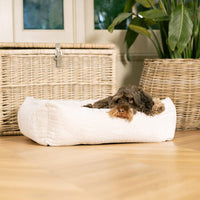
If you like the cosy box-bed style, the Lords & Labradors Essentials Plush Box Bed is a useful one to compare against your checklist, especially if you want something practical, snug, and easy to live with day to day.

Best orthopedic beds by budget and value for large dogs

Price matters, but with the best orthopedic dog beds for large dogs, value is really about how well the bed suits your dog’s stage of life. A younger, healthy Labrador who flops down after a muddy walk may be perfectly happy on a well-made large dog bed for joint support with sturdy filling and a washable cover. An older giant breed who’s slower to get up usually benefits from thicker, denser foam that holds its shape night after night.


Budget-Smart Picks

Premium Investment Picks


Price Range

£60–£120

£130–£250+

Foam Type

Supportive standard foam

High-density memory foam

Ideal Dog Size/Age

Young adults, growing large breeds

Seniors, giant breeds, dogs over 32kg

Best Use Case

Everyday comfort, guest bed, younger dog

Ongoing joint support, stiffness, recovery

It’s usually worth spending more if your dog:

  • is older and seems stiff after naps
  • is a giant breed putting lots of weight on the bed every day
  • has arthritis, hip issues, or reduced mobility
  • needs a bed that won’t flatten too quickly

If your dog is still growing, or just needs a comfortable everyday spot, a simpler orthopedic dog bed for large dogs can be the smarter buy. But if you’re looking for longer-lasting support, especially for a big dog who sleeps deeply and spends hours in bed, premium foam often earns its keep. You can browse Lords & Labradors’ luxury dog beds collection if you want to compare more supportive, extra large options.

How to pick the best orthopedic bed for your large dog

The right bed really does come down to knowing your dog — their size, how they sleep, and where they are in life.

For younger large breeds who just need reliable everyday support, a quality memory foam dog bed with a washable cover is usually the sweet spot. Good cushioning, easy to keep clean, no unnecessary fuss.

Older dogs, or those managing arthritis, stiff joints, or post-surgery recovery, need a bit more thought. Deeper foam, a lower entry point, and bolster sides they can actually lean into all make a real difference. Senior dogs tend to sleep longer and heavier, so that extra support earns its keep quickly.

If your dog is a sprawler, a digger, or just reliably hard on everything they own, durability matters as much as foam quality. Look for reinforced covers and a dense base layer that holds its shape over months of use, not just the first few weeks.

On budget, spending a little more upfront on an extra large orthopedic dog bed almost always makes more sense than replacing a cheaper one every year. A good bed can genuinely grow with your dog's needs as they age.

Ultimately, the best orthopedic dog beds for large dogs are the ones that fit your specific dog — their weight, their sleep style, their life stage. That combination will always matter more than any single feature on a label.


Related Products

Related Collections

Next Article
Puppy Teething Symptoms

Related Articles

  • How to Know If Dogs Are Bonded With Each Other
    07.08.26 August 07, 2026 Owning a Dog

    How to Know If Dogs Are Bonded With Each Other

    Some dogs share a home peacefully for years without ever forming a real emotional attachment, while others become genuinely inseparable in a way that runs surprisingly deep. Knowing how to know if dogs are bonded with each other comes down to tuning into small, everyday moments rather than dramatic displays. This guide walks you through the clearest signs of a bonded dog pair, what healthy play actually looks like, and how to gently support the relationship your dogs are building together. How to tell when dogs are actually bonded, not just getting along Living with more than one dog, you quickly learn that not all dog relationships are equal. Two dogs can share a home, eat side by side, and spend their days in the same rooms without ever forming a real emotional bond. They get along fine, but there’s no particular pull between them. Then there are dogs who actively seek each other out, settle together without any fuss, and seem genuinely unsettled when the other isn’t around. That second dynamic is what most of us mean when we ask how to know if dogs are bonded with each other. The difference matters more than it might seem. A bonded pair relies on each other for comfort and confidence, not just company. Research published in Scientific Reports found that pet dogs’ relationships with household dogs are characterized by three components: reference, affiliation, and stress, and that some dogs form stronger affiliative bonds with a canine companion than with their own owner. The connection running between two dogs in your home can go surprisingly deep. Spotting the signs of a bonded dog pair is mostly about tuning into small, everyday moments. Forget dramatic displays — it’s the quiet patterns that tell the real story. Where they choose to rest. How they react when separated. Whether they check in on each other as the day goes on. Understanding your dogs’ body language is a brilliant place to start, because bonding shows up in posture and movement just as much as in outward behaviour. The clearest signs dogs share a real bond Knowing how to know if dogs are bonded with each other usually comes down to choice and consistency. Dogs who live together will often share space, nap in the same room, or wander into the kitchen together simply because that is the household routine. A real bond tends to show up in the moments when they seek each other out anyway. Mutual grooming: Licking, gentle nibbling, or nuzzling can be one of the sweeter signs dogs are bonded, especially when both dogs look relaxed and the behaviour happens regularly. On its own, though, licking can also be habit, appeasement, or general social behaviour. If you are curious about the different reasons behind it, our guide on why dogs lick is a helpful next read. Choosing to rest close, or touching: If two dogs consistently settle beside each other or sleep pressed together when they have other comfy spots available, that often points to attachment. If they only do it on the sofa because that is the warmest place in the house, it may just be convenience. Following each other from room to room: This can be one of the clearest bits of dog bonding behavior when it goes both ways and happens across the day, not just when one dog thinks snacks might appear. One dog shadowing the other occasionally does not always mean they are deeply bonded. Leaning or seeking contact for comfort: Some dogs seem to move closer to their companion when something feels unsettling, like visitors arriving or a sudden noise outside. That kind of check-in can suggest trust, but not every bonded pair shows it. Mirroring play styles: One of the easiest ways to tell if two dogs are bonded is seeing how naturally they match each other’s energy, pause together, and re-engage without tension. The best signs of a bonded dog pair show up by choice, in different situations, and over time. Simply co-existing peacefully is lovely too, but it is not quite the same thing. Bonded play looks different from rough play or tension One of the clearest ways to tell if two dogs are bonded is simply to watch how they play together. Bonded dogs tend to find a natural rhythm — loose bodies, soft expressions, and a sense that both are genuinely in on the joke rather than one just tolerating the other. Signs of healthy, bonded play: They swap roles freely, taking turns chasing and being chased without either dog needing to always come out on top They pause mid-play to sniff around or catch a breath, then bounce straight back in together You spot frequent play bows — that classic front-end dip that says “still fun, I promise” Their mouths stay soft and open, never tight or tense One dog will deliberately fumble or hold back to keep things even (this is called self-handicapping, and it’s a lovely thing to see) Either dog can walk away at any point, and the other simply lets them Watch for these red flags instead: One dog pins the other and won’t release when the other dog goes still or squeaks Stiff posture, a tucked tail, or whale eye (where you can see the whites of the eyes) One dog repeatedly trying to escape or hide behind your legs Growling that sounds sharp and flat rather than low and rumbly The same dog always starting things while the other looks tense, flat, or checked out Truly bonded dogs recharge each other rather than wear each other down. If your pair have that easy back-and-forth, giving them the right outlets helps keep it that way. Interactive dog toys are a great way to encourage the kind of cooperative, rewarding play that strengthens their bond over time. Why some dogs become close companions while others just coexist Not every pair of dogs will become inseparable, and that is completely fine. Bonding rarely follows a neat timeline, and how close two dogs actually grow depends on a whole mix of factors that are unique to them as individuals. A few things tend to shape whether dogs become true companions or simply comfortable housemates: Age at first meeting. Puppies introduced early tend to bond more readily than adult dogs meeting for the first time. Individual temperament. A confident, sociable dog usually warms up faster than one who is naturally more cautious or reserved. Early socialisation history. Dogs who had positive experiences with other dogs as puppies generally find it easier to connect later in life. Scent familiarity. Letting dogs get used to each other’s bedding or belongings before they meet in person can help them settle together more easily. Shared daily routine. Walking, eating, and resting on similar schedules builds a quiet but meaningful sense of togetherness over time. Feeling emotionally safe. Both dogs need to feel genuinely secure in the same space before a real bond can take root. It is also worth remembering that bonded dogs do not always look the part. Some pairs show their attachment simply by choosing to nap nearby, or by quietly keeping tabs on each other across the room. That low-key closeness is just as meaningful as the dogs who play together constantly. If you are right at the beginning of that journey, our guide to bringing a puppy home is a great place to start — those early days really do lay the groundwork for everything that follows. When to step in and how to support a healthier dog relationship If you’re not quite sure where your dogs sit on the bonded-to-coexisting spectrum, a few small shifts can make a real difference to how they relate day to day. Start with shared calm routines. Dogs build trust through predictability, so feeding them at the same time, walking them together, and letting them settle in the same room after a walk all create natural opportunities for positive association without any pressure to interact. Resource management matters more than most people realise. Even dogs who genuinely like each other can tip into tension around food bowls, favourite beds, or a well-loved toy. Giving each dog their own dedicated space to eat and rest removes that friction entirely. If crates are part of your setup, a comfortable, familiar space for each dog helps them feel individually secure — and that individual security actually supports their relationship. Our guide to setting up and caring for your dog’s crate is a brilliant place to start if you want to get it right. One-on-one time with each dog is worth protecting too. Separate walks, solo play, individual training sessions — these help each dog feel settled in themselves, and settled dogs tend to make far better companions. If you’re noticing persistent avoidance, repeated conflict, or signs of stress that aren’t resolving, a qualified behaviourist can help you understand what’s really going on and give you a practical plan. Most importantly, trust what you’re already seeing. You know your dogs better than anyone. Whether yours share a deep bond or simply coexist contentedly, understanding the difference helps you give them both exactly what they need.

    By Adele Busby

    Read more
  • Why Do Some Dogs Hate Baths
    06.08.26 August 06, 2026 Owning a Dog

    Why Do Some Dogs Hate Baths

    If you have ever watched your dog sprint joyfully into a freezing pond and then wondered why the same animal turns into a four-legged protest movement at bath time, you are in the right place. Why do some dogs hate baths is actually a really interesting question, and the answer has far more to do with control, comfort, and past experience than any dislike of water itself. In this article we will walk you through what your dog is actually trying to tell you, what might be going on beneath the surface, and some gentle ways to make bath time feel a whole lot less like a ordeal for both of you. Why some dogs panic at bath time but jump straight into lakes and puddles If your dog bolts for the nearest puddle on a walk but turns into a trembling wreck the moment you run the bath, you are definitely not alone. It is one of the most common things pet parents wonder about, and honestly, it makes complete sense that it feels confusing. Here is the thing though: why some dogs hate baths has very little to do with water itself. A dog charging into a lake is making a choice. They picked the moment, the pace, and the direction. Bath time offers none of that. Instead, there is a slippery surface underfoot, a confined space, water coming from above, unfamiliar shampoo smells, and a human leaning over them. Even the gentlest wash can feel pretty overwhelming when you look at it from your dog’s point of view. Think of it this way: if someone suddenly tipped a bucket of water over your head in a small room with no warning, you probably would not enjoy it much either, even if you loved swimming. So when your dog shows signs of dog bath anxiety, it is not stubbornness or drama. It is a completely understandable response to a situation that feels unpredictable and out of their control. A lot of it comes down to reading what your dog is actually communicating, which is something worth getting familiar with. Understanding that shift in context is the first step to making bath time genuinely better for both of you. Why do dogs hate baths but love swimming? Why do dogs hate baths but love swimming? It can feel a bit ridiculous, can’t it? One minute your dog is charging into a muddy pond like it’s the best day of their life, and the next they’re bracing all four paws against the bathroom floor. If you’ve ever wondered why do some dogs hate baths, the answer usually comes down to how different those two experiences feel. Control. Swimming is your dog’s choice. They decide when to jump in, where to paddle, and when they’ve had enough. A bath feels very different because someone else is doing everything to them. Temperature. Outdoor water often feels natural and familiar. Bath water can feel too warm, too cold, or suddenly different when you start rinsing. Smell. Dogs experience scent far more intensely than we do. Strong shampoos, conditioners, and even bathroom cleaning products can be overwhelming. Noise. Running taps, shower heads, splashing water, and bathroom echoes can all add to dog bath anxiety, especially in nervous dogs. Slippery surfaces. Baths don’t offer much grip. If your dog feels their paws sliding about, it can make them feel unsafe very quickly. Confinement. Swimming feels open and fun. Baths feel small, restrictive, and hard to escape from, which is why a dog afraid of bath time may tense up before the water is even on. So while swimming feels playful and self-led, baths can feel unpredictable and uncomfortable. That contrast explains a lot about why do dogs hate baths. If your dog starts licking you during stressful moments, that can be part of how they communicate too. We cover that in more detail here: why dogs lick you. What your dog is telling you during bath time Dogs communicate constantly, and bath time is no exception. Learning to read your dog’s body language is one of the most useful tools for understanding why some dogs hate baths — and for knowing whether they just need a bit of encouragement or a more thoughtful approach altogether. Signs of mild dislike Lip licking or yawning before you’ve even turned the tap on Low or tucked tail Reluctance to walk into the bathroom Shaking off before any water has touched them Leaning away or planting their feet Signs of genuine fear or anxiety Whale eye (the whites of their eyes showing) Freezing or going completely still Trembling or panting Attempting to climb out or bolt Whining, barking, or crying Dislike means your dog is unhappy. Fear means your dog feels genuinely unsafe. The two are different, and they deserve different responses. Both are completely real and worth taking seriously. A dog who dreads bath time is trying to tell you something. Much like a dog who falls apart during fireworks, they’re communicating that their environment feels overwhelming and out of their control. The common thread is often the same: feeling trapped in an unfamiliar situation with no way to predict what happens next. If your dog struggles with that kind of sensory stress more broadly, this guide to keeping dogs calm during fireworks covers some helpful principles that apply well beyond bonfire night. How to make baths feel safer and less overwhelming The good news is that dog bath anxiety is something most pet parents can genuinely work through — it just takes a little patience and the right setup. No professional groomer required. Just some thoughtful adjustments that help your dog feel safer from the moment bath time starts. Use warm, comfortable water. Too cold or too hot and the sensation itself becomes a trigger. Aim for lukewarm, roughly what you’d use for a baby’s bath. Put down a non-slip mat. Slipping on a wet surface is genuinely frightening for dogs. A rubber mat gives them something solid underfoot and helps them feel steady rather than scrambling. Let your dog explore the space before you turn the water on. A dry, calm sniff around the bath or shower tray builds familiarity and takes the edge off that anticipatory dread many dogs carry into the room. Bring the good stuff. A smear of peanut butter on the bath wall or a steady stream of small treats keeps your dog’s focus positive and starts building better associations around bath time. Use a handheld shower attachment. Overhead sprays can feel startling and overwhelming. A handheld nozzle lets you direct water gently, keeping it well away from the face and ears. Keep early sessions short. A five-minute bath that ends on a calm, positive note is worth far more than a long, stressful one. Slow down and lower your voice. Your energy really does set the tone. A quiet, unhurried manner helps more than you might expect. Make the wind-down part of the routine. Finishing bath time with somewhere warm and cosy to settle — like a dedicated resting space designed to help dogs decompress — reinforces that the whole experience leads somewhere good. Small changes, repeated consistently, are how you help a dog that hates baths slowly learn it’s not so bad after all. It won’t happen overnight, but it does happen. When bath avoidance could be a sign of something more Sometimes a dog’s reluctance to be bathed isn’t just a personality quirk — it can point to something physical that genuinely deserves attention. Skin sensitivities are more common than many people realise. If your dog has underlying irritation, dryness, or a mild allergy, water and shampoo can actually sting. A dog who flinches when you lather their back, or who scratches obsessively after a bath, may be reacting to discomfort rather than drama. Joint pain is worth considering too, particularly in older dogs. Standing on a slippery surface while being lifted or repositioned can be really painful for a dog with stiff hips or achy legs. What looks like dog bath anxiety might simply be their only way of saying this hurts. Ear sensitivity is another piece of the puzzle. Dogs who have had ear infections in the past often associate water near their head with pain, so even the gentlest rinse can trigger a strong reaction. And then there are past experiences. A rescue dog carrying fear from previous handling needs patience, not persistence. If you have ruled out anything physical and your dog is otherwise healthy, slow and steady desensitisation at home works well for most. Focus on creating positive associations, keeping sessions short, and making sure they have a warm, comfortable place to settle afterwards — a cosy dog bed they actually want to retreat to can make a real difference to how they wind down. That said, if the fear seems intense or pain feels like a possibility, talking to your vet or a groomer who specialises in nervous dogs is absolutely the right move. Frequently Asked Questions Is it normal for dogs to not like baths? Yes, it’s very normal for dogs to dislike baths. Bath time can feel slippery, noisy, confined, and out of their control, which is very different from choosing to swim or splash in a puddle. For many dogs, it’s stress or uncertainty rather than a dislike of water itself. How do I wash my dog who hates baths? Wash them slowly and make the setup feel safe. Use lukewarm water, a non-slip mat, gentle rinsing with a handheld shower, and plenty of treats or peanut butter to build positive associations. Keep sessions short, stay calm, and let them explore the space before the water goes on.



    By Adele Busby

    Read more
  • Why Do Dogs Bark at Strangers
    03.08.26 August 03, 2026 Owning a Dog

    Why Do Dogs Bark at Strangers

    If you’ve ever watched your dog lose the plot at the postman or stiffen up the moment a visitor walks in, you’re not alone — and there’s usually a very good reason behind it. Understanding why dogs bark at strangers starts with figuring out what they’re actually trying to communicate, whether that’s a bit of nerves, a protective instinct, or simply a heads-up that someone new has arrived. In this article, we’ll walk through the most common causes, how to read what your dog is telling you, and some gentle, practical ways to help them feel more settled around unfamiliar faces. Why dogs bark at strangers in the first place When your dog barks at the parcel courier or launches into a full performance the moment a guest walks through the door, it can feel embarrassing — or just plain baffling. But dog barking at strangers is rarely a sign that your dog is being difficult or badly behaved. Most of the time, they’re simply trying to tell you something. Dogs don’t have the vocabulary we do, so barking is one of their main ways of expressing how they feel. When an unfamiliar face appears, your dog has to make a quick call: is this person safe? That assessment happens in seconds, and how they respond — one sharp bark or a full-on chorus — says a lot about what’s going on for them in that moment. There are a few reasons why dogs bark at strangers. Some feel uncertain or a little unsettled by someone new. Others are protecting their space, their home, or you. And some are simply doing what comes naturally as a watchdog, flagging that something unfamiliar is nearby. Knowing which of those is driving the behaviour makes a real difference when it comes to actually helping your dog feel more at ease. Before jumping to solutions, it’s worth pausing to read what your dog is communicating. Their body language alongside the bark usually tells the fuller story. Our guide to understanding your dog’s body language is a great place to start if you’d like to get better at reading the signs. Fear barking: when a stranger feels worrying or unsafe Fear-based barking is one of the most common reasons dogs bark at strangers, and it’s rarely about aggression. Think of it as an anxiety response — your dog’s way of saying “I’m not sure about this person, and I really need some space.” If your dog looks unsettled rather than bold when they bark, fear is very likely at the root of it. Here are some body language signals to look out for alongside the barking: Backing away or retreating while still barking Barking from behind your legs or pressing close against you A stiff, tense body with weight shifted backwards Tail tucked low or held unusually still Lip licking, yawning, or excessive blinking Whites of the eyes showing (often called “whale eye”) When it comes to why dogs bark at strangers out of fear, it usually comes down to how they’re reading a situation. Direct eye contact, quick movements, someone leaning in to say hello, or a loud voice can all feel genuinely overwhelming to a nervous dog. Factor in a tricky past experience with an unfamiliar person, and it makes complete sense that barking becomes their way of creating distance. If you’ve ever thought “but they were so friendly” — that’s often exactly the point. It’s not about the person; it’s about how the moment feels to your dog. Worth remembering: a lot of well-meaning strangers do things that dogs find uncomfortable without realising it. Crouching down, reaching out a hand, or making prolonged eye contact are classic examples. Fear barking is communication, not a character flaw. Once you start reading what your dog is actually trying to tell you, you can begin taking small, meaningful steps to help them feel safer around new people. Territorial barking: guarding the home, car, or favourite person Territorial barking comes from a deep-rooted instinct to protect what your dog considers theirs — their home, their garden, their people. It’s one of the most common reasons dogs bark at strangers, and once you recognise it, a lot of their behaviour suddenly starts to make sense. Some of the most typical triggers include: Barking the moment someone rings the bell or even turns up the path Window watching and reacting to anyone passing the house or garden Kicking off at pedestrians or other dogs going by the car Barking when a stranger gets too close to you on a walk or in a shared space Alerting loudly when an unfamiliar face enters a room your dog considers their own How to tell it apart from fear or alert barking: Territorial barking tends to be confident, sustained, and forward-facing. Your dog holds their ground rather than retreating. Fear barking is more erratic, often paired with cowering or backing away. Alert barking is usually shorter and settles once your dog feels acknowledged. According to Tufts University’s Cummings School of Veterinary Medicine, dogs that bark when people or dogs walk by the house, yard, or car are likely motivated at least in part by territoriality — which helps explain why this behaviour so often spikes in familiar, enclosed spaces. Dogs who are particularly protective of one person can become more intense in smaller environments too. If your dog uses a crate as their safe space, dog crate bumpers can help create a calmer, more den-like atmosphere — which sometimes takes the edge off that protective tension. Either way, understanding the trigger is always your starting point. Alert barking: your dog’s way of saying ‘something’s happening’ Alert barking is one of the most natural things a dog can do. It’s their way of flagging something unfamiliar — a knock at the door, a delivery driver pulling up outside, or a stranger passing the front window. If you’ve ever asked yourself why dogs bark at strangers, this kind of instinctive alerting is often the simplest explanation. Common triggers include: The doorbell or a knock at the door Delivery drivers or visitors arriving Pedestrians passing the garden or front window Unexpected noises from outside the house A couple of woofs to announce someone’s arrival? Completely normal. But if your dog barks relentlessly at every person who passes, that’s worth paying closer attention to. Alert barking is healthy communication up to a point. When it becomes persistent or intense, it can sometimes signal that something more is going on — anxiety, over-protectiveness, or a dog that just hasn’t learned to settle once the “threat” has passed. If you find yourself wondering why your dog is protective of you every time someone new appears, they may have moved beyond simply sounding the alarm. Every dog is different, of course. But consistent, heightened reactions to strangers are usually a sign your dog could use a bit of extra support feeling calm and confident in the world. Worth knowing: alert barking can also ramp up when you’re out on walks. If that sounds familiar, it’s a pattern worth looking into — we’ve covered it in more detail in our guide to why dogs bark when out walking. What you can do to calm barking around strangers Understanding why dogs bark at strangers is a great starting point, but knowing what to actually do in those moments? That’s where most of us could use a little guidance. The good news is that small, consistent changes can make a real difference over time, without needing to turn your whole routine upside down. Create distance before your dog reacts. If you’re out on a walk and you can feel your dog clocking a stranger ahead, cross the road or quietly turn around before they hit their threshold. Giving them space to breathe makes it much easier to stay calm. Reward calm, every single time. Keep treats in your pocket on walks. The moment your dog notices someone and doesn’t react, mark it with a quiet “yes” and a treat. You’re teaching them that choosing calm is always worth it. Keep guest arrivals low-key. Brief visitors to ignore your dog when they first walk in — no eye contact, no crouching down to say hello straight away. Letting your dog approach in their own time makes the whole thing far less loaded. Build a predictable greeting routine. When visitors always sit down quietly before interacting, your dog starts to learn what’s coming. That predictability genuinely helps them relax. Reduce rehearsal at home. If your dog barks at strangers passing the window, try frosted window film or shifting their bed to a quieter spot. The less they practise the behaviour, the faster the habit starts to fade. Tip: Every calm moment near a stranger is worth marking and rewarding. You’re building a new pattern, one quiet interaction at a time. Patient, realistic management will always do more for your dog than chasing a quick fix. And if anxiety feels like a bigger theme for your pup beyond strangers, our guide to keeping your dog calm during stressful situations is well worth a read. When barking at strangers needs a bit more support Most dogs bark at strangers from time to time, and honestly, that’s just part of having a dog. But if the barking is ramping up in intensity, happening more frequently, or your dog seems genuinely frightened rather than simply on alert, it’s worth getting a little extra support. A few signs it might be time to call in a professional: lunging, snapping, or growling alongside the barking; a dog who can’t settle long after a stranger has left; or barking that keeps getting worse despite everything you’ve tried at home. A qualified trainer or certified behaviourist can help you work out what’s really behind the behaviour and build a plan that suits your dog specifically, not just dogs in general. You know your dog better than anyone. If something feels off, trust that feeling. Getting support early, before things have a chance to escalate, makes the whole process so much easier. There’s no shame in it. The best pet parents ask for help all the time. Frequently Asked Questions What does it mean if a dog barks at a stranger? It usually means your dog is communicating how they feel about someone unfamiliar. They may be worried, protecting their space or people, or simply alerting you that something new is happening. The meaning becomes much clearer when you look at their body language alongside the barking. How do I get my dog to stop barking at strangers? The best way is to help your dog feel calmer before they react and reward that calm consistently. Create more distance, keep greetings low-key, ask visitors to ignore your dog at first, and reduce barking practice at windows. If it’s getting worse or feels intense, get support from a qualified trainer or behaviourist. What are dogs saying when they bark at strangers? They’re usually saying one of three things: ‘I’m not sure about this,’ ‘this is my space,’ or ‘something’s happening.’ Some dogs bark because they feel uneasy, some because they’re being territorial, and others are simply sounding the alarm. Their posture and overall body language help tell you which it is.

    By Adele Busby

    Read more
  • Effects of Cutting Dog Whiskers
    31.07.26 July 31, 2026 Owning a Dog

    Effects of Cutting Dog Whiskers

    Most pet parents are surprised to learn just how much their dog relies on those stiff little hairs around the muzzle and brows. The effects of cutting dog whiskers are subtler than you might expect, but they can leave your dog feeling genuinely unsettled in their day-to-day life. In this article, we cover why whiskers matter so much, what changes when they’re trimmed, and exactly what to do if your dog’s whiskers have already been cut. What dog whiskers actually do for your dog Whiskers might look like oversized stray hairs, but they’re doing something genuinely impressive beneath the surface. Each whisker — technically called a vibrissa — is rooted far deeper than regular coat hair and connects to a dense cluster of nerve endings. Every tiny air shift, brush against a surface, or change in pressure sends detailed sensory information straight to your dog’s brain. Think of them as a built-in spatial awareness system. The whiskers above the eyes trigger a blink reflex the moment something gets too close, protecting your dog before they’ve even registered the threat. The ones around the muzzle help your dog judge whether a gap is wide enough to squeeze through — which explains that funny little pause you’ve probably noticed before they commit to nosing through a tight space. That’s not hesitation. That’s the whiskers working exactly as they should. Whiskers also pick up subtle air movement, which helps dogs build a picture of their surroundings even when visibility is low. In dim lighting, dense undergrowth, or when your dog is rooting around under the sofa, those sensory signals make a real difference to how confidently they move. This is exactly why the effects of cutting dog whiskers go well beyond looks. When whiskers are removed, dogs lose a layer of sensory feedback they rely on constantly — often in ways we’d never notice, because whiskers do so much of their work quietly in the background. If you’re curious about the other ways dogs read and respond to their environment, our guide to understanding your dog’s body language is well worth a read. Effects of cutting dog whiskers: what changes and why it feels so off The effects of cutting dog whiskers are rarely dramatic, but they are real — and once you know what to look for, they’re surprisingly easy to spot. Most owners notice subtle shifts in how their dog moves and reacts, rather than any obvious signs of distress. Here’s what you might observe after a trim: Bumping into furniture or doorframes, especially in low light Hesitating before squeezing through narrow gaps or entering smaller spaces Misjudging distances when reaching for toys, food bowls, or objects on the ground Startling more easily at movement or objects in their peripheral field Seeming uncertain or unsettled during activities they usually breeze through A quick note on pain: cutting whiskers doesn’t hurt in the way cutting skin would — the hair shaft itself has no nerve endings. But removing them does take away a key sensory tool, and that loss of input creates real discomfort and insecurity for your dog, even if they can’t tell you that. Whiskers act as a constant stream of environmental feedback, helping your dog judge space, airflow, and nearby objects with genuine precision. Without that input, even familiar routes and routines can feel slightly off. It’s one of the clearest reasons why dog whiskers are important well beyond how they look — and why most vets and groomers agree you shouldn’t trim dog whiskers unless there’s a specific medical reason to do so. That disorientation doesn’t always stay indoors, either. If your dog seems hesitant or on edge during walks after a grooming session, disrupted sensory confidence could be part of the picture — worth keeping in mind if you’re also noticing unusual barking or anxious behaviour out on walks. Why the “whiskers are just hair” myth gets it wrong It’s easy to see why people think whiskers are just wiry little hairs around the muzzle, but they work very differently from the rest of your dog’s coat. Whiskers, or vibrissae, sit much deeper in the skin and are surrounded by blood-filled follicles with lots of nerve endings. That’s why the effects of cutting dog whiskers can feel so different from a normal trim. What makes them special? They’re set deeper: Whiskers have a much deeper anchor than ordinary fur, which helps them stay steady and pick up tiny movements. They’re part of your dog’s sensory system: When a whisker moves, it sends signals your dog uses to make sense of what’s nearby. They notice subtle changes: They can help dogs detect shifts in air movement and the position of nearby objects, even before they bump into them. They support confident movement: Dogs use whiskers to judge spaces, especially in dim light or unfamiliar places. They help dogs feel secure: When whiskers are trimmed, some dogs seem a bit hesitant or clumsy simply because an important source of feedback has gone. That’s also why, if you’ve ever wondered should you trim dog whiskers, most pet parents and groomers would say no unless there’s a medical reason. Even things that sit close to the face, like a well-fitted snood, should feel comfortable and not press on those sensitive whiskers. How whisker trimming can happen during grooming, and how to avoid it Whisker trimming often happens without anyone meaning it to. During a quick tidy-up at home or a trip to the groomer, those sensitive little hairs can get snipped in seconds, usually when working around the muzzle or brows. Once you understand the effects of cutting dog whiskers, it’s much easier to stay mindful — and the good news is that most accidental trims are entirely preventable with a few small habits in place. At home grooming Switch to blunt-tipped scissors whenever you’re trimming fur around the face. They give you far more control and reduce the risk of a stray snip near the muzzle or brows. Work slowly, especially if your dog is wriggly or a little anxious. Short, calm sessions are always better than rushing to get it done in one go. Before you put the scissors away, do a quick check of the muzzle, brows, and paw pads to make sure everything looks as it should. If your dog is having a particularly fidgety day, save the face trim for another session when they’re more settled. At professional grooming appointments Mention at every appointment that you’d like the whiskers left intact. Even if your groomer knows you well, it’s worth saying — don’t assume they’ll remember. Bring it up again at drop-off as a friendly reminder. It only takes a second. When you collect your dog, take a moment to check the muzzle and brow area before you head home. Once you know what to watch for, protecting your dog’s whiskers quickly becomes second nature. It’s a small thing that makes a genuine difference to how confident and comfortable your dog feels every day. What to do if your dog’s whiskers were cut If your dog’s whiskers were trimmed at their last groom, here’s the most important thing to know: they do grow back. It takes anywhere from a few weeks to a few months depending on the dog, but they will return. In the meantime, your main job is simply to keep things calm and consistent. You might notice your dog being a little more hesitant than usual — bumping into the coffee table, or moving carefully through spaces they’d normally breeze through. That’s the effects of cutting dog whiskers showing up in everyday life, and it really is temporary. Try to avoid rearranging furniture or introducing lots of new places while they’re finding their feet again. Familiar surroundings make a genuine difference. Keep routines steady, give them plenty of positive time with you, and hold off on anything that might feel overwhelming. If you’ve recently brought a new dog home on top of all this, our guide to making those first days feel safe and settled is well worth a read. If your dog seems genuinely distressed, goes off their food, or something just feels off beyond what you’d expect, give your vet a call. Trust your instincts. You know your dog better than anyone, and sometimes a quick conversation with a professional is exactly what you both need. Frequently Asked Questions Is it bad if you cut a dog’s whiskers? Yes, it’s best not to cut a dog’s whiskers unless there’s a medical reason. Trimming them doesn’t usually cause dramatic symptoms, but it removes an important source of sensory feedback, which can leave dogs feeling unsure, more easily startled, and less confident judging spaces or objects around them. Do dogs feel pain if whiskers are cut? No, cutting the whisker itself doesn’t hurt like cutting skin because the hair shaft has no nerve endings. But whiskers are an important sensory tool, so trimming them can still make a dog feel unsettled, less secure, and a bit clumsy while they adjust to that lost feedback. Why do groomers cut off dogs’ whiskers? Usually, groomers don’t mean to cut them off on purpose. Whiskers often get trimmed accidentally during face tidying, especially around the muzzle or brows, and it can happen in seconds. That’s why it helps to mention at every appointment that you’d like your dog’s whiskers left intact. How do dog groomers avoid cutting whiskers? Dog groomers avoid cutting whiskers by being especially careful around the muzzle and brows and by following clear instructions from you. It helps to mention at every appointment that you want the whiskers left intact, repeat it at drop-off, and quickly check the face when you collect your dog.

    By Adele Busby

    Read more

loyal customer in 17 countries

Why Shop With Us?

  • Free Delivery

    Orders over £75 qualify for free standard UK delivery. Orders under £75 will be calculated at the checkout.

  • Shopping Made Easy

    Gain exclusive access to sales and shop all your pets favourites on the go by downloading our app.

  • Designed in the UK

    Our own brand products are lovingly designed in our specialist UK workshop to our exacting standards.

  • We're Here For You

    Contact our Pet Experts on Chat or by email at sales@lordsandlabradors.co.uk