














































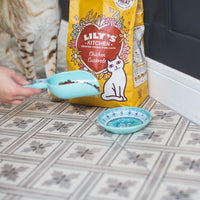




























Choosing the best kitten food is one of those decisions that feels straightforward until you’re actually doing it, and suddenly every shelf and search result pulls you in a different direction. This guide cuts through that noise with practical advice on wet versus dry food, how to read a label properly, how much to feed at every stage, and what to do when your kitten has opinions of their own. Whether you’re setting up for day one or adjusting as your kitten grows, you’ll find everything you need to feed with confidence right here.
What actually counts as the best kitten food for your new arrival?
Finding the best kitten food feels simple enough — until you’re actually standing in front of a shelf stacked floor to ceiling with options. Pouches, tins, biscuits, raw, grain-free, sensitive, indoor. It’s a lot, especially when you just want to do right by a tiny cat who depends entirely on you.
The most useful thing to know upfront: kitten food and adult cat food are genuinely different, and that difference really matters. Kittens grow at a remarkable rate, and they need more protein, more fat, more calories, and higher levels of specific nutrients like calcium, phosphorus, and taurine than an adult cat requires. Feed an adult formula too early and your kitten may simply not get the building blocks they need to grow well. It’s not a minor tweak — it’s a fundamentally different nutritional brief.
When you pick up any pack, look for the words “complete and balanced for kittens” or “all life stages.” That phrasing means the food has been formulated to meet your kitten’s full nutritional needs on its own, with nothing extra required. If a food says “complementary,” it’s designed to sit alongside something else — not replace it. That’s the single most important label check you’ll make, so it’s worth getting comfortable with it early.
Beyond that, the best food for kittens is one they’ll actually eat, fits your daily routine, and that you can buy consistently without the stress of it going out of stock. The Lords and Labradors kitten food collection is a good place to see what well-formulated options actually look like. The rest of this guide will help you narrow things down from there.
Wet food, dry food, or both: what works best in real life?
There’s no single rule that makes one format the best kitten food for every household — and most experienced cat owners will tell you they’ve landed somewhere in the middle. Wet and dry food each bring something genuinely useful to the bowl, and understanding those differences makes the whole decision a lot simpler.
| Factor | Wet Food | Dry Food |
|---|---|---|
| Hydration | High moisture content, great for keeping kittens well hydrated | Low moisture, so fresh water alongside is essential |
| Texture appeal | Soft and easy to chew, ideal for younger kittens | Crunchy texture some kittens love, though not all take to it straight away |
| Convenience | Best served fresh, so less practical if you’re out all day | Easy to portion, stays in the bowl longer, great for measured feeding |
| Cost | Typically costs more per serving | Usually more economical over time |
| Shelf life | Short once opened, usually 24 hours refrigerated | Long shelf life, simple to store |
Combining both is a sensible approach that many vets are happy with, and it works well in practice. Wet kitten food at set mealtimes supports hydration in a really natural way, which matters more than you might think — kittens are notoriously poor water drinkers. Dry food then gives you flexibility around a busy day without worrying about what’s been sitting in the bowl since breakfast. If you’re looking for quality options to build into your kitten’s routine, the wet cat food range is a good place to start.
A few practical things to help you find your balance:
- Offer wet food at set mealtimes and use dry as a flexible top-up during the day
- Watch how your kitten eats — enthusiasm tells you a lot about what format they prefer
- If they rarely touch their water bowl, lean further towards wet food
- Start simple, then adjust as you both settle into a routine
How to spot a proper complete kitten food on the label
Picking up a bag or pouch that says “kitten” on the front feels reassuring — but that label alone doesn’t guarantee the food is nutritionally complete. Reading a little further takes about thirty seconds and makes a real difference to what ends up in your kitten’s bowl.
Look for the word “complete”. You’ll usually find it on the front or back of the pack. That single word confirms the food meets all of your kitten’s nutritional needs on its own, every day.
Check the life-stage wording. The label should say “for kittens,” “for growth,” or “for all life stages.” If it only says “for adult cats,” put it back.
Find a named animal protein as the first ingredient. Chicken, salmon, or turkey listed first means animal protein leads the recipe, not cereals or vague fillers.
Look for an AAFCO or FEDIAF nutritional adequacy statement. This confirms the food has been formulated to meet recognised standards for growing cats, not just cats in general.
Think about caloric density. Kittens need significantly more calories per gram of bodyweight than adults do, so food made specifically for growth will reflect this in its nutritional values.
Complete vs. complementary, simply put: A complete food provides everything your kitten needs as a standalone meal. A complementary food is designed to be fed alongside something else and can’t do the job alone.
Once you know what to look for, spotting the right food takes seconds. The Lords and Labradors cat food range is a solid place to start browsing options that have already done the hard work for you.
Feeding amounts, meal frequency, and when to change as they grow
Kittens have tiny stomachs and very big appetites for life, so feeding little and often usually works best. Getting the balance right helps support steady growth, a healthy weight, and fewer tummy upsets too.
Kitten Feeding Guide by Age
| Age | Meals Per Day | General Portion Guidance |
|---|---|---|
| 8–12 weeks | 4–5 | Offer small meals and use the feeding guide on your chosen kitten wet food, kitten dry food, or mixed-feeding plan as your starting point |
| 3–6 months | 3–4 | Increase the total daily amount gradually as your kitten grows, then split it across meals based on the label guidance |
| 6–12 months | 2–3 | Keep adjusting portions with growth and body condition as your kitten moves towards an adult routine |
If you feed both wet and dry, remember the daily amount needs balancing across both, not adding a full day’s serving of each. That’s one of the easiest ways to overfeed without meaning to.
Practical tips to get it right:
- Start with the pack guidelines for your kitten’s age and weight, then tweak based on body condition and appetite
- Weigh your kitten regularly, especially in the first few months when they seem to change overnight
- Move to fewer meals gradually rather than dropping from four to two in one go
- Measured dry food is usually easier to manage than topping up the bowl throughout the day
- If your kitten constantly leaves food, or finishes every meal and still seems hungry, it’s worth reviewing portions
If you want a more detailed breakdown, our full kitten feeding guide goes into more detail by age and weight.
Even the best kitten food still needs the right portion size. A little attention now makes feeding feel much simpler as your kitten grows.
Ingredients, sensitivities, and choosing food your kitten will actually eat
Even the most nutritionally complete kitten food is useless if your kitten sniffs it twice and walks off in disgust. Ingredient quality and texture matter — especially for young digestive systems still finding their feet — so it pays to be a little selective from the start.
Here’s what to look for in practice:
- Named meat first. Chicken, salmon, or turkey should sit at the top of the ingredient list. Vague terms like “meat derivatives” usually mean the recipe is cutting corners.
- Go easy on fillers. Some carbohydrate content is fine, but cereals and plant proteins shouldn’t dominate — particularly in those early months when your kitten is growing fast.
- Spot the green flags. Firm stools, steady weight gain, a glossy coat, and genuine excitement at mealtimes are all signs a food is genuinely working.
- Take red flags seriously. Loose stools, bloating, or consistent refusal aren’t things to push through. They’re worth acting on.
- Respect texture preferences. Some kittens go wild for pâté-style wet food; others want chunks or kitten dry food. Many do well on a mix of both. Follow their lead.
- Transition slowly. When switching foods, mix old and new over seven to ten days to keep digestive upsets at bay.
If your kitten shows recurring signs of sensitivity — loose stools, skin reactions, persistent fussiness — it’s worth exploring sensitive and hypoallergenic cat food formulated for more delicate systems.
Finding the right match can take a little trial and error. The best food for kittens is simply the one your individual kitten genuinely thrives on.
Which kitten food should you choose? A simple way to decide
There’s no single best kitten food that works for every cat and every household — and honestly, accepting that makes the whole decision much easier. What you’re really looking for is something complete and balanced, made with decent ingredients, that your kitten actually wants to eat.
Start by thinking practically. Out of the house most of the day? Dry kitten food earns its place because it won’t spoil sitting in the bowl. If your kitten seems lukewarm about food or you want to boost their fluid intake, wet food is a brilliant option — most kittens find it far more tempting. Plenty of cat parents naturally settle into a mix of both over time, and it genuinely works well.
From there, it’s fairly straightforward. Choose a food labelled complete for kittens, check that a named protein — chicken, salmon, turkey — sits at the top of the ingredients list, and pick a texture your kitten responds to. Then give it a proper chance before switching. Chopping and changing too soon is one of the most common mistakes new kitten parents make, and it can unsettle a young cat’s digestion faster than almost anything else.
If you’re still finding your feet with the basics, our guide on how to prepare for your new kitten is a great place to start. The right food is out there. You don’t need to have it all figured out on day one — you just need to begin.