






















































If you have ever watched a cat bypass a brand new bed to squeeze into a battered delivery box, you already know that cardboard holds a very particular power over them. This article gets into the real reasons why cats like to go in boxes, from the deep-rooted instincts behind it to the surprising science that explains why boxes can actually make cats feel calmer and more secure. You will also find practical tips for making box time safer at home, plus some cosy alternatives worth knowing about.
Why do cats like to go in boxes? The short answer
If you have ever set down an empty delivery box and watched your cat claim it within seconds, you already know that cats and cardboard share a very special relationship. But why do cats like to go in boxes so reliably — regardless of age, personality, or how many perfectly good beds they have completely ignored?
The honest answer comes down to instinct. Cats are both predators and prey, which means they are hardwired to seek out small, enclosed spaces where they feel hidden, secure, and in control. A box delivers all of that at once. It is basically the feline version of a perfect afternoon.
But there is more to it than simple survival instinct. Cardboard retains warmth, which cats are naturally drawn to. Boxes offer novelty, which keeps curious, intelligent animals happily occupied. And research has actually shown that access to a box can meaningfully lower stress levels in cats, especially when they are adjusting to a new or unsettling environment.
So if your cat has commandeered every online delivery since you started shopping from home, they are not just being theatrical. They are following a deeply rooted urge that feels safe, satisfying, and entirely natural to them.
This article unpacks all of it — from the science behind why cats are attracted to boxes to practical ways you can lean into the behaviour at home. And if you want to go a step further, you can explore our full range of cat essentials for even more ways to keep your cat comfortable and content.
How boxes make cats feel safe, hidden, and in control
One of the clearest answers to why cats like to go in boxes lies in how perfectly a box suits their dual nature as both predator and prey. Inside a box, a cat can watch everything happening in the room while staying completely hidden. That combination of visibility and cover is deeply wired into how cats experience the world.
- Reduced sensory overwhelm: Enclosed spaces filter out visual noise and movement, helping cats feel calmer in busier households.
- Monitoring without exposure: A cat in a box can track people, other pets, and sounds without putting itself in a vulnerable position.
- Ambush readiness: Even the most pampered indoor cat still carries those hunting instincts. A box keeps them poised and ready, even if the “prey” turns out to be a passing sock.
- A sense of boundary and control: Cats feel safest when they can define their own space. A box creates a clear perimeter that feels entirely theirs.
- Instinct, not stubbornness: That moment when your cat bypasses a plush bed to squeeze into the tiniest cardboard box in the room? That’s not cheek. That’s instinct telling them that smaller means safer.
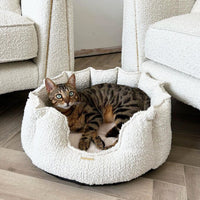
Enclosed spaces give cats something open rooms simply cannot: a genuine sense of control over their environment. If your cat gravitates toward boxes and tight corners, they’re not being awkward — they’re following instincts that go back thousands of years. Our High Wall Bouclé Cat Bed is built with exactly that in mind, with raised, defined sides that recreate the sheltered, secure feeling cats love about boxes — just a little more comfortable for everyone involved.
What the Leiden University stress study found about boxes and feline stress
There is some genuine science behind why cats like to go in boxes. A well-known study from Leiden University looked at newly arrived shelter cats and found that simple hiding boxes seemed to help them cope better with the stress of a big change.
That matters because shelters are full of unfamiliar smells, sounds, and routines. For a cat, that can feel overwhelming. In the study, cats with access to a box generally showed lower stress scores and appeared to settle more quickly than cats without one. In other words, the box was not just somewhere to sit. It gave the cat a safe, contained space to retreat to while taking in a new environment.
A few easy takeaways from the research:
- Cats with a hiding box appeared to adapt more quickly in a stressful setting
- A small, enclosed space may help cats feel safer and more in control
- Hiding can be a normal coping behaviour, not something “bad” that needs stopping
- The idea is useful beyond shelters too, especially for new kittens, house moves, or changes in routine
The big lesson is simple: when cats can choose to tuck themselves away, they often feel more secure. That helps explain why cats like boxes so much in the first place.
At home, that does not have to mean leaving delivery boxes all over the hallway, although many cats would be thrilled with that. A cardboard box, covered bed, or snug hideaway can all offer a similar sense of comfort. If your cat likes cosy places to curl up out of sight, our cat beds collection is a helpful place to start.
Why cardboard boxes are so irresistible: texture, warmth, and novelty
Part of understanding why cats like to go in boxes comes down to the material itself. Cardboard ticks several boxes at once (pun very much intended), offering a mix of sensory rewards that are genuinely hard to resist. It’s rarely just one thing pulling them in.
- Natural insulation: Cardboard traps body heat surprisingly well, creating a snug little pocket of warmth that feels immediately comforting to a cat settling in for a nap.
- Scratch-friendly texture: The surface is satisfying to knead and scratch, giving cats a natural outlet for an instinct they act on every single day.
- Novelty and mental stimulation: A new box arriving in the house is basically an event. Exploring it engages their curiosity and gives their brain a small but meaningful workout.
- Muffled acoustics: The walls absorb surrounding sound, softening the environment and helping cats feel calmer and less overstimulated.
- Familiar, neutral scent: Cardboard carries no strong or threatening smells, which makes it feel safe and approachable from the very first sniff.
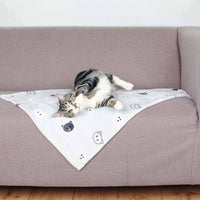
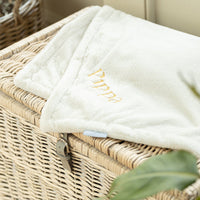
Put all of that together and it’s easy to see why cat behaviour in boxes makes so much sense. Warm, tactile, quiet, and interesting all at once — it’s a pretty compelling combination. If you want to make a box even more inviting, try tucking in one of our soft cat blankets to layer up the warmth and comfort your cat is already searching for.
How to use boxes safely and keep the fun going at home
Giving your cat a cardboard box to explore is one of the easiest wins in pet parenting, but a little prep goes a long way. Before you set one down, check it over properly. Remove any staples, packing tape, or sharp folded edges that could catch a paw or scratch a nose, and give it a quick sniff while you’re at it. Boxes that have held cleaning products or heavily scented goods are best left in the recycling.
Once it passes the check, placement matters more than you might expect. Tuck it somewhere quiet, away from busy hallways or noisy appliances. Cats are drawn to boxes because they feel hidden and in control, so dropping one in the middle of a well-trafficked room rather misses the point.
It’s also worth keeping an eye on chewing. Most cats will sniff, knead, and generally make themselves at home without much drama, but if yours is tearing off chunks and swallowing them, it’s time to swap things out for something safer.
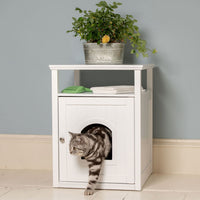
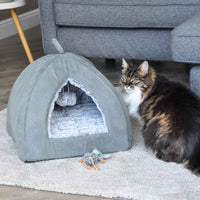
When you want a longer-lasting version of the same comfort, cat tunnels, enclosed hideaway beds, and soft-sided dens deliver everything a cardboard box does: warmth, shelter, and that deeply satisfying tucked-in feeling. They’re washable, sturdier, and far tidier to have around the house. The instinct behind why cats like to go in boxes stays exactly the same. You’re just giving it a proper home.