


















































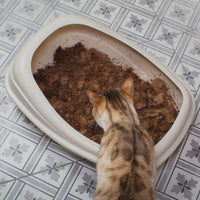
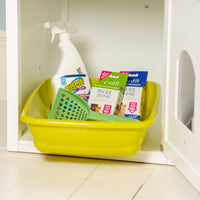


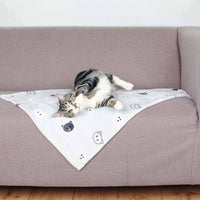
















Scratching is one of those things that feels deeply frustrating when it’s your sofa taking the hit, but the good news is that learning how to stop a cat from scratching furniture is far more about smart redirection than strict rules. In this guide, we’ll walk you through why cats scratch, how to make a scratcher genuinely appealing, and simple ways to protect your furniture while your cat builds better habits. From claw care and deterrents to rewards and routine, these are practical steps that actually work in a real home.
Why cats scratch furniture in the first place
If you have ever come home to find your sofa looking like it lost a fight, you are definitely not alone. Scratching can feel destructive from our side of things, but for cats, it is completely normal behaviour.
So, why does my cat scratch furniture in the first place? Usually, it comes down to a few very natural reasons. Scratching helps your cat stretch their whole body, especially their shoulders, back, and legs, which is why you will often see a big scratch after a nap. It also helps remove the outer layer of the claw, keeping it in good condition underneath.
There is also the territory side of things. When your cat scratches the arm of the sofa or the stair carpet, they are not being difficult for the sake of it. They are leaving both a visible mark and a scent from glands in their paws. In cat language, that is a clear little message that says, “this is mine.”
For some cats, scratching is emotional too. They may do it when they feel excited, overstimulated, unsettled, or even just full of energy. It can be a bit like us stretching, fidgeting, or pacing when we need to release tension. That is why punishment rarely helps. Scratching is not bad behaviour to “fix”, it is a normal instinct to redirect.
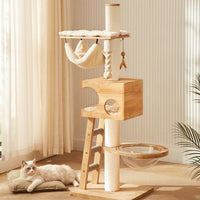
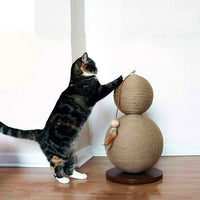
Understanding that makes a big difference when thinking about how to stop a cat from scratching furniture. The aim is not to stop scratching altogether. It is to give them a better place to do it, like one of these cat trees and scratch posts, and make that option easier and more appealing than the sofa.
Cornell University’s Feline Health Center notes that the only guaranteed way to stop a cat from scratching a particular area or object is to restrict access to it, which is rarely practical in a real home. The good news is that with the right setup, you really can stop cat scratching furniture becoming a daily battle.
Make the scratching post the easiest option
Most scratching posts fail not because cats are stubborn, but because they’re in the wrong place. Location, size, stability, and texture all determine whether your cat actually bothers — get those things right, and you’re most of the way there.
Here’s what to think about when choosing and positioning a scratcher:
- Placement near problem areas or favourite napping spots. Cats scratch when they wake up and when they move through familiar territory. Put the post where the scratching is already happening, not tucked in a corner no one visits.
- Height and size. Your cat needs to fully extend their body when they scratch. A post that’s too short simply won’t satisfy. Look for something tall enough that they can stretch right up on their hind legs.
- Stability. One wobble and most cats write it off completely. The post needs to feel solid and secure every single time they use it.
- Texture preference. Some cats are devoted to sisal, others love cardboard or carpet. If you’re not sure what your cat prefers, try more than one and let them lead.
Good to know: Most cats need at least two or three scratchers placed in different rooms. One near the sofa is rarely enough, particularly in a larger home.
When you’re trying to redirect scratching away from a specific piece of furniture, place the post directly beside it — almost touching. It feels counterintuitive, but you’re simply meeting your cat where they already are. Once they’re using it reliably, you can gradually shift it somewhere more convenient. A tall, sturdy option like the Lords & Labradors Back to Nature 4-Tier Cat Scratch Post works particularly well for this, giving cats a satisfying full-body stretch in something that won’t tip or shift under their weight.
Making the post the obvious, easy choice is one of the most practical steps you can take to stop cats scratching furniture — and it works best when paired with making the sofa a little less tempting at the same time.
How to make furniture less tempting
While you work on how to stop a cat from scratching furniture, it helps to make the sofa less rewarding in the meantime. These gentle deterrents are best used as a short-term backup, not a punishment. The goal is simply to protect your furniture while you show your cat where you do want them to scratch.
- Double-sided tape: Many cats dislike the sticky feeling on their paws, so a few strips on the sofa arms or favourite corners can help break the habit. It is harmless, but odd enough to make them pause.
- Furniture covers and throws: A thick throw, blanket, or fitted cover changes the feel of the surface and protects the fabric underneath. This can be especially helpful if your cat loves one particular arm or cushion corner.
- Citrus-style deterrent sprays: Many cats dislike citrus scents, so a light mist on favourite scratching spots may help. Always check the label carefully and only use a spray that is clearly marked as cat-safe.
- Blocking favoured corners: If your cat returns to the same spot every day, try placing a cushion, storage basket, side table, or another pet-safe obstacle in front of it for a while. Even a simple change in access can interrupt the routine.
- Scratch-deterrent mats: These textured mats attach to or sit against the sofa and make scratching feel less satisfying. They are easy to move if your cat switches to a new target.
Quick tip: Deterrents work best when there is a better option right beside them. Put a scratching post or pad next to the area you are protecting, so your cat can immediately make the “right” choice.
If you want an extra layer of protection while training, sofa toppers can be a really practical addition. They help shield the spots cats usually target, and they make life feel a lot calmer while everyone settles into a new routine.
Trim, file, and care for their claws
Trimming your cat’s claws won’t stop them from scratching altogether, but it will make a real difference to the damage they cause. Shorter, blunter claws are far less likely to snag fabric or gouge into wood, so keeping on top of nail care is a genuinely useful piece of the puzzle when you’re trying to stop cat scratching furniture.
- Start with paw handling. Before you bring out any clippers, spend some time getting your cat comfortable with you touching their paws. A gentle hold during a quiet cuddle is a good place to start — you want it to feel like nothing, not like something to brace for.
- Use the right clippers. Cat-specific scissor-style or guillotine clippers give you far more control than regular nail scissors, and they make a clean cut without splitting the claw.
- Find the quick. Hold the paw up to the light and look for a faint pink line running partway down the claw. That’s the quick — cut just below it and you’ll avoid any sensitive tissue.
- Keep sessions short. One or two claws at a time is absolutely fine, especially while your cat is still getting used to it. There’s no rule that says all four paws have to happen in one sitting.
- Always finish on a good note. A treat and a bit of fuss at the end goes a long way. Most cats come around faster than you’d expect once there’s something in it for them.
Quick tip: For most indoor cats, trimming every two to four weeks is plenty to keep claws in good shape.
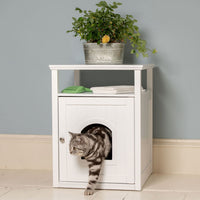
Having a consistent, calm spot for grooming makes the whole routine feel less like a wrestling match. A dedicated cat washroom or grooming station keeps everything in one place, so you’re not hunting down clippers at the last minute and your cat knows what to expect when you head there together.
Use rewards and routine to build a new habit
Getting a scratching post in place is a brilliant first step, but it’s the consistent positive reinforcement that turns an occasional scratch into a genuine habit. This is honestly the most important part of learning how to train a cat not to scratch furniture, and the good news is it doesn’t need to be complicated or time-consuming.
- Guide your cat to the post. Gently carry them over or dangle a toy nearby to draw them in. You’re not forcing anything — just creating the right moment.
- Reward the second they scratch it. The moment their claws make contact, mark it with a bright “yes!” and follow up with a small treat. Timing really is everything here.
- Try a little catnip to spark interest. A light sprinkle on or around a plush cat scratch post can make a real difference, particularly for cats who’ve been slow to engage.
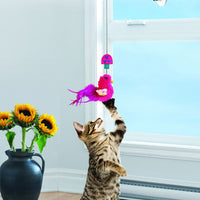
- Finish with a play session nearby. A few minutes with a wand toy next to the post helps build a warm, happy association with the whole area — not just the post itself.
- Keep it consistent. Right after meals or when your cat first wakes up are ideal windows. Cats are natural creatures of habit, so a predictable routine makes this much easier for both of you.
Tip: Aim to reward within two seconds of your cat using the post. Any longer and they won’t connect the treat to what they just did.
Most cats show clear progress within a few weeks when you stick with this. Keep sessions short, stay upbeat, and trust the process — the habit will come.
When to upgrade your setup and keep the peace
Sometimes, despite your best efforts, your cat still makes a beeline for the sofa. Before you feel defeated, it’s worth asking whether your current setup is actually giving them what they need.
If they keep ignoring their scratcher, texture is often the culprit. Some cats are devoted sisal fans, others swear by corrugated cardboard, and a few will only scratch carpet. If you’ve only tried one material, experiment with another — it can make a surprisingly big difference.
Size matters too. A wobbly post that shifts the moment your cat leans into it isn’t going to win them over. Cats scratch to get a full, satisfying stretch through their whole body, so a scratcher that feels tall and solid enough to do that job properly is far more likely to earn regular use. If you have the wall space, something like the Lords and Labradors Malmo Sling Scratch Wall Climber offers a sturdy vertical option that doubles as a climbing spot — the kind of thing many cats find genuinely hard to resist.
Orientation is worth considering too. Not every cat wants to scratch vertically. Some prefer to stretch out horizontally on the floor, so offering both styles helps you land on what your cat actually enjoys.
In a multi-cat household, one scratcher almost never cuts it. Cats can be territorial, so dotting a few options around different rooms reduces competition and gives everyone a reliable spot to call their own.
The honest truth is that stopping cats from scratching furniture is mostly about building the right environment and sticking with it. With a little patience and the right setup, most cats genuinely do get there.
Frequently Asked Questions
What scent will deter cats from scratching furniture?
Citrus-style scents can help deter some cats from scratching furniture. A light mist of a cat-safe citrus deterrent spray on favourite scratching spots may make the area less appealing, especially if you place a sturdy scratching post right beside it so your cat has a better option.
Is furniture scratching a behavioral issue?
Not usually — scratching furniture is a normal cat behaviour, not simply bad behaviour. Cats scratch to stretch, maintain their claws, mark territory, and release energy or tension, so the kindest and most effective approach is to redirect that instinct to a suitable scratching post rather than punish it.