



































































Every cat parent knows that bringing a Christmas tree into the house is basically the most chaotic decision of the festive season. This guide covers everything you need to set up a cat christmas tree that actually stays standing, from anchoring the base and choosing safer decorations to stopping the climbing before it starts. Whether your cat is a casual sniffer or a committed wrecker, there's something here that will help.
How to make your Christmas tree cat-friendly from the start
If you share your home with a cat, you already know that a Christmas tree is basically the most exciting thing you'll bring into the house all year. It smells like the outdoors, it's full of shiny dangling things, and it fits perfectly in a corner your cat has probably been eyeing up for months. Getting the basics right before you even think about decorating makes everything that follows so much easier.
Start with your spot. A corner works well because it limits the angles your cat can approach from and gives you something solid to anchor the tree against. Stability really is everything here. A wobbly base is practically an open invitation, so invest in a heavy, wide tree stand and make sure the tree feels genuinely secure before a single bauble goes on.
Then think about layout. Cats tend to head for the lower branches first, so keeping the bottom third of the tree clear of decorations gives them far less reason to get involved. Nothing tempting at nose level means many cats will simply sniff around and move on.
It also helps to introduce the tree gradually. Put it up undecorated for a day or two and let your cat have a good explore. Once the novelty fades, it becomes a lot less interesting to climb or chew. A tree that's been thoroughly investigated and dismissed is one you're far more likely to still find standing on Christmas morning.
If you'd like a broader overview before you dive in, our guide on how to cat proof your Christmas covers the wider festive setup beyond just the tree. For now, though, a stable base and a clear lower half are the two simplest things you can do to set yourself up for a calmer, cat-friendlier Christmas.
Are Christmas trees toxic to cats?
A cat Christmas tree can be festive and safe, but whether it causes trouble really depends on the tree, your cat, and what they get into. Real and artificial trees are not usually a major poisoning risk on their own, but both can still cause irritation or an upset stomach if your cat chews them.
| Risk Factor | Real Trees | Artificial Trees |
|---|---|---|
| Needles | Sharp needles can irritate the mouth, throat, or stomach if chewed or swallowed | Plastic needles can do the same and may pose a blockage risk if eaten |
| Sap or resin | Can be sticky and may cause mild mouth, skin, or tummy irritation if licked or chewed | No sap, but some trees may have coatings or materials that are best not chewed |
| Tree water | Can collect bacteria, mould, or traces of preservatives, so it’s best kept covered | Not applicable |
| Overall risk | Usually low, but more of a concern for cats who like to chew | Usually low, though chewing any artificial material is not ideal |
For most cats, a quick sniff of the trunk or one fallen needle is unlikely to cause a big problem. The bigger issue is repeated chewing, swallowing bits of branch or plastic, or sneaking a drink from the stand. That’s why Christmas tree cat safety is often more about preventing access than worrying about the tree itself.
Call your vet if your cat has been chewing the tree and then shows signs like:
- Drooling or lip licking
- Vomiting or retching
- Lethargy
- Pawing at the mouth
- Loss of appetite
If your cat loves investigating every plant in the house, it’s also worth reading our guide to poisonous plants for cats.
Simple ways to stop your cat climbing the Christmas tree
Cats and Christmas trees are a combination that makes every cat parent hold their breath a little. The twinkling lights, dangling baubles, and pine-scented branches are basically an open invitation — and cats know it. The good news is that a few smart adjustments can make the tree far less tempting without turning your living room into an obstacle course.
- Place the tree in a corner or against a wall. This limits the angles your cat can approach from and makes a running leap much harder to pull off. Raising it slightly on a sturdy surface adds another layer of awkwardness for would-be climbers.
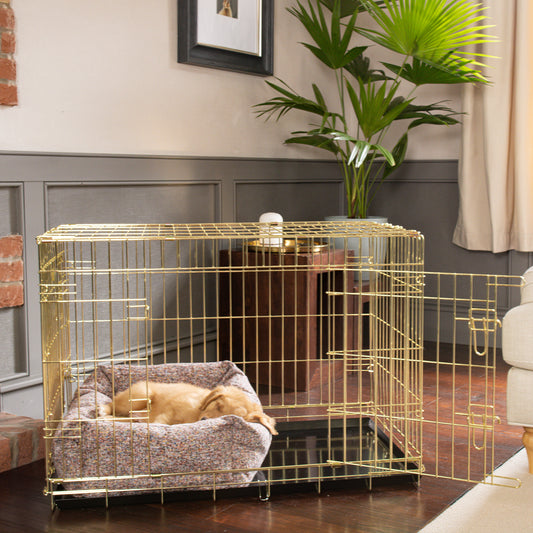
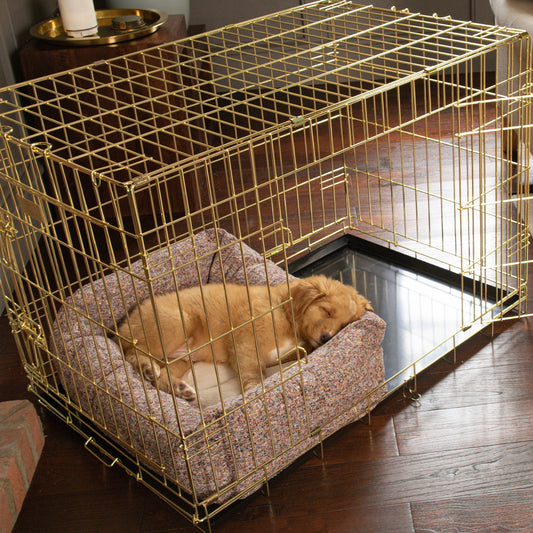
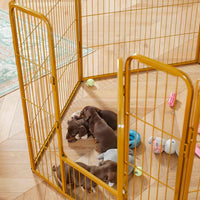
- Use a playpen or furniture as a soft barrier. A pet playpen arranged around the base keeps curious paws at a distance without looking out of place in a festive room.
- Anchor the tree securely. A simple hook and some clear fishing line through the upper branches can stop the whole thing toppling if your cat does make it up there. It takes five minutes and saves a lot of chaos.
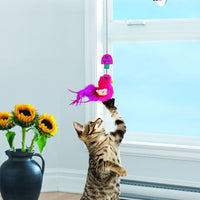
- Tire them out before the evening settles. A proper play session with a wand toy or feather teaser before you sit down for the night means your cat is far less likely to go looking for entertainment in the tree.
- Try citrus or pine cones at the base. Most cats dislike the smell of citrus. A few strips of orange peel or some pine cones scattered around the lower branches work surprisingly well as a low-effort deterrent.
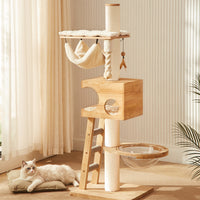
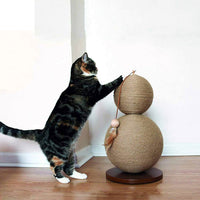
- Give them something better to climb. A tall cat tree or scratching post placed nearby gives your cat a sanctioned outlet — and pairing it with some guidance on redirecting scratching to the right places makes the habit stick faster.
None of these tactics are foolproof on their own, so combining two or three will give you the best chance of success. Consistency matters just as much as the method — the more reliably the cat Christmas tree feels boring and off-limits, the sooner your cat stops testing it.
Choosing decorations that work for cats and Christmas trees
How you decorate makes a real difference when you share your home with a cat. The good news is that a few smart swaps can keep your tree looking beautiful without every evening turning into a rescue mission.
- Switch to shatterproof baubles. Plastic or fabric baubles won't shatter when batted off a branch — and if you've ever swept up broken glass at midnight, you'll know how much that matters. Matte finishes are worth seeking out too, since they catch a cat's eye far less than shiny, reflective ones.
- Ditch the tinsel and rethink ribbon. Both are genuinely risky if chewed or swallowed. Knitted or paper garlands make a lovely alternative and still give you that layered, cosy look without the hazard.
- Choose LED lights with tidy cords. LEDs run cooler than traditional bulbs, which makes them safer around curious paws. Tuck cords away carefully and use a cord cover where they trail along skirting boards.
- Keep the lower third simple. This is the zone your cat can actually reach, so stick to lightweight fabric or wooden ornaments rather than anything glass, foil, or dangling. Fewer decorations down low means less temptation to investigate.
A note on Christmas tree cat safety: Tinsel and ribbon can cause serious intestinal blockages if swallowed. Skip them entirely or swap in pet-safe alternatives. It's one of the easiest changes you can make, and it genuinely reduces risk without sacrificing the festive feel.
Decorating with cats in mind really does come down to thinking one step ahead. For a broader look at keeping pets safe throughout the season, our guide to Christmas with pets covers everything worth knowing beyond the tree itself.
What to do if your cat still gets into the tree
Even with the best prep in place, some cats will still find a way in — and honestly, that's okay. If you catch yours mid-climb or batting a bauble across the room, take a breath. It's useful information, not a failure.
When you find your cat in or around the tree, work through these steps:
- Calmly remove your cat without making a fuss. Loud reactions tend to make the tree feel more exciting next time, not less.
- Check the floor straight away for fallen needles, broken glass, or spilled water from the tree stand. Clear these up before your cat comes back to investigate.
- Look the tree over for anything that shifted — loose baubles, low-hanging decorations, or exposed wires that need tucking away.
- If anything broke, bin it securely with a lid so your cat can't get to the fragments later.
Once you've tidied up, use what happened to reset the space. Think about what drew your cat in. Was it a dangly decoration hanging at just the right height? A suspiciously climbable lower branch? Move the temptation, re-secure any ornaments that shifted, and check your deterrents are still in place. Keeping the cat and Christmas tree situation running smoothly is usually about small, ongoing tweaks rather than one big fix.
If your cat is getting in repeatedly, it's often a sign they need more stimulation elsewhere. A bored cat is a creative cat — and your tree is an irresistible playground. Channelling that energy into proper play makes a real difference. Our guide on how to entertain your indoor cat is a great place to start.
A calmer festive setup for you and your cat
Getting to Christmas Day with your tree still standing is a genuine achievement when you live with a cat — and absolutely worth celebrating.
The good news is that you don't need a flawless setup from day one. Most cat parents find that a handful of small, thoughtful changes make all the difference. Check that your tree is properly secured, swap out any fragile or risky decorations for safer alternatives, and think about what your cat actually needs during a season that can feel busier and more unsettling than usual. A bored or under-stimulated cat will almost always find their own entertainment, and your Christmas tree is an obvious candidate. Keeping them occupied with toys, scratching posts, and cosy places to curl up genuinely helps — more than you might expect.
It's also worth cutting yourself some slack if things don't go perfectly. Cats are curious, playful, and wonderfully stubborn. The odd ornament on the floor is just part of life with one, and it doesn't mean your cat-proof Christmas tree strategy has failed. The goal is a setup that feels manageable and festive for everyone — not one that leaves you on edge every time your cat walks into the room.
If you want to give your cat something more tempting than tinsel to focus on, our festive feline collection is full of seasonal toys, treats, and accessories designed with cats in mind. A little well-placed redirection really can save a bauble or two.
Wishing you and your cat a calm, cosy, and tree-intact Christmas.