




























































Getting the right fit for your dog’s crate makes a bigger difference than most people realise, and knowing how to choose the right size dog crate is simpler than it looks once you have a few key numbers to hand. This guide walks you through measuring your dog properly, planning ahead for a growing puppy, and thinking about how the crate will fit into your everyday life. You’ll also find advice on the extras that help a crate feel like a proper den rather than just a box your dog happens to sleep in.
How to choose the right size dog crate without second-guessing yourself
Choosing the right crate size comes down to one simple idea: your dog needs enough room to stand up, turn around, and stretch out comfortably — but not so much space that it stops feeling like a cosy den and starts feeling like a draughty hallway.
That balance matters more than most people expect. A crate that’s too large can leave a dog feeling unsettled, particularly during those early weeks of getting used to it. Dogs are naturally drawn to snug, enclosed spaces, and a well-fitted crate tends to feel far more reassuring than one with room to spare.
The most common mistake? Sizing by breed name alone. A “Labrador-sized” crate sounds like it should cover it, but two Labs can look completely different in build. A lean working type and a stockier show dog might need very different dimensions. So before you start comparing products, get your dog’s actual measurements: length from nose to tail, and height from the floor to the top of their head when standing. Those two numbers will do most of the work for you.
The other key decision is whether you’re buying for a puppy or a fully grown dog. Puppies grow quickly — sometimes faster than you’d think — so crate sizing for a puppy involves a little more forward planning than sizing for an adult.
Get clear on those two things first: your dog’s measurements and their life stage. Once you have both, the rest of the decision becomes much more straightforward. Our dog crate sets are a great place to start browsing once you’ve got your numbers to hand.
Start with your dog’s measurements, not the breed label
Breed labels are a helpful starting point, but they’re not reliable enough to base a purchase on. A Cocker Spaniel can come in wildly different shapes and sizes depending on their lineage and build, and the same goes for almost every breed. Getting your dog’s actual measurements is the only way to feel genuinely confident about how to choose the right size dog crate.
Here’s how to do it properly:
- Body length: Measure from the tip of the nose to the base of the tail (not the tip). This gives you the minimum internal length the crate needs to be.
- Standing height: Measure from the floor to the top of the head or ears while your dog stands naturally. This tells you how tall the crate needs to be.
- Natural posture: Notice whether your dog stands tall and upright or carries themselves low and compact. Two dogs with identical measurements can still need slightly different headroom depending on how they naturally hold themselves.
A note on weight: Useful as a rough guide, but never the whole story. Two 30kg Labradors can easily need different crate sizes based on build and bone structure alone.
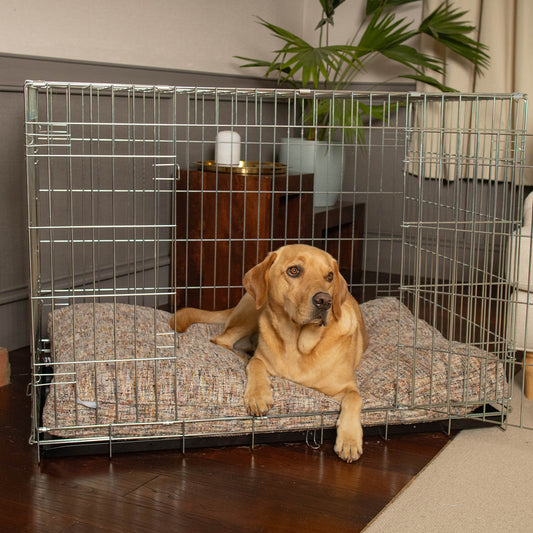
Once you have your dog’s measurements, add around 10cm to both figures. Your dog should be able to stand up, turn around, and stretch out comfortably without brushing the sides. That’s the sweet spot. If you’re still finding your feet with crates generally, our introduction to dog crates is a great place to start before you buy.
Getting the fit right for a puppy who’s still growing
Figuring out what size crate to buy for a puppy is one of the trickier parts of those early weeks. You want something that fits them now without being so roomy it sets back toilet training, but you also don’t want to find yourself buying a second crate six months down the line. The good news is you don’t have to.
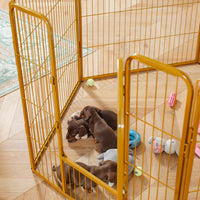
A crate with a divider panel is the most practical solution for a growing pup. Start with the panel positioned to give your puppy just enough room to stand, turn around, and lie down comfortably, then gradually move it back as they grow. The space stays snug and den-like throughout, without you having to start from scratch.
A few things worth keeping in mind as you work out the right crate sizing for your dog:
- Base your crate choice on your breed’s expected adult measurements, then work backwards
- Measure your puppy every two to three weeks, particularly during fast growth phases
- Adjust the divider when they start looking cramped or can no longer stretch out fully
- Resist jumping up a size too soon — a crate that feels vast rarely feels safe to a young dog
- If your pup is a mix, ask your vet for a realistic adult size estimate rather than guessing
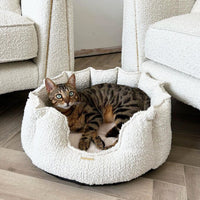
Those in-between months go quickly, and a bit of forward planning makes the whole thing far less stressful. Pairing a well-sized crate with a grow-with-me puppy bed means the sleeping space keeps pace with your pup too, so nothing ever feels too big or too sparse along the way.
Choose the crate size for how you’ll actually use it day to day
Knowing how to choose the right size dog crate isn’t just about measuring your dog from nose to tail. Where the crate will live and what you’ll actually use it for each day shapes the decision just as much as the numbers do.
- Overnight sleeping. For nighttime use, a snug, den-like fit works best. A crate that’s too roomy can feel unsettling rather than secure, especially for dogs who take a while to wind down.
- Toilet training a puppy. Keep it cosy. Too much space and a puppy may decide one end is the bathroom. Crate sizing for dogs in training works best when there’s just enough room to stand, turn, and lie down comfortably.
- Quiet time or a safe retreat. If the crate doubles as your dog’s go-to calm spot throughout the day, a little extra room to stretch out is a genuinely kind choice.
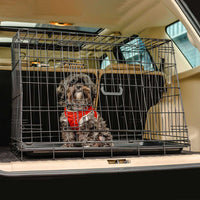
- Car travel. Consider boot space and how often the crate needs moving. A lightweight, collapsible option will usually serve you better than a heavier everyday crate.
- A permanent spot in a shared living space. Here, aesthetics matter alongside fit. You want something that looks as good in your home as it feels for your dog.
Think through your typical week before you decide. Browse the Lords & Labradors crate collection to find options designed around how real dogs and families actually live.
Don’t forget the extras that make the crate feel right
Once you’ve settled on the right crate size, what you put inside it matters just as much as the dimensions themselves. The right extras can turn a plain wire box into somewhere your dog genuinely wants to spend time — but bulky or mismatched accessories can eat into the floor space you carefully measured. It’s worth thinking about each one before you buy.
Here’s what to keep in mind:
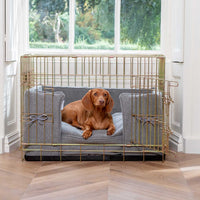
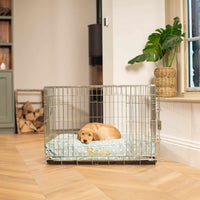
- A well-fitted bed or mattress gives your dog a comfortable surface without bunching up against the sides. Flat, supportive options tend to work better than thick, oversized cushions that reduce usable space.
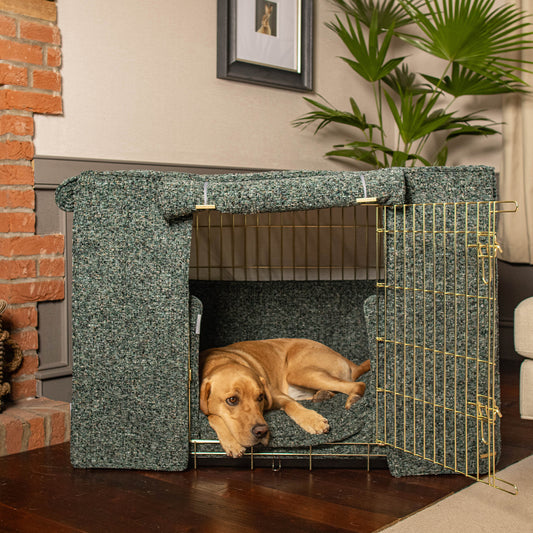
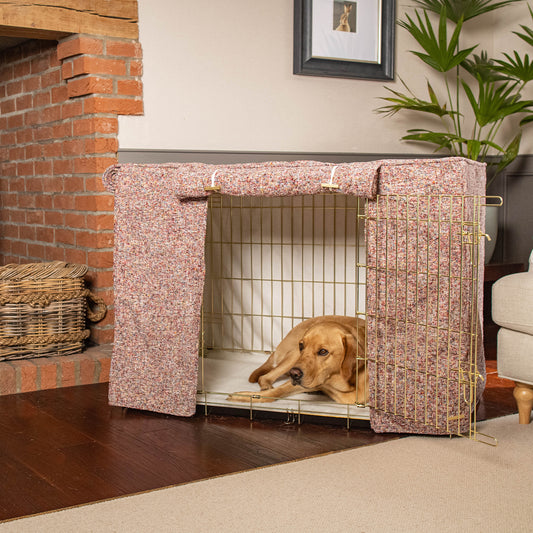
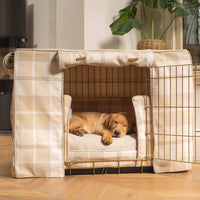
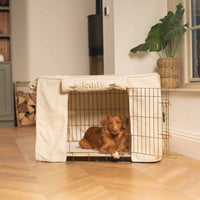
- A crate cover cuts out visual stimulation and creates a darker, den-like feel that helps many dogs settle more quickly — especially useful in busier households where there’s always something going on.
- A bumper set lines the inner walls with soft padding, which is particularly helpful for puppies who tend to press or lean against the sides. It adds warmth and cosiness without dramatically reducing floor space.
Our cosy crate bed set brings all of these elements together in one thoughtfully designed package, so everything fits and works as it should from day one.
The goal is a snug interior that feels calm and safe — not a cramped one. Get both the crate size and the setup right, and your dog has the best possible foundation for settling in happily.
How to make the final choice with confidence
When you’ve done the measuring, thought about your dog’s daily routine, and browsed your options, the final choice usually comes down to a handful of simple things. Run through this quick checklist before you commit.
Start with your dog’s measurements. Nose to tail and floor to the top of the ears are your two non-negotiables. Add around 10cm to each, and you’ve got the internal crate dimensions you’re actually shopping for.
Check the fit feels cosy, not cavernous. Dogs who love to curl up in a corner often feel more settled in a snugger space. If you’re buying ahead for a growing puppy, use a divider to keep things proportional now and simply move it back as they fill out.
Think about where the crate will live. A crate destined for the car boot has different needs to one tucked into a bedroom corner. Measure doorways, check your boot space, and picture where this crate will actually spend its time.
Don’t overlook the finishing touches. A well-chosen crate cover can turn even a slightly generous-sized crate into a proper den. Take a look at the Lords and Labradors crate cover collection to find something that suits both your crate and your home.
Choosing the right size dog crate really does come down to measuring carefully, thinking practically, and trusting what you already know about your dog. You know them best.