







































































There is something genuinely lovely about watching a dog move freely, nose down, tail up, doing exactly what they were built to do. Learning how to walk your dog without a leash takes more than just unclipping the lead, though, and this guide covers everything from checking local rules and assessing your dog’s recall to choosing the right places and building confidence one step at a time. Whether you are just starting out or looking to make off-leash walks feel easier and more reliable, there is plenty here to help you get it right.
Can you walk your dog without a leash? Start with the rules and the real-world check
The idea of walking your dog without a leash sounds wonderfully freeing — and for the right dog in the right place, it genuinely is. But before you unclip that lead, two things are worth sorting out: what the rules say, and whether your dog is actually ready for that freedom.
Start with your local leash laws, because they vary more than most people expect. Some parks allow leash-free dog walking in designated zones only, others require dogs to be on a lead at all times, and some areas have seasonal restrictions in place to protect wildlife. A quick search for your local council or park authority guidelines takes five minutes and could save you a fine or a very awkward conversation with a park warden.
Once you know what’s legally allowed, shift your focus to the practical reality. Even in a fully off-leash area, not every dog is ready for that kind of walk. A dog who reliably comes back when called in a quiet garden might completely lose the plot the moment a squirrel, a cyclist, or another dog enters the picture. That is not a failure — it is just where they are in their training right now.
A useful gut-check: if your dog spotted something exciting across a field and bolted toward it, would they come back when you called? If the answer is anything other than a confident yes, open-space off-leash walking is probably a step too soon.
It also helps to tune into how your dog is feeling before the walk even starts. A dog who is already overstimulated or on edge needs more structure, not less. Getting good at reading those early signals makes a real difference, and our dog body language guide is a great place to start.
Is your dog actually ready? The recall basics that matter most
Before you even think about how to walk your dog without a leash, it’s worth asking a more honest question: has your dog actually earned that freedom? Most dogs are ready later than their owners assume, and the gap between “mostly listens” and “genuinely reliable off lead” is bigger than it looks on a quiet Sunday morning stroll.
A solid recall means your dog comes back every single time — not just in the garden when nothing interesting is happening. It means they respond in an unfamiliar park, near other dogs, when a squirrel bolts across the path, and when a child drops a sandwich three metres away. In recall training for dogs, this is called “proofing”: practising the same cue across different places, distractions, and energy levels until the response becomes instinct rather than coincidence.
Here’s how to tell whether your dog is genuinely there yet:
- Recalls reliably in at least three different outdoor environments, not just your usual route
- Returns to you even when distracted by other dogs, wildlife, or an irresistible smell
- Checks back in with you naturally during walks, without being prompted
- Disengages from other dogs or fast-moving distractions on a single calm cue
- Holds a sit or a wait briefly, even when the world around them is interesting
- Responds to cues outdoors at the same level they would indoors
A clear word of caution: If your dog is reactive to other dogs, people, or traffic, has a prey drive that shuts out everything else once you’re outside, or regularly ignores cues the moment the lead comes off, they are not ready for leash-free walking yet. That is not a failure on anyone’s part. It simply means there’s more groundwork to do first, and doing it properly will make all the difference.
Once your dog clears those checkpoints, the next step is finding the right environment to start practising. And if your dog tends to bark or react on walks, it’s worth reading why dogs bark when out walking before going any further — reactivity is one of the clearest signs that a dog needs more time on the lead before earning that extra freedom.
Where off-leash walking makes sense — and where it doesn’t
Knowing how to walk your dog without a leash is only half the picture. The environment you choose matters just as much as the training itself. Even a dog with a rock-solid recall can be caught off guard by an unexpected noise, an unfamiliar dog bounding over, or a squirrel appearing from nowhere. Getting the location right gives you both the best possible chance of a good experience.
Good locations for off-leash walking
- Securely fenced fields hired specifically for dog exercise
- Quiet rural footpaths and bridleways where off-leash access is permitted
- Designated dog exercise areas within parks
- Large open spaces with good sightlines and low foot traffic
- Private land where you have the owner’s permission
Places to avoid
- Busy pavements, roads, or anywhere near fast-moving traffic
- Crowded parks where your dog might bolt or become reactive
- Wildlife-heavy areas, especially during nesting or lambing season
- Beaches or open countryside with no natural boundaries
- Any space where signage requires dogs to be kept on a lead
Always check local bylaws and any posted signs before letting your dog off the lead somewhere new. Rules vary a lot between locations, and what’s fine in one park may not be in the next.
Starting in quiet, low-distraction spaces gives your dog room to make good choices and helps you build confidence as a handler too. Once those early sessions feel easy, you can begin introducing slightly busier environments. Choosing the right spaces also ties into your dog’s broader health and happiness — our guide on keeping your dog physically and mentally stimulated is a great place to explore that further.
How to build confidence with gradual off-leash practice
Building off-leash confidence is a gradual process, and rushing it is the most common mistake dog owners make. If you want to learn how to walk your dog without a leash in a way that genuinely sticks, the key is earning that freedom in small, deliberate steps rather than crossing your fingers in a wide-open field.
- Start with a long line. Attach a 20 to 50-foot long line and let your dog explore with real freedom while you keep a safety net in place. Government guidance on recall training recommends using a 20–50-foot long line, not a retractable leash, to work on prompt recall — and it genuinely makes a difference. Retractable leads create constant tension; long lines teach your dog to move freely and still tune in to you.
- Reward spontaneous check-ins. Every time your dog glances back at you or trots over without being called, mark it with a cheerful “yes” and a treat. You’re teaching them that keeping an eye on you is always worth their while — and that lesson carries a long way.
- Practise recall in low-distraction environments. An empty car park, a quiet garden, or a familiar field all work well. Keep sessions short, and always make coming back feel like the best decision your dog has made all day.
- Introduce distractions gradually. Once recall feels solid in calm spaces, add one layer of difficulty at a time — another dog in the distance, a jogger passing by, an interesting smell along the hedgerow. Off-leash dog training at this stage is about building reliability, not testing limits.
- Try short off-leash moments in safe, enclosed spaces. Drop the long line and give your dog a few minutes of genuine freedom. Watch their body language, and notice how quickly they respond when you call.
- Extend freedom only when responsiveness stays consistent. Teaching a dog to walk without a leash takes real patience. If focus starts to slip, step back without frustration — it’s not a setback, it’s just part of the process.
Practical tip: Only move to the next stage when your dog is succeeding around 8 out of 10 times at the current one. That ratio is your green light, not the calendar.
The progression mindset is everything here. A quality training lead is your best companion in those early stages, giving your dog room to roam while keeping you connected — and the patience you put in now is exactly what makes leash-free walking genuinely enjoyable for both of you later.
What to bring for safer, happier leash-free walks
Being prepared makes a real difference when you’re figuring out how to walk your dog without a leash. A little forward planning means fewer stressful moments and more time actually enjoying the freedom together — and honestly, it just becomes second nature once you’re in the habit.
Here’s what’s worth bringing on every leash-free outing:
- An ID tag with current contact details — even the most reliable dog can have an off day, so make sure the tag is readable and your number is still correct
- A well-fitted collar or harness — something secure that won’t slip, even if your dog decides to roll in something deeply unpleasant
- High-value training treats — the good stuff, like small pieces of chicken or cheese, that your dog will actually work for
- A portable water bottle and travel bowl — longer, more relaxed walks mean your dog needs to stay hydrated, especially when the weather warms up
- A whistle — useful for recall training because the sound carries further than your voice and stays consistent whatever mood you’re in
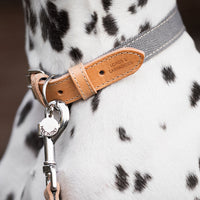
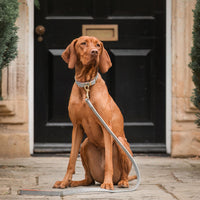
- A long line as a safety backup — for dogs still building reliability, a longer lead lets them roam while keeping you connected. The Lords & Labradors Essentials Twill Dog Lead works well here, doubling up as a training lead for practising recall before you make the leap to fully off-leash
Having the right kit genuinely helps you feel more confident out there, and dogs pick up on that energy. Even experienced off-leash walkers keep a lead tucked away. That’s not being overcautious — that’s just knowing your dog.
Knowing when to keep the lead on
Even the most committed off-leash walkers have days where the lead just stays on. And honestly? That is completely fine.
Learning how to walk your dog without a leash is not about achieving some permanent state of freedom. It is about reading your dog honestly and making good calls in the moment. If they had a restless night, spent the morning losing their mind at squirrels through the window, or just are not tuning in to you today, that is useful information. The recall that holds beautifully on a quiet Tuesday morning may not be there on a busy Saturday afternoon near a packed farmers market, and that is worth knowing before you unclip.
Watch for the signs. A dog drifting further than usual, ignoring their name, or locking onto something in the distance is communicating clearly. They need more support right now. That is not failure. It is just an honest moment in the process, and noticing it is part of good recall training for dogs.
The same thinking applies when your environment shifts unexpectedly. A new location, a sudden crowd, or an unfamiliar dog appearing out of nowhere can change everything in seconds. Clipping the lead back on is not a step backwards. It is exactly what responsible leash-free dog walking looks like in practice.
It is always worth keeping a reliable lead on you, even on your most confident off-leash days. Our Essentials Twill Dog Lead is a solid everyday choice — sturdy when you need it, comfortable enough to forget it is in your hand.
The more honest your judgment calls, the more freedom your dog earns over time.
Frequently Asked Questions
How do I get my dog to walk without a leash?
You build up to it gradually, starting with a long line rather than unclipping straight away. Practise recall in quiet places, reward check-ins, add distractions slowly, and only give more freedom when your dog responds reliably in different environments and around real-world temptations.
Is it okay to walk your dog without a leash?
Yes, if it’s legal where you are and your dog is genuinely ready for it. Check local leash rules first, then be honest about recall, reactivity, and the environment. If your dog won’t reliably come back or the setting feels unsafe, keep the lead on.