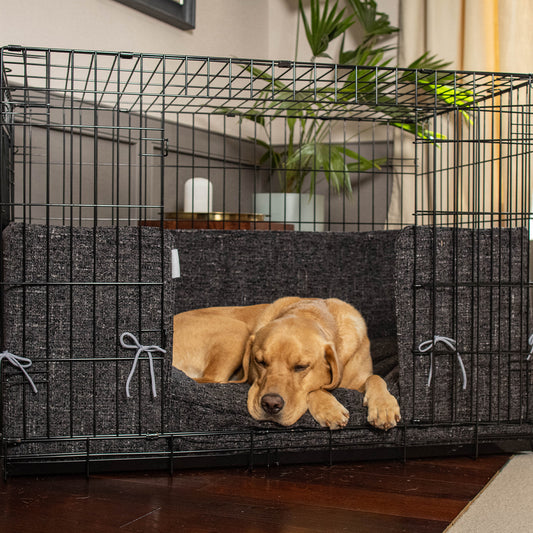





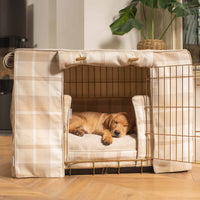



































































If your dog has started sleeping on the cold kitchen floor instead of their bed, or takes a little too long to get up after a rest, it might be time to look more closely at what they're actually sleeping on. This guide covers everything you need to decide whether an orthopedic dog bed is the right move for your dog, from understanding which dogs benefit most to knowing what actually makes a bed supportive rather than just soft. By the end, you'll have a clear sense of what to look for, how to get the size right, and how to find something built to last.
Are orthopaedic dog beds worth it? A quick answer before you buy
For most dogs with joint pain, stiffness, or mobility issues, an orthopaedic dog bed is absolutely worth it. If your dog is older, recovering from surgery, or just seems uncomfortable after a long rest, a properly supportive bed can make a real difference to how they feel from one day to the next. Dogs with arthritis in particular often move more freely and settle more easily once they have something that actually holds them, rather than slowly giving way beneath them.
That comes down to what's inside. A quality memory foam dog bed keeps its shape over time and spreads your dog's weight evenly across the surface. Standard cushion beds tend to flatten and hollow with use, which means less support exactly where your dog needs it most: hips, elbows, and shoulders.
That said, not every dog needs one right now. A young, healthy dog with no joint issues will likely sleep perfectly well on a well-made standard bed. An orthopaedic bed for a bouncy two-year-old Labrador is never a bad call, but it's not urgent.
The clearest sign it's time to upgrade is a change in behaviour. Struggling to settle, being slow to rise in the mornings, or choosing cold hard floors over their usual bed are all worth noticing.
Which dogs benefit most from extra support?
While any dog deserves a comfortable place to rest, some genuinely need more than a standard bed can offer. If you recognise your dog in any of the profiles below, an orthopedic dog bed is likely to make a real, noticeable difference to how they feel day to day.
Dogs most likely to benefit:
- Senior dogs — older joints tire more easily, and a supportive surface helps them rest and recover properly
- Large and giant breeds — more body weight means more pressure on joints, even in younger, otherwise healthy dogs
- Dogs with arthritis or joint stiffness — a memory foam dog bed reduces the hard contact points that make resting uncomfortable
- Overweight dogs — extra weight puts strain on hips, elbows, and shoulders, so a firmer base makes a real difference
- Dogs recovering from surgery or high-impact activity — proper cushioning supports healing and takes the edge off post-exercise soreness
You know your dog better than anyone. Some signs are easy to brush off at first, but once you know what to look for, they often point clearly toward a need for better support.
Signs your dog may need more support:
- Slow or stiff when getting up after a rest
- Avoiding their bed in favour of cool, hard floors
- Circling repeatedly before they can settle
- Fidgeting or shifting position during rest
- Stiffness that gradually eases once they start moving around
If a few of those feel familiar, it is worth taking seriously. And if your dog is already managing joint issues, our guide to the best orthopaedic dog beds for arthritis is a good place to go deeper.
What to look for in a good memory foam dog bed
Not every orthopedic dog bed offers the same level of support, and that is where it helps to look past the label. Some beds feel lovely and plush at first touch, but if the foam underneath is too soft or too thin, your dog may end up sinking straight through it after a few naps.
Here is what is worth checking before you choose:
- Foam density: A good memory foam dog bed should keep its shape and support your dog’s weight properly over time. If the foam is low density, it can flatten quite quickly, especially if you have a bigger breed or a dog who uses their bed for most of the day.
- Layered support: The best orthopedic bed for dogs often combines a firmer base layer with memory foam on top. That firmer base helps hold the body evenly, while the top layer cushions pressure points like hips, elbows, and shoulders.
- Pressure relief: This is especially important if you are choosing a dog bed for arthritis or an older dog who feels stiff after resting. Good memory foam gently moulds around the body rather than creating pressure on the joints.
- Washable covers: Real life matters here. Muddy paws, dribbles, shedding, and the odd post-walk flop all happen, so a removable, machine-washable cover makes day-to-day life much easier.
- Bolsters or raised sides: Some dogs love having somewhere to rest their chin, and others like to curl up against a side for a bit of security. For many older dogs, that extra head and neck support can make a bed feel even more comfortable.
- Size and weight suitability: A bed needs to suit your dog’s build, not just their sleeping style. Foam that works beautifully for a Cockapoo may not give enough support to a Labrador.
If you want to compare styles, you can browse our collection of memory foam dog beds at Lords & Labradors.
In the end, the best orthopedic dog bed is the one that supports your dog properly beneath the surface, not just one that looks cosy on top.
Getting the size and shape right for your dog
Getting the right size matters just as much as getting the right support. An orthopaedic dog bed that's too small won't let the memory foam do its job — if your dog can't fully stretch out, those pressure points don't get the relief they need.
Start by measuring your dog while they're actually asleep, in whatever position they default to. Nose to tail, then add around 20–30cm so they have room to shift without falling off the edge. For dogs with arthritis, large breeds, or the ones who somehow manage to occupy an entire sofa, sizing up is always the right call. A generous fit makes a real difference to how well a senior dog bed performs night after night.
Once you have your measurements, it's worth thinking about style too:
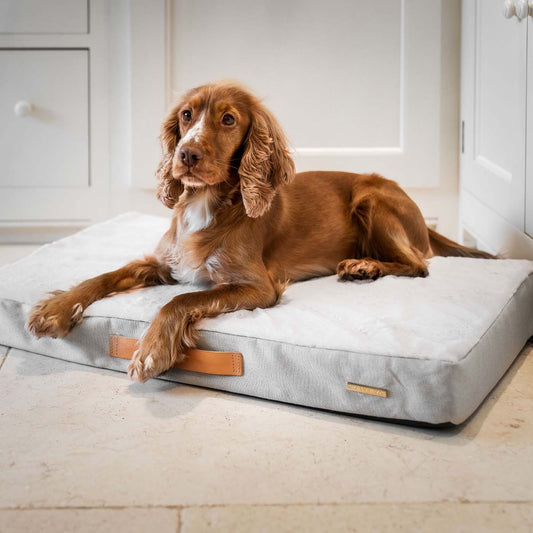
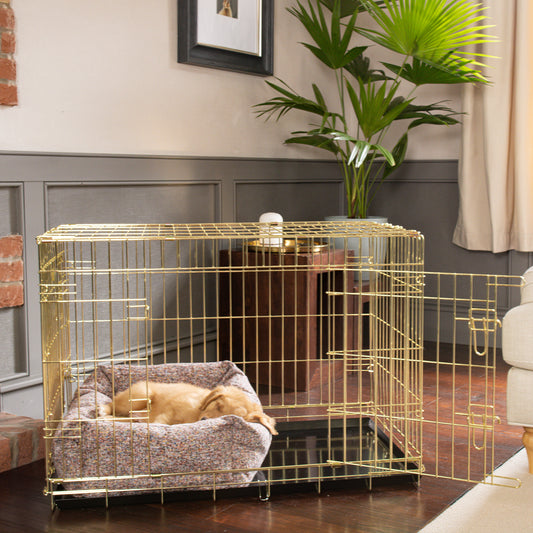
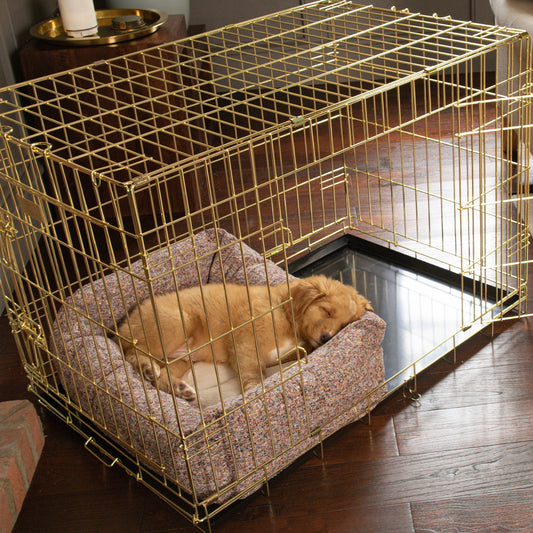
- Flat orthopaedic mattress — great for dogs who sprawl or sleep hot, and fits neatly inside a crate
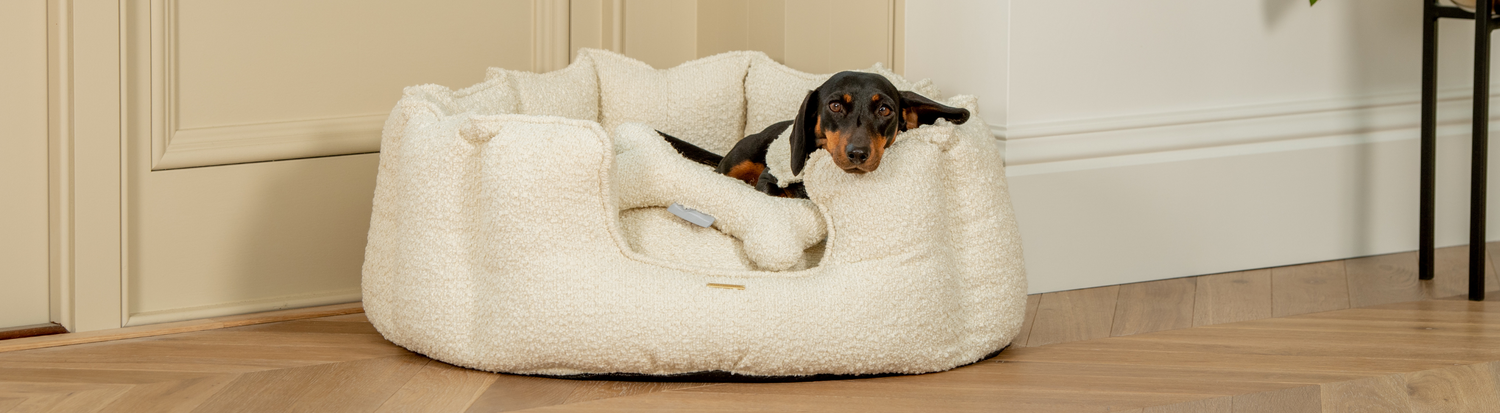
- Bolster or donut bed — suits dogs who curl up tight or like something to rest their head against for that extra sense of security
- Large luxury or sofa-style bed — ideal for multi-dog households, or dogs with limited mobility who need low, easy access
Room layout is part of the equation too. A flat memory foam dog bed slots easily into a crate or alcove, while a bolster bed tends to work better in open floor space where your dog can approach from any direction.
Before you commit, our dog bed size guide breaks everything down by breed size and weight — worth a look if you're still deciding between sizes.
Best orthopedic dog bed UK options: how to compare value, comfort and durability
Comparing orthopaedic dog beds in the UK comes down to far more than price. The right bed depends on your dog's size, age, and whether their joints need extra care — and a well-chosen orthopaedic dog bed will comfortably outlast two or three cheaper alternatives bought over the same period.
| Evaluation Criteria | Why It Matters |
|---|---|
| Foam quality and density | High-density memory foam (ideally 50kg/m³ or above) distributes weight evenly — essential for large breeds and dogs with arthritis who need consistent pressure relief night after night |
| Cover durability and washability | A removable, machine-washable cover is non-negotiable for senior dogs. Accidents happen, and a cover that deteriorates after a few washes will quickly compromise the whole bed |
| Size suitability | A bed that's too small forces your dog to curl uncomfortably, which defeats the point entirely. Large and giant breeds need enough room to fully stretch out |
| Long-term value | A bed with a durable outer and replaceable inner parts holds its value over time, especially for dogs who spend long hours resting |
A few practical things worth checking before you commit:
- Memory foam depth of at least 3 to 4 inches for meaningful joint support
- A removable waterproof liner sitting between the foam and the outer cover
- A non-slip base, especially important on hard floors
- Foam certifications like CertiPUR or OEKO-TEX for peace of mind on materials
Shopping for a bigger breed? Our guide to the best orthopaedic dog beds for large dogs covers top-rated options with honest assessments of comfort and durability. The best memory foam dog bed isn't always the most expensive one — it's simply the one built to support your dog's needs, reliably, for the long haul.
Final checks before you choose: the easiest way to pick the right bed
Before you commit, run through these quick checks. They'll make the decision a lot easier.
Start with your dog's age and health. Is your dog a senior, a large breed, or stiffening up after a nap? If any of those sound familiar, an orthopedic dog bed is almost certainly worth it. The difference in how they move through the day — getting up without that slow, reluctant stretch — tends to be noticeable pretty quickly.
Next, think about size and sleep style. Does your dog sprawl across the full width of the sofa, or curl into a tight ball in the corner? Match the bed to how they actually sleep. A generous memory foam dog bed with a low entry works well for most dogs, but if yours likes to rest their head against something solid, a bolster style is worth considering.
Then look at your home setup. Where will the bed live, and what's your dog like? A removable, washable cover is essential if muddy walks are part of your routine. If your dog chews, build quality matters more than price.
Finally, think ahead. Even young, healthy dogs benefit from a well-made orthopedic bed for dogs — it's everyday comfort that grows with them through every life stage.
For more help narrowing things down, our guide to choosing the right dog bed covers all the options in one place.
Frequently Asked Questions
How to clean an orthopedic dog bed?
The easiest option is an orthopaedic dog bed with a removable, machine-washable cover, because that handles the everyday reality of muddy paws, shedding, dribbles, and the occasional accident. A waterproof liner between the foam and outer cover also helps protect the supportive inner from wear over time.
Do dogs like oversized beds?
Yes, many dogs do well with a generously sized bed, especially if they sprawl, have arthritis, or need extra room to shift position comfortably. A larger bed lets them fully stretch out, which helps the supportive foam relieve pressure properly instead of forcing them to curl up too tightly.