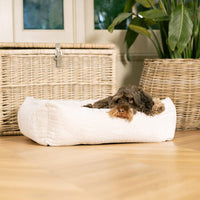
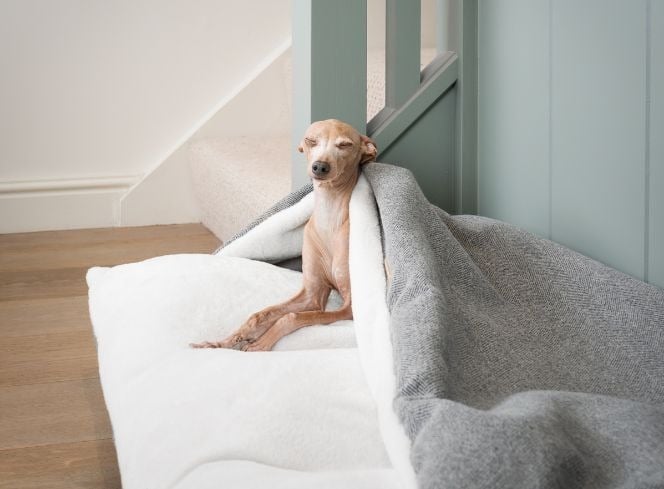
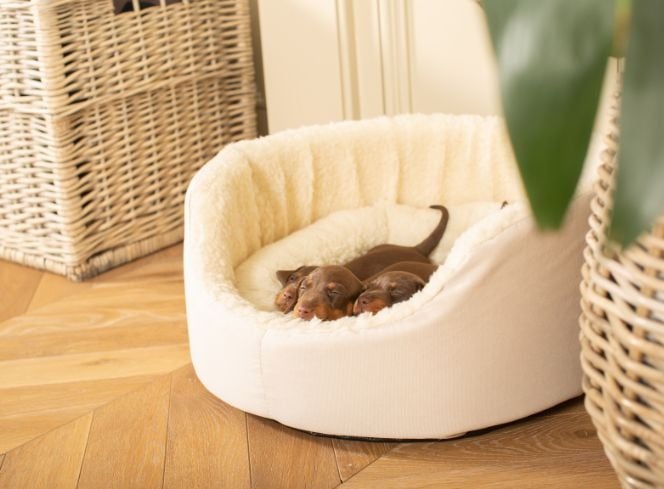
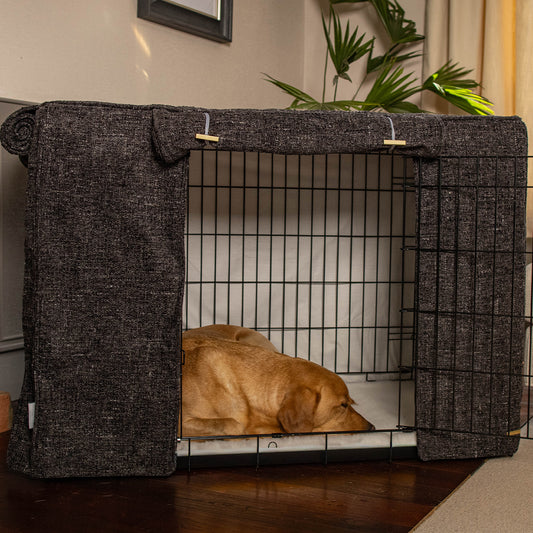
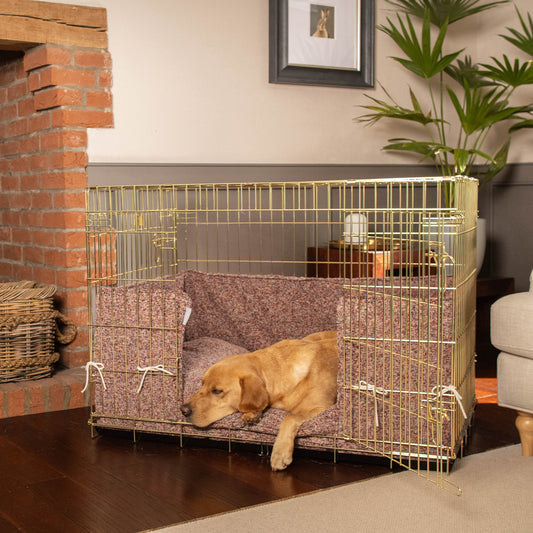
Did you know dogs spend 12 to 14 hours a day sleeping? That's a lot of time in bed so it's no surprise that their bed might be looking a little worse for wear. Dogs are creatures of comfort so making sure they have a a clean and supportive bed is essential for their overall well-being. In this guide, our Pet Experts explore the signs that indicate it's time to change your dog's bed and share expert tips on how to care for your canine's cherished sleeping spot.
How Often Should You Replace Your Dog’s Bed?
Determining how often to replace your dog's bed depends on several factors including the quality of the bed, your dog's size and activity level, and any specific health considerations. As a general guideline, it's advisable to replace your dog's bed every 1 to 3 years, or sooner if signs of wear and tear become noticeable.
Signs It's Time to Change Your Dog's Bed:
Visible Wear and Tear: Over time, your dog's bed may start showing signs of wear and tear, such as flattened cushions, lumps, or torn fabric. If you notice any significant damage, it's a clear indication that it's time to consider a replacement.
Lingering Odours: Despite regular cleaning, dog beds can accumulate odours over time, especially if your furry friend enjoys outdoor adventures or has accidents indoors. Lingering smells that persist even after washing could signal the need for a new bed.
Loss of Support: Just like humans, dogs require proper support for their joints and muscles, especially as they age or if they have existing health conditions. If your dog's bed no longer provides adequate support or has become too soft, it's time to invest in a new one to ensure their comfort and well-being. It might be worth investing in an orthopaedic dog bed if your dog’s breed is prone to joint issues.
Allergies and Skin Irritations: Dogs can develop allergies or skin irritations from prolonged exposure to dust mites, pet dander, or other allergens that accumulate in their beds over time. If you notice your dog scratching more than usual or experiencing skin issues, a new bed with hypoallergenic materials may offer relief.
Preference for Alternative Sleeping Spots: Dogs are creatures of habit, and if you notice your furry friend opting for alternative sleeping spots around the house instead of their bed, it could indicate that they're no longer comfortable or satisfied with their current sleeping arrangements. It’s worth looking at how your dog likes to sleep so you can get the best bed shape to suit their sleeping style, our Information Hub has a guide on how to choose the perfect dog bed for your dog.
Top Ways to Care for Your Dog's Bed:
Regular Washing: Establish a routine for washing your dog's bed to remove dirt, hair, and odour-causing bacteria. Most of our Lords & Labradors dog beds are machine washable, we have a handy guide on how to wash your dog’s bed here.
Use a Removable Cover: Opt for dog beds with removable, machine-washable covers for easy cleaning. Having a spare cover on hand allows you to swap them out while one is being laundered, ensuring your pup always has a fresh and clean place to sleep. We also sell bamboo bed covers which are great for popping over your dog’s bed to help keep them clean especially after a muddy dog walk, they will act as an additional layer of defence against moisture and stains, extending the life of the bed!
Vacuum and Spot Clean: In between washings, use a handheld vacuum or lint roller to remove hair and debris from the surface of the bed. Spot clean any stains or spills promptly to prevent them from setting into the fabric.
Rotate and Fluff: Just like flipping a mattress, periodically rotate your dog's bed to distribute wear evenly and prevent premature sagging. Fluffing the bed's filling helps maintain its loft and support over time.
Sun and Air Dry: On sunny days, take advantage of natural sunlight by airing out your dog's bed outdoors. Sunlight helps eliminate odours and kills bacteria, leaving the bed feeling fresh and revitalised.
Inspect Regularly: Take time to inspect your dog's bed for any signs of damage, loose seams, or worn-out stuffing. Promptly address any issues to prevent further deterioration and ensure your pup's safety and comfort.
By recognising the signs that it's time to change your dog's bed and implementing proper care and maintenance techniques, you can provide your furry friend with a clean, comfortable, and supportive sleeping environment. Remember, a happy and well-rested pup makes for a happier pet parent too!
If you’re looking to upgrade your dog’s bed why not check out our collection of luxury dog beds? Bedding is our speciality, we design and craft all of our bedding here in our Lincolnshire workshop so you can be sure your dog will be getting the best sleep possible in one of our luxury dog beds.
The Importance Of Correct Nutrition For Dogs And Cats!
Ensuring optimal nutrition for our beloved pets is paramount for their overall health and well-being. As responsible pet owners, it is crucial to understand the significance of providing nutritionally complete and balanced meals to our furry friends. In this comprehensive guide, we will delve into the world of dog and cat nutrition, exploring the importance of the right food choices, nutritionally complete homemade recipes, and the best commercial options available.
Understanding Dog and Cat Nutrition
Your pet's nutrition plays a pivotal role in their vitality and longevity. Just like humans, dogs and cats require a balanced diet that fulfils their specific dietary needs. A well-rounded diet supports their immune system, maintains a healthy weight, and promotes optimal organ function. Pet food ranges from being more processed to being raw and rich in natural ingredients, finding the right fit for your pet is important!
Dog Food Nutrition
Choosing the right dog food is a key aspect of canine care. With an abundance of options available, it's essential to prioritise nutritionally complete choices. To make an informed decision, consider using a dog food nutrition calculator and comparing different products. Look for the best nutritional dog food that meets your pet's unique requirements, taking into account factors such as breed, size, and age. Our favourite nutritionally rich dog foods are Orijen, Carnilove and Acana, they are all designed with your dogs nutrition in mind.
Dog Nutrition Facts and Guide
Understanding dog nutrition facts is imperative for providing the best care. Refer to a dog food nutrition guide to navigate through the plethora of choices available in the market. Learn about your dog's daily nutritional requirements and make informed decisions that contribute to their overall health and happiness.
Cat Food Nutrition
Cats, being obligate carnivores, have unique nutritional requirements. The best cat food for nutrition considers their need for high-quality protein and essential nutrients. Explore dry cat food nutrition labels to ensure your feline friend receives a balanced diet that supports their specific dietary needs. For a cat food which is high in protein and great for fussy felines we love Carnilove, they all have at least 80% wild origin meat content and contain No grains, potatoes, GMO, soy, sugar, preservatives or colourants.
Daily Nutritional Requirements for Cats
Cats require a carefully balanced diet to thrive. Knowing the daily nutritional requirements for cats is essential for choosing the right cat food. Consult with your vet to understand the specific needs of your cat, such as the importance of taurine and other essential nutrients crucial for their health.
In conclusion, the importance of correct nutrition for dogs and cats cannot be overstated. Whether choosing commercial options or crafting homemade recipes, prioritising nutritionally complete meals is key to ensuring your pet's health and happiness. Stay informed about dog and cat nutrition, consult with professionals, and make choices that align with your pet's unique requirements. By providing the best nutritional dog food or cat food, you contribute to a longer, healthier life for your furry companions. Here at Lords & Labradors we have a large range of both cat and dog food so you can pick the best option for you and your pet
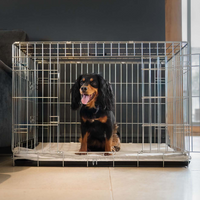
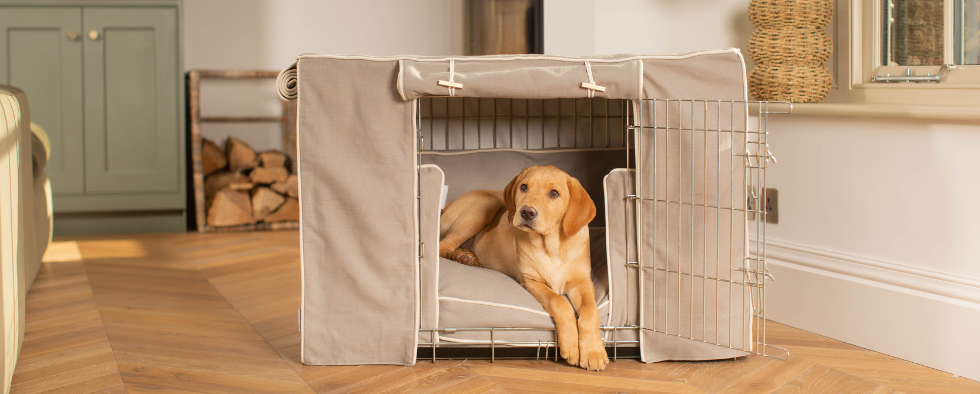
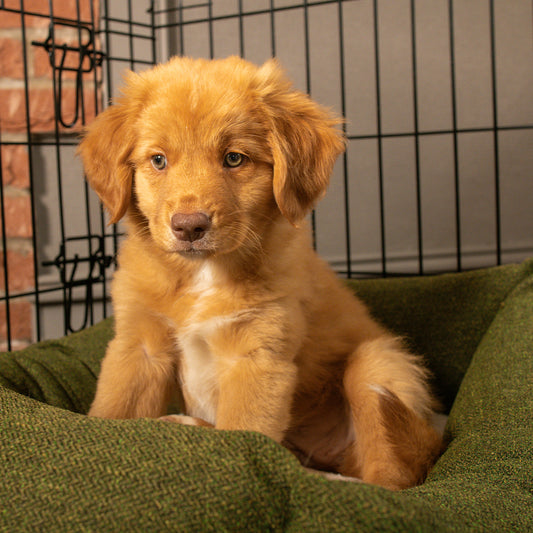
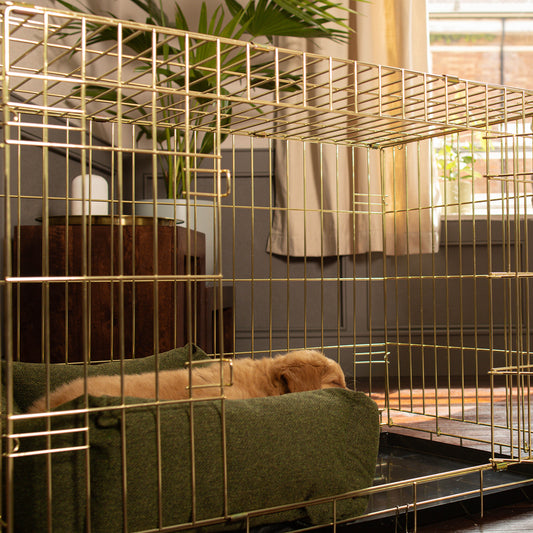
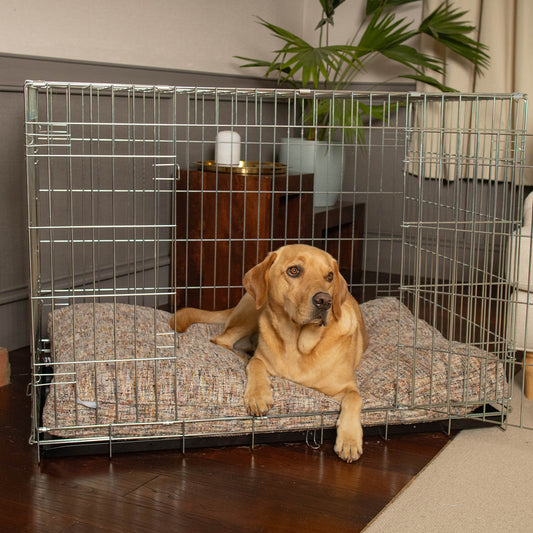
Crate training is an important part of settling in a new puppy. A crate provides a safe, quiet space for your pup and will help them to get used to their nighttime routine and with toilet training. A dog crate can be made into a cosy den that will be loved by your new four-legged friend for a lifetime. In this article we will explain the best crate set-up for puppies, how to change the set-up as they grow up and also how to look after your crate and crate bedding.
How To Make The Perfect Crate Set-Up For A Puppy
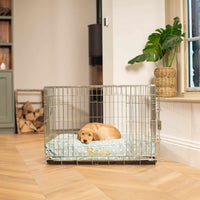
Crate training your puppy will have lots of advantages, helping them to settle and feel safe in their home as well getting them into a consistent bedtime routine. The perfect crate for a puppy will feel safe, warm and cosy. It’s important that it’s inviting so that they feel compelled to use it.
With this in mind we’d suggest the following items:
Crate Cover
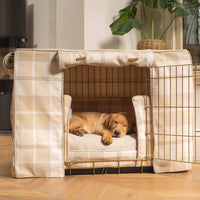
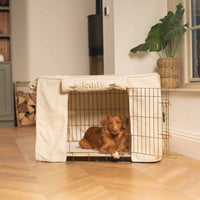
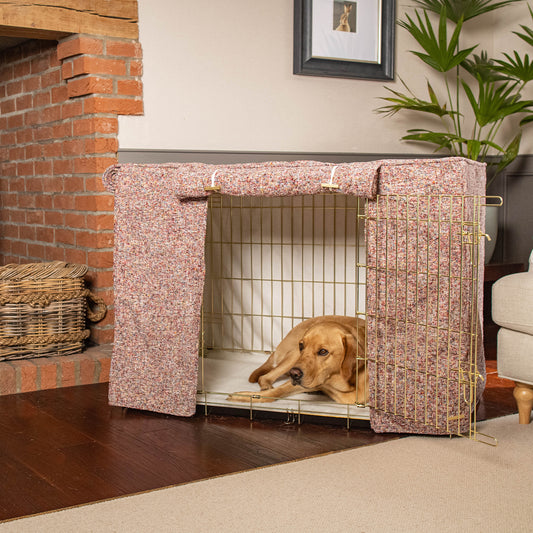
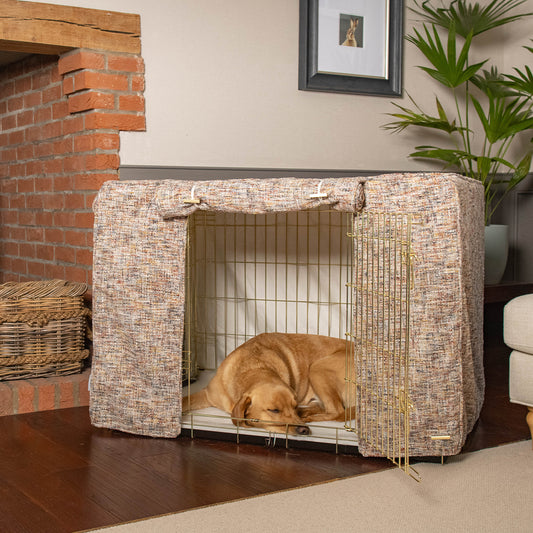
[product]Crates in their basic form can be rather draughty and a little bit unsightly! A crate cover will not only make the crate look stylish, but it will make the crate feel cosy inside. Our crate covers feature roll down doors which can be lowered when it’s time for bed. Puppy will soon learn when they should be sleeping (doors rolled down) and when it’s time to get up (doors rolled up). Our crate covers come in a range of fabrics which have been designed to match your home and they're all machine washable, making them brilliant for puppies!
Cosy & Calming Puppy Crate Bed
[product]
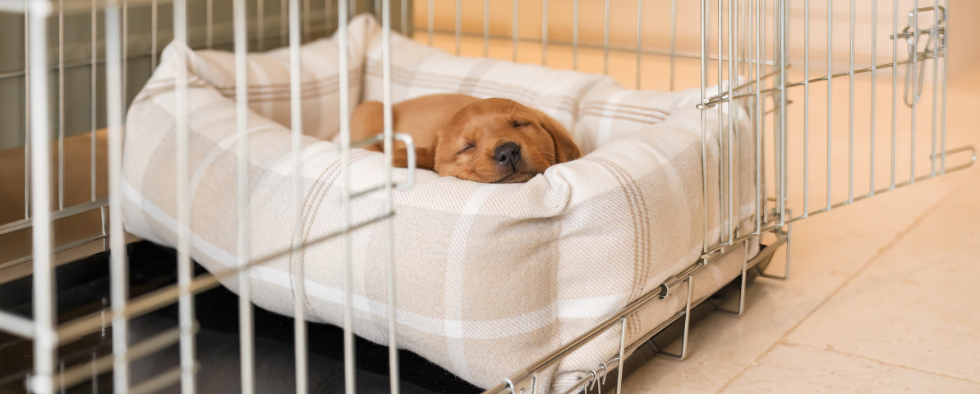
Our cosy and calming beds have been designed with crate training in mind. Each size is made to fill exactly one half of the corresponding crate size. So if you have a small crate for a Chihuahua for example, the small bed will fit in exactly one half of the crate. This then leaves room for a puppy pad in the other half along with a bowl for water. They come in a range of our printed cotton fabrics and feature a reversible cushion pad inside - one side covered in super plush sherpa!
Puppy Pads
Whilst we don’t want to encourage puppies to pee in the crate, it’s also important to note that they can’t hold themselves for very long at all. Whilst you will be able to take them outside at regular intervals during the day, this may not be the case at night. When you put them to bed, putting a puppy pad in one half of the crate will help to stop any accidents from dirtying their bed or crate tray.
Crate Bowls
Puppies will need access to water at all times and a crate bowl is a brilliant accessory as it can be fastened to the crate walls. This will ensure it doesn’t get tipped over or knocked like a standard bowl might.
The Perfect Crate Set-Up For An Adult Dog
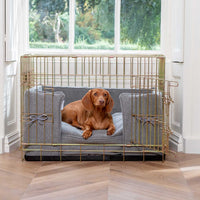
As your dog becomes toilet trained and they begin to need the full space of the crate for their bed, you will need to consider swapping out the puppy accessories for their proper adult bed. At Lords & Labradors we specialise in crate bedding that will make your dog’s den look stunning as well as super comfortable inside.
Crate Cushion
Our crate cushions are designed to fit our crates perfectly. They come in a range of fabulous fabric designs from luxurious tweeds to printed cottons. There really is something to suit every taste and home.
Crate Bumper
Crate walls aren’t the most comfortable things to snuggle up to, and if your dog likes to curl in the corner of their bed, they will need something other than metal bars! That’s where our fabulous bumpers come in. They sit around the edge of the crate cushion and create a spongey layer of warmth around the walls. Perfect for snuggling up in the corner when nap time calls!
Crate Cover
Our crate covers are perfect for setting a routine with your dog, when the doors are rolled down it will signal to them it's time to sleep. Our crate covers are fully lined to help keep light out and come in matching fabrics to our bumpers and cushions to you can be sure crate will look stylish!
Crate Set Aftercare and How To Clean A Crate
With a little love and care your crate set will last a long time. Here we detail how to look after your crate set:
The Crate - The crate is made of sturdy metal and is really easy to keep clean. Our crates are easy to wipe clean and the tray is removable so you can get into the corners properly. It’s really important to make sure the crate is completely dry before setting back up and allowing your pet back in, we recommend drying your crate to avoid any rusting.
Lords & Labradors Cushion & Bumper Covers - For our bedding from our core collection you will be able to remove the covers on the cushions and bumpers. Turn the cover inside out and machine wash on a 20 degree gentle cycle. Allow the covers to air dry (do not tumble dry). Once dry return the inner cushion to the cover.
Essentials Plush Collection Bumpers & Cushions - Our bumpers and cushions from the Essentials Plush Collection don't have removable covers, we recommend spot washing your essentials plush bumpers and cushions.
Lords & Labradors Crate Covers - Our crate covers are all machine washable on a 20 degree gentle cycle, apart from our oil cloth crate covers. After washing, we recommend air drying your crate cover over your crate to help keep it in shape and to make sure it doesn't shrink. A cool iron on the reverse of the cotton fabrics is fine if necessary, but often they won’t even need that. Our tweeds and Savanna fabrics are super fast drying and they will come out of the spin almost dry. Just give them an air and they’ll be ready to use again in no time at all!
Cushion and bumper inners - The cushion and bumper inners are protected by waterproof interlinings, so won’t need washing. This will preserve the inner fillings. The waterproof liners are wipe clean. If they become soiled, simply wipe down with a mild pet-safe detergent and they’ll be as good as new again.
Cosy and Calm Puppy Bed - Our puppy beds are fully machine washable. You can put the whole bed in the machine and wash on a 20° cycle. When removed, simply shake and plump the cushion back into shape and leave to air dry.
Follow these simple steps and your crate sets will last and look stunning for years to come!
We’re getting to that time of year again where we’re travelling more with our pets to the beach, staycations and even trips to a different location for a long walk. No matter how long the journey - even if it’s a trip to the local vets - you should ensure your dog is properly restrained and safe to travel. Here in the UK it’s the law when travelling by car your dog needs to be restrained. In this blog, we breakdown how to travel safely with your pet.
What Is The Law With Dogs In Cars?
The Highway Code states in their Rules about Animals, when in a vehicle, dogs are to be suitably restrained so they cannot distract you while you’re driving or injure you, or themselves, if you should need to stop quickly. If you were in an accident caused by your dog distracting you whilst you were driving, this could be considered as ‘dangerous driving’. It’s also good to check your insurance policy, as car insurance providers may require you to restrain your pet.
Is It The Law To Restrain A Dog In A Car?
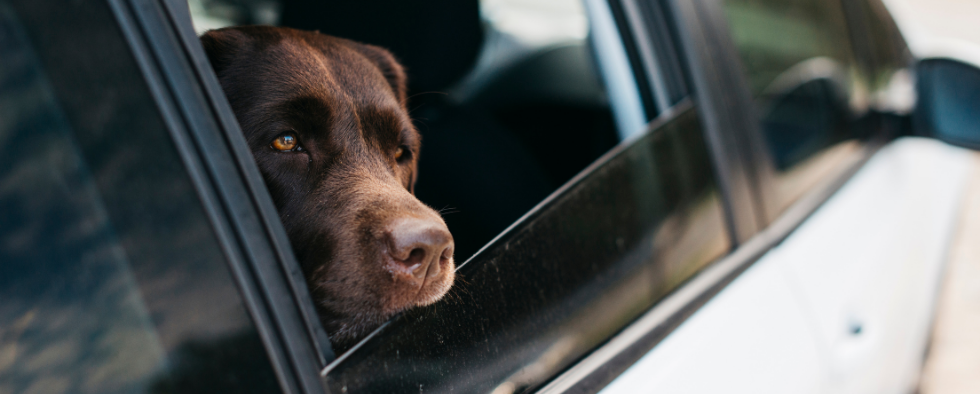
It is the law to restrain your dog when travelling in your car. So as fun as it is for your pooch to sit with their head out of the window, they must be suitably restrained so they cannot distract you and potentially hurt either you or themselves. When it comes to where your dog should be when travelling, although there are no laws against your dog travelling in the footwell of the car, unfortunately they would not be properly restrained and if you did have an accident, you may be prosecuted for ‘dangerous driving’.
When choosing where your dog should be properly restrained, no matter what method you choose, your dog should not sit in the front seat - securing them in the boot or back seat behind a front seat is considered a safer option.
How To Secure A Dog In The Car
There are many safety products you can choose from, which can help with travelling safely in the car. It’s most important you choose a solution that’s suitable and comfortable for your pooch, and it has been installed and executed correctly to ensure the safety of your pet. Here at Lords & Labradors, we’d recommend the following for safe travel.
Dog Carriers
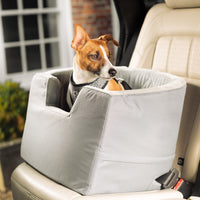
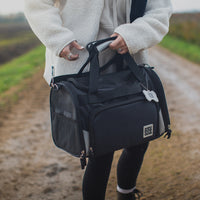
Our pet carriers come in different sizes and weights which will vary for the suitability for you and your dog. It’s a lighter option to our metal crates and are easily packed away if you’re staying away from home. Carriers are great when travelling by car and when taking your dog from the car into a safe place to let them out and stretch their legs. They keep your pooch safe and settled whilst travelling.
Travel Harnesses
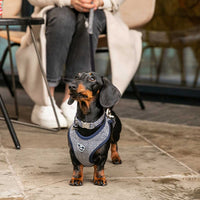
Our pet-friendly harnesses come in a variety of sizes, suitable to your dogs breed and size. Travel harnesses are easy to fit onto your dog and it’s quick to clip them into place. They’re specially designed to prevent your dog from moving around whilst in the car, all whilst keeping your pet safe and comfortably restrained.
Travel Crates
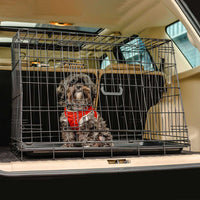
Crating your dog keeps them safe & secure - using a crate to transport your pet has the added benefit if they’re already used to being crated at home. If your dog is used to being crated, often when travelling they’ll feel safer and their surroundings will reduce any anxiety your dog may have around travelling.
How Long Can A Dog Travel In A Car
Being stuck in the car can be hard for your dog! Not only will your dog need regular toilet breaks, they’ll also need to stretch their legs and get some of their energy out. When stopping for your dog to toilet and stretch their legs, you could also give them some food and water to avoid any spillages whilst travelling. Ideally you should try to keep to your dogs routine where possible (even when travelling) - every 2 to 4 hours for about 15 to 30 minutes is a good guide to follow, however you’ll know what is best for your dog and how they travel. If you’re planning a lengthy trip, try to go on few shorter journeys to see how your dog is likely to react.
You may be preparing for the all important ‘Gotcha Day’, the day celebrated by all dog parents as the day you brought your pup home. Taking your puppy home for the first time is exciting, especially if you have prepared for their arrival. Puppy shopping can be so much fun, but also overwhelming if you’re a new pet parent, or if you’ve not had a puppy for a few years. There will be some things you do need to buy for necessity and some things that are worth buying for your new pup. Here at Lords & Labradors we’ve put together the 10 puppy essentials you’ll need to get your new puppy settled.
Our Top 10 Items To Buy For Your New Puppy
1) What crate to buy?
Firstly, if you’ve decided to crate train your puppy, you’ll need a crate that will see you through from puppyhood to adulthood. You’ll need a crate the appropriate size so you can fit a puppy bed at one end and a puppy training pad the other incase they need to toilet when left in their crate. It also gives your pup enough room to stretch, play and sleep if crated during the daytime. Depending on your training methods, you may want to place the crate somewhere the puppy can be near to you, but also not directly in a high traffic area of your home. Remember the crate is your puppy’s den, so discourage any children from climbing inside.
2) Where should my puppy sleep?
We recommend a puppy bed that’s easy for your pup to get in and gives them enough support and comfort whilst they sleep. Our Cosy & Calm Puppy Box Beds have been carefully designed with your puppy in mind. The beds are super squishy and soft, and have the most comfortable sides for your pup to snuggle right into. If you have chosen to crate train your pup, our vet bed is really popular, as it’s cosy, comfortable, robust and relatively puppy proof - it’s easily washed and dried too. It can be used with or without our Cosy & Calm puppy box bed.
3) What will my new puppy eat?
It’s recommended you initially use the same food that your puppy comes home with, in order to avoid any tummy upset during their first few days with you. Once your puppy has settled, you can gradually introduce a new food to their diet. It’s good to check the food guidelines of the food you choose to feed your pup, as often they’ll give you the correct guidelines on how to introduce the new food to your pup.
Make sure you have a clean bowl for water and a clean bowl for food, you can opt for a slanted water bowl if you have a spaniel breed to reduce your dogs ears from getting soaked in their water.
4) Puppy Toilet Training
Top of your list should be a reliable pack of puppy training pads, not only are they great for training your young pup, but they are invaluable when travelling (pop in the bottom of their carrier/crate to catch any travel sickness or accidental toilet trips). You can also use them to absorb muddy, wet paws after your pup has had a play in puddles!
5) How to settle my new puppy at night
When settling your new puppy at night, our heart beat sheep will be your puppy's new best friend. The heart beat sheep features a beating heart inside that mimics the beat of Mum's heart. They're designed to offer comfort and calm to new puppies who may feel nervous in their new home; they help to stop separation anxiety too. Alongside the heart beat sheep, you could pop in a heat pad under your dogs bed/cushion to keep them warm and to mimic the feeling of having siblings/mum near. Both the heat and the heart beat sheep will provide comfort for your puppy, especially whilst they are settling in and adjusting overnight.
6) How to keep your new puppy entertained
Toys will provide something to chew on for your pup, which you’ll find are essential if you want to avoid your puppy chewing on your furniture. Choose a variety of textures, styles and sizes to keep your puppy engaged and interested. You may want to keep a toy box so your pup can choose what they’d like to play with, or keep a few toys in rotation so your puppy doesn’t get bored with them.
You can also buy toys you can fill with treats or their food. If you want/need to leave your puppy - remember to build this up slowly, and don’t leave your new puppy for a long period of time - you could try freezing a peanut butter filled KONG (remember to use doggy/puppy friendly peanut butter). Freezing the toy will take them longer to work through and will give some relief to their sore teething gums and teeth.
7) Does my new puppy need a collar?
You may want to purchase your dogs collar before they arrive home with you, however it’s advised to purchase the correct size collar for your puppy, which you may have to wait until they’re here to measure them properly. It is a legal requirement to have a tag with your details on incase your puppy gets lost or strays away, but it’s advised not to add your puppy’s name to the tag.
8) How will I get my new puppy home?
Collecting your puppy to take them home is really exciting, but it’s best to be prepared. Make sure you have a suitable carrier/crate to store them in safely for the journey. It’s important your dog is restrained as it is the law to keep your puppy properly restrained whilst driving. In your carrier, you may want to pop in a blanket that smells like home and a scent blanket that smells like their mum and litter mates. It’s also good to have some puppy training pads to hand incase of any car sickness or accidental toilet trips.
9) When to start training my new puppy?
You can start with bonding and training your puppy almost straight away, get some high quality, puppy training treats (make sure to check the guidelines), and enjoy teaching them new tricks - you’ll be amazed at how quick they learn!
10) When do I start grooming my puppy?
It’s recommend that even if your pup won’t require grooming at first, you should regularly brush them to get them used to being groomed and handled. Choose a simple, soft brush and/or comb for the first couple of months. There will be a time you will need to wash your puppy, make sure you’re not using human shampoo as this will upset your puppy's PH levels and may not be compatible with your puppy flea treatment. It’s best to invest in a puppy shampoo that you can use when and if you need to bathe your puppy. We have our own puppy grooming set in our Petplex collection called the 'Puppy Purifier' it has a shampoo and a cologne to help keep your puppy smelling fresh.
It’s no secret that dog's beds can get dirty sometimes, whether it’s with muddy paw prints or urine. With the right care our dog beds will continue to look beautiful for years to come, however, you may be wondering what the best way to clean a dog’s bed is. In this blog, we look at the best ways to clean your L&L dog bedding to keep them looking as pristine as possible.
How To Clean A Dog Bed
The first thing to consider when washing your dog’s bed is what type of bed they have, different beds will want washing in different ways. Firstly check your bed for the wash label to see if they are machine washable, then follow the instructions below.
How To Clean Machine Washable Dog Beds
Vacuum your dog's bed to remove any loose dirt or hair
Washing a cushion or bed? These will usually have a removable cover so you can just wash the outside.
If you’re washing an L&L box bed, a high wall or a cosy & calming bed, try taking the cushion out of the centre of the bed to help it fit in your machine. You can then wash them in two stages!
If you’re using detergent make sure it’s non-toxic and safe for dogs
We recommend washing at 20º on a gentle wash, this will help your bed maintain its colour and keep it looking fresh.
Always air dry your bed to avoid any shrinkage, they may just need a little shake after being washed to help them return to their normal shape.
Whilst your cushion cover is in the wash you can always wipe clean the cushion inner to help remove any stains which may have soaked through your cushion.
How To Hand Wash Non-Machine Washable Dog Beds
Maybe your bed isn’t machine washable or if it’s too big to fit in your washing machine, these step-by-step instructions will help you handwash your dog’s bed.
Hoover your dog’s bed to help remove any loose hair or dirt
Fill up either your bath or sink with hot soapy water – you want enough in there so you can submerge your dog’s bed
Soak the bed in soapy water for 10-15 minutes – this will help loosen any stains
Scrub the bed to remove any stains
Rinse thoroughly
Air dry your dog’s bed after wringing it out.
How To Get Rid of Dog Smells and Urine Stains from Dog Beds
Got tougher stains or smells to clean? Don’t worry, we have got some helpful tips which will help you get rid of that dog smell and clean any dog pee stains.
Smells – Try using baking soda when you hand wash your dog’s bed, this will help neutralise any smells which should deter your dog from repeatedly urinating on their bed.
Stains – Using an enzyme cleaner will help remove any tougher stains like dirt or urine. These work by attaching to the organic matter in the stain, they then begin to break it down from its roots. The stain should then wash out. We recommend the Simple Solutions Stain & Odour remover, it removes both stains and odours at once!
How Often to Clean a Dog Bed
[product]
We regularly wash our own bedding and we don’t get in our beds with muddy paws! So why should we treat our dogs beds differently? Experts recommend we wash our pet's bedding as much as we wash our own, ideally weekly. This helps to stop any bacteria buildup but also will stop stains and dirt from becoming too deeply ingrained in your dog’s bed.
Before washing your dog's bed always check the manufacturer's instructions, these will help keep your dog's bed looking as perfect as possible.
Still unsure how best to wash your bed? Why not give our customer care team a call on 01790 720900, who will be happy to answer any questions! Or read our L&L bedding wash guidefor more information.
Looking for the perfect comfy bed? Look no further than our Luxury Dog bed range. All of our beds are machine washable so are easy to keep clean and are handmade here in our Lincolnshire-based workshop so you can be sure they’re of the highest quality.
We know keeping your dog's minds busy in summer on hot days or on the occasional rainy day when walks aren't possible can be a struggle. On those more rainy days you probably aren't wanting to go on the longest walk with your dogs and walking your dog's in temperatures over 20 can be fatal. We thought we’d compile a list of fun things to do with your dog at home, to help keep you and your four-legged friends occupied and exercised when the weather isn't allowing you and your dog to get out. We have fun activities for play as well as some others for downtime. Take a read and make the most of an afternoon at home with your pet:
Play Indoor Games With Your Dog
One of the things we worry about most is getting bored of being indoors. But there are so many things we can do to keep our brains active and our minds occupied, including things we can do with our beloved canines. We’ve come up with a number of indoor games to play with your dog that we think you and they will enjoy!
Play a Game of Find-the-Treats
One of the easiest games you could play is Find-the-Treats. You could hide them in a number of places to make the games super exciting. You could start by hiding them in your dog’s favourite KONG and watch them try to lick and tease them out. Then you could get more creative with your hiding places - perhaps pop one under a cushion, or even in another room. Try to use treats that have a strong scent to give your dog a helping hand. It’ll be fun for both you and them and they’ll get a tasty reward for their efforts.
Play a Game of Tug-of-War
One of the drawbacks of extended time indoors is that your dog can end up with lots of unused energy. A game of Tug-of-War could be the ideal game to play to help them expel some of that pent-up excitement. Find a suitable tug toy for your dog’s size (we have many options in our shop!) and enjoy a game of tug with them. It can be a really useful training method too and can help redirect any inappropriate use of their teeth.
This game is especially good for larger dogs in small spaces who may be used to running off energy outside.
Play Indoor Fetch
You may think that games of Fetch are only suitable outside, but that isn’t necessarily the case. If you have a long hallway or a staircase, you could use a soft throwing toy to play a game of fetch indoors. The Chuckit Indoor Play Ball is just one toy that would be ideal, but there are a few plush toys that would be suitable too.
If you have a small dog, you may find you can play this in the living room, but larger dogs may well need that staircase or hallway!
Set up an Indoor Obstacle Course
If your dog rather likes an adventure, then why not try setting up an indoor dog assault course for them? All kinds of things that you may find around your home could be used to set up a mini obstacle course for your dog. You could use pillows, boxes, a laundry basket, the stairs etc. Anything that your dog could jump over, or crawl through like a tunnel (a box with both ends open perhaps?) will make a great obstacle. It may take a little training to get them to do some of the tasks, but it will be rewarding for both your dog and you. Make sure to have some good quality training treats for their good behaviour!
Play the Shell Game
You have probably heard of the Shell Game or Cup Game. The game with three cups and a ball or other token where the cups are swapped around, and you have to follow the one with the token inside? It can be surprisingly difficult! Well how about swapping the regular token for a dog treat and play the game with your dog? It may take a little bit of training for them to get the ropes, but with a bit of time they’ll soon be having loads of fun trying to work out which cup has the treat!
Brush Up On Your Dog Training
Whether you have a little puppy or an older dog, there is always something you can be teaching your dog. The saying may go, “you can’t teach an old dog new tricks”, but actually it’s never too late to teach your dog something new. A spot of training will give you both something to focus on and may be lots of fun. Plus, we always relish any chance we get to spend a bit of bonding time with our pups!
Teach Your Dog a New Trick
One of the simplest things you could do is think of a trick that your dog doesn’t already know. It could be learning to roll over, to kiss, to shake paws or to spin. There are loads of great videos online that will give you a helping hand.
Teach Your Dog to Tidy Their Toys
You could take you dog’s training one step further and train them to do something practical, like tidy their toys. All that time spent in the house probably means your dog’s toy box contents is more often than not all over your floor! Well this could be the perfect way to get your dog involved with the chores. They’ll probably enjoy the time spent learning and it’ll mean one less chore for you to do. Again, there are a number of video tutorials and ‘How-To’s online. Take a look and start your dog on their cleaning journey!
Chill Out With Your Dog
After all of these games and activities, you might find you’re both tired! We think you deserve a rest and to put your feet up whilst your canine family members snuggle up to you on the sofa. You’ve earned it!
Watch a Movie or Catch up on Netflix
There’s nothing better than reclining on the sofa with a cup of tea, to watch a film or tv series. Whether it’s Netflix or Disney Plus, there are loads of new things coming to our TV’s all the time. Whilst your dog may not want to watch the latest movie, they’ll love snuggling up to you on the sofa, especially after a challenging day learning new things or defeating an obstacle course. You might even find something animal or pet related that will get your dog’s ears pricked.
If you're anything like us, as soon as the weather gets warmer you're looking for fun days out to go on with your dog. One of our favourite dog-friendly trips is to the beach, however, not all beaches are geared up day trips with your dogs. Here we look our top ten dog-friendly beaches in the UK so you can plan your next seaside adventure with your dog.
Our Top 10 Beaches For Dog Walking
1. Holkham Bay, Norfolk
A beautiful sandy beach on the Norfolk coast, Holkham is perfect for a walk with your dog. In fact, there are miles of unspoiled coastline here to enjoy a long adventure with your canine family members. At low tide, the beach stretches a mile from the entrance to the sea so there's plenty of space for your dogs to run around. There's a lot of nature to spot including birds and seals.
The beach has such a peaceful feel with the nature reserve that runs alongside the sand and the sunsets are beautiful.
2. Lunan Bay, Scotland
Lunan Bay has a lot to offer including a gorgeous cliff-lined edge and endless sandy beaches. As well as a great opportunity for a good walk, there are other things to see too, including a cave, the ruins of Red Castle and a bird hide for the ornithologists amongst you. You may even catch a glimpse of dolphins in the water on a clear day. The beach is also popular with surfers and horse riders.
This is a great option if you're looking for a dog-friendly beach trip, it has free parking and the local diner is also dog friendly so why not stop by for a coffee and a cake after your walk?
3. Freshwater West Beach, Wales
A wide, open sandy beach that is popular with surfers, you wouldn't be wrong for thinking that Freshwater West Beach looks familiar. The beach has actually been used in several films, from Ridley Scott's Robin Hood to Harry Potter and the Deathly Hallows, it's definitely worth a visit especially if you're a film buff!
Freshwater West Beach is dog friendly all year round and perfect for your next coastal adventure with your dog.
4. Whitely Bay, North Tyneside
In the North of England sits Whitley Bay. A blue flag award-winning beach punctuated by St Mary’s Lighthouse, it is perfect for dog walks and picnics, there are also plenty of dog-friendly cafes and pubs around if you want to stop for a drink after your dog walk. Dogs are allowed on the section north of Panama Gardens all year round and the rest of the beach between September and May.
5. Dunster Beach, Somerset
Located on the edge of Exmoor is Dunster Beach; a wide beach of sand and pebble. It’s a super popular choice for walkers as the 25-mile West Somerset Coastal path runs through it. So not only is this the ideal beach for a casual stroll and a paddle, but is ideal if you’re a walking enthusiast and looking for a more adventurous walk with your dog. There are plenty of car parks here for your visit, but it’s also possible to drive right up the beach in places too - just take note of how busy it is as it’s a popular spot.
6. Climping, Sussex
A quiet rural beach on the Sussex beach. Climping (or Atherington as it’s also known) is predominantly shingle with a good stretch of sand at low tide. The beach has been identified as a “Site of Special Scientific Interest” so some of the sand dunes are now fenced off to help prevent erosion
7. Sandymouth, Cornwall
This is a really beautiful cliff-lined beach that sits in-between Bude and Morwenstow, in Cornwall. It’s a dramatic landscape and perfect for an afternoon out. A predominantly pebble beach with sand exposed as the sea retreats, there is something here for everyone; if you’re looking for a more adventurous ramble with your canine companions you might like to try a walk along the South West Coast Path that runs along the cliff top. For a more relaxed day out, a stroll along the water’s edge and a paddle might be more suitable.
There are lots of rock pools to look for creatures in, cliffs and caves to explore, there really is something for everyone! Parking is free for National Trust Members as well!
8. Theddlethorpe, Lincolnshire
Theddlethorpe is one of our favourites here at L&L, the dunes here are designated a National Nature Reserve and it's simply stunning. The tide never comes fully in so you don't have to worry about the water and it's one of the quieter beaches in the area. The beach is definitely one for nature lovers with its unspoiled sands and salt marshland, there are so many different habitats here for animals to thrive in!
9. Embleton Bay, Northumberland
The views in Embleton Bay are stunning, the dramatic coastline has a rugged, romantic feel to it. Embleton Bay is great for both sightseeing and dog walks, the 14th-century Dunstanburgh Castle ruins are at one end with miles of golden sandy beaches snaking up to them
10. Three Cliffs Bay, Gower Peninsula
These are one of the most photographed beaches in Britain and it's easy to see why! It's spectacularly beautiful with a freshwater stream running through it and lined with sand dunes, it's one of the quieter beaches in the area. There's a 400m walk to get onto the beach but we promise it's worth it!
Things to Remember When Taking Your Dog to the Beach
Research before you go
Every beach is different and so researching the spot you intend to visit is really important. Some beaches will have certain restrictions such as certain times of the year when dogs might not be allowed. Some may ask that your dog is on a lead at all times whilst others will be more relaxed. Be prepared so you can make the most of your day.
Take provisions
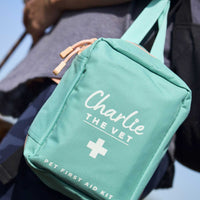
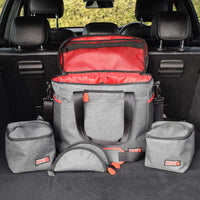
There are some obvious items you should take such as your dogs walking set and some poo bags, but also think about what else you might need. If you’re going to be out for an extended period you might take some drinking water and a pet travel bowl for them. A drying coat might be an essential if your dog is a water lover and is likely to venture into the sea. You might take some outdoor dog toys to add some playtime fun to the day trip. If you’re planning a full day out with a long car journey, maybe invest in a good travel bag for your dog with travel feeding bowls and accessories. That way your dog can join in with a picnic. Our other beach essential is a first aid kit, the Charlie The Vet kits are one of our travel essentials!
Be aware of other people
If there are a few people about and your dog is likely to run off, then you may consider keeping them on a lead for the whole time you’re at the beach, even if it’s not a requirement of the beach you’re visiting. Practicing good pet etiquette makes the time enjoyable for both you, your pets and everyone else on the beach. Longline leads are great for giving your pets the freedom to roam without you having to worry about where they are wondering off to.
Pick up your dog’s waste
You may think it less important to pick up your dog’s poo when on the beach; it can be buried in the sand or washed away by the sea, but that’s not the case. It’s just as important to pick up your dog’s mess here as in any other location. Dog waste contains harmful bacteria and causes harm to sea life, children playing in the sea and people walking on the beach. Always clean up after your dog!
Be mindful of the local wildlife
You may see all kinds of wildlife depending on the particular coastline you are visiting. If your dog has a tendency to chase birds or other animals it may be best to keep them on their lead. It isn’t fair for other animals to be chased unnecessarily. In some ares there will be restricted areas for nesting and endangered wildlife. Whilst you may know not to enter, your wandering dog won’t know the difference. Take care and control your dog. You want the day to be pleasant for all, human and animal alike.
Be mindful of heatstroke
If you're planning to go on a warmer day make sure you consider whether it's too warm for your dog. It will typically be a little cooler on the beach but just check the forecast before you go to keep your dog safe!
A dog collar is an important item for any dog as it can be used as a form of identification if they go missing and makes the process of attaching a lead for walkies a quick, simple and comfortable experience. However, if a dog collar isn’t properly fitted, it could potentially cause pain to your dog or allow them to escape.
In this blog, we explain how tight a dog collar should be, offer tips on fitting a collar correctly and look into how to measure your dog’s neck to find the right size.
How Tight Should A Dog Collar Be?
When you put a collar on your dog, you will need to ensure that the size is right to avoid causing a feeling of discomfort or even potentially putting your furry friend in danger. Finding the correct fit is a balance between making sure it isn’t too loose, meaning it could fall off, or too tight, potentially causing it to hurt their neck.
Whether you’re currently choosing a collar for your dog and need to find the correct size or already have a collar and need to make sure it’s correctly fitted, it’s important that it’s as it should be to avoid harm. Below, we offer tips on getting the size of your dog’s collar right:
How To Fit A Collar On A Dog
Even if the collar doesn’t look particularly tight or loose around your dog’s neck, it doesn’t mean that it's correctly fitted. It can be difficult to know how best to gauge the most suitable size on your dog’s neck. However, a tried and tested way that is effective in identifying the correct fit is by using what’s known as the ‘two finger rule’.
To do this, simply put the collar on your dog and place two fingers between the surface of the collar and your dog's neck. If your fingers can fit comfortably while still feeling a little restricted, this should be an indication that the collar is a suitable length. If, however, your fingers have a lot of room to move or feel stuck in the collar, you should adjust the length accordingly.
How To Shorten A Dog Collar
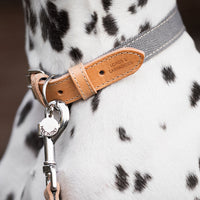
Dog collars often use a tri-glide buckle, allowing the owner to easily shorten or lengthen the collar. To shorten the length of the collar, move the end of the collar away from the buckle, tightening and making it shorter.
How to Extend A Dog Collar
Likewise, extending a dog collar that uses a tri-glide buckle requires the opposite action. Instead of moving the end of the collar away from the buckle to tighten it, push the end of the collar towards the buckle, pass it through the buckle itself and pull both ends to make the collar longer.
How To Measure Collar Size For A Dog
If you haven’t yet chosen a collar for your dog and are in the process of deciding the most suitable option, you will want to check that you’ve picked the right size. To help with measuring your dog for a collar, we’ve provided helpful tips on carrying out this process:
Get your dog to sit in front of you, ideally facing the opposite direction.
Place measuring tape around the base of your dog’s neck where their collar would be likely to sit.
Place two fingers between the measuring tape and their neck, making the measurement around one to two inches looser.
Record this measurement using a pencil and paper and mark it down as their neck measurement.
Using the neck measurement you’ve recorded, determine the collar size based on the collars size guide - each brand is sized differently so check the individual products size guide to find the best fit.
Lords & Labradors Essentials Walking Accessories
Our L&L Essentials Walking Collection collars come in seven sizes so you're sure to find the perfect fit, we've put our size guide below to help you find the right collar for your dog:
Collar Size
Neck Size
Recommended For
XXS
23-27 cm
Chihuahua, Yorkshire Terrier
XS
28-32 cm
Jack Russell, Norfolk Terrier
S
30-36 cm
Cockapoo, Standard Dachshund, Spaniel
M
35-41 cm
Bulldog, Schnauzer, English Bull Terrier
L
39-47 cm
Labrador. Red Setter, Labradoodle
XL
44-52 cm
Retriever, Great Dane, Doberman
XXL
49-57 cm
Bullmastiff, Dogue De Bordeaux, Newfoundland
Still not sure on the right size collar for your dog? Why not chat with one of our pet experts? They are available on +44 1790 720 900, sales@lordsandlabradors.co.uk or our live chat on our website - they're always happy to help!
Help! My Cat and Dog Don’t Get Along - How to Introduce your Cat and Dog
People have stereotyped the relationship between cat and dog for an age; pitting them against one another as mortal foes. However the reality is somewhat different and many families enjoy both canine and feline company in the same home.
Do Cats And Dogs Get Along?
They defintely can get along, it's all down to their personalities and the way you as an owner both train them and manage their environment. The way you introduce them and manage that introduction period will help form the foundation for their relationship.
The important thing to take into consideration is the personality of the pets in question. Finding two animals whose personalities gel, rather than conflict, is key. If you have an older, more relaxed pet for example, they will probably find it difficult to adjust if introduced to a new kitten; if you have a boisterous dog who loves to play, then a nervous cat may not be the right choice for you.
If you are thinking about introducing a cat and dog into your home, or you already have them and need tips on how to help them get along, read our list of things we think you should consider.
Dog Breeds That Can Live With Cats
All dog breeds have the potential to get along with cats, that being said there are some breeds who typically have a personality which is more suited to living with a cat. These include breeds such as Golden Retrievers, Pugs and Basset Hounds. The experts at Purina have put together their list of top cat friendly dog breeds, which is definitely worth checking out if you're thinking about adding a dog to your cat household.
How To Introduce Your Dog and Cat to a New Puppy Or Kitten
1. Let Them Smell Each Other First
[product]
We use scent to settle our pets in many situations. Many people bring home a blanket with Mum’s scent on when they first bring kitten or puppy home to help settle the new arrival. Similarly, if you want to get two animals used to each other it’s a good idea to share each of their scents with the other before they actually meet. This could mean giving them each a blanket from the others bed for example. This way they will be somewhat familiar with one another already.
2. Ensure Your Cat Has Their Own Territory
[product]
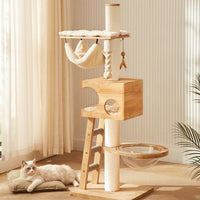
Cats enjoy their own space regardless of whether they share the home with other pets or not. If you are thinking of introducing another pet, then make sure your cat has places to retreat to when they want some peace and alone time. Cats naturally love climbing, so providing them with a cat tree or platforms attached to the wall is ideal and will give them somewhere they can watch the others in the house from a distance.
Also, try to keep their food in a different location to the dogs and place their litter tray somewhere that they won’t be distracted by the dog. A quiet spot of their own is ideal so they can do their business in peace.
You can try sectioning areas off with dog gates. Just be wary of agile pups and those too large for a gate. This is ideal for young puppies though, whilst they are getting used to their feline friends.
3. Raise Them Together
If you have the chance, raise your cat and dog together from a young age. Puppies and kittens will learn to accept things much more quickly than older pets who are set in their ways. Dogs are not only less confident in their younger years, but also smaller and therefore less physically intimidating to a smaller cat. Introduced in this way, cats will more quickly assume their place at the top of the cat/dog social hierarchy!
4. Plan The First Time They Meet Carefully
It’s best to keep them in separate parts of the house for at least the first few days before you let them meet face-to-face. This will allow them both time to get to know the smell of the other and get to know their new homes.
As with humans, first impressions are important. Finding a common interest can help the process; mealtimes are enjoyed by all creatures great and small, so why not start with food?
One way to introduce them initially is to keep your cat and dog on either side of a door whilst you give them their food; they won’t see each other, but they will smell each other. This is a good way for them to associate the smell with something positive. If you can do this for a number of days whilst being able to keep them separate in the home, it will help in the long-run.
Keep your dog on a lead for extra control, just-in case he gets excitable. You could start with a door and then slowly introduce them to each other visually with a dog gate between. If you can stretch this process over time, it will help keep it gradual and give them both time to adjust.
During this process, alternate the rooms that each is allowed in thus giving them both more opportunity to get to know the smell of the other.
5. Make Sure Your Cat Is Relaxed
When you do introduce them face-to face for the first time ensure your cat is totally relaxed. Keep your cat in your arms (long sleeves are a good idea!) whilst someone else brings your dog into the room on a leash. Take it really slowly, keeping an eye on both their reactions. Gradually bring the dog closer one or two steps at a time and allow both to settle at each step. You could pop your cat in their carrier if that seems easier and more controlled. The last thing you want is for your cat to claw your arm in panic.
6. Show Equal Amounts Of Fuss To Both Pets
It’s important to show equal amounts of affection to both pets during the introduction phase. Pets are just as prone to jealousy as children, so show them both that they’re loved and all should be fine.
7. Separate Them After Their First Meeting
After they’ve first met, even if all went swimmingly, make sure to separate them again. Introducing them should be a gradual process with a number of these meetings taking place. Gradually lengthen the interactions over time and they will soon grow familiar with one another.
8. Let the Cat Loose First
Once they seem comfortable in each others company, try giving the cat freedom to roam whilst keeping your dog on a lead. You want your cat to feel as comfortable as possible - in most cases they will be the smallest of the two animals. After a few interactions like this, if your dog seems content, try letting them off the lead at the same time. Hopefully the time taken to socialise them will have paid off and they will be fine in each others company.
9. Train Your Dog Well
It’s imperative your dog knows what the boundaries are. A well mannered dog will be much more easy to settle in the same space as a cat. Knowing when to sit and having general manners is a must.
10. Exercise Your Dog
Dogs are much more naturally social creatures than their independent feline friends. We don’t mean to say that some cats don’t love a fuss, and I’m sure we all know someone with a loving lap cat, but, generally speaking, dogs enjoy more socialisation and cats appreciate some alone time. Try to exercise your dog as much as possible so that his energy levels in the house are kept to a level that suits the felines of the family. Making sure there are some brain stimulating toys around will also help, so when your dog does have excess energy to burn, he can play with those rather than chase the cat around the house!
11. Keep Their Things Separate
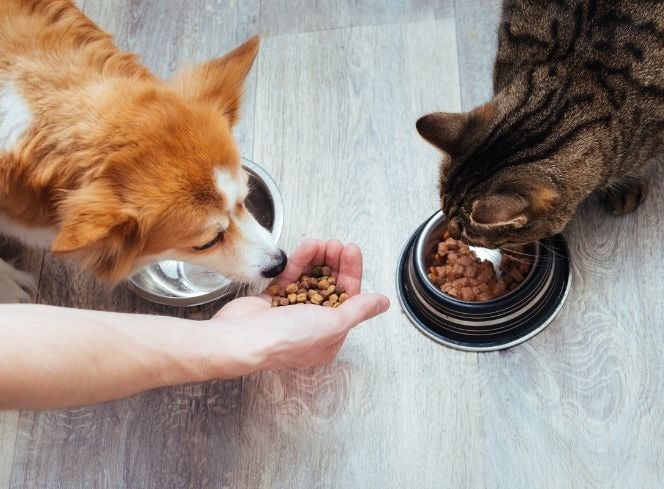
If you can keep their bowls in different locations it will help prevent them from fighting over each others food. Dogs can be territorial when it comes to food so best let them eat in different areas. You could allow your cat to eat up high out of the way, on a table or other surface for instance, whilst your dog eats on the floor. Separate rooms is also a good idea if that’s an option - one in the utility and the other in the kitchen for example.
12. Separate Your Pets When You Leave the House
If you will be leaving both pets at home together, keep them in separate rooms, at least until they have lived with one another for a long period and are fully comfortable with each other.
13. Don’t Scold Your Dog For Negative Behaviour
Dogs can get playful and energetic; if yours starts to get a bit rough or loud with the cat try to redirect his energy on to something else. Obedience training will come in handy here. You don’t want to tell him off, but show him it’s ok to release his energy in the right place and the right time. This is the perfect time for playtime. Give him a toy to play with, take him out for a walk or something else positive. He’ll be less likely to associate negative things with the cat if you choose to distract him with a positive activity instead.
14. Reward For Good Behaviour
The more positivity shown around the cat the better. Speak in a happy friendly way when the cat appears, pat the dog and give him a treat. The dog will soon learn to associate positive feelings and situations with the cat.
15. Remember That Every Pet Is Different And Be Realistic In Your Expectations Of Them
All animals, just like humans, have their own ways and personality traits. Some are more sociable and laid back than others. Some just want their own space on their own terms. It’s important not to force anything and also not to give up. Take it steadily and react to how things are going on any given day. Perseverance and making transitional changes is key to a long lasting happy relationship between cat and dog. And remember, some pets just won’t enjoy being around others. It doesn’t mean they can’t live in the same house, just value their differences and try to give them the space they prefer. Keep them away from other pets as much possible and don’t force their interactions. Things will work out in the end and all family members will find their rightful place in the family household.
If you have any questions about our article do get in touch. We're always happy to help in any way we can.
Don't forget to follow our social media channels! You can find us on Facebook, Twitter, Instagram and Pinterest.
SIGN UP FOR USEFUL TIPS & GUIDES STRAIGHT TO YOUR INBOX
21.02.23February 21, 2023HealthFeatured
How to Stop Your Cat Scratching Your Furniture
Do you have a kitten with a habit for scratching your furniture? Perhaps they’ve taken a liking to scratching your door frames or wallpaper? First of all, it’s important to understand that your cat’s love of scratching is a natural instinct and actually good for their health and wellbeing. Rather than stopping them from scratching entirely you should try to encourage them to scratch in the correct places, like a scratch post for example; and deter them from scratching the wrong things, like your furniture!
Why Do Cats Scratch?
Whilst it may seem like bad behaviour, your cat’s desire to scratch is actually something to encourage. It has a number of health and wellbeing benefits:
Scratching keeps your cat’s claws in tip top condition - Helping to keep them sharp and shedding the outside layer as they grow. We all know cats love to climb, whether it’s a tree outside or their indoor scratch tree, and they need their claws to be healthy in order to do so.
Scratching provides a workout - When your cat scratches, you may notice how they stretch out their body. Scratching is your cat’s version of a full body workout, allowing them to stretch out their muscles and keep their body in top condition for climbing and chasing their prey!
Scratching is also a way for your cat to mark their territory - Your cat’s paws contain scent glands which leave behind an odour around their home. Scratching, especially when they are settling in, will make them feel at home and more secure in their surroundings. It can also relieve stress if they’re feeling anxious.
Scratching can be a sign of boredom -. It’s essential to provide your cat with plenty of mental stimulation, especially if you have a house cat. Even older cats who may never have scratched your furniture can develop a bad habit out of stress or boredom.
How To Stop Your Cat Scratching Your Furniture
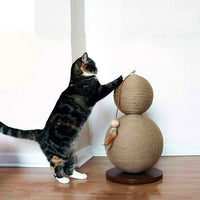
The best way to prevent your cat from scratching in the wrong places is to encourage them in the right places! Providing your cat with plenty of scratching opportunities around the home will allow them to sate their desire without ruining your furniture. Good quality, strong scratch posts in a size suitable for your breed are a must. Make sure you provide enough height for your cat to be able to stretch out as they scratch. If you have an indoor cat, we’d highly recommend a series of posts and platforms in the form of a large cat tree so they can exercise in the way an outdoor cat would when outside.
If your cat has already begun scratching your furniture, place a scratch post in that area; near doorways or sofas for example. It is also a good idea to place near sleeping spots as many cats enjoy a good scratch and stretch after waking. If your cat seems to enjoy horizontal scratching (your carpet for example), then a scratching mat is a good option.
If your cat doesn’t seem interested in the post at first, don’t give in, persevere and make the post enticing. You could spray catnip on it or try playing near it. Some posts come with a dangly toy attachment - the perfect addition to encourage your cat to investigate!
If your cat has already scratched somewhere they shouldn’t, make sure you wash down the area to remove any scent your cat may have released. You could even try spraying the area with pet safe Get Off spray to repel your cat from the area.
If you think the scratching is down to boredom or anxiety, provide your cat with lots of toys and plenty of opportunity for interaction. Indoor cats especially, will need a variety of activities to keep them mentally stimulated. Catit makes the brilliant Senses range of cat toys that appeal to all of your cat's senses and there are a plethora of playground-like cat trees out there to ensure they get plenty of indoor exercise.
Don’t Consider Your Cat Naughty For Scratching
Just remember that scratching is natural and has great benefits for your kitten and cats. Do discourage them from scratching in the wrong areas, but don’t chastise them too much, but rather encourage them in the right spots. It’s a good idea to plan ahead before you bring your kitten home and have areas for them to scratch in preparation.
We hope this article is helpful, to both new kitten owners and those with an older cat who has started to scratch later in life. If you have any more questions, please do get in touch as we're always happy to help as much as we can.
Natural dog treats popularity is quickly growing, and there are so many health benefits it’s easy to understand why. A hairy rabbit’s ear or duck foot may not sound the most appetising but your dogs will love them. In this blog, we’re going to explore the benefits of natural treats.
10 Benefits of natural treats
One of the main benefits of our natural treats is that they’re 100% animal, there are no additives or preservatives in there – they’re all exactly what they say on the tin. This makes them great for keeping your dogs healthy and you can ensure you’re only giving them the best.
1. Stronger Immunity
Just like us, dogs require a well-balanced diet to stay fit and healthy, natural treats help to give your dogs the range of nutrients that their bodies need. Protein is super important for boosting your dog's immunity and natural treats are rich in protein making them the perfect treats for your pooches.
2. Better Digestion
Dog's stomachs haven’t developed to handle artificial chemicals that are found in a lot of processed dog food. This is one of the key benefits of natural treats – the lack of additives and artificial chemicals means it’s easier for your dog to digest and they’re able to absorb all the important nutrients that their bodies need.
3. Dental and oral health support
Four out of five dogs over the age of three suffer from dental problems. Natural treats are great for keeping your dog's teeth clean, when your dog is chewing on these natural crunch teeth it will help to clean their teeth and get rid of any dirt that’s built up.
4. Natural Dewormers
[product]Treats with hair on, such as hairy rabbits ears, are actually natural dewormers. The hair helps to cleanse their digestive system and flush out any nasties.
5. Healthier Skin and Coats
Give your dogs the glossy coats you’ve always dreamed of with natural treats, the healthy fats in them will help give their coats that special shine. The blend of nutrients in natural treats can help with skin allergies in dogs, healing and moisturising any outbreaks as well as preventing any future ones. Natural treats are rich in vitamin A which is essential for maintaining healthy skin, hair, and teeth.
6. Fewer Allergies
Many mainstream dog treats have additives such as grain to help bulk them out, many dogs are actually allergic to grain and often suffer from upset stomachs because of this. Our Natural treats don’t contain any of these hidden allergens and the high levels of vitamin C in many natural dog treats help the white blood cells to fight off any potential reactions or illnesses.
7. Naturally calming
[product]Studies have shown that when dogs chew it is a natural anxiety reliever, it releases endorphins in your dogs brain so helps to calm them down. Dried Natural Treats are perfect for your dogs to chew on, they are often long-lasting so also act as a great boredom buster.
8. Air Dried
Our natural treats are air dried which means the treats are protein and nutrients rich. Once the moisture has been dried out of the natural treat, it means the proteins and nutrients are much more concentrated. This makes natural treats so much more rewarding and tastier for your dogs.
9. Single Protein Source
Some mainstream dog treats will combine different proteins together, however, if your dog has an allergy to certain proteins this can make finding treats for them difficult. Natural treats are an easy way to make sure your dog is only getting the proteins that agree with them and that they love. The Wild Deli treats are perfect for picking the proteins your dogs know and love.
10. Rawhide Free
All of our natural dog treats are rawhide-free! Rawhide is bad for your dog, they are ladened with chemicals and are difficult for your dogs to digest. Natural treats are a great alternative, they are long-lasting and are great for your dog inside and out.
Looking to start feeding your dogs with natural treats? Our Natural Graze boxes are the perfect way for your dog to try lots of different treats and figure out which ones they like. They come in three sizes, Essential, Luxury, and Ultimate – all of which are packed with delicious natural treats your dog is sure to enjoy.
Or if you know which treats your dog likes why not buy your dog a whole bag of them from our Wild Deli range?
If you have any questions about natural treats why not ask our Customer Care team? They are available on 01790 720 900 or sales@lordsandlabradors.co.uk, Monday-Friday 9-5 to answer any questions or queries you may have
Feeding our cats a healthy and balanced diet that provides them with all the healthy nutrients they need is an important consideration for all cat owners. It’s also nice to offer them treats to give variety to their diets as well as a reward. Your cat may show interest in your human food, or maybe you’ve wondered what fruits they can and even those they can’t eat.
In this article we will answer a couple of frequently asked questions including what fruits cats can eat and what signs to look out for if they eat something they shouldn’t.
Can Cats Eat Bananas?
Bananas are safe for your cat and are generally a safe and healthy treat. They need to be given in small amounts, such as a slice not a whole or even half a banana. Bananas are high in sugar which can lead to diabetes and weight problems in your feline. Be careful of the peel however as banana peel cannot be properly digested by cats - so make sure this is kept out of sight and reach your inquisitive feline!
Can Cats Eat Apples?
Apples are great treats to give your cat on a cool day if cut up into digestible chunks and cooled. Apples are considered to be safe for cats to eat, but they aren’t a necessary part of your cat’s diet. It’s good to know apple steams, leaves and seeds contain cyanide which are poisonous to your cat. If your cat consumes any of these call your veterinarian as soon as possible.
Can Cats Eat Grapes?
You should never feed your cat grapes as they are very toxic and may cause kidney failure. There is no known reason why grapes are so unsafe for cats, and the way their toxicity affects the animals’ body remains unknown - so it’s best to keep all grapes out of their reach and interest.
Can Cats Eat Strawberries?
Strawberries aren’t considered toxic to your cat and they’re generally safe for your cat to eat. They do however contain a high volume of sugar which your cat shouldn’t need in their carefully balanced diet. The stem of strawberry however can cause gastrointestinal obstruction, so ensure you are only offering up the strawberry flesh to your cat and give them a strawberry snack as a treat in moderation.
Can Cats Eat Raisins?
Much like grapes, raisins are also extremely toxic - whilst it would be unlikely that one raisin can kill your cat, it is better to be safe than sorry and treat all raisins as toxic. Ingestion of any raisins can cause anything from an upset stomach to poisoning. Symptoms such as lethargy, dehydration and weakness are all signs your cat may have ingested a raisin and it’s best to call your veterinarian immediately.
Can Cats Eat Oranges?
Like all citrus fruits, oranges are toxic to cats and should be avoided within their diets and treats. If you find your cat eating an orange (or any citrus fruits) or you begin to notice signs such as vomiting, diarrhoea, drooling, weakness, depression, allergic dermatitis or trembling, take them to the veterinarian as soon as possible.
If you do plan on treating your feline to a fruity snack, make sure you stick to the 10% rule - treats should only make up to 10% off your cats diet. Follow your veterinarians advise when making changes in your cats diet and be aware of over feeding treats as this could lead to health implications, such as weight gain.
How To Measure For Your Lords & Labradors Sofa Topper
Our most stylish sofa protection comes in three different sizes or they can be made to fit your sofa. The sofa toppers are perfect for pets who like to dig or circle to get comfortable when making themselves at home on your sofa. The sofa toppers feature a gorgeous comfy, soft inner (so great for you to sit on too!), as well as being machine washable at 30 degrees. The cover is easily removed for washing so it’ll fit within your washing machine and dries quickly when left to dry flat. If you do require a custom sized sofa topper, just get in touch with our team on +44 (0) 1790 720900 or email us at sales@lordsandlabradors.co.uk if you'd like a custom quote.
How To Measure For Your Luxury L&L Sofa Topper
We’re getting to that time of year again where we’re travelling more with our pets to the beach, staycations and even trips to a different location for a long walk. No matter how long the journey - even if it’s a trip to the local vets - you should ensure your dog is properly restrained and safe to travel. Here in the UK it’s the law when travelling by car your dog needs to be restrained. In this blog, we breakdown how to travel safely with your pet.
What Is The Law With Dogs In Cars?
The Highway Code states in their Rules about Animals, when in a vehicle, dogs are to be suitably restrained so they cannot distract you while you’re driving or injure you, or themselves, if you should need to stop quickly. If you were in an accident caused by your dog distracting you whilst you were driving, this could be considered as ‘dangerous driving’. It’s also good to check your insurance policy, as car insurance providers may require you to restrain your pet.
Is It The Law To Restrain A Dog In A Car?
It is the law to restrain your dog when travelling in your car. So as fun as it is for your pooch to sit with their head out of the window, they must be suitably restrained so they cannot distract you and potentially hurt either you or themselves. When it comes to where your dog should be when travelling, although there are no laws against your dog travelling in the footwell of the car, unfortunately they would not be properly restrained and if you did have an accident, you may be prosecuted for ‘dangerous driving’.
When choosing where your dog should be properly restrained, no matter what method you choose, your dog should not sit in the front seat - securing them in the boot or back seat behind a front seat is considered a safer option.
How To Secure A Dog In The Car
There are many safety products you can choose from, which can help with travelling safely in the car. It’s most important you choose a solution that’s suitable and comfortable for your pooch, and it has been installed and executed correctly to ensure the safety of your pet. Here at Lords & Labradors, we’d recommend the following for safe travel.
Dog Carriers
Our pet carriers come in different sizes and weights which will vary for the suitability for you and your dog. It’s a lighter option to our metal crates and are easily packed away if you’re staying away from home. Carriers are great when travelling by car and when taking your dog from the car into a safe place to let them out and stretch their legs. They keep your pooch safe and settled whilst travelling.
Travel Harnesses
Our pet-friendly harnesses come in a variety of sizes, suitable to your dogs breed and size. Travel harnesses are easy to fit onto your dog and it’s quick to clip them into place. They’re specially designed to prevent your dog from moving around whilst in the car, all whilst keeping your pet safe and comfortably restrained.
Travel Crates
Crating your dog keeps them safe & secure - using a crate to transport your pet has the added benefit if they’re already used to being crated at home. If your dog is used to being crated, often when travelling they’ll feel safer and their surroundings will reduce any anxiety your dog may have around travelling.
How Long Can A Dog Travel In A Car
Being stuck in the car can be hard for your dog! Not only will your dog need regular toilet breaks, they’ll also need to stretch their legs and get some of their energy out. When stopping for your dog to toilet and stretch their legs, you could also give them some food and water to avoid any spillages whilst travelling. Ideally you should try to keep to your dogs routine where possible (even when travelling) - every 2 to 4 hours for about 15 to 30 minutes is a good guide to follow, however you’ll know what is best for your dog and how they travel. If you’re planning a lengthy trip, try to go on few shorter journeys to see how your dog is likely to react.