






































































Most pet parents are surprised to learn just how much their dog relies on those stiff little hairs around the muzzle and brows. The effects of cutting dog whiskers are subtler than you might expect, but they can leave your dog feeling genuinely unsettled in their day-to-day life. In this article, we cover why whiskers matter so much, what changes when they’re trimmed, and exactly what to do if your dog’s whiskers have already been cut.
What dog whiskers actually do for your dog
Whiskers might look like oversized stray hairs, but they’re doing something genuinely impressive beneath the surface. Each whisker — technically called a vibrissa — is rooted far deeper than regular coat hair and connects to a dense cluster of nerve endings. Every tiny air shift, brush against a surface, or change in pressure sends detailed sensory information straight to your dog’s brain.
Think of them as a built-in spatial awareness system. The whiskers above the eyes trigger a blink reflex the moment something gets too close, protecting your dog before they’ve even registered the threat. The ones around the muzzle help your dog judge whether a gap is wide enough to squeeze through — which explains that funny little pause you’ve probably noticed before they commit to nosing through a tight space. That’s not hesitation. That’s the whiskers working exactly as they should.
Whiskers also pick up subtle air movement, which helps dogs build a picture of their surroundings even when visibility is low. In dim lighting, dense undergrowth, or when your dog is rooting around under the sofa, those sensory signals make a real difference to how confidently they move.
This is exactly why the effects of cutting dog whiskers go well beyond looks. When whiskers are removed, dogs lose a layer of sensory feedback they rely on constantly — often in ways we’d never notice, because whiskers do so much of their work quietly in the background. If you’re curious about the other ways dogs read and respond to their environment, our guide to understanding your dog’s body language is well worth a read.
Effects of cutting dog whiskers: what changes and why it feels so off
The effects of cutting dog whiskers are rarely dramatic, but they are real — and once you know what to look for, they’re surprisingly easy to spot. Most owners notice subtle shifts in how their dog moves and reacts, rather than any obvious signs of distress.
Here’s what you might observe after a trim:
- Bumping into furniture or doorframes, especially in low light
- Hesitating before squeezing through narrow gaps or entering smaller spaces
- Misjudging distances when reaching for toys, food bowls, or objects on the ground
- Startling more easily at movement or objects in their peripheral field
- Seeming uncertain or unsettled during activities they usually breeze through
A quick note on pain: cutting whiskers doesn’t hurt in the way cutting skin would — the hair shaft itself has no nerve endings. But removing them does take away a key sensory tool, and that loss of input creates real discomfort and insecurity for your dog, even if they can’t tell you that.
Whiskers act as a constant stream of environmental feedback, helping your dog judge space, airflow, and nearby objects with genuine precision. Without that input, even familiar routes and routines can feel slightly off. It’s one of the clearest reasons why dog whiskers are important well beyond how they look — and why most vets and groomers agree you shouldn’t trim dog whiskers unless there’s a specific medical reason to do so.
That disorientation doesn’t always stay indoors, either. If your dog seems hesitant or on edge during walks after a grooming session, disrupted sensory confidence could be part of the picture — worth keeping in mind if you’re also noticing unusual barking or anxious behaviour out on walks.
Why the “whiskers are just hair” myth gets it wrong
It’s easy to see why people think whiskers are just wiry little hairs around the muzzle, but they work very differently from the rest of your dog’s coat. Whiskers, or vibrissae, sit much deeper in the skin and are surrounded by blood-filled follicles with lots of nerve endings. That’s why the effects of cutting dog whiskers can feel so different from a normal trim.
What makes them special?
- They’re set deeper: Whiskers have a much deeper anchor than ordinary fur, which helps them stay steady and pick up tiny movements.
- They’re part of your dog’s sensory system: When a whisker moves, it sends signals your dog uses to make sense of what’s nearby.
- They notice subtle changes: They can help dogs detect shifts in air movement and the position of nearby objects, even before they bump into them.
- They support confident movement: Dogs use whiskers to judge spaces, especially in dim light or unfamiliar places.
- They help dogs feel secure: When whiskers are trimmed, some dogs seem a bit hesitant or clumsy simply because an important source of feedback has gone.
That’s also why, if you’ve ever wondered should you trim dog whiskers, most pet parents and groomers would say no unless there’s a medical reason. Even things that sit close to the face, like a well-fitted snood, should feel comfortable and not press on those sensitive whiskers.
How whisker trimming can happen during grooming, and how to avoid it
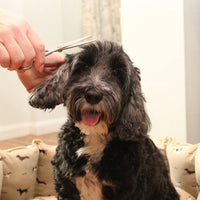
Whisker trimming often happens without anyone meaning it to. During a quick tidy-up at home or a trip to the groomer, those sensitive little hairs can get snipped in seconds, usually when working around the muzzle or brows. Once you understand the effects of cutting dog whiskers, it’s much easier to stay mindful — and the good news is that most accidental trims are entirely preventable with a few small habits in place.
At home grooming
- Switch to blunt-tipped scissors whenever you’re trimming fur around the face. They give you far more control and reduce the risk of a stray snip near the muzzle or brows.
- Work slowly, especially if your dog is wriggly or a little anxious. Short, calm sessions are always better than rushing to get it done in one go.
- Before you put the scissors away, do a quick check of the muzzle, brows, and paw pads to make sure everything looks as it should.
- If your dog is having a particularly fidgety day, save the face trim for another session when they’re more settled.
At professional grooming appointments
- Mention at every appointment that you’d like the whiskers left intact. Even if your groomer knows you well, it’s worth saying — don’t assume they’ll remember.
- Bring it up again at drop-off as a friendly reminder. It only takes a second.
- When you collect your dog, take a moment to check the muzzle and brow area before you head home.
Once you know what to watch for, protecting your dog’s whiskers quickly becomes second nature. It’s a small thing that makes a genuine difference to how confident and comfortable your dog feels every day.
What to do if your dog’s whiskers were cut
If your dog’s whiskers were trimmed at their last groom, here’s the most important thing to know: they do grow back. It takes anywhere from a few weeks to a few months depending on the dog, but they will return. In the meantime, your main job is simply to keep things calm and consistent.
You might notice your dog being a little more hesitant than usual — bumping into the coffee table, or moving carefully through spaces they’d normally breeze through. That’s the effects of cutting dog whiskers showing up in everyday life, and it really is temporary. Try to avoid rearranging furniture or introducing lots of new places while they’re finding their feet again. Familiar surroundings make a genuine difference.
Keep routines steady, give them plenty of positive time with you, and hold off on anything that might feel overwhelming. If you’ve recently brought a new dog home on top of all this, our guide to making those first days feel safe and settled is well worth a read.
If your dog seems genuinely distressed, goes off their food, or something just feels off beyond what you’d expect, give your vet a call. Trust your instincts. You know your dog better than anyone, and sometimes a quick conversation with a professional is exactly what you both need.
Frequently Asked Questions
Is it bad if you cut a dog’s whiskers?
Yes, it’s best not to cut a dog’s whiskers unless there’s a medical reason. Trimming them doesn’t usually cause dramatic symptoms, but it removes an important source of sensory feedback, which can leave dogs feeling unsure, more easily startled, and less confident judging spaces or objects around them.
Do dogs feel pain if whiskers are cut?
No, cutting the whisker itself doesn’t hurt like cutting skin because the hair shaft has no nerve endings. But whiskers are an important sensory tool, so trimming them can still make a dog feel unsettled, less secure, and a bit clumsy while they adjust to that lost feedback.
Why do groomers cut off dogs’ whiskers?
Usually, groomers don’t mean to cut them off on purpose. Whiskers often get trimmed accidentally during face tidying, especially around the muzzle or brows, and it can happen in seconds. That’s why it helps to mention at every appointment that you’d like your dog’s whiskers left intact.
How do dog groomers avoid cutting whiskers?
Dog groomers avoid cutting whiskers by being especially careful around the muzzle and brows and by following clear instructions from you. It helps to mention at every appointment that you want the whiskers left intact, repeat it at drop-off, and quickly check the face when you collect your dog.