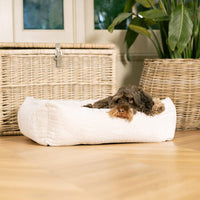
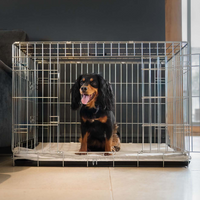
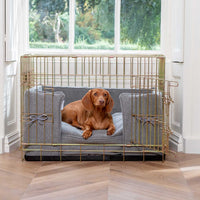
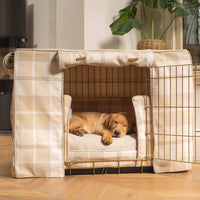
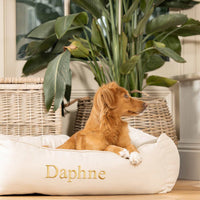
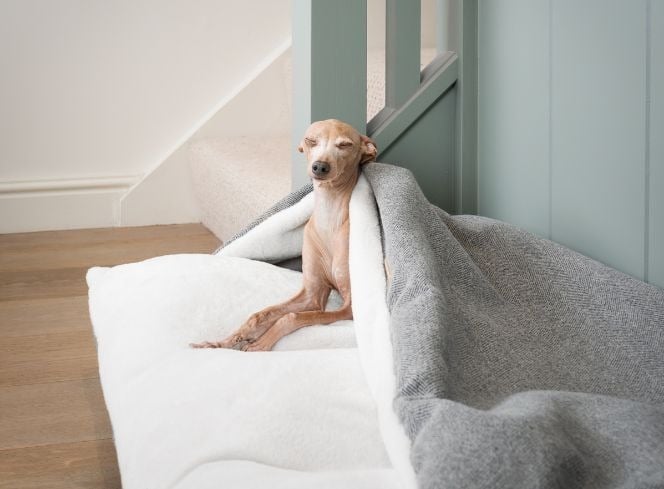
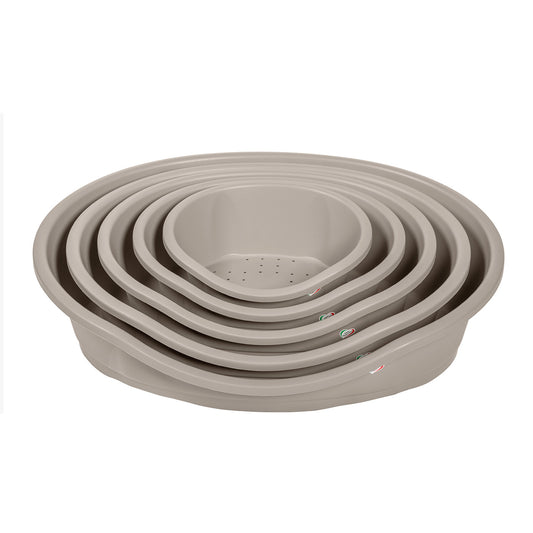
Did you know dogs spend 12 to 14 hours a day sleeping? That's a lot of time in bed so it's no surprise that their bed might be looking a little worse for wear. Dogs are creatures of comfort so making sure they have a a clean and supportive bed is essential for their overall well-being. In this guide, our Pet Experts explore the signs that indicate it's time to change your dog's bed and share expert tips on how to care for your canine's cherished sleeping spot.
How Often Should You Replace Your Dog’s Bed?
Determining how often to replace your dog's bed depends on several factors including the quality of the bed, your dog's size and activity level, and any specific health considerations. As a general guideline, it's advisable to replace your dog's bed every 1 to 3 years, or sooner if signs of wear and tear become noticeable.
Signs It's Time to Change Your Dog's Bed:
Visible Wear and Tear: Over time, your dog's bed may start showing signs of wear and tear, such as flattened cushions, lumps, or torn fabric. If you notice any significant damage, it's a clear indication that it's time to consider a replacement.
Lingering Odours: Despite regular cleaning, dog beds can accumulate odours over time, especially if your furry friend enjoys outdoor adventures or has accidents indoors. Lingering smells that persist even after washing could signal the need for a new bed.
Loss of Support: Just like humans, dogs require proper support for their joints and muscles, especially as they age or if they have existing health conditions. If your dog's bed no longer provides adequate support or has become too soft, it's time to invest in a new one to ensure their comfort and well-being. It might be worth investing in an orthopaedic dog bed if your dog’s breed is prone to joint issues.
Allergies and Skin Irritations: Dogs can develop allergies or skin irritations from prolonged exposure to dust mites, pet dander, or other allergens that accumulate in their beds over time. If you notice your dog scratching more than usual or experiencing skin issues, a new bed with hypoallergenic materials may offer relief.
Preference for Alternative Sleeping Spots: Dogs are creatures of habit, and if you notice your furry friend opting for alternative sleeping spots around the house instead of their bed, it could indicate that they're no longer comfortable or satisfied with their current sleeping arrangements. It’s worth looking at how your dog likes to sleep so you can get the best bed shape to suit their sleeping style, our Information Hub has a guide on how to choose the perfect dog bed for your dog.
Top Ways to Care for Your Dog's Bed:
Regular Washing: Establish a routine for washing your dog's bed to remove dirt, hair, and odour-causing bacteria. Most of our Lords & Labradors dog beds are machine washable, we have a handy guide on how to wash your dog’s bed here.
Use a Removable Cover: Opt for dog beds with removable, machine-washable covers for easy cleaning. Having a spare cover on hand allows you to swap them out while one is being laundered, ensuring your pup always has a fresh and clean place to sleep. We also sell bamboo bed covers which are great for popping over your dog’s bed to help keep them clean especially after a muddy dog walk, they will act as an additional layer of defence against moisture and stains, extending the life of the bed!
Vacuum and Spot Clean: In between washings, use a handheld vacuum or lint roller to remove hair and debris from the surface of the bed. Spot clean any stains or spills promptly to prevent them from setting into the fabric.
Rotate and Fluff: Just like flipping a mattress, periodically rotate your dog's bed to distribute wear evenly and prevent premature sagging. Fluffing the bed's filling helps maintain its loft and support over time.
Sun and Air Dry: On sunny days, take advantage of natural sunlight by airing out your dog's bed outdoors. Sunlight helps eliminate odours and kills bacteria, leaving the bed feeling fresh and revitalised.
Inspect Regularly: Take time to inspect your dog's bed for any signs of damage, loose seams, or worn-out stuffing. Promptly address any issues to prevent further deterioration and ensure your pup's safety and comfort.
By recognising the signs that it's time to change your dog's bed and implementing proper care and maintenance techniques, you can provide your furry friend with a clean, comfortable, and supportive sleeping environment. Remember, a happy and well-rested pup makes for a happier pet parent too!
If you’re looking to upgrade your dog’s bed why not check out our collection of luxury dog beds? Bedding is our speciality, we design and craft all of our bedding here in our Lincolnshire workshop so you can be sure your dog will be getting the best sleep possible in one of our luxury dog beds.
The Importance Of Correct Nutrition For Dogs And Cats!
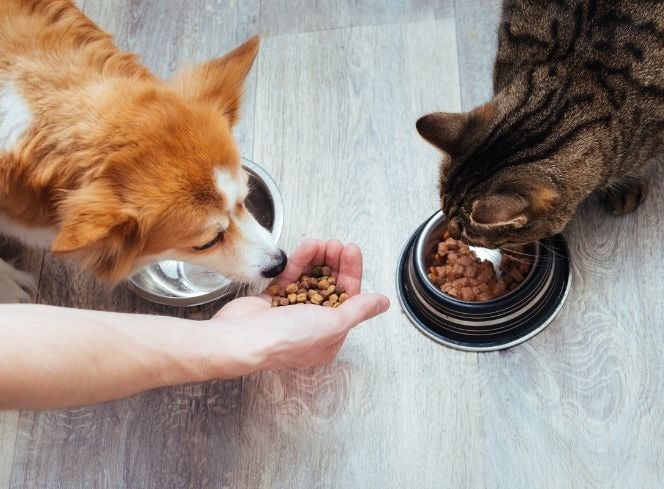
Ensuring optimal nutrition for our beloved pets is paramount for their overall health and well-being. As responsible pet owners, it is crucial to understand the significance of providing nutritionally complete and balanced meals to our furry friends. In this comprehensive guide, we will delve into the world of dog and cat nutrition, exploring the importance of the right food choices, nutritionally complete homemade recipes, and the best commercial options available.
Understanding Dog and Cat Nutrition
Your pet's nutrition plays a pivotal role in their vitality and longevity. Just like humans, dogs and cats require a balanced diet that fulfils their specific dietary needs. A well-rounded diet supports their immune system, maintains a healthy weight, and promotes optimal organ function. Pet food ranges from being more processed to being raw and rich in natural ingredients, finding the right fit for your pet is important!
Dog Food Nutrition
Choosing the right dog food is a key aspect of canine care. With an abundance of options available, it's essential to prioritise nutritionally complete choices. To make an informed decision, consider using a dog food nutrition calculator and comparing different products. Look for the best nutritional dog food that meets your pet's unique requirements, taking into account factors such as breed, size, and age. Our favourite nutritionally rich dog foods are Orijen, Carnilove and Acana, they are all designed with your dogs nutrition in mind.
Dog Nutrition Facts and Guide
Understanding dog nutrition facts is imperative for providing the best care. Refer to a dog food nutrition guide to navigate through the plethora of choices available in the market. Learn about your dog's daily nutritional requirements and make informed decisions that contribute to their overall health and happiness.
Cat Food Nutrition
Cats, being obligate carnivores, have unique nutritional requirements. The best cat food for nutrition considers their need for high-quality protein and essential nutrients. Explore dry cat food nutrition labels to ensure your feline friend receives a balanced diet that supports their specific dietary needs. For a cat food which is high in protein and great for fussy felines we love Carnilove, they all have at least 80% wild origin meat content and contain No grains, potatoes, GMO, soy, sugar, preservatives or colourants.
Daily Nutritional Requirements for Cats
Cats require a carefully balanced diet to thrive. Knowing the daily nutritional requirements for cats is essential for choosing the right cat food. Consult with your vet to understand the specific needs of your cat, such as the importance of taurine and other essential nutrients crucial for their health.
In conclusion, the importance of correct nutrition for dogs and cats cannot be overstated. Whether choosing commercial options or crafting homemade recipes, prioritising nutritionally complete meals is key to ensuring your pet's health and happiness. Stay informed about dog and cat nutrition, consult with professionals, and make choices that align with your pet's unique requirements. By providing the best nutritional dog food or cat food, you contribute to a longer, healthier life for your furry companions. Here at Lords & Labradors we have a large range of both cat and dog food so you can pick the best option for you and your pet
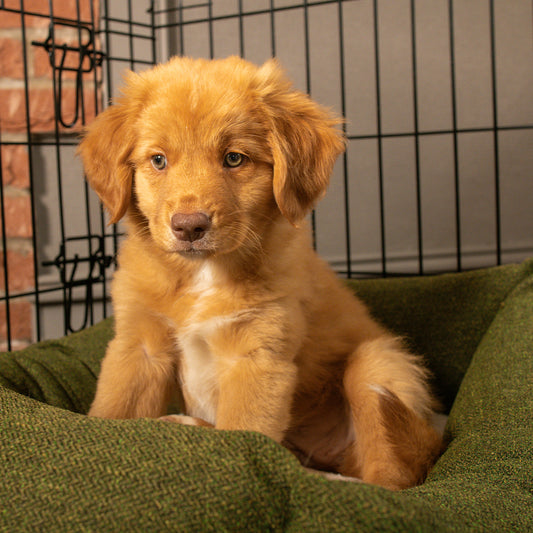
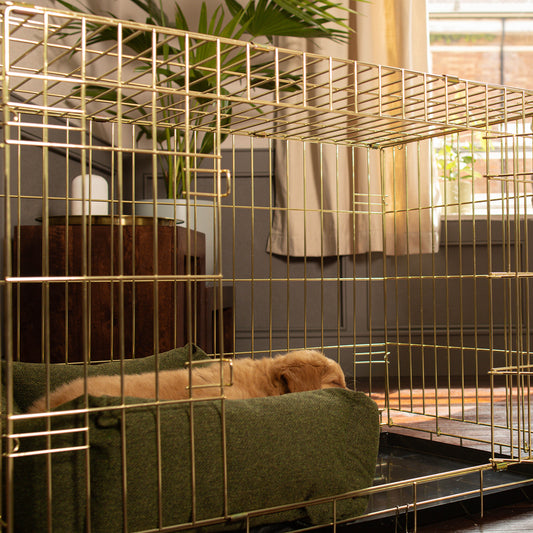
Crate training is an important part of settling in a new puppy. A crate provides a safe, quiet space for your pup and will help them to get used to their nighttime routine and with toilet training. A dog crate can be made into a cosy den that will be loved by your new four-legged friend for a lifetime. In this article we will explain the best crate set-up for puppies, how to change the set-up as they grow up and also how to look after your crate and crate bedding.
How To Make The Perfect Crate Set-Up For A Puppy
Crate training your puppy will have lots of advantages, helping them to settle and feel safe in their home as well getting them into a consistent bedtime routine. The perfect crate for a puppy will feel safe, warm and cosy. It’s important that it’s inviting so that they feel compelled to use it.
With this in mind we’d suggest the following items:
Crate Cover
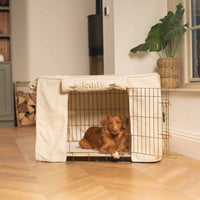
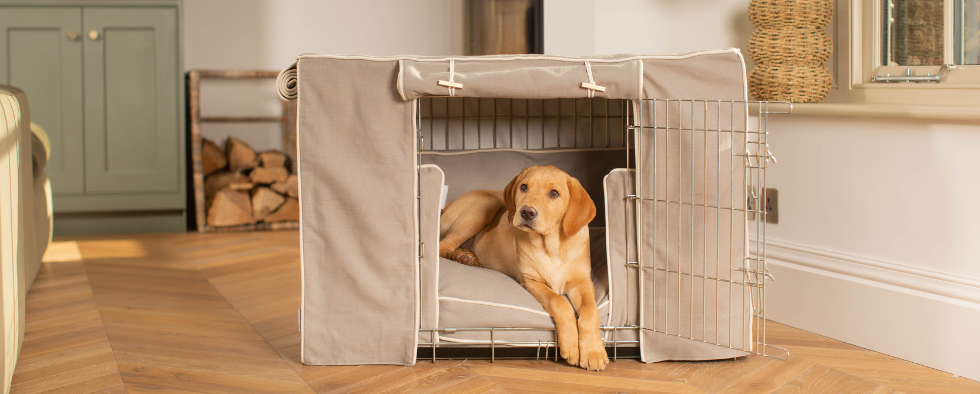
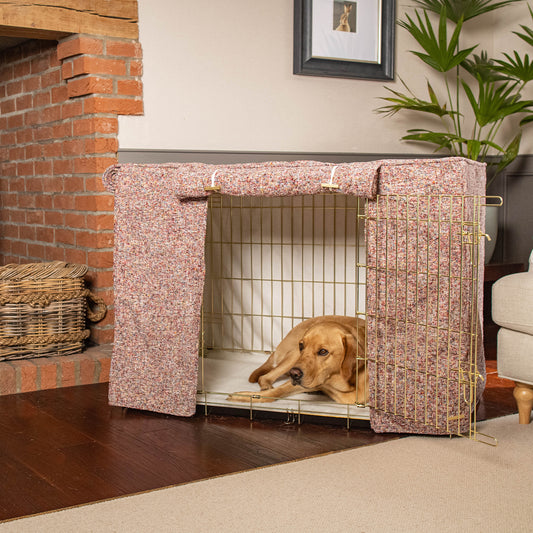
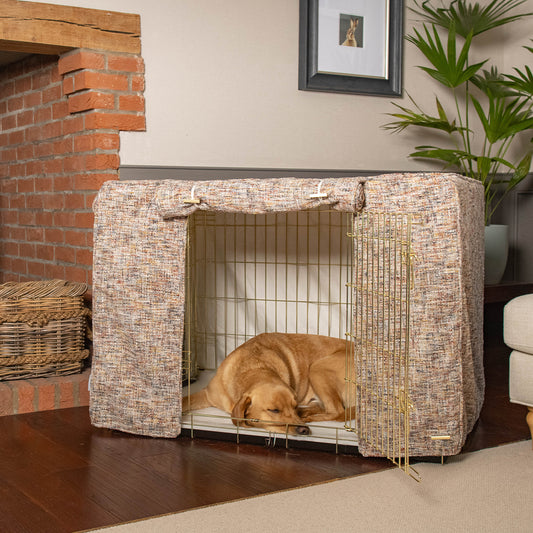
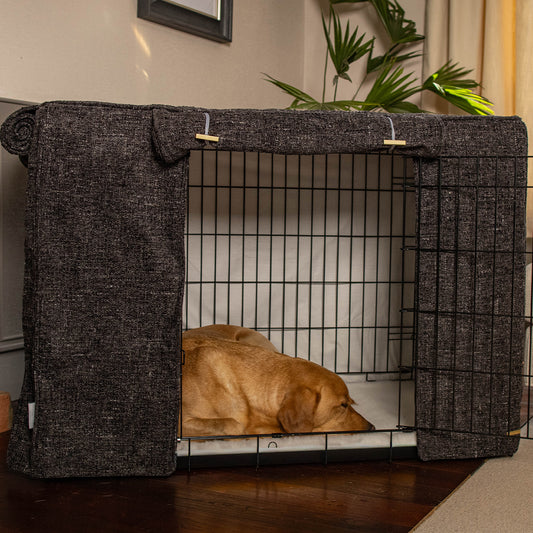
[product]Crates in their basic form can be rather draughty and a little bit unsightly! A crate cover will not only make the crate look stylish, but it will make the crate feel cosy inside. Our crate covers feature roll down doors which can be lowered when it’s time for bed. Puppy will soon learn when they should be sleeping (doors rolled down) and when it’s time to get up (doors rolled up). Our crate covers come in a range of fabrics which have been designed to match your home and they're all machine washable, making them brilliant for puppies!
Cosy & Calming Puppy Crate Bed
[product]
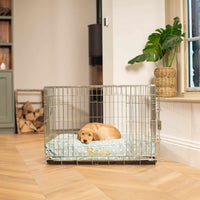
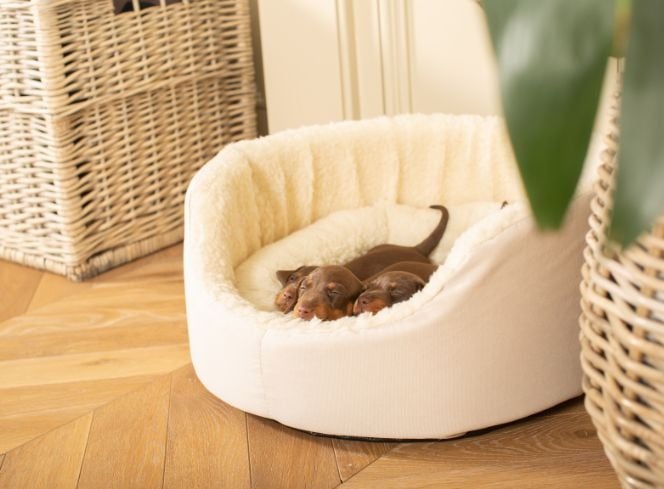
Our cosy and calming beds have been designed with crate training in mind. Each size is made to fill exactly one half of the corresponding crate size. So if you have a small crate for a Chihuahua for example, the small bed will fit in exactly one half of the crate. This then leaves room for a puppy pad in the other half along with a bowl for water. They come in a range of our printed cotton fabrics and feature a reversible cushion pad inside - one side covered in super plush sherpa!
Puppy Pads
Whilst we don’t want to encourage puppies to pee in the crate, it’s also important to note that they can’t hold themselves for very long at all. Whilst you will be able to take them outside at regular intervals during the day, this may not be the case at night. When you put them to bed, putting a puppy pad in one half of the crate will help to stop any accidents from dirtying their bed or crate tray.
Crate Bowls
Puppies will need access to water at all times and a crate bowl is a brilliant accessory as it can be fastened to the crate walls. This will ensure it doesn’t get tipped over or knocked like a standard bowl might.
The Perfect Crate Set-Up For An Adult Dog
As your dog becomes toilet trained and they begin to need the full space of the crate for their bed, you will need to consider swapping out the puppy accessories for their proper adult bed. At Lords & Labradors we specialise in crate bedding that will make your dog’s den look stunning as well as super comfortable inside.
Crate Cushion
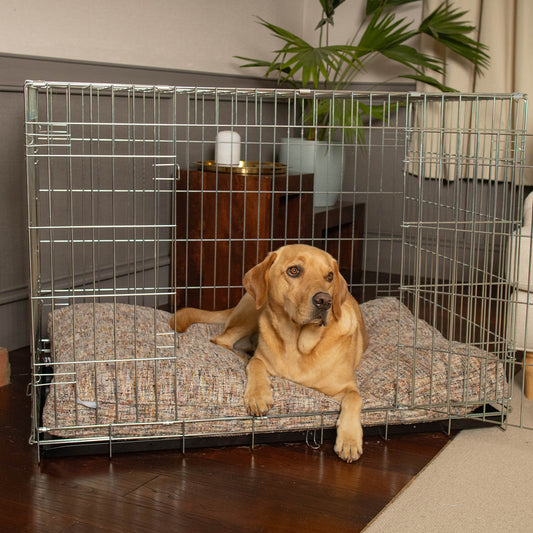
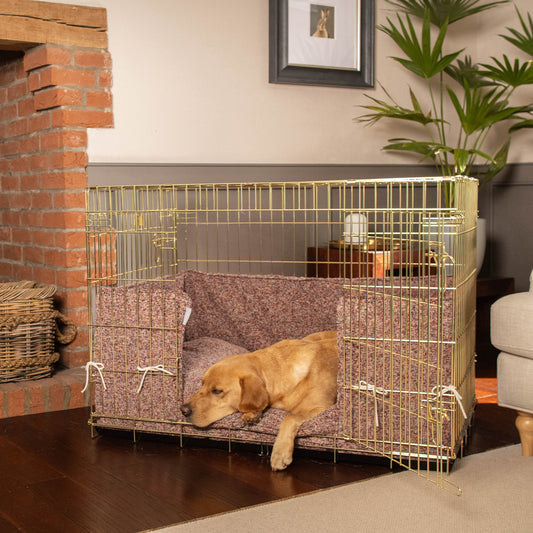
Our crate cushions are designed to fit our crates perfectly. They come in a range of fabulous fabric designs from luxurious tweeds to printed cottons. There really is something to suit every taste and home.
Crate Bumper
Crate walls aren’t the most comfortable things to snuggle up to, and if your dog likes to curl in the corner of their bed, they will need something other than metal bars! That’s where our fabulous bumpers come in. They sit around the edge of the crate cushion and create a spongey layer of warmth around the walls. Perfect for snuggling up in the corner when nap time calls!
Crate Cover
Our crate covers are perfect for setting a routine with your dog, when the doors are rolled down it will signal to them it's time to sleep. Our crate covers are fully lined to help keep light out and come in matching fabrics to our bumpers and cushions to you can be sure crate will look stylish!
Crate Set Aftercare and How To Clean A Crate
With a little love and care your crate set will last a long time. Here we detail how to look after your crate set:
The Crate - The crate is made of sturdy metal and is really easy to keep clean. Our crates are easy to wipe clean and the tray is removable so you can get into the corners properly. It’s really important to make sure the crate is completely dry before setting back up and allowing your pet back in, we recommend drying your crate to avoid any rusting.
Lords & Labradors Cushion & Bumper Covers - For our bedding from our core collection you will be able to remove the covers on the cushions and bumpers. Turn the cover inside out and machine wash on a 20 degree gentle cycle. Allow the covers to air dry (do not tumble dry). Once dry return the inner cushion to the cover.
Essentials Plush Collection Bumpers & Cushions - Our bumpers and cushions from the Essentials Plush Collection don't have removable covers, we recommend spot washing your essentials plush bumpers and cushions.
Lords & Labradors Crate Covers - Our crate covers are all machine washable on a 20 degree gentle cycle, apart from our oil cloth crate covers. After washing, we recommend air drying your crate cover over your crate to help keep it in shape and to make sure it doesn't shrink. A cool iron on the reverse of the cotton fabrics is fine if necessary, but often they won’t even need that. Our tweeds and Savanna fabrics are super fast drying and they will come out of the spin almost dry. Just give them an air and they’ll be ready to use again in no time at all!
Cushion and bumper inners - The cushion and bumper inners are protected by waterproof interlinings, so won’t need washing. This will preserve the inner fillings. The waterproof liners are wipe clean. If they become soiled, simply wipe down with a mild pet-safe detergent and they’ll be as good as new again.
Cosy and Calm Puppy Bed - Our puppy beds are fully machine washable. You can put the whole bed in the machine and wash on a 20° cycle. When removed, simply shake and plump the cushion back into shape and leave to air dry.
Follow these simple steps and your crate sets will last and look stunning for years to come!
We’re getting to that time of year again where we’re travelling more with our pets to the beach, staycations and even trips to a different location for a long walk. No matter how long the journey - even if it’s a trip to the local vets - you should ensure your dog is properly restrained and safe to travel. Here in the UK it’s the law when travelling by car your dog needs to be restrained. In this blog, we breakdown how to travel safely with your pet.
What Is The Law With Dogs In Cars?
The Highway Code states in their Rules about Animals, when in a vehicle, dogs are to be suitably restrained so they cannot distract you while you’re driving or injure you, or themselves, if you should need to stop quickly. If you were in an accident caused by your dog distracting you whilst you were driving, this could be considered as ‘dangerous driving’. It’s also good to check your insurance policy, as car insurance providers may require you to restrain your pet.
Is It The Law To Restrain A Dog In A Car?
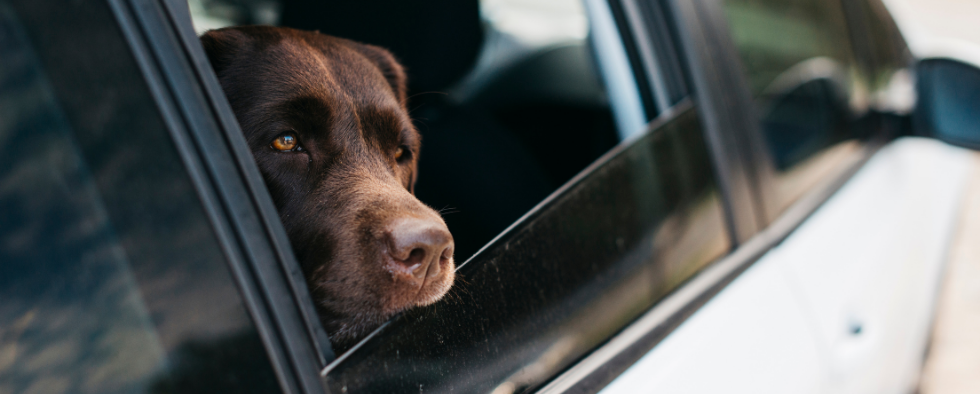
It is the law to restrain your dog when travelling in your car. So as fun as it is for your pooch to sit with their head out of the window, they must be suitably restrained so they cannot distract you and potentially hurt either you or themselves. When it comes to where your dog should be when travelling, although there are no laws against your dog travelling in the footwell of the car, unfortunately they would not be properly restrained and if you did have an accident, you may be prosecuted for ‘dangerous driving’.
When choosing where your dog should be properly restrained, no matter what method you choose, your dog should not sit in the front seat - securing them in the boot or back seat behind a front seat is considered a safer option.
How To Secure A Dog In The Car
There are many safety products you can choose from, which can help with travelling safely in the car. It’s most important you choose a solution that’s suitable and comfortable for your pooch, and it has been installed and executed correctly to ensure the safety of your pet. Here at Lords & Labradors, we’d recommend the following for safe travel.
Dog Carriers
Our pet carriers come in different sizes and weights which will vary for the suitability for you and your dog. It’s a lighter option to our metal crates and are easily packed away if you’re staying away from home. Carriers are great when travelling by car and when taking your dog from the car into a safe place to let them out and stretch their legs. They keep your pooch safe and settled whilst travelling.
Travel Harnesses
Our pet-friendly harnesses come in a variety of sizes, suitable to your dogs breed and size. Travel harnesses are easy to fit onto your dog and it’s quick to clip them into place. They’re specially designed to prevent your dog from moving around whilst in the car, all whilst keeping your pet safe and comfortably restrained.
Travel Crates
Crating your dog keeps them safe & secure - using a crate to transport your pet has the added benefit if they’re already used to being crated at home. If your dog is used to being crated, often when travelling they’ll feel safer and their surroundings will reduce any anxiety your dog may have around travelling.
How Long Can A Dog Travel In A Car
Being stuck in the car can be hard for your dog! Not only will your dog need regular toilet breaks, they’ll also need to stretch their legs and get some of their energy out. When stopping for your dog to toilet and stretch their legs, you could also give them some food and water to avoid any spillages whilst travelling. Ideally you should try to keep to your dogs routine where possible (even when travelling) - every 2 to 4 hours for about 15 to 30 minutes is a good guide to follow, however you’ll know what is best for your dog and how they travel. If you’re planning a lengthy trip, try to go on few shorter journeys to see how your dog is likely to react.
You may be preparing for the all important ‘Gotcha Day’, the day celebrated by all dog parents as the day you brought your pup home. Taking your puppy home for the first time is exciting, especially if you have prepared for their arrival. Puppy shopping can be so much fun, but also overwhelming if you’re a new pet parent, or if you’ve not had a puppy for a few years. There will be some things you do need to buy for necessity and some things that are worth buying for your new pup. Here at Lords & Labradors we’ve put together the 10 puppy essentials you’ll need to get your new puppy settled.
Our Top 10 Items To Buy For Your New Puppy
1) What crate to buy?
Firstly, if you’ve decided to crate train your puppy, you’ll need a crate that will see you through from puppyhood to adulthood. You’ll need a crate the appropriate size so you can fit a puppy bed at one end and a puppy training pad the other incase they need to toilet when left in their crate. It also gives your pup enough room to stretch, play and sleep if crated during the daytime. Depending on your training methods, you may want to place the crate somewhere the puppy can be near to you, but also not directly in a high traffic area of your home. Remember the crate is your puppy’s den, so discourage any children from climbing inside.
2) Where should my puppy sleep?
We recommend a puppy bed that’s easy for your pup to get in and gives them enough support and comfort whilst they sleep. Our Cosy & Calm Puppy Box Beds have been carefully designed with your puppy in mind. The beds are super squishy and soft, and have the most comfortable sides for your pup to snuggle right into. If you have chosen to crate train your pup, our vet bed is really popular, as it’s cosy, comfortable, robust and relatively puppy proof - it’s easily washed and dried too. It can be used with or without our Cosy & Calm puppy box bed.
3) What will my new puppy eat?
It’s recommended you initially use the same food that your puppy comes home with, in order to avoid any tummy upset during their first few days with you. Once your puppy has settled, you can gradually introduce a new food to their diet. It’s good to check the food guidelines of the food you choose to feed your pup, as often they’ll give you the correct guidelines on how to introduce the new food to your pup.
Make sure you have a clean bowl for water and a clean bowl for food, you can opt for a slanted water bowl if you have a spaniel breed to reduce your dogs ears from getting soaked in their water.
4) Puppy Toilet Training
Top of your list should be a reliable pack of puppy training pads, not only are they great for training your young pup, but they are invaluable when travelling (pop in the bottom of their carrier/crate to catch any travel sickness or accidental toilet trips). You can also use them to absorb muddy, wet paws after your pup has had a play in puddles!
5) How to settle my new puppy at night
When settling your new puppy at night, our heart beat sheep will be your puppy's new best friend. The heart beat sheep features a beating heart inside that mimics the beat of Mum's heart. They're designed to offer comfort and calm to new puppies who may feel nervous in their new home; they help to stop separation anxiety too. Alongside the heart beat sheep, you could pop in a heat pad under your dogs bed/cushion to keep them warm and to mimic the feeling of having siblings/mum near. Both the heat and the heart beat sheep will provide comfort for your puppy, especially whilst they are settling in and adjusting overnight.
6) How to keep your new puppy entertained
Toys will provide something to chew on for your pup, which you’ll find are essential if you want to avoid your puppy chewing on your furniture. Choose a variety of textures, styles and sizes to keep your puppy engaged and interested. You may want to keep a toy box so your pup can choose what they’d like to play with, or keep a few toys in rotation so your puppy doesn’t get bored with them.
You can also buy toys you can fill with treats or their food. If you want/need to leave your puppy - remember to build this up slowly, and don’t leave your new puppy for a long period of time - you could try freezing a peanut butter filled KONG (remember to use doggy/puppy friendly peanut butter). Freezing the toy will take them longer to work through and will give some relief to their sore teething gums and teeth.
7) Does my new puppy need a collar?
You may want to purchase your dogs collar before they arrive home with you, however it’s advised to purchase the correct size collar for your puppy, which you may have to wait until they’re here to measure them properly. It is a legal requirement to have a tag with your details on incase your puppy gets lost or strays away, but it’s advised not to add your puppy’s name to the tag.
8) How will I get my new puppy home?
Collecting your puppy to take them home is really exciting, but it’s best to be prepared. Make sure you have a suitable carrier/crate to store them in safely for the journey. It’s important your dog is restrained as it is the law to keep your puppy properly restrained whilst driving. In your carrier, you may want to pop in a blanket that smells like home and a scent blanket that smells like their mum and litter mates. It’s also good to have some puppy training pads to hand incase of any car sickness or accidental toilet trips.
9) When to start training my new puppy?
You can start with bonding and training your puppy almost straight away, get some high quality, puppy training treats (make sure to check the guidelines), and enjoy teaching them new tricks - you’ll be amazed at how quick they learn!
10) When do I start grooming my puppy?
It’s recommend that even if your pup won’t require grooming at first, you should regularly brush them to get them used to being groomed and handled. Choose a simple, soft brush and/or comb for the first couple of months. There will be a time you will need to wash your puppy, make sure you’re not using human shampoo as this will upset your puppy's PH levels and may not be compatible with your puppy flea treatment. It’s best to invest in a puppy shampoo that you can use when and if you need to bathe your puppy. We have our own puppy grooming set in our Petplex collection called the 'Puppy Purifier' it has a shampoo and a cologne to help keep your puppy smelling fresh.
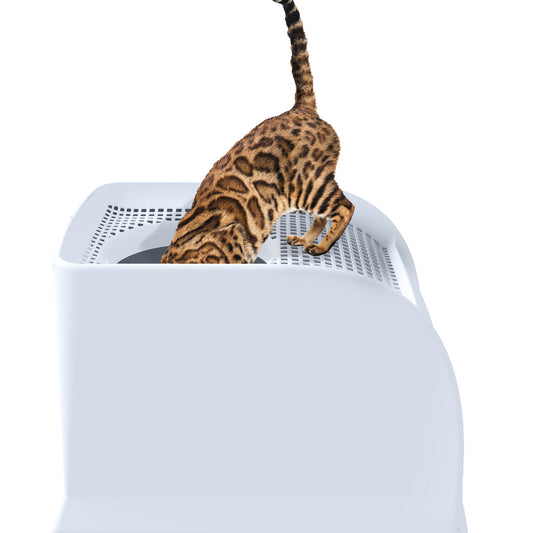
Bringing your new kitten or cat into your world can be exciting, but when you look at what you need to get for your new feline, it’s hard to know what is best, especially when it comes to cat litter, and knowing what actually is the difference between clumping cat litter and non-clumping cat litter? And which you should choose for your newest member.
In this article, we discuss the difference between each litter and the options that may suit you best.
[product]
What Is The Best Cat Litter?
With so many different types of cat litter on the market, choosing the best one for your cat can be overwhelming - especially if you’re welcoming a new cat into your home. It’s good to know different types of litter suit different cats and suit your home and lifestyle too. There isn’t one superior cat litter, it all comes down to preference for both you and your cat.
Is Clumping Cat Litter Better Than Non Clumping Cat Litter?
Put simply, clumping is the term used to describe litter that has been developed to be much more absorbent than standard litter as it forms clumps when coming into contact with liquid. Non-clumping cat litter is where the litter particles do not clump together despite being soaked in liquid. It’s good to remember cats do not toilet ‘tidily’. The majority of cats will move the litter around the tray (and sometimes outside of it!) which means when non-clumping litter is used, all of the soiled particles are mixed up with the clean particles of litter. The difference with clumping litter is all of the soiled particles are clumped together and can be removed very easily.
[product]
How Does Non-Clumping Cat Litter Work?
The benefit of non-clumping cat litter is often, it is low maintenance. You won’t have to worry about constantly checking for waste to remove as non-clumping litter can stay in the box for up to a week. Non-clumping litter is often a lot less dusty than a clumping cat litter which is a great benefit for cats (and owners) that suffer with asthma.
[product]
How Does Clumping Cat Litter Work?
Clumping cat litters are designed so that urine can be removed easily from the box without having to totally empty the entire box. Once the litter is clumped together, it can be easily scooped out of the litter tray, leaving only clean litter in the box. With clumping litter, odour is trapped inside the clumps, whereas non-clumping litters can’t contain the smell nearly as well.
There is no clear answer to which litter is best, clumping or non-clumping. And the choice is a personal decision that depends on yours and your cats needs. Many cats prefer clumping litter because it’s easier for them to push aside, but some cats prefer a non clumping clay litter.
Choosing the litter that your cat prefers makes it less likely that your cat will avoid the litter tray and find elsewhere to toilet.
For those of you aware of Pavlov’s dog, you can understand why classical conditioning is an effective training mechanism. Replace Pavlov’s bell with a clicker and use dog treats as a reward for good behaviour and you’re left with the premise of clicker training.
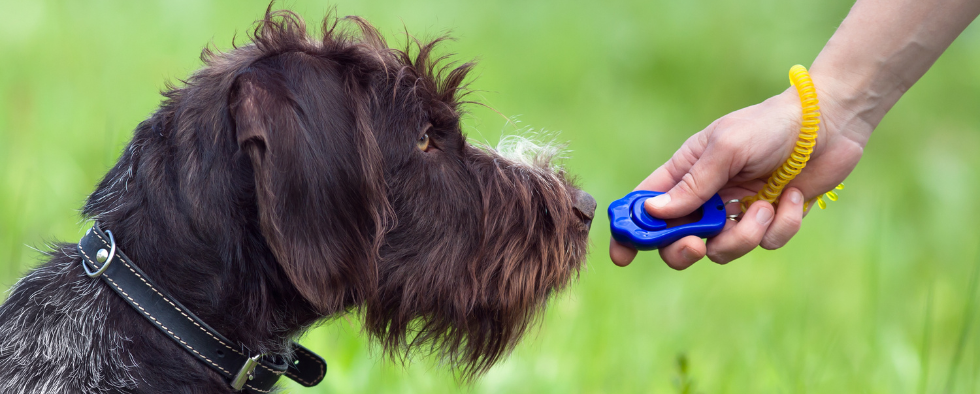
Clicker training is a reward-based training method in which a clicker notifies your dog that they have done the right thing. A clicker is a small device that makes a distinct clicking sound. This device is used to form an association with a reward, such as a dog treat or a toy - Police scent dogs will often work for a tennis ball. Whereas at first a reward is always given after a click, over time your dog will eventually begin to interpret the click as a reward in itself for showing positive behaviour.
While many people question why they should use a clicker at all instead of a reward, a clicker lets your dog know exactly when they’ve shown the right behaviour, helping them to learn at a faster rate than more traditional training methods.
For instance, when you reward your dog with a treat for responding to a sitting command, they have done other things such as stand up by the time they receive their treat. As a result, they can get confused, as they may have misinterpreted the reward for standing instead of sitting. The sound of a click should be implemented while your dog is showing good behaviour, not afterwards. Unlike the traditional method mentioned above, a clicker can mark the exact moment your pet has responded correctly to a command.
When To Start Clicker Training A Puppy
You can start to train your puppy as early as eight weeks, however, you should note that the time it takes to train your puppy could depend on their age, temperament, gender and breed. It’s important to not get frustrated if your puppy isn’t learning the commands as quickly as you hoped, for it’s all about repetition and patience. Rely on the positive reinforcement of the clicker and treat and eventually, your puppy will begin to pick things up.
How To Start Clicker Training A Puppy
Remember that when it comes to clicker training, timing is everything - click at the exact moment your dog responds correctly to your demand. Also, if the treat you are offering is food, you should cut down the amount of food they consume daily so that they don’t put on weight, you can even use some of their dry food to help them with their training. With that in mind, implement the following steps to clicker-train your puppy:
Before starting the training process, you need to teach your dog that the click means a reward. Simply take your dog somewhere quiet (without any distractions), press down the clicker just once and give them a reward immediately after. Do not click if your dog is showing discouraging behaviour. Repeat this process for a few days, in bouts of around two minutes a few times throughout the day. Continue this step until they look at you as if to expect a reward immediately after you click, now you can start to teach them new tricks!
Once your dog has associated a click with a reward, you can move on to some basic training. Start with a simple command like sitting down. Hold the thing that motivates your four-legged friend, whether that’s a treat or dog toy, and move it back over your dog’s head slowly. This method is called lying and should make your dog sit back instinctively. Press your clicker as soon as their bottom touches the floor so they become aware of the command they are being rewarded for. Give them their reward immediately after the click.
Once you have succeeded in luring your dog to sit down, add the word ‘sit’ and continue the training with a reward. Each time you lure your dog, say ‘sit’ in a loud but affirmative tone and as you did in Step Two, click and give your dog their treat as soon as their bottom touches the floor. After you have practised this a few times throughout the day, try and command them by saying ‘sit’ without the lure and see if they have learnt the association.
Continue doing these exercises in short bursts of up to 10 minutes, although younger puppies may need shorter training sessions. Eventually, your dog will learn to automatically sit when they hear the ‘sit’ command. Once you are confident your dog has learnt to sit properly, start to reduce the number of times you reward your dog with a treat after the click. By now, the click will have become a reward in itself and you won’t need to acknowledge their good behaviour with a treat every time. There you have it - the simple process of click training.
Top Clicker Training Tips
Timing is key! - Make sure to click as soon as your dog performs the command so they associate the click with what they've just done
Reward every time - when they first start training rewarding every time is key, as they get more advanced you can begin to gamble with treats but to start with consistency is key. Studies have shown the key difference between professional dog trainers and your average pet owners is the number of treats and rewards, professional dog trainers tend to give their dogs many more treats when practising commands with them.
Word Association - Saying 'sit' or 'down' won't mean anything to your dog to start with, it will take them time to begin associating the words with the action
Keep the treats small - treats are great but you don't want your dog to put on loads of weight either, reducing their food intake or using their dry food as a treat is a great way to reward them and keep their calorie intake down
End on a positive note - to keep training fun for both you and your pet make sure to end every session on a positive so even if they haven't quite gotten the hang of everything you've done that day they still go away feeling happy
Phase the treats out - once your pup has mastered a trick start slowly phasing the treats out, they will begin to associate the sound of the click as a reward and won't need the treat every time
How Does Clicker Training Help?
Teaching your dog to sit using a clicker is just one example of a command they can learn. There are other behaviours that can be taught with this method and many other training accessories available for your puppy. However, teach your dog only one or two commands at a time and don’t move on until they are fully confident with them. Other examples include:
Look - training your dog to look at you.
Stay - asking your dog to stay in the same place without moving.
Paw - opening your hand and ask your dog to place his paw in it.
Lie down - luring your pet into a lying position.
Roll over - encouraging your dog to roll over from a lying position
Drop - getting your dog to drop something from its mouth.
Leave it - getting your dog to move away from something they're about to pick up
Bed - getting your dog on their bed
Heel - getting your dog to walk in line with your heel
Clicker training provides an easy and efficient way to reward positive behaviours in your dog. Keep in mind that it will take time and keep the sessions short so that it’s an enjoyable experience for both you and your pet.
Some of the questions we are most frequently asked are related to crate training new puppies; Do I need to crate train my puppy? What size dog crate do I need for my new puppy? Are dog crates cruel?...
This guide is for those who have asked any one of those questions, or any other question related to crate training. Our guide will cover all the reasons to strongly consider crating your puppy; what size crate you might need depending on your puppy’s breed; and how to make the crate an inviting place for your puppy.
What To Use A Dog Crate For
There are a number of benefits to crate training:
Crates offer a safe, quiet place for nervous pups in their new environment.
Crates help with toilet training.
Crates help teach your pup their bedtime routine quickly and efficiently.
Crates make a great bed and private space for adult dogs, mimicking the “den” like home their canine ancestors would have lived in.
When you first your new puppy home, they will likely be nervous of everything. Whilst they probably came in to contact with all sorts of noises from birth, everything will seem new again when you bring them home. Crates, when used correctly, will offer your pup a calm safe space of their own. It should become their little den where they can go to relax, as well as when you need to contain them for a short time. The crate will also help get them into a routine, helping teach them when it’s time for bed. As your puppy grows into an adult dog, the crate will become their quiet spot – somewhere for them to enjoy some quiet time and a nap… and maybe a chew on their favourite dog toy!
What NOT to use crates for: Punishment and long-term confinement. This may seem obvious, but crates should never be used as a form of punishment. Rather, they should be seen as a safe space that they can retreat to when they want to relax and get away from the rest of the household. Then if you do need to close your puppy inside for a short time, they will feel relaxed and probably just go to sleep! The last thing you want is for your pup to be nervous of the crate which could lead to destructive behaviour due to stress.
Different Kinds Of Crate
Dog crates fall into three main categories; Metal crates, wooden crates and travel crates.
Metal Crates
[product]
The most popular type of crate as they are less expensive than wooden crates and can easily be folded flat for practical storage when not in use. Some may not like the look of the somewhat cage-like metal crates, but when teamed with a fabric cover and bedding set, they become a really cosy den for your dog. We have both traditional metal crates and our new sliding door crate which is perfect for saving space.
Wooden Crates
[product]
For those looking for something more substantial, our wooden crates are perfect. They are great if you’re looking for a dual-purpose piece of furniture as they suit a range of interior décor styles and make lovely end tables.
Travel Crate
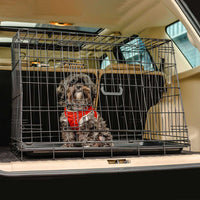
Travel safety is of utmost importance and restraining your dog when travelling in the car is now a legal requirement. A travel crate is a really practical option for most people as they sit simply in the boot and can fold flat when not in use. They are also needed for travel by sea and air – again, another reason to train your pup in a crate whilst young.
How To Find The Perfect Size Dog Crate
Are you wondering what size dog crate to get? We always suggest choosing a big enough crate for your puppy to grow into as an adult dog. This means you won’t have the expense of upgrading to a larger size later on and your dog won’t have to part with the den that has been their favourite private place for as long as they can remember! When they are fully grown, they should have plenty of head room in the crate - about 3-4” of space, as well as be able to move and turn around freely. The worst thing would be for your dog to be cramped inside.
Dog crates come in a number of different sizes, the most common being 24”, 30”, 36”, 42” and 48” in length. Different brands may vary slightly, but most will offer these most common size options. These are our size recommendations for each size of crate*:
24" Crate (S)
Chihuahua, Jack Russell, Shih Tzu, Yorkshire Terrier and similar breeds
30" Crate (M)
Westie, Beagle, Standard and Miniature Dachshunds, French Bulldog, Border Terrier and similar
36" Crate (L)
Cockapoo, Springer Spaniel, Bulldog and similar breeds
42" Crate (XL)
Labrador, Dalmatian, Labradoodle, English Bull Terrier and similar breeds
48" Crate (XXL)
Golden Retrievers, Greyhounds, Bernese Mountain Dogs and similar breeds
*These are our general breed size recommendations. When selecting your crate speak to your breeder to find out what crate size they think will be most suitable. Not every dog of a particular breed is the same size. You might have or be expecting a particularly large Frenchie or a very dainty Cockapoo – use our recommendations as a guide and use this with your breeder’s knowledge of the litter for a more accurate size recommendation.
How To Make A Dog Crate More Comfortable
Crates in their purest form are not the most enticing looking things. One of the first things you will want to do is make the dog crate look inviting. When your puppy is young, you’ll probably add a cosy puppy bed and a blanket as well as a cover to help make it feel more private and comfortable. As your pup grows up a full-size crate cushion is the ideal choice.
Our own brand crate bedding has been designed to make your dog’s crate the most comfortable den ever. We make cushions, bumpers and covers in a whole variety of fabrics to suit every taste. Cushions – Our crate cushions are deeply filled with hollow fibre filling to ensure supreme comfort. The handmade covers are detachable and washable making them super practical. There is also a removable waterproof liner so accidents won’t permeate the inner cushion. Bumpers – Our bumpers have been designed to create a cosy wall of softness to the inside of your dog’s crate. Sitting around the edge of the cushion, they are perfect for dogs and puppies who like to snuggle up in the corner of their crate. They also look beautiful too! Covers – Our crate covers are practical and stylish. Our crate covers are handmade in our workshop and turn your bare, draughty crate into a beautiful pet den. They come in a range of fabric choices and feature roll-up doors to help get your pup in their bedtime routine.
How To Make The Perfect Puppy Crate
The crate set-up will be slightly different for a puppy to the crate set-up for an adult dog. If you buy a size suitable for your pup as an adult as we recommend, we’d then suggest the following items to use inside:
Puppy Bed
Vet Bed
Puppy pad
Water bowls
Crate Cover
Blanket/Snuggle Toy
Chew Toy
Our preferred layout is to pop a piece of Vetbed on the base of the crate then a puppy bed on top in one half; then pop a puppy pad in the other half. Your puppy won’t be able to hold themselves in the first couple of weeks that they’re home so a puppy pad will ensure accidents are easily cleaned. Remember to add in a bowl for water for when your pup is closed inside and a chew toy to help prevent them from nibbling their bed!
When your puppy grows and is fully toilet trained you can swap out the puppy essentials for a full crate set; a cushion, bumper and cover. Our crate sets offer optimum den comfort whilst looking super stylish too! Explore our crate bedding range.
For many cats, their bed represents their very own happy place within your home - an ideal place to sleep and relax throughout the day. Some cats, however, simply won’t take to their bed and may even opt for the box it came in.
Whether your cat has recently stopped sleeping in their bed or was never fond of it at all, our blog will identify potential causes and offer effective tips to get them sleeping soundly in their cat bed once again.
Why won’t my cat sleep in their bed?
Cats are particular animals and often want things to be just right, and as their bed is such a significant item in their life, it’s important that it meets their lofty standards. However, there could be a number of reasons why they’re refusing to sleep in their bed. Below, we’ve outlined some common causes:
1. Comfort -
Humans and many animal breeds choose their beds based on the sponginess of the surface, the softness of the material and the overall feeling of comfort. Cats are different and sometimes find too much comfort to be unpleasant. For example, if a bed is super soft, it may suit a dog, but a cat may prefer a harder surface such as wood flooring and window shelves.
2. Location -
You may choose to put a cat bed where you want it or based on the design of your home, but you should really think more about where your cat may want it. Cats are particular about the location of their bed and, more often than not, would prefer to sleep on the floor in a good location than on their bed in a bad one.
3. Smell -
As cats possess twice the amount of scent receptors in their nose as humans, smell plays an important role in how they perceive the things around them. Many cat owners are confused when their cat sticks their nose up at a brand new bed, but as it doesn’t smell like the things they’re used to - i.e. their home or owners - it can end up feeling unfamiliar.
Why has my cat stopped sleeping in their bed?
If your cat has recently stopped sleeping in their bed, you may be wondering what caused the change. You should first consider if anything you’ve done recently could have put them off using it.
For instance, if you’ve recently washed their bed, you may have thought you were cleaning away fur and eradicating any nasty odour, but you were in fact removing the scent that makes your cat feel cosy and at home. Alternatively, you may have moved your cat’s bed to somewhere they’re unhappy with, or you may have given them too much comfort by adding a new blanket or extra cushions.
Other potential causes include feeling too hot or cold at certain points in the year, more of an emphasis on asserting their territory through a new animal coming into the home, a natural change of preference as they grow or a general desire to sleep elsewhere.
How to train your cat to sleep in their bed
In an effort to help anyone that is having trouble getting their cat to sleep in their bed, we’ve provided a few tips to bear in mind below:
1. Consider the best bed for your cat -
You should pick a bed that would suit your cat, choosing a tougher bed if they tend to sleep on hard surfaces or a softer bed if they’re more likely to sprawl out on the sofa. If your cat likes privacy, an igloo bed may be more suitable than an open bed, or they may simply prefer to have their bed in a more secluded area of the home.
Not only is it difficult to choose the best bed for your cat, but it may be the case that they change their preferences as they get older. In order to keep your cat sleeping soundly in their bed, keep tabs on their behaviour and adapt to their preferences with beds that are more suitable.
2. Deter them from alternative sleeping spots -
Cats often sleep in peculiar locations such as in laundry baskets, baths, in drawers and on top of hard-to-reach items of furniture. It may sound cruel, but by limiting their ability to reach these areas, you should be able to get your cat to sleep in the correct place.
You could even place harmless deterrents in these areas such as tin foil and formulated sprays or close off certain areas of your home. By doing this, your cat should see their bed as being the more suitable place to sleep.
3. Lead them to bed -
Primarily using treats, you can communicate to your cat that their bed belongs to them and should be used whenever they need to sleep. All you need to do is lure your cat to the bed using treats, encourage them to move into the bed and then keep a treat in your hand above their head until they sit down. Then, when they’re sitting correctly, give them the treat and lots of praise as a reward.
Although this approach is best suited to kittens that are still learning how to behave, many older cats are likely to respond to treats too, so you could use this as a way of getting your adult cat to sleep in their bed or get used to a new bed. If, however, your cat isn’t fond of treats, you may decide to use their favourite cat toy or catnip as an alternative.
4. Pick the right spot -
Working out the preferred place for your cat’s bed may be the difference between them using it or sleeping elsewhere. You can determine the correct place by monitoring where your cat often sleeps. However, while this is likely to help find the best place to put your cat’s bed, you should always bear in mind that your cat may change their preferred location in the future and the bed may eventually need to be moved elsewhere.
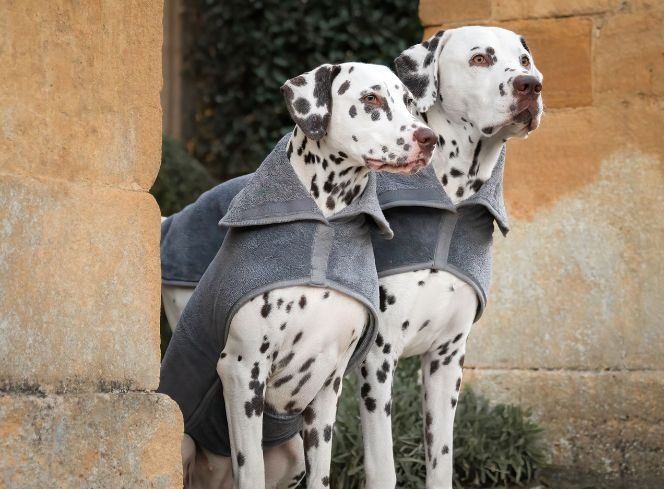
If you're anything like us, you'll be kick-starting your year with plenty of fresh winter dog walks - the perfect way to start that new year health kick as well as celebrate national walk your dog month! But we know how much of a struggle trying to dry your dog after a wet walk can be - this is where drying coats come in!
Drying coats are a practical addition to your dog's range of accessories. Not only are they handy after a wet walk, but they are also great to pack in the car when you’re on your travels. Perfect to dry and warm your dog after a bath or a run on the beach.
There are loads of drying coats to choose from here at Lords & Labradors, from our own luxury bamboo drying range to plenty of high-quality options from like-minded brands. Here, we look at our range of dog-drying coats. Ones that will be perfect for wicking moisture away after wet walks!
Choosing The Right Drying Coat For Your Dog
Finding the right drying coat for your four-legged friend can be tricky. There are a few things to think about when getting a drying coat, material, size, ease of putting on, colour and comfort!
Drying Coat Sizing
Size is most important as the drying coat should fit close rather like a horse blanket. This allows the coat to soak up moisture and simultaneously keep wet pets warm. To gauge the size needed, measure your dog’s top line from the collar to the base of their tail and then cross-reference with the size chart of the relevant drying coat. A lot of drying coats are super adjustable so getting a snug fit should be easy! We've put the size guide below for our Lords & Labradors Bamboo drying coats to help you find the ideal fit. Still not sure? Why not contact us and our expert customer care team can help you find the perfect drying coat.
Size
Back Length
Weight
Recommended Breeds
XS
26-36 cm
5-8 kg
Teacup breeds, small puppies, toy breeds
S
35-42 cm
8-10 kg
Pugs, Chihuahuas, Terriers
M
41-50 cm
10-20 kg
Spaniels, Cockapoos, Border Collies
L
57-68 cm
20-30 kg
Boxers, Labradors, Dalmatians
XL
64 -73 cm
30-40 kg
Golden Retrievers, Rottweilers, German Sheppards
Drying Coat Attachment Style
When choosing the right coat for you and your dog think about how it goes on your dog and how it attaches. Various brands will have different designs and attachments. Some come with velcro fastenings, others tie on, some are step-in and others slide over your dog's head, so definitely think about how easy it will be to put it on your dog.
Lords & Labradors Bamboo Drying Range
Our bamboo drying range was designed and tested here in our Lincolnshire workshop, with both practicality and style in mind. The range has three key products - drying coats, mitts and cushion covers, so you're sure to find the perfect combination for drying your dog. Our drying range is all made from a bamboo fabric which is super soft and is double-layered which is perfect for drawing moisture out of your dog's fur. We picked four stylish colours, Navy, Fir, Gunmetal, and Mole, for our drying range.
We designed our coats to be adjustable, they have velcro belly and neck bands so you can get a secure fit, and they also have a shake-resistant hood! They dry your dog in minutes while keeping them comfortable, and you'll be pleased to know it's machine washable! Our coats come in five sizes so will fit tiny chihuahuas as well as big German shepherds!
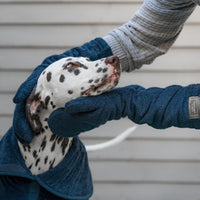
The mitts are great for dogs who love to wrestle when you try to put their drying coat on! They're made from the same luxurious bamboo as the coats, you can simply rub down your dog with the absorbent mitts and go.
The final piece of our drying collection is our cushion covers. These are designed to slip over your dogs cushion, perfect for protecting them against muddy paw prints. These are ideal for if you've driven to the beach or for a muddy walk to slip over your dog's cushion in the car. The cover easily comes on and off and is machine washable, making it perfect for pet mess protection.
Drying Bags
Henry Wag's drying bags are great for dogs who hate having something slipped over their head. They're designed simply for your dog to step in and then both have a zip and velcro to fasten your dog in with. However, if your dog is slightly more lively, a traditional drying coat which leaves their legs free may be better so they can still move about whilst wearing it.
Drying Robes
The Harbour Hounds drying coats come in stylish stripes and feature a cosy turtle neck which is perfect for keeping them snuggly and can even be pulled up as a hood. The drying coats fasten with poppers so are easy to pop on and off. They're made from 100% cotton, which quickly dries and traps body heat so are perfect for keeping warm after the beach, bathtime or a walk. Harbour Hounds makes their drying coat in an eco-friendly factory so you can be sure it's kind to the planet as well as your pup!
Whichever drying coat your choose, we're sure your four-legged friend will love it. Be sure to tag us in any pictures over on our Instagram, we love to see you on your adventures and enjoying our L&L products!
SIGN UP FOR USEFUL TIPS & GUIDES STRAIGHT TO YOUR INBOX
22.12.22December 22, 2022HealthFeatured
How To Run With Your Dog
With the new year just round the corner you may be looking to get fit, running with your dog is a great way to do this as well as being a fun way to spend time with each other. Dogs can make great running buddies and are amazing motivators, we’ve put together our top tips to help make your runs with your dog as fun as possible!
Can I Run With My Dog?
Before your start running with your dog, it’s best to make sure they’re suited for long-distance running, some dog breeds will take to it more than others. Brachycephalic dogs like pugs or French bulldogs have shorter face and noses which often makes breathing more difficult, this means they’re not as suited to running as other dogs.
It’s also worth bearing in mind your dog’s age and weight as these can impact their suitability. If you’re in doubt, ask your vet and they will be able to give your dog the okay to start running, as well as having lots of helpful tips and tricks.
How To Train My Dog To Run With Me?
Walk before you can run. Before you start running with your dog it’s important to make sure they’ve mastered loose lead walking, you don’t want your dog to be pulling you along whilst running! Have plenty of treats to hand to help them master walking to heel.
Slowly but surely is the best way to start running with your dog. Start by adding short bursts of running to your regular dog walks and gradually increase your distance and speed, this is a great way to build up both of your stamina.
Stop for plenty of water breaks, we recommend the KONG H20 Insulated water bottle, it as a handy clip so you can attach it to your lead or outfit, the bottom unscrews and doubles as a bowl, and it’s 100% recyclable and sustainable!
Just like when we exercise, warming up and cooling down is important, always start and end your runs with some walking.
How Far Can You Run With A Dog?
You know your dog best and how far dogs can run can vary massively from dog to dog, depending on age, breed, and health. For example, younger dogs’ bones are still developing so it’s important not to put them under too much stress with excessive exercise. As we said above building the speed and distance up slowly is super important, watch out to see if there’s any excessive panting or other signs your dog is tired and make sure to have a break or go home if they seem worn out.
How far you run with your dog will also depend on the weather conditions, seasoned runners will often be out in all weathers, but this doesn’t mean your dog should, it can be too hot or too cold for your dog. Have a look at our blogs on safe walking in the winter and summer with your dog for more information.
Should I Use A Lead To Run With My Dog?
It’s important to only run with your dog off-lead where it’s safe and legal, and you’ll need to practice their recall plenty of times first!
For running a lead which your can wear round your waist is much easier than one you have to hold, it means you have your hands free which is important for keeping the right form when running. Holding a lead can lead to imbalances so we love the Ruffwear Roamer leash which you can wear round your waist, it comes in two colours and sizes. It has an accessory hoop which is perfect for attaching poo bags or your clicker, the ergonomically-designed Talon clip is great for control as it can be used single handedly – it really is the perfect running lead.
We recommend using a harness to attach your dog’s lead to, this means if they pull the pressure will be spread out rather than concentrated on their neck. We love the Ruffwear front range harnesses to run with your dog, they’re super adjustable which means they’re bound to fit your dog perfectly, and we find them to be a really sturdy harness which is perfect for running.
We hope that you and your dog go on lots of fun runs in in the new year, we’d love to see some pictures so be sure to tag us on Instagram @lordsandlabradors and use the #landlfriends!
We would just like to thank all of our customers, both new and old, for your support in 2022 and wish you all a very warm and special Christmas. We hope you enjoy the holiday period, however, you will be spending it.
To those of you who regularly read our journal, we’d just like to say thank you. We hope you come back for more articles in the new year. There will be many more tips and tricks from our pet experts here at L&L, as well as fun articles with our favourite pet-friendly events and places to go. Sign up to our emails if you haven’t already, where you’ll be first to hear about new articles and be first in line for special offers.
So here’s to a wonderful Christmas holiday. We hope you enjoy a peaceful one full of joy! We'd love to see some of your Christmas pictures that you might take over the festive period, tag us or use the hashtag #landlfriends and we might just feature you on our feed!
For this week's blog article, we thought we’d highlight some of our recent Christmas posts just in case you missed them. From our favourite Christmas films to what Christmas dinner can my dog eat - there is something here for everyone that will hopefully help to make your Christmas a great one!
Fun Things to do with Your Pets in the Holidays
We recently created a blog based on special things that you could do with your pets in the run-up to Christmas. Well the big day is here, but there’s no reason you can’t do some of these things in-between Christmas and New Year too! Whether it’s a Movie Night in on the sofa with your dog, or an afternoon in the kitchen baking your pet some treats, there are some great ideas here that we think you’ll love. Click on the picture to read our suggestions.
What Christmas Dinner Can Pets Eat?
A big part of the festive period for most families is the food! Christmas dinner is integral to the celebrations at this time of year and it’s nice to include our pets in the feast where possible. It’s important to note what foods your dogs can and cannot eat. It's tempting to give them your leftovers, but this isn’t necessarily good for them or even safe. Our blog about what foods your dog can and cannot eat is a really handy guide to make sure your pets stay healthy throughout the holiday!
Christmas Movie Night with your Pets
If you’re looking for activities to do with your family that can include your pets, how about a movie night on the sofa with them? We compiled a list of some of our favourite Christmas movies that star dogs. They’re the perfect films to watch on an evening during the holidays, snuggled on the sofa with your pets. We suggest cosying up under a blanket with some pet friendly treats for them; and a glass of wine and some chocolates for you!
We hope you’ve enjoyed our Christmas blog series and that we’ve given you some nice ideas to make your holiday special. Once again we wish you all a lovely, healthy and happy holiday.
Merry Christmas, From all at Lords & Labradors x x x
Wet weather and shorter daylight hours mean we have to find other ways to keep ourselves entertained. One of our favourite things to do in the run up to Christmas is watch Christmas movies! Who doesn’t love a heart-warming festive film to get them in the spirit of the season? We have a lot of favourites such as Santa Claus: The Movie, Miracle on 34th Street, How the Grinch Stole Christmas and the list goes on! But what about Christmas films to watch with your dog? Believe it or not, quite a few famous canines have graced the screen in festive movies making them ideal options to watch with your dog.
Our favourite Christmas Movies starring Dogs
Here we take a look at some of the top festive films to watch with your dog that feature canine stars. They are the perfect films to watch, curled up on the sofa after a walk; with a mug of hot chocolate and your dog on your lap - or if your dog is the size of Beethoven, then perhaps by your side!
Here are our picks:
How The Grinch Stole Christmas
As we mentioned previously, this is an office favourite and it just so happens to star Kelley the dog as Max! Max is the Grinch’s Christmas-loving, loyal pup. This film has a bit of everything; humour, a great story and a heart-warming message. Definitely a film to watch whilst snuggled up with your dog on the sofa!
Beethoven’s Christmas Adventure
If you’re looking for a film where the dog is the main star of the show, then Beethoven’s Christmas Adventure is the one for you. This is one of a series of films about Beethoven the St Bernard, that began in the early nineties. It doesn’t matter if you haven’t seen the previous films - although they’ll also make great films to watch with your dog - as this film is just as enjoyable as a stand-alone movie. In this one, Beethoven finds himself on an adventure to rescue an elf and find Santa’s missing sledge. It all rests on Beethoven to save Christmas!
Tim Burton’s The Nightmare Before Christmas
There are so many wonderful characters in The Nightmare Before Christmas; Jack Skellington, Sally, the Mayor of Halloween Town and of course Zero the ghost-dog. Zero is Jack’s ghostly canine sidekick with a pumpkin for a nose - strangely similar, yet not, to Rudolph’s! This is such a fun film that we find ourselves watching at any time of year, but is especially relevant in the run up to Christmas. We love it!
A Charlie Brown Christmas
Charlie Brown and his dog snoopy are classic animated characters who have been loved for generations. Why not grab a hot chocolate and settle down with your dog to watch A Charlie Brown Christmas, in which Snoopy and the gang discover the true meaning of Christmas?
Lady and the Tramp
Whilst this isn’t strictly speaking a Christmas movie, it does begin and end on Christmas - and it’s a classic dog movie! A romantic tale of two dogs from very different backgrounds, it follows Lady and Tramp on a series of adventures. Definitely one to watch on a Winter’s afternoon with your pup!
The Snowman and the Snowdog
The Snowman, an animated short film based on Raymond Briggs’ picture book of the same name, became an instant classic back when it was released in 1982. 30 years later The Snowman and the Snowdog was released to mark the anniversary of the original and a new classic was born. A heart-warming tale about a boy and his dog. One to watch with all the family on Christmas Day, including your canine companions.
Make it a proper movie night with popcorn and treats for dogs
We may not be able to go to the cinema at the moment, but there’s no reason we can’t have popcorn and snacks at home on the sofa! When you’re settling down to a film with your dog, why not give them some of our popcorn, treats or even a glass posh pooch wine so they can join in on the fun!
We hope our list of Christmas films helps to get you in the Christmas Spirit and we hope your canine family members enjoy them just as much as you!
Christmas day is one of the most exciting days in a calendar year for most families, it is a day to look forward to for many reasons; spending time with family, giving and receiving gifts, and of course Christmas dinner! Your dog is a part of the family, and including them in your Christmas Day routine is important, but what about Christmas dinner? Ensuring your dog enjoys their Christmas day without upsetting their tummy is ideal, so it is important owners know what food is ok for their dog to eat, and what foods should be avoided as they are likely to make them ill from their Christmas dinner plate.
Can dogs eat Christmas dinner?
You, as a dog owner, will know your four-legged friend better than anyone, especially what food they like and what food can upset their stomach. But most dogs can enjoy some of your food, and this includes elements of your Christmas Dinner, in moderation. Many of us on Christmas Day tend to eat a lot more and larger portions than we would usually, however, it is important not to do so for your dog. If you want to treat them then we would recommend doing so with a new toy or take them on a walk on a new route to stimulate them. Feeding them a large Christmas dinner may lead to over-consumption of calories, wind, stomach pain or even sickness – these things are unlikely to be welcomed by any dog owners, let alone on Christmas Day.
What can dogs eat from Christmas dinner?
Though we may not recommend feeding your dog large portions, it is fine to feed them their ordinary portion size of certain parts of your Christmas dinner as a treat. Here are a list of foods that are safe for your dog to eat that may be part of your Christmas dinner plans:
Plain boiled or steamed green beans, Brussel sprouts and broccoli without sauce.
Lean, white, and boneless sections of the turkey (darker meat can be too rich for dogs).
Mashed potatoes without butter, salt or onions added.
Plain boiled carrots or parsnips without any glazes (such as honey).
Boiled, steamed or mushy peas.
Boiled or raw spinach.
Plain cooked cauliflower without sauce (such as cheese).
Please ensure you feed your dog an appropriate portion sized based on their breed and size. A little treat will be more than welcomed by them, whereas over-feeding could cause issues.
What can dogs eat at Christmas?
At Lords & Labradors, we understand the importance of treating your loved ones during the festive season. Whether it is a gift, food or drink its important to show those around us that we appreciate them, and this includes your dog! Buying treats for your own, family or friends’ dog is something many canine owners like to do. Why not browse our Christmas dinner collection to see our festive themed range of treats and food?
What not to feed dogs at Christmas
Some food that we eat regularly can obviously be harmful to dogs, whether this is due to choking hazards or maybe because they are just poisonous to dogs. Whatever the reason it is important to know what NOT to feed your dog, especially during the festive period where the temptation to treat your dog is higher than ever. Below are some foods that we strongly advise against feeding your dog:
Any bones in meat – these are an obvious choking hazard for dogs, as well as cooked bones having a big risk of splintering, if swallowed they can cause major issues such as internal tears that can be very problematic and potentially fatal for dogs.
Onions, leeks, shallots, and garlic – these are all toxic to dogs. Ensure your dog does not consume food containing any of these, such as onion gravy or stuffing.
Any alcoholic drinks or food containing alcohol – again this can be harmful to dogs as it is poisonous to them.
Chocolate – another poisonous ingredient for dogs.
Mincemeat, currants, raisins, and sultanas – mince pies, Christmas puddings and other festive desserts will be off limits as they are toxic to dogs.
Sweets - Sweets contain lots of chemicals and additives such as Xylitol which is toxic to dogs
If in doubt whether your dog is allowed a particular food then it's best to avoid, we'd hate for any of your precious pooches to be poorly this festive season! Have a pawsome Christmas from team L&L
The UK’s Top Dog-Friendly Towns and Cities, Revealed
It’s no secret the UK is a nation of dog lovers. In fact, according to recent data, a third of UK households (34%) own a dog, with around 10 million owners in total across the country.
With an abundance of amazing countryside and coastal locations quite literally on our doorstep, Brits are spoilt for choice when it comes to places to explore with their four-legged friends.
And whilst the sights and sounds of the UK’s towns and cities may be vast in contrast, many are more then well well-equipped to welcome our beloved pooches on their adventures – and their owners too of course!
With this in mind, we were keen to find out which of the UK’s more urban locations were the most dog-friendly in the country, and so we compared the following ‘dog-friendly’ factors across 48 UK towns and cities in order to see where is best. We looked at:
Number of dog-friendly restaurants and cafes
Number of green spaces and parks in each city
Number of vets per city that treat dogs
Number of local pet shops
Number of dog walkers and sitters
Number of dog groomers
Number of dog-friendly shops
But which UK towns and cities claimed a top spot on our list? Read on to find out...
The UK’s Top Dog-Friendly Towns and Cities
According to our research, the top dog-friendly cities in the UK are as follows:
1. London
Claiming first place is the UK’s bustling capital city, scoring a significant 99% (331 points) dog-friendly rating overall.
Boasting over 3,000 amazing parks and green spaces such as Hyde Park and Chiswick House and Gardens, and 513 dog-friendly cafes such as Ozone in Shoreditch and St. Clements in Parsons Green, London is the perfect city for a day out with your pooch.
London also has some of the best shopping destinations in the UK, and luckily, 141 of these shops will allow your pet to accompany you whilst you browse, including the iconic, Liberty.
2. York
The beautiful northern city of York came in second place, with a respectable 86% dog-friendly score (291.5 points).
The northern city boasts 45 dog-friendly cafes and restaurants including Partisan and Fossgate Social, 326 dog-friendly vets, and 124 pet shops too, making it one of the top places for dogs and their owners.
Adventurous pups can also roam around any of York’s 25 parks, gardens, and green spaces for a break away from the cobbled streets. We'd recommend York Knavesmire which boasts a substantial green space where your beloved pet can blow off some steam after a long day exploring the city.
3. Glasgow
Over in the heart of Scotland, Glasgow has been named the third most ‘dog-friendly’ city in the UK, scoring 86% (288.5 points) in total.
With over 90 parks and green spaces to explore, including the beautiful Kelvingrove Park, it’s no wonder Glasgow is high up on the list of cities that are perfect for a trip out with your four-legged companion.
There are also many dog walkers and sitters (78) who will happily look after your furry friend whilst you delve into the culture and vibrance of the city.
4. Manchester
Next on our list is another northern city, Manchester, scoring an admirable 85% dog-friendly rating (286.5 points). Aside from being one of the largest metropolitan cities in the North, Manchester is home to 160 parks and green spaces to visit with your pooch.
In addition, there are 66 restaurants and cafés that will welcome your pet, such as Alberts Schloss, that even offers designated dog tables to reserve.
5. Cambridge
In fifth place is Cambridge, scoring 83% (279.5 points) altogether. With 92 parks and green spaces, such as Alexandra Gardens,
Cambridge provides an ideal setting to bring your canine companion for the day. In addition to this, Cambridge was found to have a high number of veterinary practices (64), which provides that extra layer of safety when visiting the city.
Other top spots for dogs
The cities of Derby (83%/277.5 points), Leicester (82%/274 points), Nottingham (78%/262 points), Bristol (75%/253 points) and Gloucester (74%/250 points) also made their way onto our top 10 ‘dog-friendly’ cities in the UK list, having proven to be great spots to visit with your pup based on our ranking.
The Full List of Rankings – and the Not Quite as Dog-Friendly Locations
Here is the full list of rankings, according to our study. So, where did your town or city place?
Overall Rank
City/Town
Overall Points
Percentage Score
1
London
331
99%
2
York
291.5
87%
3
Glasgow
288.5
86%
4
Manchester
286.5
85%
5
Cambridge
279.5
83%
6
Derby
277.5
83%
7
Leicester
274
82%
8
Nottingham
262
78%
9
Bristol
253
75%
10
Gloucester
250
74%
11
Northampton
237
71%
12
Oxford
231.5
69%
13
Leeds
230
68%
14
Cardiff
221.5
66%
15
Sheffield
217.5
65%
16
Durham
216.5
64%
17
Edinburgh
208.5
62%
18
Aberdeen
197.5
59%
19
Liverpool
196.5
58%
20
Norwich
191.5
57%
21
Birmingham
189
56%
22
Newcastle Upon Tyne
179
53%
23
Swansea
176
52%
24
Plymouth
169
50%
25
Brighton
167
50%
26
Exeter
156
46%
27
Kingston Upon Hull
155
46%
28
Southampton
153.5
46%
29
Peterborough
149
44%
30
Belfast
143
43%
31
Coventry
140.5
42%
32
Warrington
133.5
40%
33
Newport
124
37%
34
Bath
122.5
36%
35
St Albans
114
34%
36
Bradford
111.5
33%
37
Chelmsford
109.5
33%
38
Blackpool
108.5
32%
39
Carlisle
107
32%
40
Dundee
92
27%
41
Wrexham
83
25%
42
Portsmouth
70.5
21%
43
Wolverhampton
56
17%
44
Walsall
55
16%
45
Sunderland
49.5
15%
46
Lisburn
49
15%
47
Middlesborough
41
12%
48
Derry
39
12%
Understandably, not all locations are likely to have quite as many dog-friendly offerings for our four-legged friends right now, but that doesn’t mean they won’t in the future.
With just four dog-friendly cafés and restaurants, Derry was found to be one of the locations on the list that was not quite as dog-friendly. The city also scored a low number of points due to having just 17 vets that treat dogs.
Middlesborough also ranked on the lower end of the table, securing just 12% (41 points) in total due to its low numbers of dog-friendly cafes and restaurants, as well as having just 12 parks and green spaces available for dogs and their owners to enjoy.
It’s worth keeping in mind that despite their lower scores, the towns and cities that placed lower down our list are still likely to be great places to raise a pup.
The Perfect Pups for Urban living
Whether you’re planning a short visit to a bustling town or city for just a day or two, or perhaps you are already living in a more urban area and are ready to bring a pup into your home, it’s integral that you do your research to ensure you find the perfect dog to suit your lifestyle.
According to Statista data, the most popular dog breed amongst Brits is the Labrador Retriever, with 61,559 records of this breed registered in 2021.
Labs are a fairly active breed and so may not suit a more sedentary or limited lifestyle in regard to getting outdoors. That said, for those living in towns and cities where green space is in abundance, a Labrador could certainly live a happy and contented life, as long as you also have plenty of space for them to relax with you at home.
In second place is the beloved French Bulldog or ‘Frenchies’ as they are commonly known. There were 54,074 registrations of this breed in the UK last year.
Thanks to their laid-back nature, love of shorter walks, and petite stature, Frenchies can make great pets for city living. French Bulldogs are super affectionate and love to be around people meaning they can happily squeeze into a cosier living space often associated with city living.
With a further 38,910 registrations in 2021, Cocker Spaniels are the UK’s third most popular dog breed, followed by Bulldogs (15,403) and Miniature smooth-haired Dachshunds (14,820). Similarly to French Bulldogs, Dachshunds make a great pet for city living thanks to their small size, making them a great fit for apartment living where space is limited. Like most dogs, potential owners will need to be mindful of ensuring they get substantial time to explore outdoors to ensure they don’t become restless or noisy due to pent-up energy – a typical Dachshund trait.
Pugs (6,122) also made it to the top 10 leader board and are another great example of breeds that work well in a town or city environment. Due to their extremely loving, loyal nature, Pugs can make the perfect pet for families and are happiest when they’re around their owners.
Like most dogs, Pugs can be rather playful and enjoy a so-called mad half hour, also known as zoomies. That said, the breed is known for their love of naps, getting in 14 hours a day on average, making them an excellent choice for city-dwellers who prefer shorter, more frequent walks.
Our Top Tips for Urban Living with a Four-Legged Friend
Exploring a new town or city can be exciting for both owner and dog alike. Much like with humans, visiting busier locations can be somewhat of a sensory overload for your four-legged friend due to all the new sights, smells, and noises that come along with them.
Alongside ensuring you pack plenty of treats, toys, and other items that offer comfort and familiarity for your pup, starting work on basic training cues and ensuring your dog is traffic savvy as early as possible for their adventures in the big city is key.
Where possible, it’s always a good idea to start training your dog at a young age and really get them used to reacting quickly to your commands in a busy, more distracting environment.
Basic Cues to Ensure that Your Dog Thrives in a Busy Town or City
Sit: This one is a staple command in the world of dog training. It’s a great cue for your pooch to master, as this will hugely come in handy for those moments when you would like your dog to wait quietly, such as on public transport or in restaurants and cafes.
Wait: Similarly to ‘sit’, ‘wait’ is another key command for your canine to learn. This can be pivotal for traffic safety, with increased road and foot traffic in the busy city.
Leave: City streets are full of unsafe objects, litter, and germ-ridden food remnants. Teaching your dog to drop anything that could be dangerous to them can be crucial to their health. Top tip: remember to reward with a treat!
Curbing: Encouraging your dog to do their ‘business’ on the curb instead of the pavement is the essence of this term. Essentially, this ensures that your dog doesn’t leave a mess in the middle of the path where people tend to walk. To achieve this, gently lead them toward the curb when you see your pooch sniffing around for a place to go.
For those who may be visiting a bustling city from a much quieter location, it’s important to consider giving your pet time to familiarise themselves with all the sights, smells, and noises in their surroundings. Slowly easing them into this new environment can be crucial when ensuring that your dog is calm and comfortable in the city.
Another top tip is also investing in a warm coat to keep your doggy warm in colder weather. Like humans, dogs are also susceptible to illness brought on by the cold, and therefore need to stay wrapped up in these conditions.
After a long day out in the city, your pup still will need their own space to roam at home. Even if your living situation is more ‘snug’, having an area of a room that they recognise as their own, containing their favourite toys and a bed, will help to keep them relaxed. You may want to consider purchasing a crate for your dog to act as this safe space.
Must-Have Items for a Day in the Big City
Here are just a few items that we believe can help to make a day out in the city with your dog that little bit easier.
A pet carrier: For particularly nervous dogs who love their own space, a pet carrier is one of the single most important accessories to own when traveling with your pooch. These ensure that your dog is safe and sound when driving in the car, traveling by train or bus, or even just giving them a safe place to hide away from crowded shops, cafes, and eateries.
Toys: Items such as balls and chew toys are always great to have in your pocket or bag in case you stumble upon a green space with your excitable pup. These can also be great motivators when encouraging your dog to follow those all-important commands.
Dog poo bags: This one speaks for itself. When your dog needs to ‘go’ in a public place, you will need a poo bag on hand, so make sure you have plenty stashed away within easy reach, so you’re not caught short when nature calls.
Plenty of snacks: Just like humans, your furry friend will enjoy a nice snack on the go. This is another great way to encourage your pet to follow cues such as ‘sit’ and ‘wait’ when out and about. So, before heading out on your adventures, remember to pack plenty of their favourite treats to reward that good behaviour!
Portable water bottle and travel water bowl: Much like you and I, dogs need to stay hydrated and this is especially important when traveling to a new place. A travel water bottle is a guaranteed way to always have water on hand, and a water bowl makes drinking this far more comfortable for your pet.
Conclusion
Here at Lords & Labradors, we pride ourselves on putting your dog’s well-being first, and we know you’ll be eager to ensure your beloved pup feels both safe and confident when joining you on your adventures.
By taking the time to work on training for specific situations you know you’re likely to encounter in busier places, as well as slowly introducing your dog to more of the sights and sounds they may come across along the way. Luckily, dogs are extremely adaptive, so all your hard work will certainly pay off and help to reduce the stress levels for both you and your pooch, and your dog will surely be grateful for it.
We hope that this study will prompt you to visit some of the places on our list of top dog-friendly towns and cities. Why not share pictures of your adventures with us on Instagram? Tag us @lordsandlabradors and use the hashtag #landlfriends