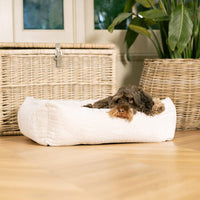
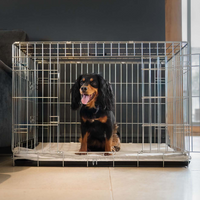
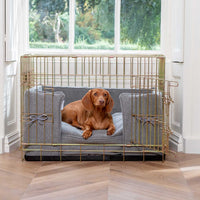
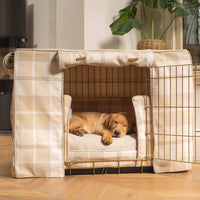
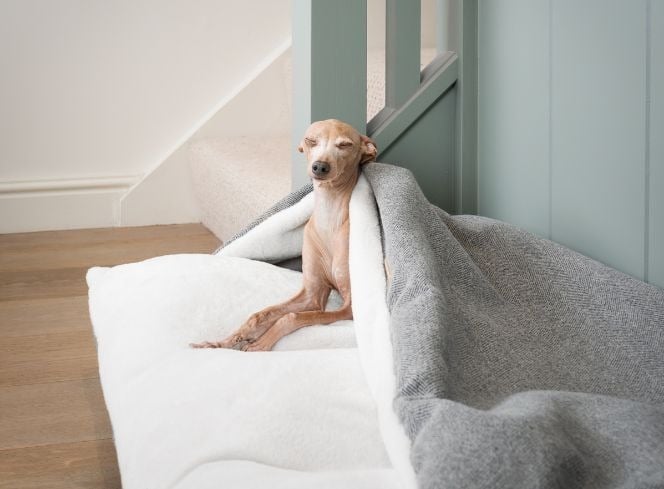
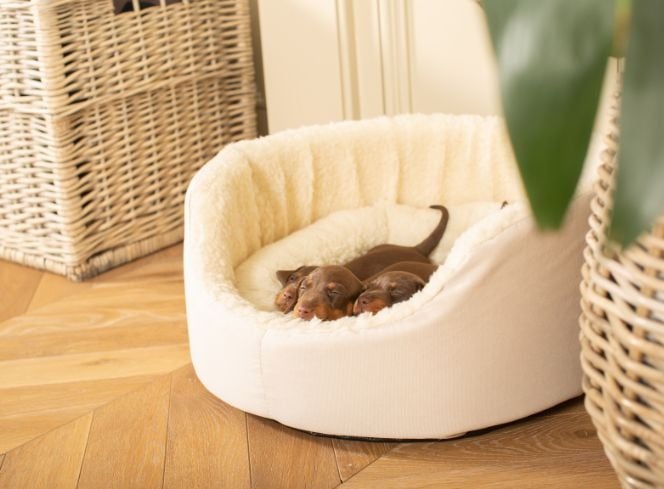
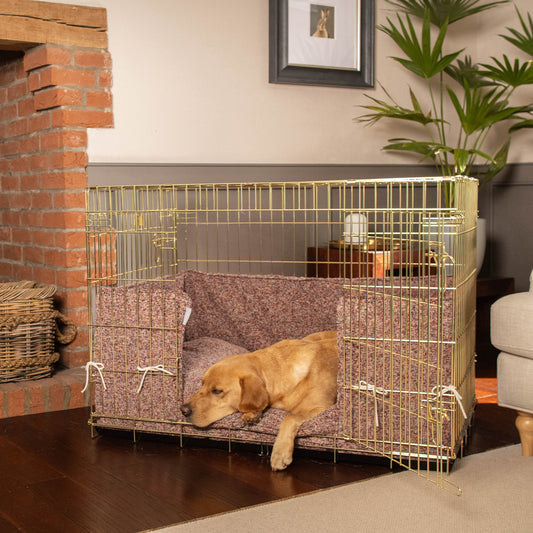
Did you know dogs spend 12 to 14 hours a day sleeping? That's a lot of time in bed so it's no surprise that their bed might be looking a little worse for wear. Dogs are creatures of comfort so making sure they have a a clean and supportive bed is essential for their overall well-being. In this guide, our Pet Experts explore the signs that indicate it's time to change your dog's bed and share expert tips on how to care for your canine's cherished sleeping spot.
How Often Should You Replace Your Dog’s Bed?
Determining how often to replace your dog's bed depends on several factors including the quality of the bed, your dog's size and activity level, and any specific health considerations. As a general guideline, it's advisable to replace your dog's bed every 1 to 3 years, or sooner if signs of wear and tear become noticeable.
Signs It's Time to Change Your Dog's Bed:
Visible Wear and Tear: Over time, your dog's bed may start showing signs of wear and tear, such as flattened cushions, lumps, or torn fabric. If you notice any significant damage, it's a clear indication that it's time to consider a replacement.
Lingering Odours: Despite regular cleaning, dog beds can accumulate odours over time, especially if your furry friend enjoys outdoor adventures or has accidents indoors. Lingering smells that persist even after washing could signal the need for a new bed.
Loss of Support: Just like humans, dogs require proper support for their joints and muscles, especially as they age or if they have existing health conditions. If your dog's bed no longer provides adequate support or has become too soft, it's time to invest in a new one to ensure their comfort and well-being. It might be worth investing in an orthopaedic dog bed if your dog’s breed is prone to joint issues.
Allergies and Skin Irritations: Dogs can develop allergies or skin irritations from prolonged exposure to dust mites, pet dander, or other allergens that accumulate in their beds over time. If you notice your dog scratching more than usual or experiencing skin issues, a new bed with hypoallergenic materials may offer relief.
Preference for Alternative Sleeping Spots: Dogs are creatures of habit, and if you notice your furry friend opting for alternative sleeping spots around the house instead of their bed, it could indicate that they're no longer comfortable or satisfied with their current sleeping arrangements. It’s worth looking at how your dog likes to sleep so you can get the best bed shape to suit their sleeping style, our Information Hub has a guide on how to choose the perfect dog bed for your dog.
Top Ways to Care for Your Dog's Bed:
Regular Washing: Establish a routine for washing your dog's bed to remove dirt, hair, and odour-causing bacteria. Most of our Lords & Labradors dog beds are machine washable, we have a handy guide on how to wash your dog’s bed here.
Use a Removable Cover: Opt for dog beds with removable, machine-washable covers for easy cleaning. Having a spare cover on hand allows you to swap them out while one is being laundered, ensuring your pup always has a fresh and clean place to sleep. We also sell bamboo bed covers which are great for popping over your dog’s bed to help keep them clean especially after a muddy dog walk, they will act as an additional layer of defence against moisture and stains, extending the life of the bed!
Vacuum and Spot Clean: In between washings, use a handheld vacuum or lint roller to remove hair and debris from the surface of the bed. Spot clean any stains or spills promptly to prevent them from setting into the fabric.
Rotate and Fluff: Just like flipping a mattress, periodically rotate your dog's bed to distribute wear evenly and prevent premature sagging. Fluffing the bed's filling helps maintain its loft and support over time.
Sun and Air Dry: On sunny days, take advantage of natural sunlight by airing out your dog's bed outdoors. Sunlight helps eliminate odours and kills bacteria, leaving the bed feeling fresh and revitalised.
Inspect Regularly: Take time to inspect your dog's bed for any signs of damage, loose seams, or worn-out stuffing. Promptly address any issues to prevent further deterioration and ensure your pup's safety and comfort.
By recognising the signs that it's time to change your dog's bed and implementing proper care and maintenance techniques, you can provide your furry friend with a clean, comfortable, and supportive sleeping environment. Remember, a happy and well-rested pup makes for a happier pet parent too!
If you’re looking to upgrade your dog’s bed why not check out our collection of luxury dog beds? Bedding is our speciality, we design and craft all of our bedding here in our Lincolnshire workshop so you can be sure your dog will be getting the best sleep possible in one of our luxury dog beds.
The Importance Of Correct Nutrition For Dogs And Cats!
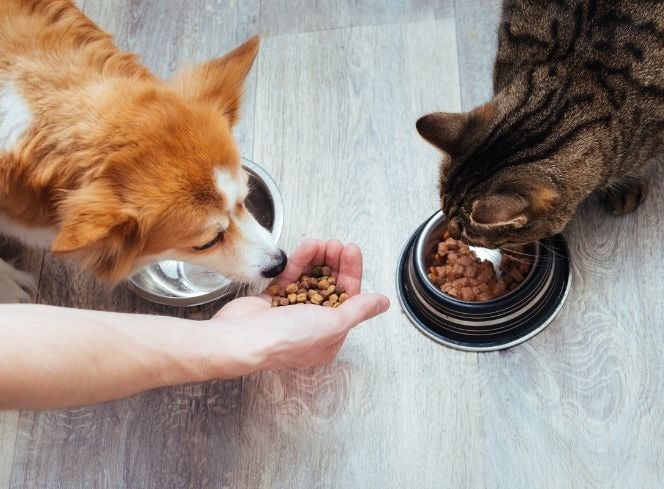
Ensuring optimal nutrition for our beloved pets is paramount for their overall health and well-being. As responsible pet owners, it is crucial to understand the significance of providing nutritionally complete and balanced meals to our furry friends. In this comprehensive guide, we will delve into the world of dog and cat nutrition, exploring the importance of the right food choices, nutritionally complete homemade recipes, and the best commercial options available.
Understanding Dog and Cat Nutrition
Your pet's nutrition plays a pivotal role in their vitality and longevity. Just like humans, dogs and cats require a balanced diet that fulfils their specific dietary needs. A well-rounded diet supports their immune system, maintains a healthy weight, and promotes optimal organ function. Pet food ranges from being more processed to being raw and rich in natural ingredients, finding the right fit for your pet is important!
Dog Food Nutrition
Choosing the right dog food is a key aspect of canine care. With an abundance of options available, it's essential to prioritise nutritionally complete choices. To make an informed decision, consider using a dog food nutrition calculator and comparing different products. Look for the best nutritional dog food that meets your pet's unique requirements, taking into account factors such as breed, size, and age. Our favourite nutritionally rich dog foods are Orijen, Carnilove and Acana, they are all designed with your dogs nutrition in mind.
Dog Nutrition Facts and Guide
Understanding dog nutrition facts is imperative for providing the best care. Refer to a dog food nutrition guide to navigate through the plethora of choices available in the market. Learn about your dog's daily nutritional requirements and make informed decisions that contribute to their overall health and happiness.
Cat Food Nutrition
Cats, being obligate carnivores, have unique nutritional requirements. The best cat food for nutrition considers their need for high-quality protein and essential nutrients. Explore dry cat food nutrition labels to ensure your feline friend receives a balanced diet that supports their specific dietary needs. For a cat food which is high in protein and great for fussy felines we love Carnilove, they all have at least 80% wild origin meat content and contain No grains, potatoes, GMO, soy, sugar, preservatives or colourants.
Daily Nutritional Requirements for Cats
Cats require a carefully balanced diet to thrive. Knowing the daily nutritional requirements for cats is essential for choosing the right cat food. Consult with your vet to understand the specific needs of your cat, such as the importance of taurine and other essential nutrients crucial for their health.
In conclusion, the importance of correct nutrition for dogs and cats cannot be overstated. Whether choosing commercial options or crafting homemade recipes, prioritising nutritionally complete meals is key to ensuring your pet's health and happiness. Stay informed about dog and cat nutrition, consult with professionals, and make choices that align with your pet's unique requirements. By providing the best nutritional dog food or cat food, you contribute to a longer, healthier life for your furry companions. Here at Lords & Labradors we have a large range of both cat and dog food so you can pick the best option for you and your pet
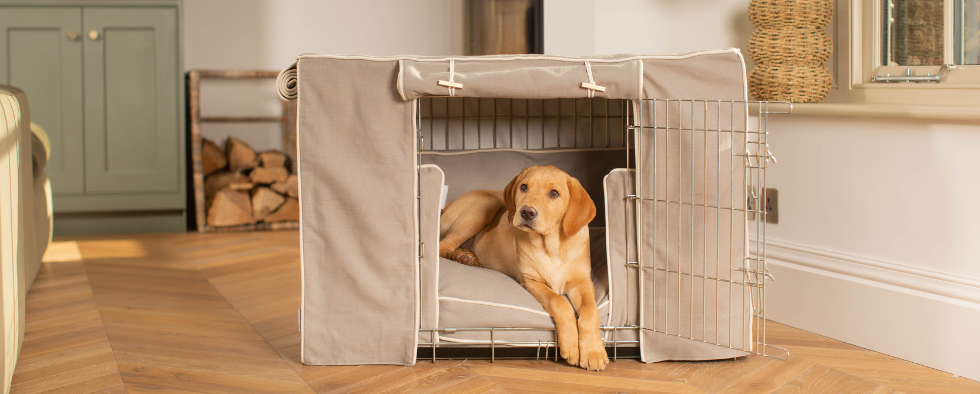
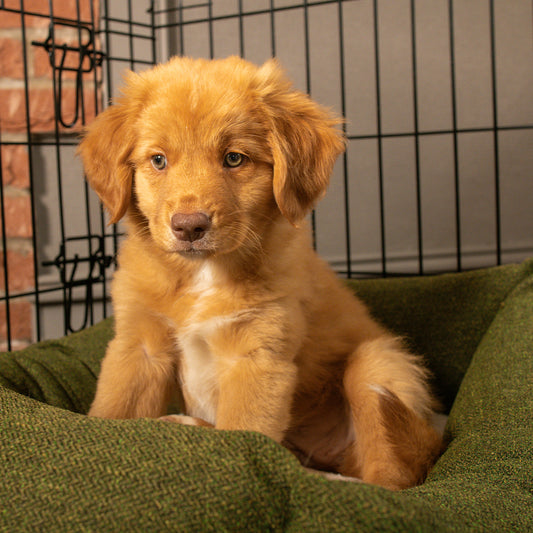
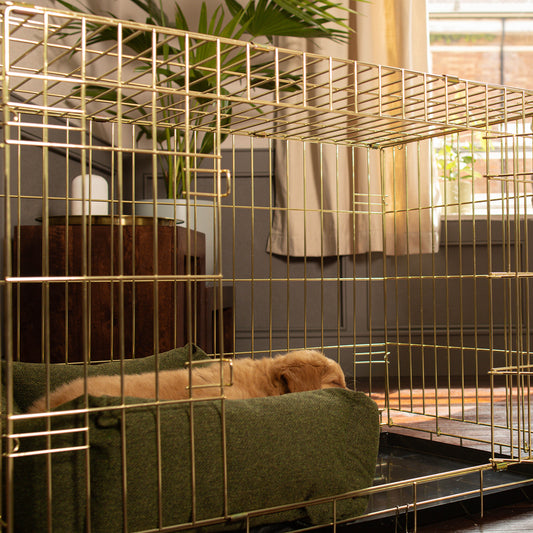
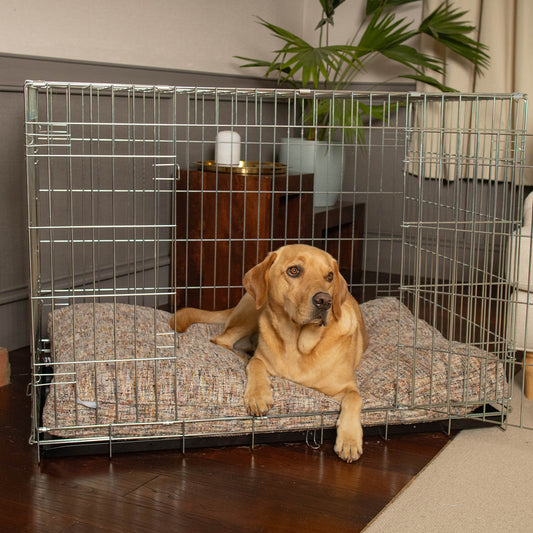
Crate training is an important part of settling in a new puppy. A crate provides a safe, quiet space for your pup and will help them to get used to their nighttime routine and with toilet training. A dog crate can be made into a cosy den that will be loved by your new four-legged friend for a lifetime. In this article we will explain the best crate set-up for puppies, how to change the set-up as they grow up and also how to look after your crate and crate bedding.
How To Make The Perfect Crate Set-Up For A Puppy
Crate training your puppy will have lots of advantages, helping them to settle and feel safe in their home as well getting them into a consistent bedtime routine. The perfect crate for a puppy will feel safe, warm and cosy. It’s important that it’s inviting so that they feel compelled to use it.
With this in mind we’d suggest the following items:
Crate Cover
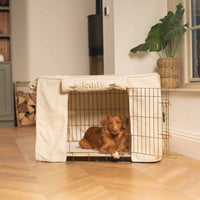
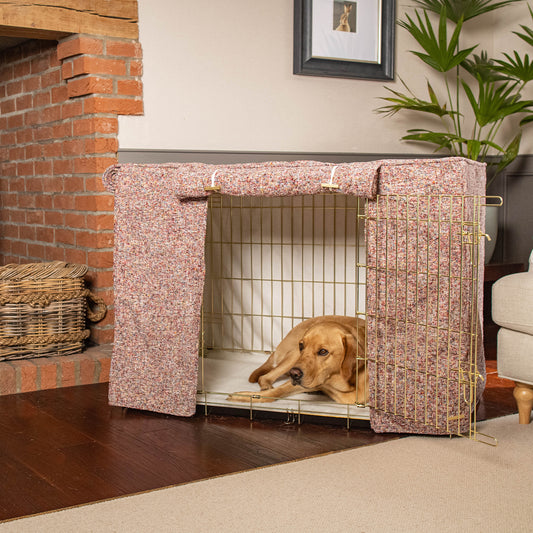
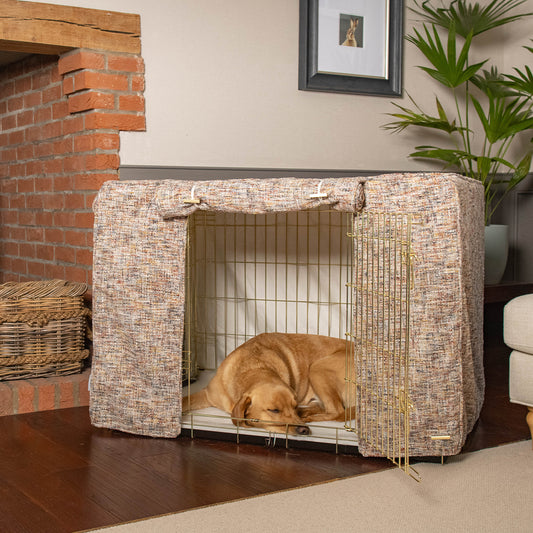
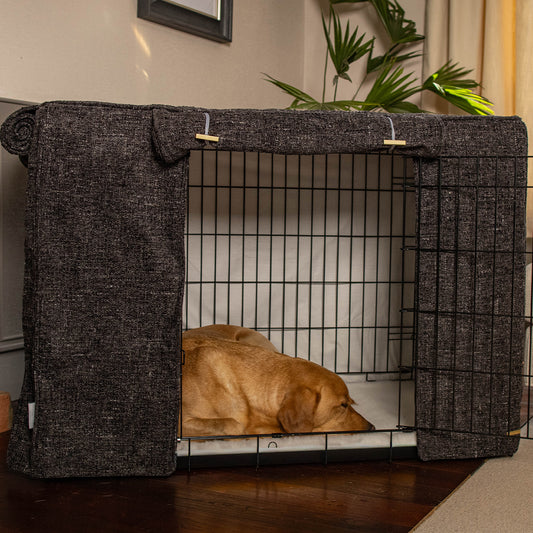
[product]Crates in their basic form can be rather draughty and a little bit unsightly! A crate cover will not only make the crate look stylish, but it will make the crate feel cosy inside. Our crate covers feature roll down doors which can be lowered when it’s time for bed. Puppy will soon learn when they should be sleeping (doors rolled down) and when it’s time to get up (doors rolled up). Our crate covers come in a range of fabrics which have been designed to match your home and they're all machine washable, making them brilliant for puppies!
Cosy & Calming Puppy Crate Bed
[product]
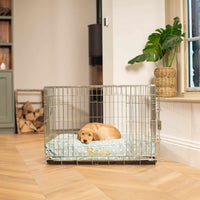
Our cosy and calming beds have been designed with crate training in mind. Each size is made to fill exactly one half of the corresponding crate size. So if you have a small crate for a Chihuahua for example, the small bed will fit in exactly one half of the crate. This then leaves room for a puppy pad in the other half along with a bowl for water. They come in a range of our printed cotton fabrics and feature a reversible cushion pad inside - one side covered in super plush sherpa!
Puppy Pads
Whilst we don’t want to encourage puppies to pee in the crate, it’s also important to note that they can’t hold themselves for very long at all. Whilst you will be able to take them outside at regular intervals during the day, this may not be the case at night. When you put them to bed, putting a puppy pad in one half of the crate will help to stop any accidents from dirtying their bed or crate tray.
Crate Bowls
Puppies will need access to water at all times and a crate bowl is a brilliant accessory as it can be fastened to the crate walls. This will ensure it doesn’t get tipped over or knocked like a standard bowl might.
The Perfect Crate Set-Up For An Adult Dog
As your dog becomes toilet trained and they begin to need the full space of the crate for their bed, you will need to consider swapping out the puppy accessories for their proper adult bed. At Lords & Labradors we specialise in crate bedding that will make your dog’s den look stunning as well as super comfortable inside.
Crate Cushion
Our crate cushions are designed to fit our crates perfectly. They come in a range of fabulous fabric designs from luxurious tweeds to printed cottons. There really is something to suit every taste and home.
Crate Bumper
Crate walls aren’t the most comfortable things to snuggle up to, and if your dog likes to curl in the corner of their bed, they will need something other than metal bars! That’s where our fabulous bumpers come in. They sit around the edge of the crate cushion and create a spongey layer of warmth around the walls. Perfect for snuggling up in the corner when nap time calls!
Crate Cover
Our crate covers are perfect for setting a routine with your dog, when the doors are rolled down it will signal to them it's time to sleep. Our crate covers are fully lined to help keep light out and come in matching fabrics to our bumpers and cushions to you can be sure crate will look stylish!
Crate Set Aftercare and How To Clean A Crate
With a little love and care your crate set will last a long time. Here we detail how to look after your crate set:
The Crate - The crate is made of sturdy metal and is really easy to keep clean. Our crates are easy to wipe clean and the tray is removable so you can get into the corners properly. It’s really important to make sure the crate is completely dry before setting back up and allowing your pet back in, we recommend drying your crate to avoid any rusting.
Lords & Labradors Cushion & Bumper Covers - For our bedding from our core collection you will be able to remove the covers on the cushions and bumpers. Turn the cover inside out and machine wash on a 20 degree gentle cycle. Allow the covers to air dry (do not tumble dry). Once dry return the inner cushion to the cover.
Essentials Plush Collection Bumpers & Cushions - Our bumpers and cushions from the Essentials Plush Collection don't have removable covers, we recommend spot washing your essentials plush bumpers and cushions.
Lords & Labradors Crate Covers - Our crate covers are all machine washable on a 20 degree gentle cycle, apart from our oil cloth crate covers. After washing, we recommend air drying your crate cover over your crate to help keep it in shape and to make sure it doesn't shrink. A cool iron on the reverse of the cotton fabrics is fine if necessary, but often they won’t even need that. Our tweeds and Savanna fabrics are super fast drying and they will come out of the spin almost dry. Just give them an air and they’ll be ready to use again in no time at all!
Cushion and bumper inners - The cushion and bumper inners are protected by waterproof interlinings, so won’t need washing. This will preserve the inner fillings. The waterproof liners are wipe clean. If they become soiled, simply wipe down with a mild pet-safe detergent and they’ll be as good as new again.
Cosy and Calm Puppy Bed - Our puppy beds are fully machine washable. You can put the whole bed in the machine and wash on a 20° cycle. When removed, simply shake and plump the cushion back into shape and leave to air dry.
Follow these simple steps and your crate sets will last and look stunning for years to come!
We’re getting to that time of year again where we’re travelling more with our pets to the beach, staycations and even trips to a different location for a long walk. No matter how long the journey - even if it’s a trip to the local vets - you should ensure your dog is properly restrained and safe to travel. Here in the UK it’s the law when travelling by car your dog needs to be restrained. In this blog, we breakdown how to travel safely with your pet.
What Is The Law With Dogs In Cars?
The Highway Code states in their Rules about Animals, when in a vehicle, dogs are to be suitably restrained so they cannot distract you while you’re driving or injure you, or themselves, if you should need to stop quickly. If you were in an accident caused by your dog distracting you whilst you were driving, this could be considered as ‘dangerous driving’. It’s also good to check your insurance policy, as car insurance providers may require you to restrain your pet.
Is It The Law To Restrain A Dog In A Car?
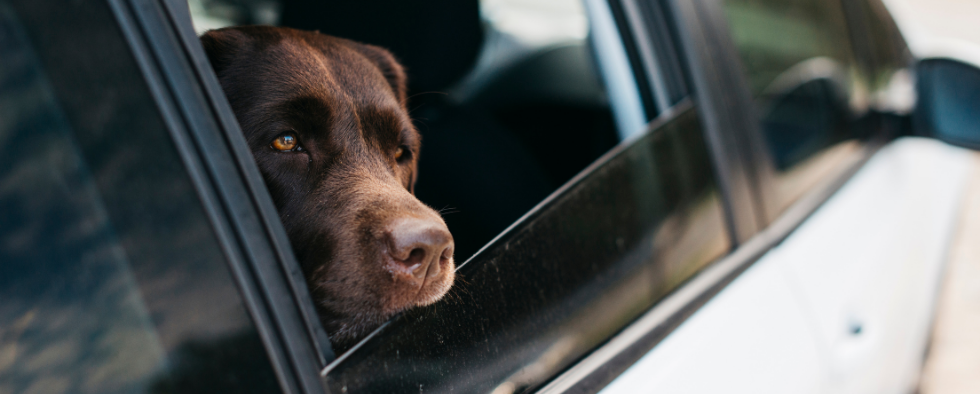
It is the law to restrain your dog when travelling in your car. So as fun as it is for your pooch to sit with their head out of the window, they must be suitably restrained so they cannot distract you and potentially hurt either you or themselves. When it comes to where your dog should be when travelling, although there are no laws against your dog travelling in the footwell of the car, unfortunately they would not be properly restrained and if you did have an accident, you may be prosecuted for ‘dangerous driving’.
When choosing where your dog should be properly restrained, no matter what method you choose, your dog should not sit in the front seat - securing them in the boot or back seat behind a front seat is considered a safer option.
How To Secure A Dog In The Car
There are many safety products you can choose from, which can help with travelling safely in the car. It’s most important you choose a solution that’s suitable and comfortable for your pooch, and it has been installed and executed correctly to ensure the safety of your pet. Here at Lords & Labradors, we’d recommend the following for safe travel.
Dog Carriers
Our pet carriers come in different sizes and weights which will vary for the suitability for you and your dog. It’s a lighter option to our metal crates and are easily packed away if you’re staying away from home. Carriers are great when travelling by car and when taking your dog from the car into a safe place to let them out and stretch their legs. They keep your pooch safe and settled whilst travelling.
Travel Harnesses
Our pet-friendly harnesses come in a variety of sizes, suitable to your dogs breed and size. Travel harnesses are easy to fit onto your dog and it’s quick to clip them into place. They’re specially designed to prevent your dog from moving around whilst in the car, all whilst keeping your pet safe and comfortably restrained.
Travel Crates
Crating your dog keeps them safe & secure - using a crate to transport your pet has the added benefit if they’re already used to being crated at home. If your dog is used to being crated, often when travelling they’ll feel safer and their surroundings will reduce any anxiety your dog may have around travelling.
How Long Can A Dog Travel In A Car
Being stuck in the car can be hard for your dog! Not only will your dog need regular toilet breaks, they’ll also need to stretch their legs and get some of their energy out. When stopping for your dog to toilet and stretch their legs, you could also give them some food and water to avoid any spillages whilst travelling. Ideally you should try to keep to your dogs routine where possible (even when travelling) - every 2 to 4 hours for about 15 to 30 minutes is a good guide to follow, however you’ll know what is best for your dog and how they travel. If you’re planning a lengthy trip, try to go on few shorter journeys to see how your dog is likely to react.
You may be preparing for the all important ‘Gotcha Day’, the day celebrated by all dog parents as the day you brought your pup home. Taking your puppy home for the first time is exciting, especially if you have prepared for their arrival. Puppy shopping can be so much fun, but also overwhelming if you’re a new pet parent, or if you’ve not had a puppy for a few years. There will be some things you do need to buy for necessity and some things that are worth buying for your new pup. Here at Lords & Labradors we’ve put together the 10 puppy essentials you’ll need to get your new puppy settled.
Our Top 10 Items To Buy For Your New Puppy
1) What crate to buy?
Firstly, if you’ve decided to crate train your puppy, you’ll need a crate that will see you through from puppyhood to adulthood. You’ll need a crate the appropriate size so you can fit a puppy bed at one end and a puppy training pad the other incase they need to toilet when left in their crate. It also gives your pup enough room to stretch, play and sleep if crated during the daytime. Depending on your training methods, you may want to place the crate somewhere the puppy can be near to you, but also not directly in a high traffic area of your home. Remember the crate is your puppy’s den, so discourage any children from climbing inside.
2) Where should my puppy sleep?
We recommend a puppy bed that’s easy for your pup to get in and gives them enough support and comfort whilst they sleep. Our Cosy & Calm Puppy Box Beds have been carefully designed with your puppy in mind. The beds are super squishy and soft, and have the most comfortable sides for your pup to snuggle right into. If you have chosen to crate train your pup, our vet bed is really popular, as it’s cosy, comfortable, robust and relatively puppy proof - it’s easily washed and dried too. It can be used with or without our Cosy & Calm puppy box bed.
3) What will my new puppy eat?
It’s recommended you initially use the same food that your puppy comes home with, in order to avoid any tummy upset during their first few days with you. Once your puppy has settled, you can gradually introduce a new food to their diet. It’s good to check the food guidelines of the food you choose to feed your pup, as often they’ll give you the correct guidelines on how to introduce the new food to your pup.
Make sure you have a clean bowl for water and a clean bowl for food, you can opt for a slanted water bowl if you have a spaniel breed to reduce your dogs ears from getting soaked in their water.
4) Puppy Toilet Training
Top of your list should be a reliable pack of puppy training pads, not only are they great for training your young pup, but they are invaluable when travelling (pop in the bottom of their carrier/crate to catch any travel sickness or accidental toilet trips). You can also use them to absorb muddy, wet paws after your pup has had a play in puddles!
5) How to settle my new puppy at night
When settling your new puppy at night, our heart beat sheep will be your puppy's new best friend. The heart beat sheep features a beating heart inside that mimics the beat of Mum's heart. They're designed to offer comfort and calm to new puppies who may feel nervous in their new home; they help to stop separation anxiety too. Alongside the heart beat sheep, you could pop in a heat pad under your dogs bed/cushion to keep them warm and to mimic the feeling of having siblings/mum near. Both the heat and the heart beat sheep will provide comfort for your puppy, especially whilst they are settling in and adjusting overnight.
6) How to keep your new puppy entertained
Toys will provide something to chew on for your pup, which you’ll find are essential if you want to avoid your puppy chewing on your furniture. Choose a variety of textures, styles and sizes to keep your puppy engaged and interested. You may want to keep a toy box so your pup can choose what they’d like to play with, or keep a few toys in rotation so your puppy doesn’t get bored with them.
You can also buy toys you can fill with treats or their food. If you want/need to leave your puppy - remember to build this up slowly, and don’t leave your new puppy for a long period of time - you could try freezing a peanut butter filled KONG (remember to use doggy/puppy friendly peanut butter). Freezing the toy will take them longer to work through and will give some relief to their sore teething gums and teeth.
7) Does my new puppy need a collar?
You may want to purchase your dogs collar before they arrive home with you, however it’s advised to purchase the correct size collar for your puppy, which you may have to wait until they’re here to measure them properly. It is a legal requirement to have a tag with your details on incase your puppy gets lost or strays away, but it’s advised not to add your puppy’s name to the tag.
8) How will I get my new puppy home?
Collecting your puppy to take them home is really exciting, but it’s best to be prepared. Make sure you have a suitable carrier/crate to store them in safely for the journey. It’s important your dog is restrained as it is the law to keep your puppy properly restrained whilst driving. In your carrier, you may want to pop in a blanket that smells like home and a scent blanket that smells like their mum and litter mates. It’s also good to have some puppy training pads to hand incase of any car sickness or accidental toilet trips.
9) When to start training my new puppy?
You can start with bonding and training your puppy almost straight away, get some high quality, puppy training treats (make sure to check the guidelines), and enjoy teaching them new tricks - you’ll be amazed at how quick they learn!
10) When do I start grooming my puppy?
It’s recommend that even if your pup won’t require grooming at first, you should regularly brush them to get them used to being groomed and handled. Choose a simple, soft brush and/or comb for the first couple of months. There will be a time you will need to wash your puppy, make sure you’re not using human shampoo as this will upset your puppy's PH levels and may not be compatible with your puppy flea treatment. It’s best to invest in a puppy shampoo that you can use when and if you need to bathe your puppy. We have our own puppy grooming set in our Petplex collection called the 'Puppy Purifier' it has a shampoo and a cologne to help keep your puppy smelling fresh.
In the last few years the adorable teddy-bear like cross breed has quickly become a top choice for a family dog. Cockapoos were first bred in the USA in the 1950’s and are one of the oldest known planned hybrid dogs. They are a cross between two well-known hunting dogs: the Cocker Spaniel and the Poodle. Cockapoos aren’t a recognised dog breed but are one of the most popular poodle cross breeds. Their sweet nature and gentle temperament makes them the perfect family pet, as well as the hypoallergenic coat. If you are preparing to bring a new Cockapoo home with you, then you make sure you read this guide to learn everything you need to know about Cockapoo’s as well as everything they will need to feel right at home.
Cockapoo Features
Breed
Cockapoo
Breed Group
Hybrid
Breed Size
Small - Medium
Height
25cm - 38cm / 10" - 15"
Weight
5kg - 11kg
Coat
Long and Curly
Colours
Red, cream, black, blue, white, gold, yellow, brown & chocolate
Lifespan
10-12 Years
How Big Does A Cockapoo Get?
Cockapoos vary in size due to being a cross breed so it’s hard to generalise just how big they will grow to. On average they grown to around 10-15 inches when standing but this can massively vary depending on whether the poodle parent is a toy, miniature or a standard variety of Poodle.
Being small- medium sized dogs we usually recommend a large in L&L products but always check the individual product listings size guide or our customer service team are always happy to help you find the perfect fit.
What Do Cockapoos Look Like?
Being crossbreeds Cockapoos come in all shapes and sizes, there’s no ‘breed standard’ so there’s plenty of variation to choose from. Most commonly Cockapoos have luscious curls which come in chocolate, red, black, blue, cream, and white, as well as multi-coloured and patterned coats. Their floppy Cocker Spaniel ears frame their gorgeous teddy bear-like faces.
How tight your Cockapoo’s curls are depends on their parents, they can have tight curls, waves or ringlets or a more shaggy coat. They are great dogs for people with allergies due to being low shedding.
Are Cockapoos Easy To Train?
Cockapoos are very smart thanks to their Poodle heritage but they can have a short attention span at times due to the Cocker Spaniel in them. They are loyal dogs who love to both please and be near their owner. This desire to be near to you as their owner means they can be susceptible to separation anxiety which is why training them from a young age is key. Crate training is a great way to get your Cockapoo used to being on their own for short periods of time and the crate makes a great safe space for your Cockapoo.
Due being eager to please you as their owner Cockapoos will thrive off positive reward training and as with all dogs consistency is key when training your Cockapoo.
Cockapoo Health Issues
Learning about any potential health issues early on is a great idea, it allows you to put any preventative measures in place and pick up on any warning signs early on. Below we’ve listed the main health issues that Cockapoos are prone to but if you have any concerns we always recommend to speak with your vet.
Being floppy-eared dogs, Cockapoos are susceptible to ear infections. Make sure to clean their ears weekly with a solution such as the Wahl Easy Ear Cleaner or the Bugalugs Soothing Ear Cleaner to help keep infections at bay. Keep your eye on your dog’s ears and go to your vet if their ears become red, itchy or have discharge.
Cockapoos can be prone to eye problems such as Progressive Retinal Atrophy, Hereditary Cataracts, Glaucoma and Corneal Ulcerations. It’s important to watch out for the signs and catch them early so your vet can diagnose and treat them as soon as possible.
Other health issues to watch out for with your Cockapoo include allergies, dental disease and anaemia.
How To Groom A Cockapoo
Cockapoo cute curls take a lot of maintenance to keep them that way. We recommend daily brushing of their coats to prevent matting, a slicker brush like the Rosewood Salon Slicker brush or the Ancol Ergo Universal Slicker brush are great for brushing out their curls. If their curls do get a little knotty why not try either the PetPlex Curl Perfector spray to help brush them out?
Cockapoos are relatively odourless so don’t need bathing too regularly, we recommend bathing only when they are dirty or smelly so that their coat can retain all the essential oils to help them stay soft and shiny. For curly haired dogs we love PetPlex Curl Perfecter Shampoo; for summer the TropiClean Natural Flea and Tick Shampoo Maximum Strength is perfect for keeping bugs at bay!
Straight scissors are great for trims in-between grooming sessions, it means you can keep the hair out of their eyes. Why not wipe away any tear stains with the Tropiclean Tear Stain Remover?
We recommend getting them groomed professionally every 4-6 weeks depending on how curly their coats are, this will help keep them crazy curls in check.
How Much Exercise Should A Cockapoo Have?
What dogs don’t love a walk? Well coming from two hunting breeds, the Cocker Spaniel and the Poodle, Cockapoos are energetic dogs so require lots of exercise and mental stimulation. We recommend around an hour a day for fully grown Cockapoos and for puppies we always recommend 5 minutes of walk time a day per month of age. You can split the walks into two shorter walks to keep them active throughout the day.
Being such intelligent dogs Cockapoos can require a lot of mental stimulation, enrichment activities such as the Nina Ottosson Interactive Toys are great for this – the sniffing and problem solving is sure to wear them out.
Make sure you have a good and sturdy harness for them to be walked in, as well as a lead. RuffWear Harnesses and leads make the perfect solution. The harnesses are comfortable and robust, providing you with additional support when they start to pull, without causing any restriction to your dog’s airways. Plus, they come in some great colours along with matching leads.
Some walks are wetter and muddier than others, and for these, it is important that you are prepared for home time. Your dog should be dried thoroughly after a walk, and so drying mitts and a drying coat are excellent things to have on hand. These allow them to get dry in their own time and in a more relaxed way.
Best Bowls and Food For Cockapoos
Every puppy needs food and water dishes, and you should always ensure that they are the right size. Their water bowls should be full at all times to keep them hydrated, and if they are a messy drinker, it is possible to buy placemats to prevent damage to your floor. Our favourite Cockapoo bowls are:
Beco Travel Bowls are perfect to pack in the car when you first bring your puppy cockapoo home - especially if you have a long journey ahead. The super handy pop up design is easy to stow away and ensures your pup can have water wherever you are on your travels. It's also not breakable - drop to as you're getting out of the car and it'll just bounce!
Medium Size Beco Bowls are a great choice for Cockapoos. They are made from eco-friendly materials, just like the travel bowls and come in matching colours too. Buy at least two for dry food and water and a third for wet food if you wish.
Tarhong’s Wood Grain Ceramic Stoneware Pet Bowls are gorgeous ceramic bowls, the neutral colour means they will look lovely in any home. The heavier weight of a ceramic bowl is great for stopping mischievous dogs who love to pick their food bowls up to play with. They’re also super practical as they dishwasher safe.
Here at L&L we love the James Wellbeloved food, it’s a great grain free option and they have both wet and dry food which will follow your beloved Cockapoo from puppy to adult to senior.
Best Toys For Cockapoo Puppies
Every dog, regardless of age, needs a few toys to play with and chew on. It’s great mental and physical stimulation, but also allows them to develop a deeper bond with you. Here are some of our favourite toys for Cockapoos – all of which can be found on our website:
Puppy Teething Toys
Puppy Soft Toys
Puppy Chew Toys
Puppy Throwing Toys
Puppy Activity Toys
Best Crates, Beds and Bedding for your Cockapoo
Your Cockapoo needs and deserves a comfortable place to sleep, especially after a long walk or exciting day. One of the places that dogs often feel safest in is in a crate. Not to mention that crate training new puppies is a great way to help settle and start their development from the moment they come home. It provides them with their own space where they can relax and get away from the hustle and bustle of the home.
We have great Dog Crate and Cover sets that also come with a comfortable cushion for them to sleep and relax on. When your puppy first comes home, you could buy a cosy & calming puppy box bed and place puppy pads in the other half. Then as they grow older and become home trained, you can swap to a full size cushion. Snuggly and enclosed, it provides the perfect space for them. The crate in a size large is ideal for your cockapoo from puppy to adulthood.
We also have a great range of beds for Cockapoos that will look great in the home and still offer your dog the comfort they need to get a good (and well-deserved) rest.
Cockapoo Shopping List
Hopefully this guide will have given you some ideas of the key things to buy when getting ready for your new Cockapoo. Oh and if you want to treat yourself why not get our Cuddlesome Cockapoo tea towel or oven glove? Or a Wagging Tail Cockapoo Dog Clock by the Labrador Company? For even more suggestions, visit our Cockapoo Breed Page which has some must-have items for all Cockapoo owners. If you need any help or advice with your order don’t hesitate to contact us, we’re always happy to help as best we can.
Is your dog obsessed with balls? You may be wondering what the ordeal is with their fascination. And why do some dogs love balls but others are indifferent?
In this blog, we look at exactly why dogs are bonkers over balls, why they like playing fetch, and how to train them to fetch and drop a ball.
Why Are Dogs Obsessed With Balls?
The main reason most dogs like balls and specifically playing fetch is because of their prey drive. the way a ball moves when thrown or dropped replicates the movement of prey which stimulates your dog's prey instincts.
Balls are also a perfect size to fit in your dog’s mouth to chew, it’s also a natural next step for them instinctively after catching a ball. Chewing is also believed to be relaxing and self-soothing for dogs, it helps to release endorphins which make them feel good.
Another reason your dog may love balls so much is because of your impact as their owner. When you first brought your precious pooch home you may have started throwing and playing with balls to meet their needs for mental stimulation and exercise, soon they begin to develop a habit and positive association with playing fetch. Playing fetch with balls quickly becomes a routine for them and they rely on it to connect and bond with you as their owner which is why they become so obsessed with their ball. Fetch is a great trust builder and way to connect with your dog, it’s quality time for them where they feel like they are pleasing you.
Why Do Dogs Like Playing Fetch?
Playing fetch can be fun for both you and your dog, it helps them burn off energy and is great quality time for you both. But where does their instinct to fetch come from? Dogs also love to please their owners, chasing an object and retrieving it for you is a great way for them to feel like they’ve accomplished something for you – especially if they’re getting a reward at the end.
The movement of the ball when you throw it will mimic the movement of prey for your dog and their instinctive nature will kick in telling them to retrieve the ball. The reward centers of their brains are then triggered and release dopamine, which is why they love playing fetch so much, it mimics the thrill of the hunt for them.
Not all dogs will love to play fetch, this will depend on their breed and their temperament. For many breeds, especially hunting dogs like Cocker Spaniels and Border Terriers, their prey drive is so strong that catching and retrieving a ball or toy when thrown will satisfy it and act as a reward in itself.
How Do You Train A Dog To Fetch A Ball?
Is your dog not a fetching expert yet? Fear not, we’ve put together our top tried and tested tips to help them become a pro in no time
Choose the right toy – make sure the ball or toy you want them to fetch is the right size for them. Too big and they won’t be able to hold it, if they’re a puppy or a senior they may need something easier to grasp with their teeth.
Make the toy more enticing for them, balls such as the KONG activity ball are great for putting treats in to encourage them to play with the ball. You can also try teasing them with the ball before playing fetch to gain their attention and to build their prey drive up
If your dog loves to chase a ball and not return it why not try playing bait and switch to get them accustomed to bringing the ball back? To play you’ll need to get two balls, throw the first one, and once your dog reaches it use the second one to tease them and entice them back. Once they’re back to you, with or without the first toy, throw the second one in a different direction. Whilst they’re getting the second toy, go to collect the toy and then repeat the pattern of throwing one toy and teasing with another. Chances are your dog will become too excited to get the next toy that they will stop dropping the first toy and will start bringing it back to you. Bringing the toy back in anticipation of another will slowly become a habit and your dog may be ready to start playing fetch with one toy at a time.
How Do I Teach My Dog To Drop The Ball?
Once your dog has started to bring the dog back to you say the word ‘drop’ and then put a treat in their mouth, in order to eat the treat your dog will have to drop the ball. Repeat this several times.
Next start to build this up by saying Drop and waiting 2-3 seconds for their mouths open. Make sure to reward them with a treat and fuss once they drop the ball. If their mouth doesn’t open try step one again a few more times. Keep repeating until your dog starts to associate ‘drop’ with letting go of their toy.
5 Easy Frozen KONG Recipes To Keep Your Dog Cool This Summer
We’re having another heatwave here in the UK and here at L&L we know it can be difficult to find ways to keep your dog cool whilst also keeping their busy minds active.
Finding a way to get your dogs energy out without them overheating can be tricky which is why we love frozen KONG’s so much.
Frozen KONG toys are an amazing way to both cool your dog down and keep them engaged. Being frozen it’s harder for your dog to get the food out which gives them more opportunity for problem-solving, mental stimulation and helps fulfill their natural instinct to hunt for food. Frozen KONG’s are great all year round for keeping your four legged friend busy, not just in the heat.
We've put together our tried and tested frozen KONG recipes for you and your precious pooch below.
KONG’s come in all shapes and sizes, make sure you get the right size for your dog. These recipes will work for either the classic KONG or the KONG tire depending on what they enjoy.
L&L Top Tips
Put a dry treat at on the hole at the bottom of the KONG to act as a stopper so food can’t get out when it freezes.
Wrap your KONG in cling film so the mixture can set in the freezer without spilling
Check your dogs dietary requirements before giving them any new foods and check with your vet if you are unsure.
Top 5 Frozen KONG Recipes To Use In A Heatwave
1. Peanut butter fro-yo
Ingredients
Dog peanut butter or natural peanut butter which doesn’t contain xylitol
Ripe Banana – chopped up
Plain yogurt
How to
Put all the ingredients in a blender and blend together until smooth.
Put the mixture into your KONG with a treat at the bottom and wrap in clingfilm.
Put in the freezer for 3 hours or until solid.
Let your dog enjoy.
Dogs Dinner
Ingredients
Your dogs favourite wet food
How to
Stuff your KONG with your dogs wet food.
Wrap in Cling film and freeze.
TIP – make sure to remove however much you put in from their daily food allowance
Sweet Smoothie
Ingredients
Chopped Apple
Blueberry
Water
How to
Add your chopped fruit and water to a blender.
Blend until smooth and thick.
Put a treat at the bottom of your KONG and fill with the mixture.
Wrap in clingfilm and freeze until solid.
Sunday Roast
Ingredients
Shredded chicken
Cooked chopped carrots
Mashed potatoes
How to
Layer the mash, chicken and carrots into the KONG making sure to put mash at either end to help seal the KONG.
Once full put in the freezer and freeze until solid.
Enjoy!
Tuna Melt
Ingredients
Tuna
Grated Cheese
Rice
How to
Layer the tuna, cooked rice and cheese into the KONG, we recommend putting a treat at either end to seal the KONG.
Wrap in cling film and pop in the freeze.
Freeze until solid and enjoy!
Looking for an easier option? Why not try the KONG easy treat?
Hopefully these help to keep your dog cool this heatwave, why not look at our Top Tips For Keeping Your Pets Cool in Summer?
Frenchie’s are an increasingly popular breed amongst pet owners. A small breed of domestic dog, first bred in the 1800s as a result of a cross between bulldog ancestors imported from England and local ratters in France. Like many companion breeds, French Bulldogs make wonderful lapdogs and thrive on human interaction. They are also good with children, having patient and affectionate temperaments. If you are looking to bring a French Bulldog home for the first time or already have one, take a look at our ultimate Frenchie guide and learn everything you need to know about Frenchie’s and all the essentials you need.
Features
Breed
French Bulldog
Breed Group
Utility Breed Group
Breed Size
Small
Height
15.5"-18.5"/46cm - 55cm
Length
18" - 21.5" / 46cm - 55cm
Weight Range
7.3kg - 12.7kg
Coat Length
Short
Coat Colours
Brindle, Light Brindle, Dark Brindle, Brindle & White, Fawn, Fawn & White, Fawn Pied, Fawn With Black Mask, Pied
Lifespan
10-12 Years
How Big Does A French Bulldog Get?
French Bulldogs are small breed dogs and when fully grown they usually measure between 39 and 47cm when standing.
Male Frenchie’s usually weigh between 9 and 12.7 kg and female Frenchies 7.3 – 10.9kg.
Being small dogs we usually recommend a medium size in L&L products but check the products sizing guides or speak to our customer service team for more guidance.
What Do French Bulldogs Look Like?
Frenchie’s are known for their flat faces and bat like ears. They are sturdy, well-built dogs with smooth, fine coats.
Common coat colours include Brindle, Light Brindle, Dark Brindle, Brindle & White, Fawn, Fawn & White, Fawn Pied, Fawn With Black Mask and Pied.
Are French Bulldogs Easy To Train
French bulldogs may be small, but they are highly intelligent. This makes them great to train, as long as you keep the training fun, they will be highly receptive to training. They will thrive on positive reward-based training, having plenty of treats and praise will make training them so much easier!
They are a clean breed making them on the easier side to toilet train. However, remember that as a small breed they have small bladders (especially as puppies) so taking them out regularly is key to successfully toilet training your Frenchie.
As with all dogs, consistency is key! Establish a routine from the day they come home and stick to it as much as possible.
Health Issues
Keeping any potential health issues in mind from the start is a great idea, it means you can put preventative measures in place and pick up on any warning signs early on.
Being a flat-faced breed one of the main health issues that Frenchie’s may have is breathing problems due to not being able to pant properly to cool themselves down. You’ll likely notice them breathing a little heavier when exercising or in warmer weather. You can help their symptoms by putting them in a harness to walk rather than a collar which may put added pressure on their neck, keep them inside and cool on warmer days and keep their walks short and sweet.
Frenchies can be prone to dry, cracked noses and paws, especially in cold weather. Nose Balm and Paw Balm will help keep their skin moisturised and help any cracks heal. We have some great options here at L&L and particularly love the Animology Paw and Nose Balm or the Be:Soft Nose and Paw Balm.
Other health problems to watch out for with Frenchie’s are skin allergies such as dermatitis, corneal ulcers, intervertebral disc disease (IVDD) and Degenerative Myelopathy.
How To Groom A Frenchie
As we mentioned above, Frenchies are usually a clean breed so don’t need weekly washes, we recommend washing them when they are visibly dirty. Frenchies can be prone to skin allergies so a shampoo for sensitive skin can help to manage them.
We love the PetPlex Derma Doctor shampoo for sensitive skin.
With all their fabulous folds on their face, it’s important to be careful whilst washing them, any moisture that gets trapped in between them may lead to an infection. Why not try using a dog-friendly wipe such as the Earth Rated Grooming wipes to clean in between them?
We recommend a weekly brush just to help remove any excess fur and debris which may have built up in their coat. For fine Frenchie coats rubber brushes or gloves are great, the Ancol Ergo Grooming glove is a pawfect fit for your bulldogs luscious locks.
To help keep eye problems at bay try Vet’s Best Eye Cleaning Pads, they are safe and easy to use and contain aloe vera which helps to soothe their eyes and remove any tear stains.
How Much Exercise Should A Frenchie Have
What doggy doesn’t love walkies? Whilst French Bulldogs don’t require the longest walks of all dog breeds, they do need some short walks to help keep them healthy.
Fully grown French bulldogs will need up to an hour’s exercise a day. We recommend splitting this into a few shorter walks to help with their breathing.
It’s a great idea to let your Frenchie have some time to play off-lead to help keep their mind active, this will give them plenty of opportunities to sniff around and will keep them mentally stimulated.
Being such intelligent dogs they need plenty of things to keep their mind active, a great boredom buster is the Nina Ottosson Dog Casino Puzzle.
Being a smaller dog, they aren’t suited to intense canine sports like agility in the same way that larger breeds are. They’re better for a slower-paced workout that is short and sweet.
We would suggest a harness rather than a collar, as collars can restrict their breathing. Harnesses also offer great comfort and control when lead training.
Frenchie Nutrition
Bowls are a necessity for every breed of dog. Keep water down at all times and feed your dog according to the guidelines set out by your chosen food brand.
We suggest a raised design for French Bulldogs and other breeds with deep chests to make them comfortable at feeding time.
These Scruffs bowls are designed specifically for flat-faced breeds so are perfect for feeding your Frenchie.
Some great food options for your Frenchie are James Wellbeloved Fish & Rice Adult Dog Food or the Royal Canin French Bulldog range – they have both puppy and adult varieties so can follow your Frenchie’s growth and development.
Best Toys For French Bulldogs
French Bulldogs are not the most active breed of dog, but they do require some exercise and will enjoy some playtime too. A couple of different dog toys will keep them occupied, aid brain development and stop them from chewing furniture in boredom.
The Little Buddy Heart Beat Sheep is absolutely for puppies. It will mimic the heartbeat of mum to help settle your new arrival.
We also love KONG toys as they are good for chewers and promote healthy teeth whilst relieving boredom.
Best Beds For French Bulldogs
There are a number of styles to consider when buying a bed for your new French Bulldog. The best option for puppies is a dog crate with matching cushion, cover and bumper set. The crate will keep them safe if you need to leave them on their own and is also great for potty training. The cover set will turn the bare, draughty cage into a sumptuous, cosy bed. When your puppy first comes home, you could buy a cosy & calming puppy bed and place puppy pads in the other half. Then as they grow older and become home trained, you can swap to a full size cushion. We’d suggest the medium size crate as this will then last them into adulthood.
Other options if you’re not looking to crate train your Frenchie or if you have an grown up Frenchie who no longer wants to sleep in their crate are our high-wall beds or box beds. High walls are great for frenchies who love to snuggle and curl up, where as box beds suit those who love to stretch out. Whichever bed you go for we recommend a medium size in L&L beds so they have plenty of room.
Frenchie Shopping List
Hopefully this guide will have given you some ideas of the key things to buy when getting ready for your new French Bulldog. Oh and if you want to treat yourself why not get the Wagging Tail French Bull Dog Clock by The Labrador Company? For even more suggestions, visit our French Bulldog Breed Page which has some must-have items for all Frenchie owners. If you need any help or advice with your order don’t hesitate to contact us, we’re always happy to help as best we can.
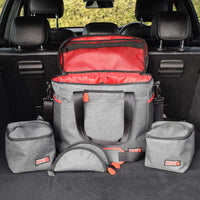
This week’s spotlight is one of our favourite brands – Mobile Dog Gear. They are the perfect travel companions whether you’re packing for a day at the beach or a week/weekend away from home this stylish pet luggage takes the chaos out of travelling with your dog. As well as being stylish they are incredibly functional so will be sure to meet your and your pooch’s travel needs. Here we are going to take a look at our Mobile Dog Gear range and we’re sure there will be something you and your four-legged friends will love!
Mobile Dog Gear Weekender Backpack
The Weekender backpack is a quilted deluxe backpack that’s brilliant for weekends or weeks away with your pet. It has two collapsible silicone bowls and a placemat, perfect for feeding on the go. On the front pocket, there is a poop bag dispenser for ease of use. The bag comes with two lined carriers for food and treats and there’s a handy side pocket for your water bottle.
In the main pocket of the bag, there is plenty of room for toys, blanket, drying coat, pet wipes and any other travel essentials. The straps are also padded and adjustable making it a comfortable addition to your walks.
Mobile Dog Gear One Flap Week Away Backpack
The Week Away backpack is a larger backpack that is ideal for weeks away. The Week Away Backpack comes in two colours: a gorgeous grey and a black, it is made from polyester which is resistant to both tearing and ripping. Its interior is also fully lined which makes it easy to keep clean.
There’s plenty of room in the week-away backpack for storing all the essentials such as toys, food, a drying coat and even a blanket.
The week away backpack comes with 2 lined food carriers which are perfect for food and snacks on the go. There are also 2 collapsible food bowls which fit nicely into the flap at the front and are top-rack dishwasher safe. A poop bag dispenser on the side makes it easy to grab a bag whilst on the go. There are also pockets on either side to store the essentials such as your water bottle or umbrella.
Mobile Dog Gear Week Away Bag
The week away bag has an adjustable padded shoulder strap making it easy to carry and it also has a handy luggage sleeve which allows the bag to slot over the pull-up handle of your suitcase. This bag meets airline carry-on requirements so is perfect for your jet-setting four-legged friends – it even has a luggage ID tag!
The Week Away bag comes in three colours – black, blue, and pink. Like with the other bags it comes with a handy feeding set including two collapsible bowls, two lined bags and a placemat. There is a divider in the main pocket which allows your food carriers to be neatly stacked to keep your bag organised.
There are several pockets to put all your essentials in making it the perfect travel companion.
Mobile Dog Gear Pet Carrier Plus
The Pet Carrier Plus allows you to travel with ease, it keeps your dog safe and has a handy feeding system. It is the ideal transportation mode for puppies, toys and small breed dogs, whether it’s to the vets, on a day trip or a holiday. There are handy side pockets for storage and even a strap to allow you to fasten it to your luggage handle.
The pet carrier has a waterproof bottom and rubber feet meaning you can pop it down wherever you need. The outside of the bag is made from a ballistic fabric and has breathable mesh panels.
Here at L&L, we love Mobile Dog Gear products, they’re designed well, premium quality and really practical. So if you’re looking to go on an adventure this summer why not treat your pooch to some stylish luggage for the trip?
SIGN UP FOR USEFUL TIPS & GUIDES STRAIGHT TO YOUR INBOX
28.07.22July 28, 2022HealthFeatured
Can Dogs Swim?
Every dog is different, some love a dip in a creek or pond and others treat water like the enemy. But can all dogs swim? The short answer is yes but in this blog, we will look at dogs swimming in a little more detail, explore what bodies of water are best for those pet parents who do want to take their dog swimming and discover the swimming essentials you'll need.
Can Dogs Swim?
A lot of dogs know how to do doggy paddle from the moment they first put their paws in the water and can be trained to become strong swimmers with a little practice. Swimming is a great way to make amazing memories with your dog, especially in the warm summer months, however, there are a few things to keep in mind when swimming with your dog.
Studies have shown swimming is a great stress reliever for dogs and improves their mental well-being. Having a varied range of exercises for your dog will help keep them sharp and happy. It’s also a great form of low-impact and non-weight-bearing exercise, this allows your pooch to enjoy the benefits of exercise without putting too much stress on their joints and tendons as the water will take on most of their weight.
Whether your dog takes to swimming like a duck to water or if they’re a little more hesitant, swimming is a great skill to teach your precious pooch to ensure they’re safe whenever you are around a body of water. The ‘doggy paddle’ swim movement is identical to how your dog moves their paws when walking so with a little help all dogs should be able to pick up swimming with a little help.
Some breeds are more natural when it comes to swimming and others may find it a little more challenging. Certain breeds like Labrador Retrievers and Portuguese Water Dogs were developed to be strong swimmers. Their body structures lend themselves to being stronger swimmers and so often these breeds will love nothing more than a splash in the water.
Other breed's body structures may not lend themselves as well to being natural swimmers, but this doesn’t mean they can’t learn with a little help and a life jacket. It’s important to be careful with breeds whose weight distribution doesn’t lend itself to being a natural swimmer – such as bulldogs or dachshunds and also as with all exercise make sure any flat-faced breeds don’t go too far so they’re not too out of breath.
If your dog isn’t a natural water baby, then start by teaching them to not be scared of the water and progress from there. Start slowly introducing them to the water and give them plenty of praise so they being to associate being in the water as a positive thing.
Even dogs that naturally start to doggy paddle will need a little practice, to begin with, they will likely splash a lot and tire quickly but with a little more time they will be able to keep their bodies afloat and will be able to build up their stamina.
Safety First
Use A Floatation Device - Float Coats have strategically placed foam panels to support your dog in its natural swimming position to give them optimal buoyancy. They also have handles so you can give your dog assistance when getting in and out of the water. These are great for helping your dog become more comfortable in the water and keeping them safe.
Stay Close - Always supervise your dog when swimming to ensure they’re keeping their head above water, aren’t swallowing too much water, and aren’t getting too tired.
Shallow To Start - Keep them in a shallow body of water with easy entry and exit points to begin with while they find their sea legs.
How Far Can Dogs Swim?
This massively depends on your dog’s breed, fitness, and the body of water they’re swimming in. The distance your dog can swim will depend on how long their legs are, the tinier the legs the tinier the paddles so they won’t be able to swim as far as a dog with longer legs. Likewise, active dogs are going to be able to keep themselves afloat for longer, maybe around 20-30 minutes compared to other less active dogs who may only need 10-15 minutes. You know your dog best so take it steady to begin with and build it up from there to a distance that they’re comfortable with – this could be anywhere from 5 – 60 minutes. Ideally, keep beginners swimming sessions to under ten minutes at a time to help avoid fatigue and drowning. You can then slowly build up their swimming from here to up to 30 minutes.
Can’t get your dog to stay in the water for 10 minutes? Don’t worry, some dogs just need a little more encouragement, why not try enticing them in with a water toy or a ball? Don’t worry about pushing it, just take it slowly and it’s okay if they just get their paws wet for the first couple of sessions. It’s important to keep the first few sessions fun and at their own pace so they can start to develop positive associations with the water and can come to love it over time.
Once your dog is more comfortable being in and around water you can begin to gradually increase the time they spend in the water and the distance they are swimming. Your dog will then be a water baby in no time!
Remember puppies and senior dogs may tire quicker than adult dogs so just keep your eye on them and take them out once they begin to become fatigued.
Can Dogs Swim In Cold Water?
Average sea temperatures in the UK in winter are 6-10 degrees compared to summer temperatures of 15-20 degrees. Generally speaking, if the water is too cold for you it’s probably too cold for your dog but it all depends on how long your dog is going to be in the water.
A quick splash in a cold body of water will usually be okay for a healthy dog, however prolonged periods could lead to issues such as hypothermia or frostbite. So, our advice is to keep the winter dips short and sweet and just make sure to dry them off post-swim to help warm them back up.
Can Dogs Swim In Chlorine Pools?
Swimming pools are great for teaching your dog to swim, they don’t have all the same risks such as currents and sharp objects that open water has. However, they don’t come without their risks.
Short swimming sessions in balanced chlorine pools are usually harmless but over-exposure to some of the pool chemicals may irritate your dog’s eyes, skin, coat, and ears. If the pool’s chlorine level is properly balanced, then it will generally not be harmful in small doses for your dog. We advise making sure there is always access to clean, fresh drinking water so they don’t begin to see the pool as their personal water bowl.
If your dog enjoys swimming in the pool, then let them. Make sure to limit their time in there as mentioned above so they don’t become too fatigued. Try encouraging them out of the pool after half an hour for a break, drink, and use the bathroom.
Should I Rinse My Dog Off After The Pool?
We recommend rinsing your dog off after swimming in any body of water, this will help limit their exposure to chemicals such as chlorine from pools or help to clear off any dirt or sand that may have become trapped in their fur in lakes or sea.
After every swim, rinse your dog off with cool water, we recommend rinsing them for a little longer than you think is necessary to make sure all the dirt or chlorine has been removed. You can then towel dry them and clean their paws and ears to keep them warm and prevent any infections.
Can Dogs Swim In The Sea?
Your dogs can spend the same amount of time swimming in the sea as they do in other bodies of water, again the length of time will depend on their breed and other physical factors such as age and stamina.
When swimming in the sea there are just a few things to watch out for to keep your dog as safe as possible:
Make sure they’re not drinking the seawater. The salt can be hazardous for them so ensure that they are well hydrated before swimming and provide some fresh, clean drinking water for them once they come out.
Salt water can be drying for your dog’s skin and coat, make sure to wash them off after a day at the beach to ensure their coat stays nice and silky and to wash out any sand they make have become trapped in their fur.
Check it’s a dog-friendly beach before going – a lot of beaches in the UK have restrictions based on the time of day and time of year when you’re allowed to take your dog on the beach. There are some great dog-friendly beaches all over the UK though so do your research, we've listed some of our favourite coastal spots here.
Assess the sea conditions before taking your dog in the water – if it is a rough day then maybe avoid taking them in to avoid any dangers. Calmer currents are much safer for both you and your dog.
If your dog doesn’t seem keen don’t force them in, this can be distressing both you and them. Let them go in of their own accord and you can try a treat or a toy to incentivise them in.
Start with the shallow water and let your dog show you how deep they’re comfortable going.
Lastly remember not all dogs will like the sea, so just follow your dog’s lead, and keep them in their comfort zone. Slow and steady is the best course of action when it comes to dogs and water.
Can Dogs Swim In Lakes?
Taking your dog to the lake is a great way to make summer memories but as with the sea and pools, there are a few things you need to bear in mind.
Assess and find a shallow area with an easy entrance and exit point.
Check for any dangerous debris – branches, metal, rubbish – anything that could harm you or your pooch – find a clear spot.
We can’t stress this point enough – go at your dog’s pace and don’t force them in.
Have treats and toys on hand to make it a fun experience for both you and them.
Check if the water is calm – avoid going in rough water to ensure both yours and your dog’s safety.
Blue-green algae is toxic for dogs and can, unfortunately, be found in many water bodies throughout the UK. Check the water and avoid any waterways with blue-green algae warnings.
Have fresh drinking water available and make sure your dog doesn’t drink the lake water.
How Do I Dry My Dog After Swimming?
We recommend rinsing and drying your dog after going into any body of water. This just helps to remove anything that may have gotten trapped in your dog’s fur and will help to stop any infections.
We recommend using a drying coat as an easy, fuss-free way to dry your dog off after a quick dip. They are usually made from a super absorbent towelling that will help to wick moisture away from your dog and keep them warm when they need it most. They fasten with either velcro or poppers so your dog can walk back to the car wearing their drying coat and stay cosy and warm.
Our Lords & Labradors Drying range is made out of a super-soft bamboo fabric which is double layered to make it extra absorbent. The range includes a drying coat, bed cover and mitts, all designed to help make drying your dog as easy as possible. It comes in four stylish colours and a big range of sizes so you're sure to find the perfect fit.
For long-eared dogs, it’s also super important to make sure their ears are clean and dry as long ears are prone to infections.
New Brands Alert: Flavourful Food Brands We’re Loving
Here at L&L we naturally care about making sure your precious pets are living well, eating well, and enjoying their food. This is why we’ve handpicked a new range of well-known and loved pet food brands that both taste and do the world of good. This blog explores our new brands and helps you pick the right one for you and your pet.
James Wellbeloved
James Wellbeloved has been creating naturally healthy hypoallergenic pet food for the last 30 years. Their wholesome and tasty recipes are inspired by nature and use simple ingredients, so your dog gets all the nutrients they need and nothing they don’t. Their food also never contains artificial preservatives, flavours, or colours and is soya and wheat free so is perfect for allergies.
James Wellbeloved’s food is all bursting with essential vitamins and minerals so you can be sure your pets will be enjoying a balanced diet and your pet’s skin and coat will be nourished and glossy. They only use gentle and highly digestible ingredients so you can be sure your pets’ bodies will be loving any of the James Wellbeloved food.
The James Wellbeloved range spans the whole of your pet’s life from puppies and kittens to juniors to adult cats and dogs and all the way to the golden oldies with their senior-specific products. They also have size-specific products to make sure you get the right fit for your dog whether they’re a tiny terrier or a large Labrador there is sure to be a food for them.
Pedigree
Pedigree put dogs in the heart of everything they do, they truly believe that dogs bring out the good in us, so they strive to create food that brings out the good in them.
Their food gives your dog all the essentials to support and fuel them whilst being an affordable option. The team have created foods which are nutritionally balanced to help encourage, fortify and fuel your dog to be their healthiest and happiest selves.
Their range includes every life stage from puppy to adult, for both tasty treats and delicious dinners.
IAMS
IAMS is committed to helping your precious pets live long and healthy lives so create innovative nutrition which truly makes a difference and brings out your pet’s unique best.
Their food supports pet health and stimulates their immune systems by using specially selected ingredients which include all the vital vitamins, minerals and nutrients and they are flavour enhancer, artificial colours and preservatives free.
IAMS dog food is tailored for your dogs and cats age and size, from puppies and kittens to cats and dogs.
Whiskas
Whiskas has been a household name for cat food since they began in 1958, their decades of experience helps them to create delicious products which help your cats live their happiest and healthiest lives.
They understand that cats are independent spirits that still need love and care, they’ve crafted their food range so cat owners everywhere can care for their feline’s natural instincts. Whiskas meals are full of the natural goodness that your cat craves, they are nutritionally balanced and complete with just the right amount of energy so you can be sure your cat is getting all the fuel they need to thrive whilst helping them to stay lean and sleek.
The Whiskas brand is there for the whole journey from kitten to cat to senior, as your cat grows their products grow with them. With the range including both wet and dry food as well as cat milk there’s sure to be something for even the fussiest of felines.
Sheba
Sheba has a variety of delicious, luxury cat food which they guarantee to impress. They’ve created products which contain all the flavours, nutrients, vitamins and minerals your cat needs to thrive. Their products contain no artificial colours or preservatives so you can be sure that you cat is only getting the goodness it needs and nothing it doesn’t.
Our range consists of two textures which are sure to delight your feline’s taste buds – Fine Flakes and Select Slices. The fine flakes are a wet cat food with scrumptious flakes in a melting jelly your cat will adore. Their select slices are a deluxe medley of cat food pieces in a delicious gravy – either texture is likely to received the meow of approval from your feline friend.
Crates are the perfect space for your dog to relax and recharge, as well as an amazing training tool for your puppy. The best crates provide cosiness and a private, safe den for your dog to retreat to. However, a question we get asked all the time is ‘how big should my dog’s crate be?’ This blog will help you pick the perfect crate for your pooch.
Our top 3 things to know when picking what size crate to get
There are a few things to consider when picking a crate for your dog to make sure you get the perfect fit:
Size is more important than weight – we often get asked ‘what size crate do I need for an 8kg dog’ but 8kg can look very different depending on the breed, an 8kg French Bulldog will measure differently from an 8kg Border Terrier for instance.
The height and length of your dog – don’t worry we’ve explained below exactly how to measure your dog.
If your dog is fully grown – we know we’re stating the obvious here but puppies are much smaller than fully grown dogs so their measurements would indicate that they need a much smaller crate which they will quickly grow out of. Carry on reading to see our recommendations on picking a crate size for your new puppy.
How to measure your dog for the correct crate size
When in doubt about which crate size to pick, measure! Your dog should be able to stand in their crate without their nose and rear end touching the crate and they shouldn’t be hunched or lowering their head past their shoulder blades when sitting or standing in the crate. Measuring will ensure that your dog can sit, stand, and lie down comfortably in their crate.
Length of dog
When your dog is on all fours measure them from their nose to the base of their tail. Make sure not to include the tail as this may mislead you into getting a bigger crate than you need, instead add between 2-4 inches to the overall measurement depending on the size of your dog to get the minimum length you will need for your crate.
Height of dog
Next, when your dog is sitting, you will need to measure them from the top of their head to the ground – make sure to measure from the tip of the ears if they have pointy ears. You will need to measure them sitting as some dogs are taller when they’re sat rather than when they’re standing, this will help you get the comfiest crate fit for your dog. Again, you will need to add between 2-4 inches to the overall measurement to get the minimum crate height so that they will definitely have plenty of room.
What Size Crate Does My Dog Need?
Once you have your dog’s measurements you can figure out what size crate you will need, their height and length measurements will just need to be smaller than the height and length of the dog crate to ensure that they will have plenty of room. Dog crates come in several different sizes, the most common being 24”, 30”, 36”, 42”, and 48” in length. Different brands may vary slightly, but most will offer these most common size options.
These are our size recommendations for each size of crate*:
24" Crate (S)
Chihuahua, Jack Russell, Shih Tzu, Yorkshire Terrier and similar breeds
30" Crate (M)
Westie, Beagle, Standard and Miniature Dachshunds, French Bulldog, Border Terrier and similar
36" Crate (L)
Cockapoo, Springer Spaniel, Bulldog and similar breeds
42" Crate (XL)
Labrador, Dalmatian, Labradoodle, English Bull Terrier and similar breeds
48" Crate (XXL)
Golden Retrievers, Greyhounds, Bernese Mountain Dogs and similar breeds
*These are our general breed size recommendations. When selecting your crate speak to your breeder to find out what crate size, they think will be most suitable. Not every dog of a particular breed is the same size. You might have or be expecting a particularly large Frenchie or a very dainty Cockapoo – use our recommendations as a guide and use this with your breeder’s knowledge of the litter for a more accurate size recommendation.
How big should a dog crate be for a puppy?
When picking a crate for your puppy things work a little differently, as your puppy grows the measurements you’ve taken won’t stay the same and they will soon grow out of their crate. We always suggest choosing a big enough crate for your puppy to grow into as an adult dog. This means you won’t have the expense of upgrading to a larger size later on and your dog won’t have to part with the den that has been their favourite private place for as long as they can remember! Look at our crate guide to see how to set up the perfect cosy den for your puppy so that their crate doesn’t feel too big for them!
We recommend having your crate set up ready for when you bring your puppy home so that they can get used to it from day one however this means you won’t be able to measure them beforehand. We do encourage prospective puppy owners to look at both the breed list above and see which category we’ve recommended as well as to consult their puppy’s breeder as they hold the specialist breed information.
Can a crate be too big for a dog?
We’ve looked at how a crate can be too small for a dog you may be wondering if it can be too big. It may seem like giving your dog as much space as possible is the best thing to do but this may create more anxiety for them. Smaller spaces actually feel safer and more secure for your dog as it replicates their dens in the wild where their priority is small spaces without too much exposure to protect them from predators.
How to tell if your dog crate is too big
Your dog will just need space to stretch out, lay down and sleep comfortably, any more space they may feel overwhelmed and unprotected. If your dog’s crate is too big, they may begin to seek out other places they feel safe in as a makeshift den, under the table, a bed, or behind the sofa are all popular choices for this!
Another thing to look out for is how your dog is using the crate, are they stretched out or mainly on one side? Are they using one end of the crate as a toilet? If they’re not utilising the whole crate or are using part of the crate as a bathroom it can be a sign that the crate is too big for your dog. Following our measuring guide above should help your find the right size for your dog!
If you’ve read this guide and still have questions about selecting the right dog crates, please get in touch with your dog's measurements and we will happily help, we love to help you purchase the perfect products for you and your pooch.
Ready to shop? Start by browsing our crates and crate bedding. Unsure what material or have more questions about crates? Why not try looking at our Complete Dog Crate Guide for more information!
Keeping your pets bedding clean and smelling fresh will not only benefit you and your pooch, it’ll also prolong the life of your pet’s well loved bed. Here at Lords and Labradors, we know being able to wash your pet’s bedding is important, as our furry friends can get their beds messy from muddy paw prints, to treats/chews being hidden inside of their bed! If you have any questions about your Lords and Labradors bedding, please do contact us and we’re happy to answer any queries you may have.
Our bedding comes in two main collections, our essentials collection which includes our Plush, Herdwick and Twill ranges, and our Core Collection which consists of our signature ranges. Each needs washing in a different way so first check which collection your pet’s bedding is from.
How To Clean Your L&L Core Collection Pet Bedding
Our core collection is all machine washable, our pet experts have listed their top tips below to keep them looking fresh for as long as possible!
How To Wash Your L&L Crate Cover
Taking care of your L&L crate cover means it’ll keep it looking fresh for longer! To wash, just turn the cover inside out and wash on a 20º, gentle cycle in the washing machine. The fabric will just need to air dry, by placing it somewhere flat and not in direct sunlight - you could even lay it over the crate so it dries in its shape. Once dry, you can cool-iron/steam inside out to remove any unsightly creases. Do not machine wash oilcloth covers.
How To Wash Your L&L Crate Cushion and Crate Bumpers
Washing your L&L core collection crate cushions and bumpers is easy, simply unzip the covers, and remove the waterproof liner from the cushion too. You can wipe clean the waterproof liner and air out the cushion whilst you pop the cushion cover/crate bumper cover into the washing machine at 20º on a gentle cycle - don’t forget to turn the covers inside out before doing so! Allow the covers to air dry, and do not tumble dry.
How To Wash Your L&L Beds
With the right care your Lords & Labradors bed will continue to look beautiful for years!
To wash, unzip the bed cover and remove the water resistant inner cushion. Wash your bed cover on a 30º machine wash inside out and leave to air dry. If the inner cushion becomes soiled it can be wiped down with a disinfectant cleaning product.
How To Wash Your L&L Blankets
Your Lords & Labradors blanket can be popped into the washing machine on a gentle cycle at 20º - the blankets are quick to dry once laid flat, do not lay over a hot radiator and do not tumble dry.
How To Wash Your L&L Sofa Toppers
Our sofa toppers are easy to wash - you don’t need to put the whole topper in the wash - only the cover. Simply remove the cover by unzipping the back, slide the inner out, turn the cover inside out and pop into a gentle wash at 20º. Once washed, lay flat if you can to air dry - this shouldn’t take too long and then you can return your beautiful sofa topper to your comfortable sofa!
How To Clean Your Lords & Labradors Essentials Pet Bedding
Our Essentials Plush & Twill beds are machine washable, the rest of our Essentials collection is spot wash only. Below we’ve listed our top tips for cleaning your L&L Essentials beds.
Cleaning Your Essentials Sofa Toppers
Our Essentials Plush sofa toppers, as well as our Sleepeze cushions, are spot wash only. You will want to start by hoovering off any loose hair and dirt, make sure to get in any crevices. Next, using a clean cloth, warm water and a mild pet-safe detergent, gently scrub any areas which need cleaning, afterwards with a clean cloth wipe away any suds and leave to air dry. We recommend doing a test patch on a discreet area of the bed before cleaning the whole bed to check that your detergent isn’t going to cause any discolouration.
Cleaning Your Essentials Herdwick Bed & Sleepeze
Start by hoovering any loose hairs or dirt from the bed, some of the collection have removable inner cushions we recommend taking this out to clean separately, so you can properly get into all the corners of the bed. Next you’ll want to get some warm water mixed with a mild pet safe detergent, with a clean cloth gently scrub your pet’s bed focusing on any dirty areas. Then wipe away any suds and leave to air dry. Again we recommend trialling the detergent in a discreet spot to check it doesn’t discolour your pet’s bed.
How To Wash Your Essentials Plush & Twill Beds
Our Plush & Twill beds are all machine washable. To keep them looking fresh we recommend starting by hoovering away any loose hairs or dirt, this will stop the hair from clogging up in your washing machine. Our twill crate mats and orthopaedic beds have removable covers, pop the cover inside out and zipped up in your washing machine. If your bed has an inner cushion, you can take this out and wash it separately to the outer, making it easier to fit in the washing machine. We recommend washing our beds on a gentle cycle at 20º in the washing machine, leave to air dry and never tumble dry. Your bed may just need a good shake after to spread out the filling and then it will be ready for your pet to use again.
If you have any questions on cleaning your Lords & Labradors bedding then why not ask out pet experts? You can call them on +44 1790 720 900 or email us at sales@lordsandlabradors.co.uk
We love nothing more than matching our dog beds and blankets to our home decor. Our dogs are part of our everyday and having an old, dirty dog bed isn’t quite the style we’re opting for. Our spots and stripes collection are the perfect addition to be in keeping with your interior style, whilst ensuring the correct support and quality for your dog.
Introducing our Spots & Stripes Collection which feature our signature, 100% cotton Grey Spot fabric, 100% cotton Duck Egg Spot fabric and 100% cotton Regency Stripe fabric. This collection features all your dog will ever need whilst looking super stylish, take a look at the range below.
Crate Bedding and Sets
[product]
Our crate sets are the ultimate dog beds - available in Grey Spot, Duck Egg Spot and Regency Stripe. Your pup will love having a cosy, stylish den of their own where they can retreat to for a snooze. General dog crates can be quite draughty and unsightly, which is why we have designed the ultimate cosy den, equipped with a cover, bumper and cushion. You can also mix and match your crate bedding and sets by opting for a crate set, a crate with bumper and cushion, or a crate with a cushion or cover! You can also purchase any of the components to our crate sets separately so you can add to your crate as your pup grows. All of our ‘By Lords & Labradors’ bedding is designed and hand made in our workshop in Lincolnshire; if you already have your crate, you can purchase a made to measure crate set separately by emailing us at sales@lordsandlabrador.co.uk, or by calling us on +44 (0) 1790 720900.
Our luxury dog crate sets are machine washable on a delicate cycle (perfect for any training puppies, or after those muddy, wet dog walk snoozes!), and come as part of a four piece set. Once you’ve picked the spot or stripe fabric, build your crate set with a crate of your choice. Our Lords & Labradors crates come in colours, black, silver or gold, all of which look gorgeous with our fabrics. The crate covers are designed to help your dog/puppy get into their nighttime routine. The bumpers create a wall around the inside of the crate, which is great for pups who love to curl up in the corner. And our crate cushions fit perfectly in the inside of the crate and can also be taken out to use as a standalone dog bed when needed too! Our crate sets come in 5 different sizes, and our experts are happy to recommend the suitable size for your breed.
High Wall Beds
Our super cosy, high wall beds are available in our gorgeous spots & stripes too. They are really plush and cosy with a super soft inner for your dog who will love cuddling up inside getting snuggly against the high sided walls of the bed. The beds come in three sizes so you can find the bed perfect for your dog’s breed - you can even personalise the bed with their name too! The only decision is which fabric to opt for! Our spots & stripes fabrics are really durable and washable, so you don’t need to worry about their muddy paw prints getting their gorgeous new bed dirty.
Spots & Stripes Collection Box Beds
Our box beds are designed for those stretched out sleepers, and those pups who need a little more support, with ease of getting in and out of their bed. Our adult dog box beds are easy for your dog to get onto and curl up to get comfy, as are our cosy & calm puppy crate beds. Each design of box bed feature a reversible inner cushion with a lovely soft teddy fleece/sherpa on one side and the 100% cotton fabric on the opposite side, so you can opt for either the print or the cosy side up - your pup will have the choice of which side they’d like to sleep on. The beds not only look stylish, they’re comfy and oh-so soft and plush. All of our Lords & Labradors 100% cotton beds are washable, meaning your dogs bed will look gorgeous for years!
Cosy Blankets
Our cosy spots & stripes blankets are designed and handmade in our gorgeous fabrics with the softest of teddy fleece on the reverse. The blankets will look fabulous in your home, whether this be on your sofa or your bed, and your dog will love curling up in them. The blankets come in varied sizes suitable for dogs of many breeds and ages, they’re a brilliant addition to your home, and they make a great gift for a special puppy or dog in your life - you can even personalise them too!