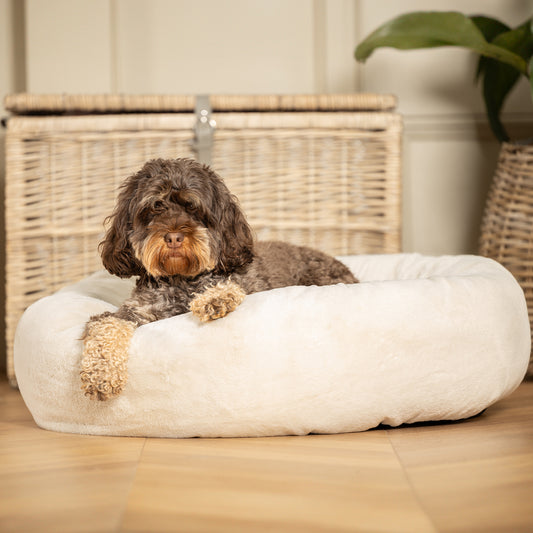
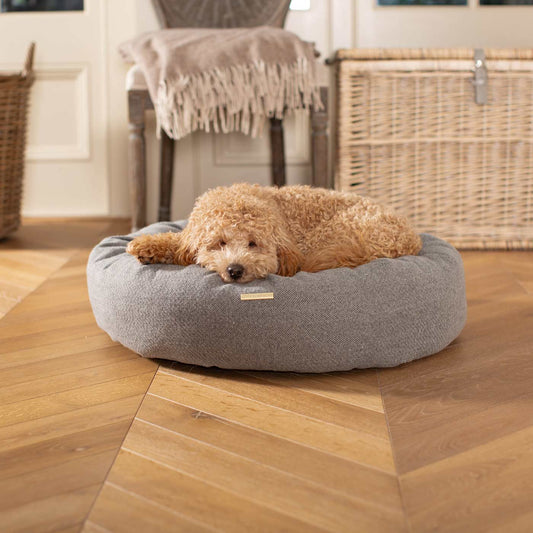
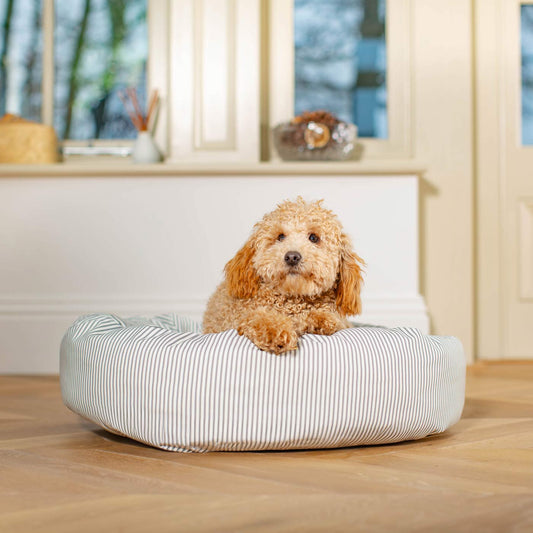
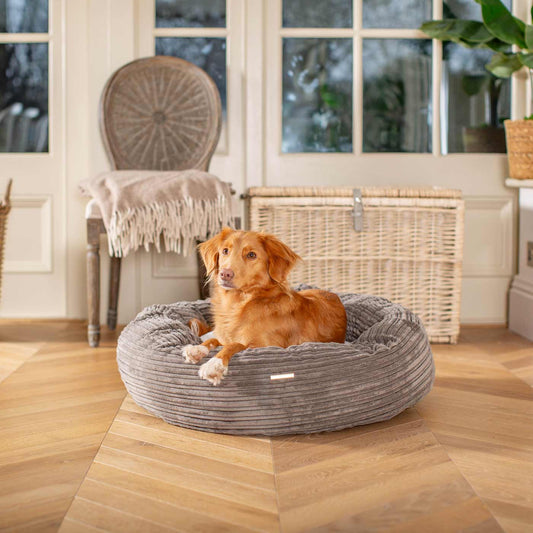
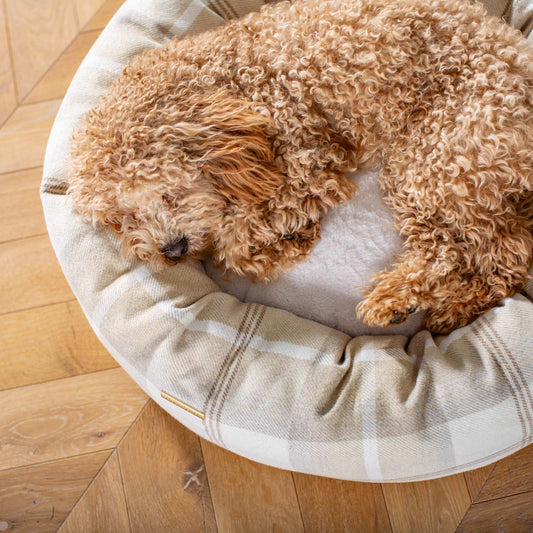
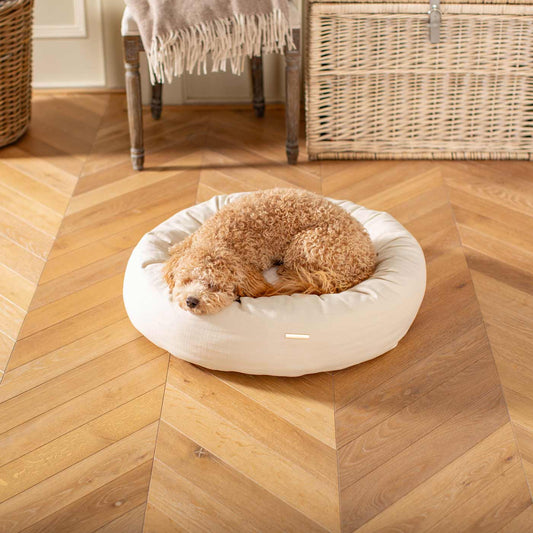
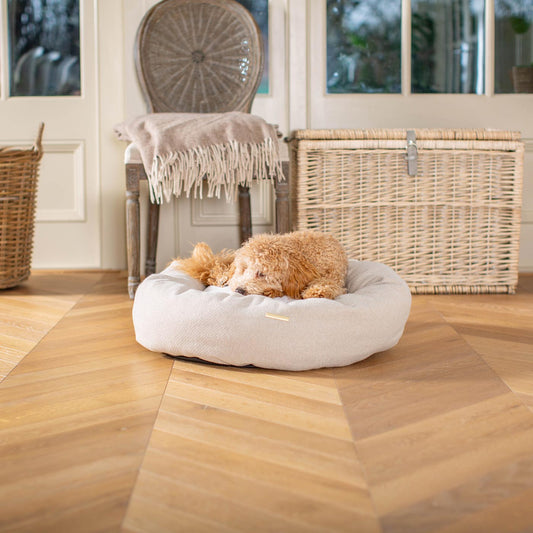
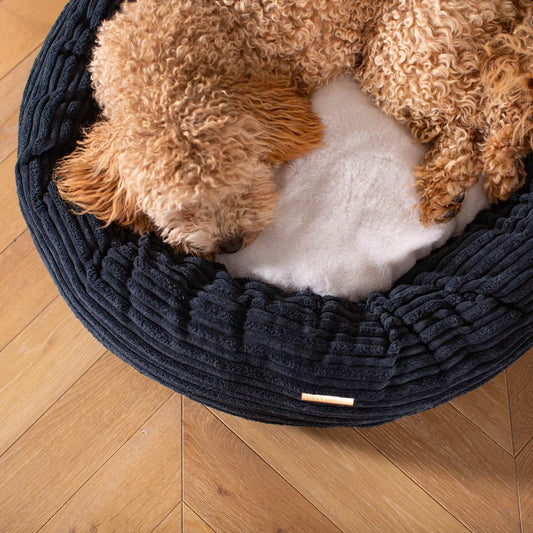
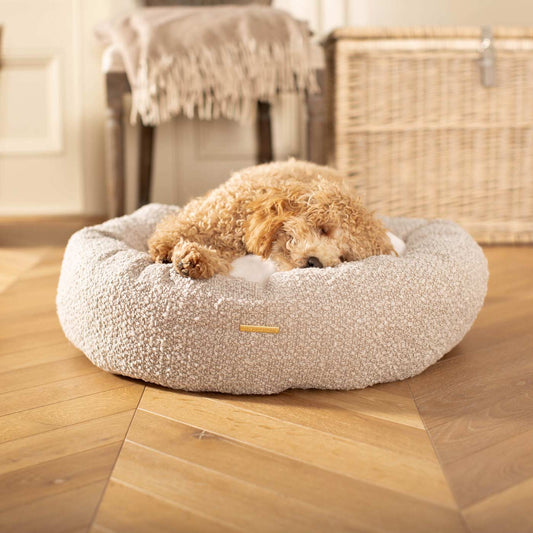
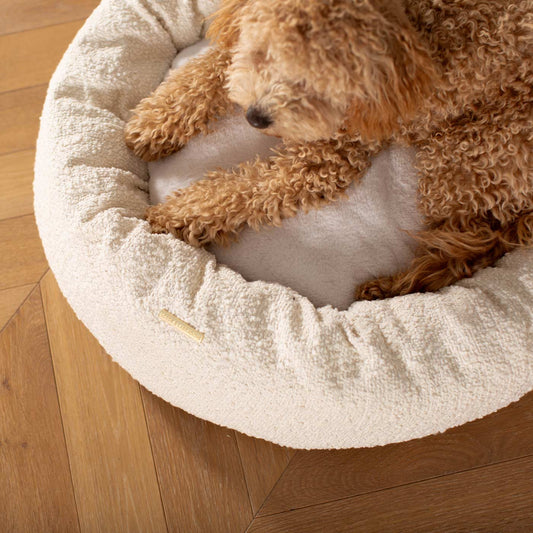
A delightful small dog breed resulting from the crossbreeding of a Maltese and a Poodle. Known for its adorable appearance and hypoallergenic coat, Maltipoos are tiny, affectionate companions with a playful spirit. Their compact size, friendly nature, and minimal shedding make them popular choices for those seeking a charming lap dog and an ideal pet for various living environments.
Are you getting a Maltipoo? Maybe you’re wondering what the best Maltipoo bed is or perhaps what the best sized crate is for a Maltipoo? Here we take a look at the breed and its characteristics and then discuss what you will need to buy, ready to welcome them home.
Maltipoo Characteristics
The Maltipoo is a cute bundle of fur, a mix between the Maltese and the Poodle. They are a small dog breed with floppy ears and the curly coat of their poodle ancestry. Maltipoos are a popular crossbreed known for their affectionate nature and playful personality. They will fit into many kinds of home too, from apartments through to larger family homes; and suit both single parents and families with children. They are friendly, not only towards humans, but other animals too, so would make a great addition to a multi-pet household. Being affectionate, they do not like being left alone for long; something to bear in mind if you work a lot.
A list of things you need for a Maltipoo puppy
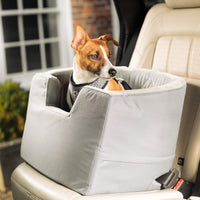
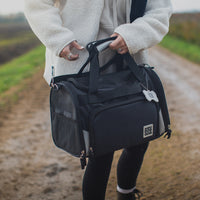
Puppy Carrier - Travelling safely with your puppy is imperative and a must when it comes to collecting them and bringing them home. A compact puppy carrier that can be belted into the backseat of the car is ideal. If you can collect with someone else so you can sit with them in the backseat all the better so you can keep them company on the journey home. We love the fabric carriers as they have a mesh panel to see your puppy inside, they’re not too big and they have a handy shoulder strap. This will come in handy for trips to the Vet and other journeys too.
Scent blanket - A small scent blanket is a useful purchase even before you collect puppy. We’d suggest giving one to your breeder a couple of weeks before you collect them, so it can be left with puppy and mum. Then when you bring them home with the scent blanket, they’ll return with the scent of Mum too - a lovely comfort when they’re settling in to their new environment.
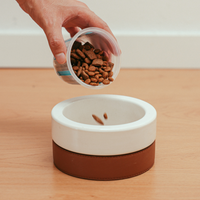
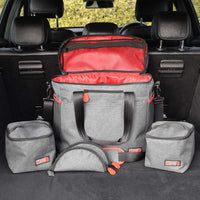
Travel Bowl or Feeding Set - If you’re travelling a long way to collect your new Maltipoo puppy, then you’ll need some feeding accessories for the journey, even if it’s just to give them a drink of water. A travel bowl is an essential for journeys along with a pet water bottle, not just for this journey but all journeys in the future. You could even invest in a travel dining set by Mobile Dog Gear which have all kinds of feeding accessories for eating and drinking on the road!
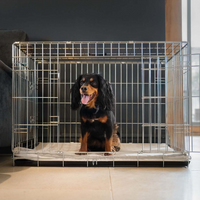
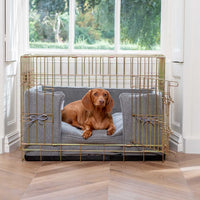
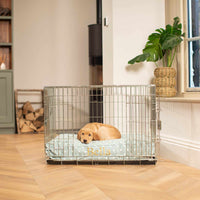
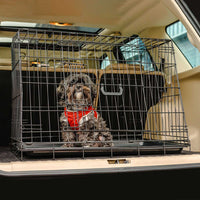
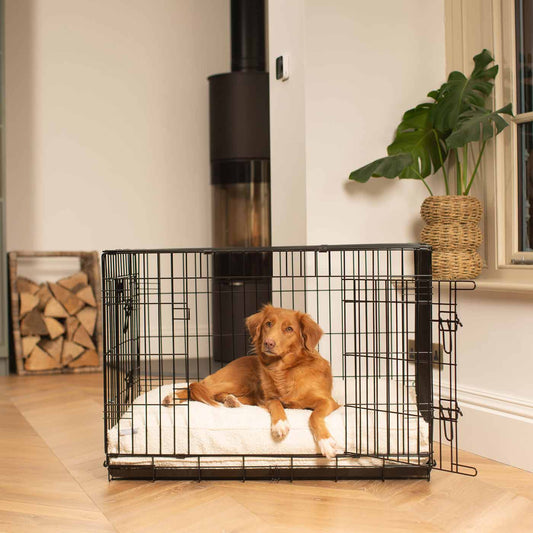
Dog Crate - The best sized crate for a Maltipoo is 30” long. The medium size in either our L&L dog crate is ideal. This size will be big enough for your puppy when they grow into an adult.
Top Tip - To begin with we’d set up the crate with a Puppy Bed in one half and a puppy pad in the other - not to encourage them to toilet in their crate, but rather as a precaution, especially during the night. When they are fully toilet trained and used to their crate you can swap out the puppy bed and pad for a full sized cushion. Don’t forget a crate bowl for water too.
Puppy Bed - A puppy bed to fit in one half of the crate will be best for your Maltese puppy. Our Cosy and Calming Puppy Crate Bed has been designed especially to fit exactly half the crate. When you come to swap it out for a full size crate cushion, you can use the half size bed outside the crate somewhere else around the house. Puppy’s can never have too many beds for lounging!!
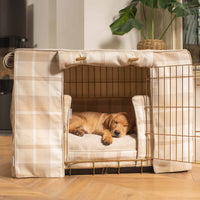
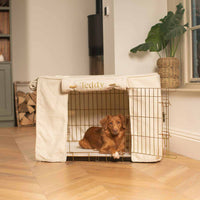
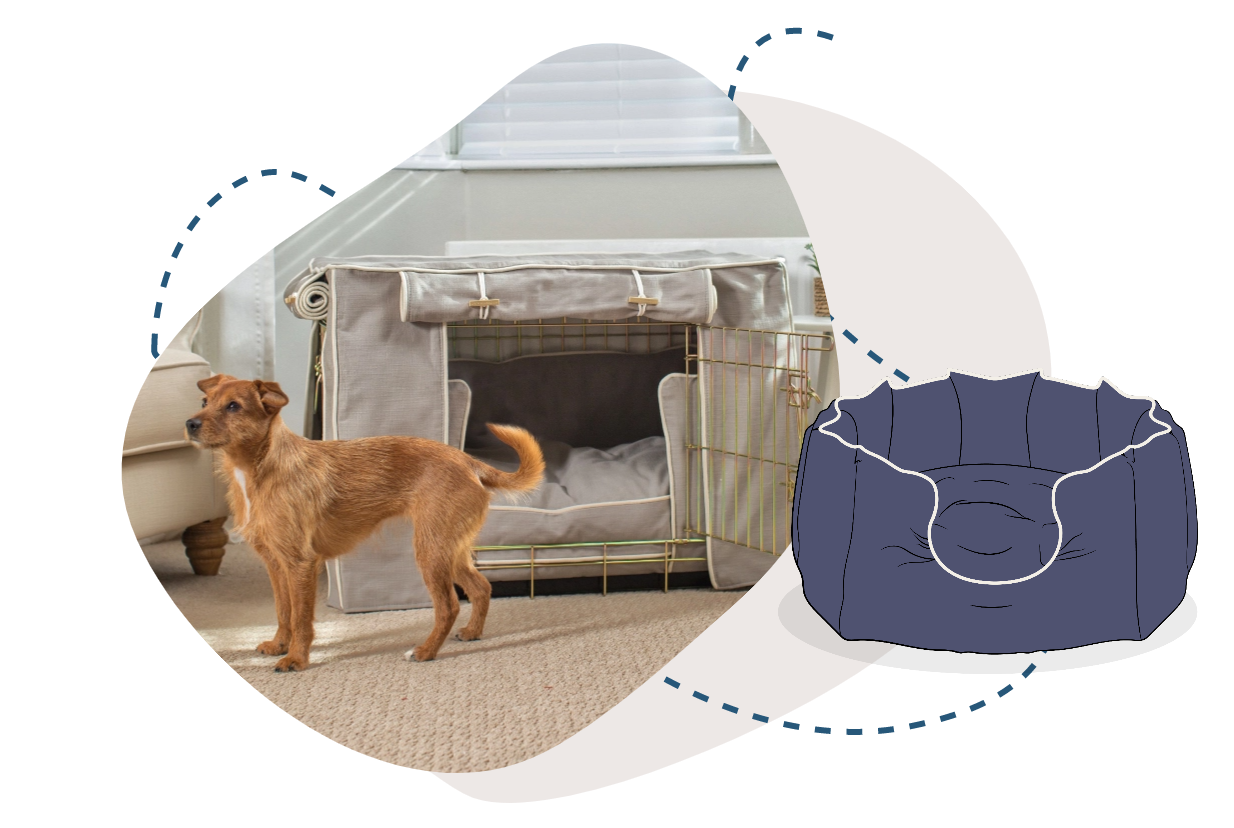
Dog Crate Cover - A crate cover might be one of the best things you buy to help with crate training your new Maltese puppy. Covering the crate gives new puppies privacy and a feeling of security. The roll down doors also help them to understand when bedtime is coming and will keep out early morning light too. These are really practical as they simply wipe clean. We make them in a variety of stylish fabrics to suit any home; all in fabrics to match you cosy & calming puppy crate bed!
Puppy Plush Toy - Puppies love to snuggle and play and plush toys are great for both of these activities. We especially love the Heart Beat Sheep and Warm Bear as they both have calming, comforting features for new puppies. The former has a “heartbeat” that mimics the feel of mum, whilst the latter has a warming feeling that offers a “warm hug”! They’ll become your new Maltipoo’s best friends in no time!
Puppy Chew Toy - Puppy’s can chew for a number of reasons; inquisitiveness, boredom and teething. If you don’t provide some specific chew toys, you may find they’ll chew their bedding or even your furniture! Some of the best chew toys for puppies and dogs are made by KONG. We especially love the puppy sized Classic KONG as well as the Teething Stick and Binkie.
First Puppy Walking Set - Lead training might not happen straight away, but you will need a lead and harness ready. We love the Hi & Light harness by Ruffwear as it gives great stability, comfort and control when puppy is learning to walk on a lead. Match with the Ruffwear Front Range Lead and you’re all set to start lead training.
Halloween is full of temptations for a curious dog, from chocolate-stuffed treat bowls to carved pumpkins going quietly mouldy on the doorstep. This guide covers everything from the question on most dog owners' minds at this time of year, are pumpkins poisonous to dogs, to the foods that genuinely warrant a call to your vet. You'll also find practical tips for keeping the night fun and stress-free for the whole family, dog very much included.
Are pumpkins poisonous to dogs? What Halloween pet parents need to know
If you've ever caught your dog eyeing up the pumpkin on your doorstep, you're not alone. And honestly, it's a fair question to ask: are pumpkins poisonous to dogs? The short answer is no. Plain pumpkin is actually one of the more dog-friendly things around this time of year. That said, Halloween has a way of complicating even the simplest foods, and the form pumpkin comes in makes a real difference.
A small amount of plain, cooked pumpkin is genuinely fine for most dogs. It's easy on digestion, low in calories, and some vets even recommend it to help settle an upset stomach. Raw pumpkin is a different story though. It's much harder for dogs to break down and can cause bloating or an uncomfortable tummy, so it's best kept out of reach.
The bigger risk at Halloween is pumpkin spice. Anything made with nutmeg, cinnamon, or cloves — pumpkin pie, spiced lattes, flavoured bakes — is off the table entirely. Nutmeg is toxic to dogs and can cause serious symptoms even in small amounts. If your dog has sneaked a slice of pumpkin pie from a low table, that's worth a call to your vet.
Carved pumpkins come with their own considerations. After a few days sitting out, the flesh starts to go mouldy, and mould can make dogs quite unwell. Once Halloween is over and the pumpkin heads to the compost bin, make sure your dog can't get into it.
The reality is that Halloween simply means more food around, and more opportunities for curious dogs to help themselves. For a closer look at what's safe and what to avoid this season, our guide to dogs at Halloween covers pumpkin and plenty more besides.
The Halloween foods dogs should never help themselves to
Halloween night is chaotic in the best possible way, and if you have a dog, you already know they'll be right in the thick of it. Bowls of sweets on the coffee table, trick-or-treat hauls tipped out across the floor, plates of baked goods doing the rounds — it's honestly one of the riskiest nights of the year for a dog who fancies their chances. Knowing which Halloween foods are most likely to cause a problem is the first step to keeping yours safe.
Here are the four to take seriously:
Chocolate. Dogs metabolise theobromine far more slowly than we do, which means even a small amount can lead to vomiting, restlessness, tremors, and a racing heart. Dark chocolate and baking chocolate are the most dangerous, but milk chocolate isn't safe either.
Sweets and candy. The sugar load alone can be enough to cause stomach upset, but it's the additives and artificial ingredients that often catch dogs out fastest. Watch for vomiting, diarrhoea, or a dog that's gone unusually quiet after raiding the sweet bowl.
Xylitol. This one catches a lot of people off guard because it doesn't sound like a food. It's a sweetener used in sugar-free products, and it's extremely toxic to dogs — capable of causing a dangerous blood sugar crash and serious liver damage. Sudden weakness, wobbling, or collapse are all warning signs.
Raisins and anything baked with them. Raisins and grapes can cause acute kidney failure in dogs, and they turn up in all kinds of Halloween baking. A small handful is genuinely enough to do harm, so any fruit-based bakes should be well out of reach.
A note on xylitol specifically: it hides in places you might not expect — sugar-free chewing gum, some peanut butters, flavoured drinks, even certain vitamin supplements. If you're not sure whether something contains it, keep it away from your dog. That's the simplest rule.
The broader approach on Halloween night is to get ahead of it: store anything risky out of reach before the evening gets going, not once it's already busy.
Plain pumpkin, pumpkin seeds, and carved decorations: what’s safe and what’s not
Plain pumpkin isn't poisonous to dogs, and that's genuinely reassuring news. Cooked or pureed pumpkin flesh is actually safe for dogs in small amounts and can even support healthy digestion, so if you've been Googling "are pumpkins poisonous to dogs" in a mild panic, you can breathe. The catch is that Halloween pumpkins rarely show up in their simplest form, and it's everything around the flesh that causes problems.
Here's what your dog might actually encounter and what it means for them:
Plain cooked or pureed pumpkin flesh: Safe, and genuinely useful in small amounts. It's high in fibre and easy on the stomach.
Raw pumpkin seeds: Not toxic, but hard to digest and a choking hazard, particularly for smaller dogs.
Stringy pulp from the inside: Difficult to digest and likely to cause bloating, stomach discomfort, or loose stools if your dog gets into it.
A carved pumpkin left out for several days: As it breaks down, mould develops. Mouldy food can cause serious gastrointestinal upset and, in some cases, neurological symptoms.
Candles inside jack-o'-lanterns: An obvious burn risk for a curious dog sniffing too close, and wax ingestion can lead to vomiting or digestive blockages.
Practical tip: If you'd like to share plain pumpkin with your dog, keep it to around 1 teaspoon for small dogs and up to 4 teaspoons for larger breeds, as an occasional treat rather than a daily habit.
So can dogs eat pumpkin? Yes, the plain, cooked kind, in sensible amounts. But a Halloween pumpkin sitting on your doorstep for a week is a different thing entirely. Between the mould, the candles, and the raw stringy innards, that festive display is more hazard than harvest. If your dog is the type to investigate anything at nose height, it's worth keeping decorative pumpkins well out of reach.
How to keep pets safe at Halloween without making the night stressful
Halloween is brilliant fun for the whole family, but throw a dog into the mix and things can get chaotic quickly. One minute they're weaving between trick-or-treaters, the next they've got their nose in the treat bowl. Keeping them safe really doesn't mean banishing them to another room all evening, though. A bit of preparation makes the whole night easier.
Move the treat bowl out of reach. A curious dog can demolish a bowl of chocolate bars faster than you'd think. Keep sweets on a high shelf or tucked in a cupboard between answering the door.
Deal with wrappers straight away. Foil and cellophane wrappers are just as hazardous as the sweets themselves. Bin them immediately rather than leaving them on the side.
Brief your guests and any children helping out. Remind little ones not to share sweets with the dog, however convincingly he begs. Even the most well-meaning visitor can cause problems without realising it.
Give your dog somewhere quiet to retreat. A baby gate or a cosy room away from the front door means they can sit out the peak chaos without feeling unsettled by it.
Offer a dog-safe treat so they feel included. Plain cooked pumpkin is a genuinely enjoyable option — good for digestion, completely safe in small amounts, and very much in the Halloween spirit.
Do a sweep before bed. Check floors, bags, and coat pockets for stray sweets before you call it a night.
Quick reminder: plain cooked pumpkin is safe for dogs. It's the chocolate, xylitol-sweetened sweets, and discarded wrappers that cause real problems.
If your dog tends to find the whole evening stressful rather than just a bit exciting, this guide on keeping your dog calm on Halloween is well worth a read before the night kicks off.
When to call the vet if your dog has eaten something toxic
Even the most vigilant dog owners have had that stomach-drop moment — a treat gone from the counter before you've even registered it was there. If that sounds familiar, knowing when to pick up the phone can genuinely make a difference.
The most important rule is simple: if you're not completely sure what your dog has eaten, call your vet right away. Don't wait to see what happens. With toxins like xylitol and raisins, visible symptoms can take hours to appear, and by the time they do, the situation can already be serious.
Here are the warning signs that mean you shouldn't hesitate:
Vomiting or diarrhoea starting within an hour or two of eating something suspicious
Restlessness, trembling, or muscle twitching, which can follow chocolate ingestion
Sudden lethargy or weakness, especially if your dog seemed perfectly fine just moments before
Pale gums, excessive drooling, or a bloated stomach
Seizures or loss of coordination, which need emergency care immediately
When you call, try to have a few things ready: your dog's approximate weight, what they ate and roughly how much, and when it happened. If you've still got the wrapper, hold onto it. That information helps vets and poison helplines give you much more targeted advice.
In the UK, you can reach your own vet, an out-of-hours emergency service, or the Animal Poison Line, which exists specifically for situations like this.
Halloween should be a brilliant night, for you and your dog alike. Most seasonal worries, including questions like are pumpkins poisonous to dogs, have genuinely reassuring answers. But when something does go wrong, acting quickly and calmly is always the right move. Trust your gut, and never feel silly for calling. That's exactly what vets are there for.
Introduction
Puppy insurance is an essential and important part of the pet ownership journey that gives owners peace of mind that should the worst happen, their pup is protected.
Simply put, pet insurance exists to help owners looking to protect their canine companions from unexpected health issues and the associated costs of veterinary care. Much like health insurance for us humans, puppy insurance like that offered by our friends over at Waggel, covers a range of treatments, surgeries and medications that may be needed throughout your puppy’s life.
Taking out a puppy insurance policy is just one of the many ways you can protect your pet and ensure they’re being cared for in the best way possible. Whilst puppy insurance protects your pet from accidents and illnesses, treating your pup to the best pet products is sure to contribute to their health and wellbeing too. This means making sure your pup is welcomed home in true style with high-quality pet products that are made to last - like those from Lords & Labradors.
Why Puppy Insurance Matters
Pet insurance is particularly crucial during a puppy's early years when they are more susceptible to accidents, illnesses and the development of unforeseen health conditions. Many owners push the thought of insurance from their minds and think that because their pet is young, they’re unlikely to experience any issues. Sadly, this couldn’t be further from the truth. By investing in puppy insurance, you can ensure that you’re consistently providing the best possible care for your furry friend without the worry of facing overwhelming veterinary fees and bills.
Without an insurance policy in place, you risk having to pay substantial fees if your pet were suddenly to become ill or involved in an accident. During a time of stress and upset, who would want to be worrying about vet bills? Without the added stress of paying hundreds or even thousands for treatment, you can focus on what’s most important, helping your dog get back to optimal health.
Vet fees can quickly add up and can become a financial burden in a time of anxiety. From surgery costs to medication and x-rays, an insurance policy in place for your pup can give you added peace of mind during times of uncertainty ultimately meaning you’ll have one less thing to worry about.
When it comes down to it, we all want what's best for our pets and our love for them means that we’ll always choose the best things for them, whether this be premium pet insurance or premium pet products. Being a pet owner means going one step beyond to ensure our furry friends are living the life they truly deserve.
Understanding Puppy Insurance
Puppy insurance is a pet insurance policy that can be taken out when a dog is as young as 8 weeks old. Most insurers require puppies to be 8 weeks old before they are eligible for an insurance policy simply because this is the youngest they can be separated from their littermates and mother. Separating a puppy from their litter too early can cause them to exhibit fear, anxiety and reactivity which is something no prospective owner wants for their new addition.
Insuring your puppy from 8 weeks means that they’ll be protected as soon as they join your family. Doing this early on in your puppy’s life means you can avoid pre-existing condition exclusions often put in place by insurance providers to ensure you aren’t claiming on a condition your pet already had before you took out your policy.
To break it down, if your pup was insured from 8 weeks old and suddenly at 2 years old developed a health condition that required veterinary care, you’d be able to claim for treatment relating to the condition for the entirety of your dog’s life as long as you remain with the same insurer, pay your monthly premiums and have a Lifetime policy in place.
However, if you waited until your puppy became an adult and then tried to claim on something they suffered with as a puppy when they weren’t insured, this would be classed as pre-existing and means your claim will likely be declined leading to more stress in an already worrisome situation.
At Waggel, they’re all about making insurance simple and do so by only offering one type of policy, Lifetime. A Lifetime policy means that you can continue to claim for any conditions your dog may develop throughout their entire life, as long as you renew your policy each year.
When purchasing a puppy, some owners are offered temporary pet insurance policies that protect their pet as they settle into their new home. They are often offered by breeders with the purchase of a puppy and don’t involve handing over any bank details. The catch is that they’re not a long-term solution and expire automatically after 4 weeks.
Switching to a Lifetime insurance policy, like that provided by Waggel, can eliminate any potential complications and ensure your puppy is protected from as young as 8 weeks old leaving no time for pre-existing conditions to develop.
Types Of Puppy Insurance
Waggel offers Lifetime policies only for one simple reason; because they’re the most comprehensive. Though they’re considered one of the more expensive types of pet insurance, Lifetime policies offer peace of mind to owners who can continue to claim for the same condition year after year as long as their policy stays active. Waggel also offers flexibility by allowing you the ability to adjust your Annual Coverage and Excess each year to suit your financial needs.
There are, however, other types of puppy insurance available such as maximum benefit, time-limited and accident-only policies.
Maximum benefit puppy insurance policies refer to a mid-level type of cover for injuries, accidents and illnesses. With a maximum benefit policy in place, you can continue to claim per condition up to a pre-specified limit. Once this limit is reached, you won’t be able to claim for the condition anymore until it resets or the policy is renewed.
Time-limited policies may seem more affordable than Lifetime and maximum benefit but they can be limiting in terms of what they offer. Essentially, they allow you to claim for conditions your dog has developed up to a timed limit. Once this timeframe has passed, you’ll be unable to claim. It’s commonly used for short-term illnesses and injuries, though health conditions can be unpredictable and reappear at any time throughout your dog’s life. With a time-limited policy in place, it’s unlikely you’d be able to claim for the same condition again which can be worrying for many owners.
Accident-only policies are considered one of the more cost-effective forms of pet insurance simply because they only cover treatment and medical expenses related to accidents. Whilst this may be tempting for new pet owners who haven’t experienced ownership before, pets are very unpredictable and can develop health conditions at any point during their lifespan which an accident-only plan is unlikely to cover.
For peace of mind, flexibility and continuous protection year after year, a Lifetime policy is sure to provide everything your pet needs and more.
What Puppy Insurance Can Cover
So, you’ve decided to take out puppy insurance but what’s really included in your policy? Most comprehensive policies like Lifetime and maximum benefit include coverage for veterinary fees such as diagnostics, surgery, medication and procedures, third-party liability in the event your dog is involved in a legal matter for which you’re deemed legally responsible, and the purchase price if your pet passes away, is stolen or goes missing.
All of the above can go a long way in providing your pup with the best start to life. Some policies go even further, like Waggel’s Lifetime policies that also include dental and travel cover for pet owners.
Dental health is a very important aspect of canine health and shouldn’t be overlooked. As a pet owner, it’s your responsibility to ensure your dog’s teeth are annually checked and deemed healthy by a vet. Your vet will be required to note down on their records that your puppy’s teeth are in optimal health in order for you to submit a dental-related claim in the future. Without a record of good dental health, insurers will be unable to determine the original condition of your dogs when they were young.
With travel cover included as part of your policy, you can rest assured that your puppy is protected even when you’re both out of the country. Waggel offers coverage for emergency treatment when you’re on holiday outside of the UK and within a country of the Pet Travel Scheme for up to 90 days each year.
No one wants to think of a time when their pet isn’t here anymore, especially in the excitement of bringing home a puppy. However, as a pet owner it’s something you want to know is covered during a time of sadness. When searching for pet insurance, it’s a good idea to look for policies that include death cover and benefits such as coverage for the purchase price of your pet if they pass away from an accident or illness.
Exclusions In Puppy Insurance
Whilst we wish puppy insurance covered everything, there are some things that are excluded. As mentioned above, most pet insurance providers exclude pre-existing conditions from policies which is why it’s so important to get your pet insured as soon as possible.
Other things that aren’t typically covered in puppy insurance policies include routine, preventative and cosmetic treatments. Routine treatments such as vaccinations and flea and worm treatment are typically excluded as insurers focus on specific treatments instead. This also means you’ll be unable to claim for the cost of neutering or spaying your puppy. Fortunately, lots of vets have health plans in place which, by paying a monthly cost, can help you secure discounts for routine and elective treatments. Health plans often work in conjunction with pet insurance policies so you can continue to get the best price for treatment and protection for your pet at the same time.
Conclusion
Puppy insurance is a vital part of pet ownership that can ensure your pet is protected from as little as 8 weeks old. Choosing the right kind of policy is important as you want to ensure you get the most comprehensive kind of coverage. We recommend Lifetime insurance like that offered by Waggel as it includes cover for things such as vet fees and dental treatment.
Insuring your puppy early means you can skip the worry of pre-existing conditions and rest easy knowing you can claim back the cost of treatment for any condition your dog may face in the future.
Taking care of your new addition also extends beyond insurance and includes incorporating high-quality pet products from Lords & Labradors. To ensure your new furry friend gets the best start to life, why not explore Lifetime policies and get a free, no-obligation quote from Waggel?
As a Waggel member, you’ll have access to an exclusive membership platform where you can book free vet, behaviour and nutrition consultations. So, when they say they’ve got your back, they really mean it.
Once your insurance policy is live you can gain immediate peace of mind knowing your pet is protected for life. And if you’re thinking of celebrating this little win, why not explore even more premium pet products with Lords & Labradors offering comfort and luxury for your dog throughout every phase of their life?
Banned dog breeds in the UK: is the Cane Corso banned?
If you’ve landed here asking are Cane Corsos banned in the UK, you’re not alone, and the answer is more straightforward than a lot of online forums make it seem. This article breaks down what the Dangerous Dogs Act actually says, where the Cane Corso sits legally, and what responsible ownership looks like day to day for a big, powerful dog. Whether you’re considering bringing one home or already have one spread across your sofa, here’s everything you need to know.
Are Cane Corsos banned in the UK? Here’s the short answer
Cane Corsos are not banned in the UK. If you’ve been searching for a straight answer, there it is. The Dangerous Dogs Act 1991 names four specific breeds as prohibited, and the Cane Corso isn’t one of them. You can legally own one, walk one through your local park, and yes, let one hog the sofa — all without breaking any laws simply by having the breed.
That said, the legal picture is a little more layered than a flat yes or no. While the breed itself isn’t prohibited, a Cane Corso can still fall under wider dangerous dog legislation if their behaviour causes concern. Any dog, regardless of breed, can become the subject of a court order if it acts in a way that puts people or other animals at risk. For a large, powerful dog like a Cane Corso, that makes responsible ownership genuinely important — not just a nice idea, but something that actually matters in practice.
These are confident, loyal, strong dogs who do best with consistent training, clear boundaries, and plenty of enrichment. Getting that foundation right counts, not just legally, but for your dog’s happiness and wellbeing too.
Whether you’re thinking about bringing a Cane Corso home or you already have one charging around your kitchen, the sections below walk through what the Dangerous Dogs Act actually says, where the breed sits legally, and how to make life with a big dog work well. You can also browse our full range of dog products to help set them up properly from day one.
What the Dangerous Dogs Act actually says about banned breeds
The Dangerous Dogs Act 1991 is the piece of legislation most people are thinking of when they search are Cane Corsos banned in the UK — and once you understand how it actually works, a lot of the confusion starts to lift. The key thing to know is that the Act targets types of dog, not breed names or Kennel Club registrations. That distinction matters far more than most people realise.
Under the Act, four dog types are prohibited in England, Wales, and Scotland:
Pit Bull Terrier — a type sharing physical traits with the American Pit Bull, not a formally registered breed in the UK
Japanese Tosa — a large Japanese fighting dog, rarely seen here
Dogo Argentino — a muscular, white hunting dog originally bred in Argentina
Fila Brasileiro — a Brazilian mastiff-type breed known for its tracking instincts
The Cane Corso does not appear on this list.
What trips a lot of people up is how “type” gets assessed in practice. It comes down to physical characteristics and behaviour, not whatever name is on a dog’s paperwork. A dog with no Pit Bull ancestry could still be assessed as Pit Bull type if it matches enough of the physical markers. That’s exactly the kind of nuance that gets lost in forum threads and leads well-meaning owners to completely the wrong conclusion.
Which brings us to sources. GOV.UK holds the current, legally accurate guidance on prohibited types, and it’s always worth going there directly rather than trusting a Facebook group or an article that hasn’t been updated in years. The Staffordshire Bull Terrier is a good example of how persistent public misperception can follow a breed around long after the facts have been clearly established — and Staffie owners will tell you how exhausting that is.
The short version: the Cane Corso is not a prohibited type under the Dangerous Dogs Act. But if you share your home with one, it’s always worth checking the current Cane Corso UK law position through official channels, rather than assuming nothing has changed.
Where the Cane Corso fits legally: not banned, but still a powerful dog that needs careful handling
If you’re wondering are Cane Corsos banned in the UK, this is where the confusion usually comes from. They are not on the list of banned dog breeds in the UK, so the breed itself is not prohibited. That said, Cane Corso UK law is not just about whether a breed is named on a list. It is also about how a dog behaves in public and how well it is handled.
Cane Corsos are big, strong, intelligent dogs. In the right home, with good training and steady routines, they can be calm and loyal companions. But they are not the sort of dog you can leave to “figure it out” as they grow.
A few practical things really matter with this breed:
Lead manners need work from the start. An adult Cane Corso is powerful, and even friendly excitement can be hard to manage if your dog pulls towards people or other dogs.
Socialisation should be calm and consistent. Meeting different people, dogs, sounds, and places early on helps build confidence and good judgement.
Public control matters every day. In parks, on pavements, outside cafés, or at the school gates, you need to feel confident that your dog can stay settled and responsive.
The law applies to all breeds. Under the Dangerous Dogs Act, any dog can create legal problems for its owner if it is considered dangerously out of control. That is one reason this topic comes up so often in searches for “is a Cane Corso banned in the UK”.
In real life, this often comes down to the ordinary moments. Can you hold your dog safely if a scooter rushes past? Can they walk calmly when another dog appears around a corner? Can visitors come into your home without stress? Those day-to-day basics matter just as much as knowing the legal position.
For a strong breed like this, the right walking setup can make a big difference too. A secure, well-fitted harness can give you better comfort and control on everyday walks. If you’re choosing one for the first time, our guide on how to choose a dog harness is a helpful place to start.
Do other countries ban Cane Corsos? What travellers and movers should check first
If you’re wondering are Cane Corsos banned in the UK, the answer may be no, but that doesn’t mean the same is true everywhere else. When you travel or move abroad with a big, powerful dog, rules can change from one country to the next, and sometimes from one city, region, airline, or apartment block to another.
Before you make plans, check these first:
National breed rules — some countries have breed-specific restrictions, and lists can change, so always confirm the current position through official sources
Regional or local rules — a dog allowed nationally may still face extra rules in certain cities, provinces, or municipalities
Airline policies — some airlines have their own breed or size restrictions, especially for larger dogs travelling in cargo
Import paperwork — think microchip details, rabies vaccinations, health certificates, and timing requirements
Housing rules — landlords, holiday lets, and managed buildings may have weight or breed limits
Insurance cover — it’s worth checking whether your dog will be covered in your destination country
This catches people out more often than you’d think. You might sort the paperwork, book the flight, and then find your airline won’t carry your dog, or your rental agreement has a breed clause hidden in the small print.
So while Cane Corsos are legal in the UK, don’t assume that UK rules travel with you. Check early, double-check closer to departure, and ask your vet for help if you’re unsure. If you’re starting to plan, our guide on how to travel internationally with a dog is a really helpful next read.
What to do if you live with a Cane Corso in the UK
If you live with a Cane Corso here, the reassuring news is that are Cane Corsos banned in the UK? No, they are not. But because they are big, strong dogs, it makes sense to be extra organised.
Start with the practical bits. Your dog must be microchipped by law, and it is just as important to keep those microchip details up to date if you move house or change phone number. It is also worth checking any tenancy agreement, landlord rules, or local site rules if you rent or live on a managed development, as large breeds sometimes face extra conditions. Public liability insurance is not a legal requirement, but many owners see it as sensible back-up for day-to-day life.
Keep a small folder, digital or paper, with the essentials: microchip information, vaccination records, insurance documents, and your vet’s details. It sounds basic, but when you need something quickly before boarding, travel, or even a routine appointment, you will be glad it is all in one place.
On walks, think management as well as manners. Use well-fitted walking gear, practise loose-lead skills, and avoid busy situations your dog is not ready for yet. If you need a refresher, our guide on how to walk a dog is a helpful place to start.
Training matters too. With guardian breeds, early socialisation and calm, reward-based handling make a huge difference. If your Cane Corso is pulling hard, reacting to people or dogs, or struggling to settle in new places, do not wait for it to become a bigger issue. Find a qualified trainer or behaviourist who understands large guardian breeds.
And if people seem unsure? You are not alone. Belgian Malinois owners often get the same puzzled looks, even though they are legal too. Calm, responsible handling helps everyone feel more at ease.
Frequently Asked Questions
Is the Cane Corso a dangerous dog breed?
Not automatically, no. Cane Corsos are not a banned breed in the UK, but they are large, powerful dogs, so behaviour and handling really matter. With calm socialisation, consistent training, and good public control, they can be loyal companions; without that, any dog can create legal concerns.
Why are pitbulls banned in the UK?
Pit Bull Terriers are banned in the UK because the Dangerous Dogs Act 1991 lists them as a prohibited dog type. The law focuses on type rather than breed name, so assessments look at physical characteristics and behaviour, which is why Pit Bull rules often cause confusion for owners.
Black Friday Dog Beds: What's Actually Worth Buying
A dog bed is one of the few things worth buying on Black Friday rather than in a hurry later, because it's something your dog uses every day. The hard part is telling a good bed at a lower price from a cheap bed with a sale sticker. This guide covers which beds are worth spending more on, what to check before you buy, how to get the size right first time, and what suits puppies, senior dogs and gift-buying.
Key takeaways
Spend more where it counts: orthopaedic beds for older and larger dogs, and hard-wearing beds for dogs who dig.
Check the filling, cover, fabric and shape before you look at the price.
Measure your dog lying flat, add 20 to 30cm, and compare that with the bed's inner dimensions.
For puppies and gifts, a removable, washable cover matters more than the style.
The Lords & Labradors Black Friday sale runs until the end of Cyber Monday.
Is Black Friday a good time to buy a dog bed?
Yes, if you know what you're buying. A good dog bed is a long-term purchase, so a Black Friday discount takes real money off something your dog will use every day. The risk is buying on price alone and ending up with a bed that looks good in a product photo and starts sagging by February.
Whether you have a Labrador puppy who chews everything, a senior spaniel who needs more support to get comfortable, or a dog-loving friend to buy for, the aim is to spend well, not just spend less. A bed that's cheap because it's poorly made is no saving if you're replacing it in six months. Our guide on how often you should replace your dog bed explains the signs of wear to look out for.
The beds worth buying hold their shape after a year of use, come through the washing machine in one piece, and help your dog settle properly. That standard applies whether you're shopping a Black Friday dog bed sale or any other week of the year.
You can browse the full range of Lords & Labradors dog beds while you read, so you have something to compare against as you work through the guide.
Which dog beds are worth spending more on?
Some beds are worth paying more for, and Black Friday is a good time to buy them. If your dog is older, larger, or likes to dig and circle before lying down, a better-made bed will last longer and keep them more comfortable.
Orthopaedic beds
For senior dogs, big breeds and dogs who seem stiff after a nap, support matters more than the size of the discount. A good orthopaedic bed spreads your dog's weight more evenly and cushions pressure points, which can help them feel more comfortable when they get up after resting. The Essentials Twill Orthopaedic Mattress, for example, is made with a thick orthopaedic foam mattress. If your dog sleeps in a crate, the Slumba Orthopaedic Mattress adds an egg-crate memory foam layer and is made to fit Lords & Labradors metal crates. If your dog has arthritis or another joint condition, ask your vet what kind of support they recommend.
If you're not sure whether your dog needs this kind of bed, our guide on whether orthopaedic dog beds are worth it will help you decide. For bigger breeds, our pick of the best orthopaedic dog beds for large dogs is a useful next read.
Hard-wearing and large beds
Some dogs are hard on their beds because of how they settle. They scratch, circle, dig, flop and repeat. For these dogs, tougher fabric saves money over time. Our Rhino Tough faux leather beds are designed as our most durable range, and they're water resistant and wipe-clean too. You'll find them with our other hard-wearing dog beds.
The same goes for bigger dogs. If your Labrador, Retriever or German Shepherd always seems to be half on and half off their bed, sizing up is often the upgrade they need. Our large dog beds give bigger dogs room to stretch out properly.
A higher-spend bed is usually worth it if:
your dog is over 25kg
your dog is seven or older
cheaper beds go flat quickly in your house
your dog scratches or digs before settling
you’ve noticed stiffness after resting
If any of these apply, a discount on a supportive, durable bed is a better buy than replacing a cheap one again a few months later.
How do you tell a good deal from a cheap dog bed?
A discount can make an average dog bed look tempting. Whether it turns out to be a good deal or a disappointing buy usually comes down to a few details that are easy to miss when the price has dropped.
What to check before you buy
Filling type and depth: Look for deep filling that holds its shape. Orthopaedic foam suits older or stiff dogs, while deep hollow fibre filling suits dogs who like to snuggle in. Thin, cheap filling flattens quickly and leaves your dog lying close to the floor.
Removable, machine-washable cover: Essential if you have a muddy dog or a heavy shedder. A cover you can wash regularly keeps the bed fresh and helps it last much longer.
Water resistance: A water-resistant liner or fabric protects the filling from spills, accidents and odour. If you have a puppy or a dog who comes in wet from walks, our water-resistant dog beds are worth a look.
The right shape for how your dog sleeps: Dogs who curl up sleep in a tight circle, sprawlers need plenty of flat space, and dogs who lean or burrow suit a bed with raised sides. A bed that matches their sleeping style is one they'll use.
Durable, well-finished fabric: Check the stitching, zips and fabric in the product description. Strong seams and a hard-wearing fabric are a good sign the bed is built to last.
A bed that ticks most of these boxes will usually outlast a cheaper one, and that's where the real saving is.
Once you know a bed is well made, it comes down to matching the style to your dog. Memory foam suits older dogs, dogs with stiff joints and heavy sleepers who like to sprawl. Elevated beds suit dogs that run hot or prefer a firmer surface. Still deciding? Our guides to elevated beds versus memory foam and soft versus firm dog beds compare the options.
What size dog bed should you buy?
Sizing is one of the easiest mistakes to make in a Black Friday sale. It's tempting to grab whichever size is discounted, but a bed that's too small is no bargain.
Follow these three steps before you buy:
Measure your dog from nose to tail base while they're lying flat.
Add 20 to 30cm to that measurement for comfortable stretch room.
Match the total to the bed's internal dimensions, not the outer frame size listed in the product details.
Quick note: Even if your dog curls up like a croissant every night, size for a full stretch. Sleep positions change as dogs get older or warmer, and they need room to sprawl when they want to.
Getting the size right before you browse means fewer returns and a bed your dog will want to sleep in. For measurements by breed and sleeping style, see our dog bed size guide. If you have more than one dog, our guide to choosing a dog bed for more than one dog has advice for multi-dog homes.
Which Black Friday dog beds suit puppies, senior dogs and gifts?
Whether you're buying for a new puppy, an older dog or as a Christmas present, the best Black Friday dog beds are the ones that make day-to-day life easier: a washable cover, the right size, and enough comfort to become your dog's favourite place to nap.
Puppies
Pick a bed with a removable, machine-washable cover from the start. Accidents, muddy paws and the odd chew mark are all part of puppy life. Size up slightly, especially for bigger breeds, so you're not replacing the bed after the next growth spurt.
Senior dogs
For older dogs, memory foam or orthopaedic support is a practical upgrade, especially if they're slower getting up, circling more before lying down or avoiding hard floors. Our guide to choosing a dog bed for senior dogs goes into more detail, and our round-up of dog beds for puppies, seniors and every stage in between covers every age. If you think your dog may be uncomfortable, our article on signs your dog is in pain explains what to look for, and your vet is the best person to check.
Gift-buying
If the bed is a gift, keep it practical: get the size right, choose an easy-clean fabric and pick a style that suits the home it's going to.
Black Friday dog bed FAQs
Are dog beds cheaper on Black Friday?
They can be. Many retailers, including Lords & Labradors, discount dog beds over Black Friday. A discount is only worth it if the bed suits your dog's size, age and sleeping style.
What features matter most in a dog bed?
Supportive filling, durable fabric and a removable, washable cover. Everything else is a nice-to-have.
How do I spot a quality dog bed in a sale?
Read the materials description carefully, check the filling type and depth, and look for detailed reviews. A vague product page is usually a warning sign.
Does the Black Friday sale include Cyber Monday?
Yes. The Lords & Labradors Black Friday sale runs until the end of Cyber Monday, so there's still time if you miss Friday.
Still unsure where to start? Our guide on how to choose a dog bed covers everything you need.
Dog travel sickness is one of those things that can turn an otherwise straightforward car journey into a stressful experience for you and your dog alike. Whether you’ve got a puppy who looks queasy before you’ve left the street, or an older dog who’s started struggling on longer trips, understanding what’s behind it makes a real difference to how you handle it. This guide covers everything from spotting the early signs and why it happens, to practical ways to help before and during a journey, and when it’s worth picking up the phone to your vet.
What dog travel sickness looks like on the road
Dog travel sickness can catch you off guard, especially if your dog has always seemed perfectly happy in the car before. The signs often creep in gradually, so knowing what to watch for means you can step in before things escalate to full-on vomiting on the back seat.
The earliest signals are easy to miss: excessive drooling, repeated yawning, lip-licking, and a general air of discomfort. Your dog might whine, pace, or keep shifting position, unable to settle. Some dogs will stare at the floor rather than looking out of the window. These things can look a lot like nerves, but when they show up consistently in the car, dog motion sickness is usually the more likely culprit.
Vomiting is the sign most people think of first, but by that point your dog has already been feeling rough for a while. Spotting those earlier cues gives you a real chance to make the journey more comfortable before it reaches that stage.
It’s also worth knowing that dog vomiting in the car can happen on a ten-minute trip to the park just as easily as on a longer Christmas run to visit family. Puppies are especially prone, because the part of the inner ear responsible for balance is still developing. It’s why puppy car sickness is so common, and also why many dogs genuinely do grow out of it over time with positive experiences.
Anxiety and motion sickness can overlap too, which makes things a little trickier to unpick. A dog who has been sick in the car before may start dreading the journey itself, so the stress kicks in before you’ve even reversed off the driveway. If you want to get the foundations right, our guide to the dos and don’ts of taking your dog in a car is a brilliant place to start.
Why dogs get travel sick in the first place
Yes, dogs absolutely can get travel sick, and it’s more common than many pet parents expect. Dog travel sickness can happen at any age, but it’s especially common in younger dogs. Usually, it comes down to a mix of motion, environment, and nerves.
Here are some of the most common reasons a dog feels unwell in the car:
Their balance system is still catching up. A dog’s inner ear helps control balance. When the movement they feel doesn’t match what they can see, it can trigger that woozy, sicky feeling. That’s the basic cause of dog motion sickness.
They feel anxious before the journey even starts. If your dog has been sick in the car before, they may begin to worry as soon as the keys come out or the car door opens. That stress can make nausea worse.
The car smells “too much.” Dogs notice scents we barely register. Air fresheners, petrol, leftover snacks, or even strong cleaning products can all add to the problem.
It’s too warm or stuffy. A hot car with little fresh air can quickly make dog vomiting in car episodes more likely.
The journey is bumpy. Stop-start traffic, roundabouts, sharp braking, and uneven roads can all make it harder for your dog to stay comfortable.
Everything feels overstimulating. Fast-moving views through the windows, road noise, and an unfamiliar setup can all leave a dog feeling overwhelmed.
Why puppy car sickness is so common: puppies are still developing, including the inner ear system that helps with balance. That’s why puppy car sickness often improves with age and positive practice.
The reassuring bit is that most cases can be managed. If you’re starting with a young dog, these puppy travel essentials can help make early journeys feel calmer and more comfortable.
How to help before you even set off
A little preparation before you leave the driveway can make a real difference when it comes to dog travel sickness. That’s especially true over the festive season, when routines are already a bit upended and dogs are quietly clocking all the extra noise and bustle around them. Getting a few things in order before you set off gives your dog the best possible chance of arriving happy and settled.
Hold off on feeding before you travel. Avoid giving your dog a full meal for two to three hours before setting off. An empty stomach makes a genuine difference for dogs prone to motion sickness, so save breakfast or dinner for when you reach your destination.
Build up to longer trips gradually. If you’re dealing with puppy car sickness, short practice runs are your friend. Start with just sitting together in a parked car, then try a five-minute drive, then a quick errand. Positive associations take time to build, but they really do stick.
Plan for regular breaks. On longer journeys, factor in a stop every hour or two so your dog can stretch, have a good sniff around, and reset. It breaks up the journey and gives their system a chance to settle.
Keep the car cool and well-ventilated. A warm, stuffy car makes nausea worse. Crack a window, use the air con if you have it, and make sure your dog isn’t sitting in direct sunlight.
Secure your dog properly. A travel crate or well-fitted harness reduces unnecessary movement, which helps limit the sensory confusion that triggers dog motion sickness in the first place.
Use a boot liner or car seat to keep things comfortable. A familiar-smelling liner or raised seat can ease anxiety and, on a purely practical note, makes any accidents far easier to deal with. For more on getting your setup right, our guide on how to travel with a dog in a car is a good place to start.
Knowing how to help dog travel sickness often comes down to these small, consistent habits rather than anything dramatic. For puppies especially, repeated positive experiences in the car will gradually shift travel from something to dread into something to genuinely look forward to.
What to do during the journey if your dog feels sick
Even with the best preparation, some dogs still show signs of travel sickness once you’re on the move. The good news? You don’t need to pull over in a panic or reach straight for medication. A few calm, thoughtful adjustments can make your dog feel noticeably more comfortable before things escalate.
Drive smoothly. Gentle acceleration, gradual braking, and steady cornering all reduce the sensory confusion that triggers nausea. Think of it like carrying a full cup of tea — no sudden movements.
Keep the car cool and well-ventilated. A warm, stuffy car makes everything worse. Air conditioning or open vents can make a real difference to how your dog feels.
Crack a window, but not too wide. Fresh air helps, but a direct blast of wind can actually increase dizziness. A small gap is plenty.
Skip the big pre-journey meal. A light stomach is much easier to manage on the road — something to bear in mind if you fed them just before setting off.
Watch for early nausea signals. Excessive yawning, lip-licking, drooling, or restlessness are all signs your dog is struggling. Catching these early gives you time to respond.
Take short comfort stops. Even five minutes standing on grass can help reset your dog’s senses and settle their stomach.
Bring something familiar. A favourite blanket or toy can ease anxiety, which plays a bigger role in dog motion sickness than many people realise.
The reassuring thing is that travel sickness in dogs often improves with patience and consistency, particularly in puppies whose inner ears are still developing. For more on crate setup, pre-journey routines, and making car travel easier all round, our guide on how to travel with your dog is a great place to start. Small changes, done consistently, really do add up.
When to ask your vet about travel sickness tablets for dogs
If practical steps aren’t making enough of a difference, it’s worth having a proper conversation with your vet. Some dogs, no matter how carefully you prepare, still really struggle with motion sickness in the car. And if yours is vomiting on every journey, going off their food before trips, or showing signs of genuine distress, that’s not something to simply push through and hope improves on its own.
Your vet can help work out what’s actually going on. Sometimes dog travel sickness has a physical cause that needs addressing directly. In other cases, anxiety is driving things just as much as the motion itself, and that changes what kind of support will actually help.
There’s no single answer when it comes to travel sickness tablets for dogs. What works well for a large, anxious Labrador might not be appropriate for a young puppy who’s still developing. Your vet will look at your dog’s age, size, health history, and how severe the symptoms are before making any recommendations. Some medications target nausea specifically, others focus on the anxiety side of things, and some do a bit of both.
One thing worth saying clearly: please don’t reach for human travel sickness medication and assume it’s safe to share. Some ingredients that are perfectly fine for us can be genuinely harmful to dogs. Always check with your vet first, no exceptions.
If you’d like to support your dog’s general wellbeing alongside any treatment your vet recommends, our Vet’s Best dog wellbeing range is a good place to browse. But for anything related to dog motion sickness specifically, your vet is always the right first call.
Frequently Asked Questions
What are some remedies for motion sickness in the car?
Some of the most helpful remedies are practical ones: avoid feeding a full meal two to three hours before travel, keep the car cool and well ventilated, drive smoothly, and stop regularly for short breaks. Securing your dog properly and bringing a familiar blanket can help settle both nausea and nerves.
What to give a dog for upset stomach and vomiting?
For car-related upset stomach and vomiting, it’s best not to give your dog human medication. A lighter stomach before travel, fresh air, and regular comfort stops can help, but if your dog is vomiting on every journey or seems really distressed, speak to your vet about safe treatment options.
Every cat parent knows that bringing a Christmas tree into the house is basically the most chaotic decision of the festive season. This guide covers everything you need to set up a cat christmas tree that actually stays standing, from anchoring the base and choosing safer decorations to stopping the climbing before it starts. Whether your cat is a casual sniffer or a committed wrecker, there's something here that will help.
How to make your Christmas tree cat-friendly from the start
If you share your home with a cat, you already know that a Christmas tree is basically the most exciting thing you'll bring into the house all year. It smells like the outdoors, it's full of shiny dangling things, and it fits perfectly in a corner your cat has probably been eyeing up for months. Getting the basics right before you even think about decorating makes everything that follows so much easier.
Start with your spot. A corner works well because it limits the angles your cat can approach from and gives you something solid to anchor the tree against. Stability really is everything here. A wobbly base is practically an open invitation, so invest in a heavy, wide tree stand and make sure the tree feels genuinely secure before a single bauble goes on.
Then think about layout. Cats tend to head for the lower branches first, so keeping the bottom third of the tree clear of decorations gives them far less reason to get involved. Nothing tempting at nose level means many cats will simply sniff around and move on.
It also helps to introduce the tree gradually. Put it up undecorated for a day or two and let your cat have a good explore. Once the novelty fades, it becomes a lot less interesting to climb or chew. A tree that's been thoroughly investigated and dismissed is one you're far more likely to still find standing on Christmas morning.
If you'd like a broader overview before you dive in, our guide on how to cat proof your Christmas covers the wider festive setup beyond just the tree. For now, though, a stable base and a clear lower half are the two simplest things you can do to set yourself up for a calmer, cat-friendlier Christmas.
Are Christmas trees toxic to cats?
A cat Christmas tree can be festive and safe, but whether it causes trouble really depends on the tree, your cat, and what they get into. Real and artificial trees are not usually a major poisoning risk on their own, but both can still cause irritation or an upset stomach if your cat chews them.
Risk Factor
Real Trees
Artificial Trees
Needles
Sharp needles can irritate the mouth, throat, or stomach if chewed or swallowed
Plastic needles can do the same and may pose a blockage risk if eaten
Sap or resin
Can be sticky and may cause mild mouth, skin, or tummy irritation if licked or chewed
No sap, but some trees may have coatings or materials that are best not chewed
Tree water
Can collect bacteria, mould, or traces of preservatives, so it’s best kept covered
Not applicable
Overall risk
Usually low, but more of a concern for cats who like to chew
Usually low, though chewing any artificial material is not ideal
For most cats, a quick sniff of the trunk or one fallen needle is unlikely to cause a big problem. The bigger issue is repeated chewing, swallowing bits of branch or plastic, or sneaking a drink from the stand. That’s why Christmas tree cat safety is often more about preventing access than worrying about the tree itself.
Call your vet if your cat has been chewing the tree and then shows signs like:
Drooling or lip licking
Vomiting or retching
Lethargy
Pawing at the mouth
Loss of appetite
If your cat loves investigating every plant in the house, it’s also worth reading our guide to poisonous plants for cats.
Simple ways to stop your cat climbing the Christmas tree
Cats and Christmas trees are a combination that makes every cat parent hold their breath a little. The twinkling lights, dangling baubles, and pine-scented branches are basically an open invitation — and cats know it. The good news is that a few smart adjustments can make the tree far less tempting without turning your living room into an obstacle course.
Place the tree in a corner or against a wall. This limits the angles your cat can approach from and makes a running leap much harder to pull off. Raising it slightly on a sturdy surface adds another layer of awkwardness for would-be climbers.
Use a playpen or furniture as a soft barrier. A pet playpen arranged around the base keeps curious paws at a distance without looking out of place in a festive room.
Anchor the tree securely. A simple hook and some clear fishing line through the upper branches can stop the whole thing toppling if your cat does make it up there. It takes five minutes and saves a lot of chaos.
Tire them out before the evening settles. A proper play session with a wand toy or feather teaser before you sit down for the night means your cat is far less likely to go looking for entertainment in the tree.
Try citrus or pine cones at the base. Most cats dislike the smell of citrus. A few strips of orange peel or some pine cones scattered around the lower branches work surprisingly well as a low-effort deterrent.
Give them something better to climb. A tall cat tree or scratching post placed nearby gives your cat a sanctioned outlet — and pairing it with some guidance on redirecting scratching to the right places makes the habit stick faster.
None of these tactics are foolproof on their own, so combining two or three will give you the best chance of success. Consistency matters just as much as the method — the more reliably the cat Christmas tree feels boring and off-limits, the sooner your cat stops testing it.
Choosing decorations that work for cats and Christmas trees
How you decorate makes a real difference when you share your home with a cat. The good news is that a few smart swaps can keep your tree looking beautiful without every evening turning into a rescue mission.
Switch to shatterproof baubles. Plastic or fabric baubles won't shatter when batted off a branch — and if you've ever swept up broken glass at midnight, you'll know how much that matters. Matte finishes are worth seeking out too, since they catch a cat's eye far less than shiny, reflective ones.
Ditch the tinsel and rethink ribbon. Both are genuinely risky if chewed or swallowed. Knitted or paper garlands make a lovely alternative and still give you that layered, cosy look without the hazard.
Choose LED lights with tidy cords. LEDs run cooler than traditional bulbs, which makes them safer around curious paws. Tuck cords away carefully and use a cord cover where they trail along skirting boards.
Keep the lower third simple. This is the zone your cat can actually reach, so stick to lightweight fabric or wooden ornaments rather than anything glass, foil, or dangling. Fewer decorations down low means less temptation to investigate.
A note on Christmas tree cat safety: Tinsel and ribbon can cause serious intestinal blockages if swallowed. Skip them entirely or swap in pet-safe alternatives. It's one of the easiest changes you can make, and it genuinely reduces risk without sacrificing the festive feel.
Decorating with cats in mind really does come down to thinking one step ahead. For a broader look at keeping pets safe throughout the season, our guide to Christmas with pets covers everything worth knowing beyond the tree itself.
What to do if your cat still gets into the tree
Even with the best prep in place, some cats will still find a way in — and honestly, that's okay. If you catch yours mid-climb or batting a bauble across the room, take a breath. It's useful information, not a failure.
When you find your cat in or around the tree, work through these steps:
Calmly remove your cat without making a fuss. Loud reactions tend to make the tree feel more exciting next time, not less.
Check the floor straight away for fallen needles, broken glass, or spilled water from the tree stand. Clear these up before your cat comes back to investigate.
Look the tree over for anything that shifted — loose baubles, low-hanging decorations, or exposed wires that need tucking away.
If anything broke, bin it securely with a lid so your cat can't get to the fragments later.
Once you've tidied up, use what happened to reset the space. Think about what drew your cat in. Was it a dangly decoration hanging at just the right height? A suspiciously climbable lower branch? Move the temptation, re-secure any ornaments that shifted, and check your deterrents are still in place. Keeping the cat and Christmas tree situation running smoothly is usually about small, ongoing tweaks rather than one big fix.
If your cat is getting in repeatedly, it's often a sign they need more stimulation elsewhere. A bored cat is a creative cat — and your tree is an irresistible playground. Channelling that energy into proper play makes a real difference. Our guide on how to entertain your indoor cat is a great place to start.
A calmer festive setup for you and your cat
Getting to Christmas Day with your tree still standing is a genuine achievement when you live with a cat — and absolutely worth celebrating.
The good news is that you don't need a flawless setup from day one. Most cat parents find that a handful of small, thoughtful changes make all the difference. Check that your tree is properly secured, swap out any fragile or risky decorations for safer alternatives, and think about what your cat actually needs during a season that can feel busier and more unsettling than usual. A bored or under-stimulated cat will almost always find their own entertainment, and your Christmas tree is an obvious candidate. Keeping them occupied with toys, scratching posts, and cosy places to curl up genuinely helps — more than you might expect.
It's also worth cutting yourself some slack if things don't go perfectly. Cats are curious, playful, and wonderfully stubborn. The odd ornament on the floor is just part of life with one, and it doesn't mean your cat-proof Christmas tree strategy has failed. The goal is a setup that feels manageable and festive for everyone — not one that leaves you on edge every time your cat walks into the room.
If you want to give your cat something more tempting than tinsel to focus on, our festive feline collection is full of seasonal toys, treats, and accessories designed with cats in mind. A little well-placed redirection really can save a bauble or two.
Wishing you and your cat a calm, cosy, and tree-intact Christmas.
Few dogs turn heads quite like the American Eskimo Dog, with that cloud-white coat and bright, curious expression that makes them impossible to walk past without a second glance. In this guide, we cover everything you need to know about the breed, from their personality and size options to grooming, training, and what daily life with an Eskie actually looks like. Whether you're seriously considering one or just starting to explore the breed, you'll find honest, practical advice to help you decide if this clever, devoted companion is the right fit for your home.
What makes the American Eskimo Dog such a lovely family companion?
The American Eskimo Dog has a habit of stopping people in their tracks. That bright white coat, those dark expressive eyes, that unmistakably alert little face — it's the kind of breed you notice. But there's so much more going on beneath all that fluff.
Despite the name, Eskies have no historical connection to Eskimo culture. They actually descend from European Spitz dogs brought over by German immigrants in the 19th century. The name changed largely due to anti-German sentiment during the First World War, and it's stuck ever since. Most people call them Eskies in everyday conversation, and now you know a little more about where that name actually came from.
What this breed is genuinely celebrated for is its personality. Eskies are sharp, curious, and devoted to their families in that lovely, slightly-velcro way that makes them such good company. They were once popular circus performers, which tells you everything you need to know about their intelligence and flair for the dramatic. At home, that translates into a dog who picks up new skills quickly, throws themselves into family life, and forms deep bonds with the people they trust.
When it comes to american eskimo dog size, there's real flexibility here. The breed comes in three varieties — toy, miniature, and standard — which makes them more adaptable than people often expect. Whether you have a large garden or a well-walked flat, there's likely a size that fits your setup.
One thing worth knowing early on: the American Eskimo Dog coat is not hypoallergenic. If that matters for your household, it's genuinely worth understanding what the term means before you fall too hard for any breed. Our guide to understanding hypoallergenic dog breeds is a helpful place to start.
American Eskimo Dog personality, size, and exercise needs
The American Eskimo Dog is one of those breeds that genuinely surprises people. Behind that cloud-white coat is a sharp, curious mind and a personality full of warmth and character. American Eskimo Dog temperament tends to be bright, loyal, and deeply tuned in to their family — which makes them wonderful companions, but also dogs that need real engagement every single day.
American Eskimo Dog size by variety
Variety
Height
Weight
Toy
23–30 cm
2.7–4.5 kg
Miniature
30–38 cm
4.5–9 kg
Standard
38–48 cm
8–16 kg
Core personality traits of the American Eskimo Dog
Highly intelligent — they pick up commands quickly, which is brilliant during training but also means they'll learn bad habits just as fast if you're not consistent
Vocal and alert — expect to be informed about the postman, a passing dog, and yes, the occasional rogue leaf
Deeply loyal — they bond closely with their family and genuinely want to be woven into daily life
Sociable but cautious with strangers — a little reserved at first, which is why early socialisation really does make a difference
Playful and energetic — they hold onto that puppy-like enthusiasm well into adulthood
Sensitive — they thrive on positive reinforcement and don't do well in harsh or unpredictable environments
For exercise, plan for around 45 to 60 minutes of activity a day. A combination of walks, off-lead play, and short training sessions tends to work well. Puzzle feeders and learning new tricks are great for keeping that busy mind occupied between walks too. They suit active households, and if you've owned dogs before, you'll find them especially rewarding to live with.
If you're getting ready to welcome one home, our dog essentials collection is a great place to start — from interactive toys to enrichment tools and everything else you'll want on day one.
How to care for the American Eskimo Dog’s thick coat in winter
The American Eskimo Dog's brilliant white double coat is one of the most striking things about the breed, and it does far more than look beautiful. That thick undercoat and longer outer layer work together to keep your dog warm in cold weather, but winter does bring a few extra grooming demands worth knowing about.
Here's what to keep on top of through the colder months:
Brush two to three times a week as a minimum. The double coat tangles quickly, especially around the collar, behind the ears, and under the legs. A slicker brush followed by a wide-toothed comb works well for getting right through to the undercoat.
After muddy or wet walks, let the coat dry before you brush. Brushing damp fur pulls at it and encourages matting. Towel off the worst of it, let your dog dry naturally, then go in with the brush once things have settled.
Keep an eye on grit and salt on paws and the underbelly. Winter pavements leave residue that can irritate the skin, and most dogs will lick at it given half the chance. A quick wipe-down with a warm damp cloth after walks sorts this easily.
Indoor heating dries out skin faster than you might expect. If you notice flakiness or a dullness to the coat, an omega-rich supplement can help, and making sure your dog has fresh water throughout the day matters more than ever when the radiators are on full blast.
Step up brushing during heavy moults. Those big shedding periods in spring and autumn can spill into winter, and staying on top of dead coat stops it compacting into mats close to the skin.
Worth knowing: American Eskimo Dogs shed heavily twice a year. Keeping on top of brushing during these periods is one of the kindest things you can do for their coat — and your sofa.
The effort genuinely pays off. A well-maintained coat stays warmer, looks spectacular, and feels much more comfortable for your dog to live in. After a brisk winter walk, there's something deeply satisfying about watching them find their favourite spot, dry off, and drift off for a nap. If you want to go further, our winter dog grooming tips are well worth a read for keeping coats in great shape when the temperature drops.
Training, grooming, and health habits that help this breed thrive
Building good daily habits early makes a real difference with the American Eskimo Dog. This is a bright, eager breed that genuinely thrives on routine, and pairing that intelligence with consistent, loving care sets the foundation for a settled, happy companion at home.
Positive reinforcement training: Eskies pick things up fast, sometimes almost faster than you expect. Short, reward-based sessions work brilliantly — keep things fun, use treats and praise freely, and you will be surprised how quickly they progress.
Early socialisation: Introduce your Eskie to new people, dogs, sounds, and environments from a young age. Their temperament is naturally curious and friendly, but early exposure is what shapes a confident, easy-going adult.
Regular brushing: That gorgeous double coat needs brushing two to three times a week to stay tangle-free and healthy. American Eskimo Dog grooming honestly becomes one of the nicer parts of your routine once you settle into it. If you are just starting out, our guide on how to groom a dog is worth a read before you begin.
Dental hygiene: Aim to brush your dog's teeth a few times a week. On busier days, a good dental chew does a decent job of filling the gap.
Nail trims: Check nails every few weeks. If you can hear them clicking on hard floors, that is your cue.
Basic health checks: A quick look at ears and eyes during your brushing sessions helps you catch anything unusual early. Fold it into your grooming routine and it never feels like an extra task.
None of this is as daunting as it looks written out. The American Eskimo Dog adapts well to consistent routines, and these small, steady habits add up to a dog that feels comfortable, well cared for, and genuinely at home with you.
Is an American Eskimo Dog the right fit for your home?
The American Eskimo Dog is a genuinely wonderful companion — but like any breed, it thrives in the right home. Give it the time, energy, and engagement it needs, and it will reward you tenfold.
At its core, this is a breed that needs daily exercise, consistent mental stimulation, and plenty of human company. Long stretches alone don't suit them, and a bored Eskie will find ways to make that very clear. They do best in active households where someone is around for most of the day — whether that's a family with older children, a work-from-home pet parent, or a retired couple who love a good long walk.
American Eskimo dog grooming is a genuine commitment too. That beautiful white coat needs brushing several times a week, with extra attention during seasonal shedding. If you love the idea of a fluffy, photogenic dog but find grooming a chore, this breed might test your patience. If you enjoy hands-on care, though, the routine can feel like quality time well spent.
Training is honestly one of the great pleasures of owning this breed. They pick things up quickly, love having a job to do, and respond beautifully to positive reinforcement. First-time owners can absolutely make it work with the right approach — and if you're weighing up your options, our guide to the best dog breeds for first-time owners is a great place to start.
If your home has space, routine, and room for a devoted and clever companion, an American Eskimo Dog could be a truly wonderful match.
Frequently Asked Questions
Is an American Eskimo a good family dog?
Yes — an American Eskimo Dog can be a lovely family dog in the right home. They’re bright, loyal, playful, and deeply devoted to their people, but they do best with daily exercise, mental stimulation, gentle training, and plenty of company rather than being left alone for long stretches.
Do American Eskimo dogs bark a lot?
Yes — American Eskimo Dogs are naturally vocal and alert. They’re likely to let you know about the postman, passing dogs, or anything unusual, so early training, socialisation, and enough daily mental and physical activity really help keep that watchful nature from becoming a constant habit.
Dogs in season: signs, how long it lasts and whether period pants help
If you've noticed your girl acting a little off lately and spotted some discharge on her bedding, chances are she's come into season and you've got a few weeks of careful management ahead. This guide walks you through exactly what to expect at each stage of her cycle, what's normal and what warrants a call to the vet, and whether dog period pants are actually worth it. You'll also find a practical breakdown of pants, diapers, pads and nappies, plus straightforward tips for keeping her comfortable both at home and out on walks.
How to tell when your dog is in season
Most dog owners notice something is off before they can quite put their finger on what. Maybe your girl is licking herself more than usual, or she seems a little clingier than normal. Then you spot a small amount of bloody discharge on her bedding, and suddenly it all makes sense. She's come into season.
The most obvious early sign is a swollen vulva. It can look quite pronounced, especially in smaller breeds, and it usually shows up a few days before any discharge starts. That discharge begins reddish and gradually lightens to a pale pink or straw colour as her cycle progresses. Some dogs produce very little and keep themselves remarkably clean. Others leave spots on furniture, floors, and anything they sit on. Every dog is different.
Alongside the physical changes, you'll often notice shifts in behaviour too. She might be more restless, more affectionate, or conversely a little withdrawn. Some dogs go off their food for a day or two. Others seem perfectly fine except for a sudden and very enthusiastic interest from every male dog in the neighbourhood. That magnetic pull on other dogs is one of the most telling signs she's in season, even when discharge is minimal.
Most of these changes are completely normal. It's worth calling your vet if the discharge has a strong smell, turns green or grey, or if she seems unwell, lethargic, or is drinking far more water than usual. Those can occasionally point to an infection that needs attention.
If you're also starting to think about longer-term options, this guide on when female dogs should be spayed is a good place to start.
For now, knowing what to look for means you can respond calmly rather than second-guess every little change.
How long a dog season usually lasts and what changes through each stage
A dog's season typically lasts somewhere between two and four weeks, though you'll rarely find two dogs with exactly the same experience. Some girls sail through it quickly; others seem to take forever. Understanding what's happening at each stage makes the whole thing a lot less stressful to manage.
The four stages of a dog's season:
Proestrus (Days 1–9) — the visible start. Bleeding begins, the vulva swells, and your dog may seem a little clingy or unsettled. Male dogs will show plenty of interest, but she'll almost certainly reject them at this point.
Oestrus (Days 9–14) — the fertile window. Bleeding often lightens or shifts to a pinkish colour. This is when ovulation happens and she becomes receptive to males, so it's the stage to be most careful about unsupervised contact.
Dioestrus (Days 14–28) — winding down. Whether or not mating occurred, her body now behaves as though she's pregnant. Discharge reduces, swelling fades, and behaviour gradually settles back to normal.
Anoestrus — the quiet phase. A resting period between seasons, usually lasting several months, with no hormonal activity to speak of.
One thing worth knowing: bleeding is often heaviest during Proestrus, before the fertile days have even arrived. It's very common for owners to notice the discharge easing off and assume the season is nearly over, when actually the risk of an unplanned pregnancy is at its peak right at that moment. If you've ever wondered how long a dog season really lasts, this is exactly why the answer is more nuanced than it first appears.
Because every dog runs to her own schedule, keeping a simple diary across a few seasons can help you spot her personal pattern and pick up on the signs earlier each time. Dog period pants or dog sanitary pants can be genuinely useful across several of these stages too, not just when bleeding is at its most obvious.
Do dog period pants actually help?
Dog period pants genuinely can help during your dog's season — but it's worth being clear about what they're actually designed to do. Their main job is to manage light spotting around the house, protecting your sofas, carpets and bedding from discharge. They don't change what's happening hormonally, and they won't stop her season in its tracks. Think of them as a practical management tool rather than a fix.
Here's a quick breakdown of what dog period pants can and can't do:
Contain light discharge around the home, cutting down on the spots and stains you're mopping up throughout the day
Protect furniture and bedding from marking — especially handy if your dog is a sofa-hogger or shares your bed
Help keep her comfortable by staying clean and dry between changes
They do not prevent mating. If there's an intact male nearby, pants offer no real barrier. Never treat them as one
They are not a substitute for supervision, particularly during the peak fertile window when she's most receptive to males
Hygiene tip: Change her pants regularly throughout the day and wash them after every use. Leaving damp or soiled pants on for too long can cause skin irritation or infection around the vulva — so checking her often matters just as much as putting the pants on in the first place.
Fit is something a lot of people underestimate. Pants that are too loose will slide off within minutes (or get launched across the room during a good shake). Too tight and you risk chafing and real discomfort. Every dog is shaped a little differently, so it's worth sizing based on her actual measurements rather than just defaulting to her breed or weight. You can browse well-fitting dog sanitary pants and other practical options in the Lords & Labradors dog clothing collection to find something that actually suits her shape.
Used alongside proper supervision and regular hygiene checks, dog period pants make the whole thing noticeably more manageable — for her and for you.
Dog period diapers, pads and nappies: which option suits your dog?
There are a few different products out there to help manage your dog's season, and it's worth knowing what each one actually does before you commit to anything. Dog period pants, disposable diapers, pads, and nappies all serve a similar purpose but suit different dogs and different situations. The right choice usually comes down to size, how much she's bleeding, and whether she'll actually tolerate wearing something in the first place.
Option
Best For
Pros
Limitations
Dog period pants
Everyday wear at home
Reusable, washable, comfortable fit, good for lighter to moderate flow
May need a booster pad for heavier flow; some dogs wriggle free
Dog period diapers
Heavy flow or overnight
High absorbency, disposable options available, secure fit
Single-use versions create more waste; can feel bulky on smaller dogs
Dog period pads
Use inside pants or diapers
Adds absorbency, easy to swap out, flexible
Not worn alone — needs a base garment to stay in place
Dog period nappies
Dogs who resist fitted pants
Familiar nappy-style wrap, adjustable tabs
Less breathable; can cause irritation if left on too long
A few things worth thinking through before you decide:
Size matters more than you'd expect. A poorly fitted garment won't stay put — especially on an active spaniel who's never still for a moment.
Consider her activity level. If she's still raring to go on walks, look for something with a secure fit that won't slip mid-stride.
Think about tolerance. Some dogs take to wearing something surprisingly quickly. Others stage a full protest. Starting early in the season gives her time to adjust.
Reusable or disposable? Washable options are easier on your budget over time, but disposables are genuinely handy for travel or those days when laundry is the last thing you need.
Keep booster pads in your kit whatever style you go for — particularly in the first few days when flow tends to be at its heaviest.
You'll find plenty of practical options in our dog essentials to help you put together a kit that actually works. There's no single right answer, so trialling your chosen option in the first day or two of her season gives you the best chance of landing on something that suits you both.
Keeping her comfortable at home and on walks during season
Managing a dog in season doesn't have to turn your home upside down. A few simple adjustments make a real difference, both for her comfort and your sanity.
Start with her sleeping area. Layer a washable waterproof mat or a spare blanket over her usual bed so you can deal with any spotting without deep-cleaning her favourite spot every day. Some dogs groom themselves thoroughly during season; others are far less bothered. Either way, easy-to-wash layers underneath her make life considerably simpler.
Dog period pants are genuinely useful indoors for keeping furniture and floors clean. If she's happy wearing them, pop a pair on when she's lounging around or settling in for a nap. Just remember to take them off for toilet breaks and give her regular time without them so she stays comfortable. When you're choosing, look for dog sanitary pants with a soft, stretchy fit and a well-placed tail hole that doesn't pull or rub. Those small details are usually what separates a pair she'll tolerate from a pair she'll shake off in under a minute.
On walks, the priority shifts from hygiene to safety. A dog in heat sends a very clear signal to any unneutered male nearby, and even the most reliable recall can wobble when hormones are involved. Stick to quieter routes, give dog parks a wide berth, and keep her on the lead throughout. Early morning or later evening walks are often the easiest way to avoid peak dog-walking traffic.
If you pass other owners, a quick heads-up that she's in season is usually all it takes. Most people will give you space without hesitation. And if she seems a little anxious, clingy, or distracted out on walks, just keep things calm and unhurried. She'll find her feet again soon enough.
Frequently Asked Questions
How long is a dog in heat bleed?
Bleeding usually starts at the beginning of a dog’s season and is often heaviest in the first stage, which typically lasts around 1–9 days. The full season usually runs for two to four weeks, and the discharge often lightens from red to pink or straw-coloured as it progresses.
Can I leave a diaper on my dog overnight?
Yes, dog period diapers can be useful overnight because they’re more absorbent, but they shouldn’t be left on too long without checking. Damp or soiled pants, diapers or nappies can irritate the skin and raise the risk of infection, so fit, cleanliness and regular changes really matter.
Under stairs dog house ideas: turning dead space into a den
That space beneath the stairs is one of those quiet corners most of us stop seeing after a while, but with a little thought it can become the best spot in the house for your dog. This guide walks you through everything you need to make a proper under stairs dog house work, from checking the space before you commit to choosing the right layout, bedding, and furniture to finish it well. Whether you have a shallow alcove or a proper cupboard to work with, there is almost certainly a setup here that will suit your dog and feel right at home.
Why an under stairs dog house can be such a lovely use of space
Most homes have a triangle of space beneath the stairs that quietly collects shoe boxes, forgotten bags, and that vacuum cleaner you keep meaning to put somewhere more logical. Turning that awkward corner into an under stairs dog house is one of those ideas that, once you see it done well, makes you wonder why you ever used it for anything else.
Dogs genuinely thrive when they have a space that belongs to them. Not a corner of the sofa they've quietly claimed, not a spot they've learned is tolerated — somewhere that is consistently, reliably theirs. An under stair dog nook does exactly that. It gives your dog a predictable retreat to settle into between walks, decompress after a busy afternoon, or simply watch the household from a comfortable distance. That kind of consistency matters more than most people realise, particularly in homes with young children or other pets where the energy level can shift quickly.
From a practical standpoint, it also solves a very real problem. Under stairs storage tends to become a dumping ground because the space is awkward and nobody quite commits to it. Give it a clear purpose and everything changes. Your dog's bed, blankets, and favourite toys have a proper home. The hallway feels calmer. And the area that once felt like an afterthought suddenly looks like it was always part of the plan.
That's really what makes the under stairs dog kennel idea work so well in real homes. You're not sacrificing a room or reshaping your layout. You're just making smarter use of something you already have.
If you want to get the atmosphere right from the start, our guide to turning a crate into a cosy den is a brilliant place to build your thinking before you pick up a paintbrush.
What to check before you turn the space into a den
Before committing to any under stairs dog house ideas, a few simple checks will save you time, money, and a fair amount of head-scratching later. Ten minutes assessing the space properly can make the difference between a den your dog loves and one they politely ignore.
Here's what to look at before you buy or build anything:
Measurements and floor area. Take the full length, width, and narrowest point of the space. Your dog needs room to turn around, stretch out, and settle comfortably — so be honest about the dimensions rather than optimistic.
Headroom at the deepest point. Crawl in if you have to. The back of an under-stairs space can drop away sharply, which matters a lot depending on your dog's size and breed.
Ventilation and airflow. Does air move through, or does it feel stuffy? A den that traps heat in summer is the last place your dog will choose to nap.
Lighting. Dark corners can feel uninviting. A plug-in light or a simple LED strip does a lot to make the space feel cosy rather than cave-like.
Ease of access. Think about the entry angle, particularly for larger breeds or older dogs. A wide, low opening is almost always the better call.
How easy it is to clean. Smooth, sealed surfaces wipe down quickly. Rough timber or carpet holds onto mess and odours faster than you'd expect.
One more thing to consider before you go any further: do you want a crate-style under stair dog nook, where a crate sits neatly within the space, or a more open under stairs dog kennel setup? The answer affects sizing, door placement, and how you arrange bedding. If you're leaning toward a crate, our complete dog crate guide is worth a read before you start measuring.
Get these basics right and everything that follows becomes much simpler.
Dog house under stairs ideas that actually work in real homes
No two staircases are quite the same. The space underneath yours might be a shallow alcove, a generous cupboard, or something awkwardly in between — and the ideas below cover that whole range. Whatever you're working with, there's a good chance one of them will feel right.
The Simple Crate Nook. If the space is compact, or you're just not ready to commit to anything permanent, sliding a wooden crate into the alcove is a genuinely tidy solution. Add a crate cover or style-matched finish and it looks considered rather than thrown together. This works especially well for smaller breeds who simply need a snug, defined spot to call their own.
The Built-In Den with Storage. For a more polished under stairs dog house, think fitted shelving or drawers on one side and a framed dog space on the other. You get somewhere to stash leads, treats, and grooming kit right where you actually need them — which is a win for the whole household, not just the dog.
The Anxious Dog Retreat. If your dog finds busy family life a bit much, prioritise enclosure over openness. A three-sided setup with a low partial door and a blackout-style curtain gives them real privacy when they need to switch off. Add a deep-sided bed and you've got a calm, cave-like space that can genuinely make a difference.
The Low-Light Nook. Some dogs — older ones especially, or dedicated nappers — thrive in a softly lit space. A small plug-in LED strip along the top of the opening adds just enough warm light to feel cosy without disturbing sleep.
The Multi-Dog Suite. Got two smaller dogs and a wider staircase? Divide the space into two zones side by side, each with its own bed and entry point. It gives both dogs their own territory, which helps enormously when one is more anxious or protective than the other.
Design tip: A warm plug-in LED and a non-slip mat are the two lowest-effort upgrades you can make to any under stair dog nook. Together, they take a space from functional to genuinely lovely in about ten minutes.
Treat these as starting points rather than fixed blueprints. The best under stairs dog kennel setup is always the one that fits your dog's personality and your home's reality — and even a simple arrangement can feel polished and purposeful with the right bedding, lighting, and a few thoughtful finishing touches.
How wooden crates and crate furniture can make the space feel finished
One of the trickiest parts of finishing an under stairs dog house is making it look intentional rather than improvised. That is where crate furniture really earns its place. Your dog gets all the security of a proper enclosed den, and you get something that looks like it was designed alongside the rest of the room.
Here is why wooden crate furniture works so well in an under-stairs space:
Dogs naturally gravitate towards enclosed, den-like spots, and solid wood delivers that sense of cosiness far more effectively than an open wire frame
Natural wood tones sit comfortably alongside built-in joinery, painted cupboards, and skirting boards, so the crate looks like it was always meant to be there
A well-made wooden crate pulls double duty, working as a side table, display shelf, or drop zone for keys and post while still being your dog's personal retreat
The structured shape tucks neatly into angled or awkward alcoves without leaving odd gaps around the edges
Wood is far easier to match to existing decor than plastic or metal, which tend to read as utility items no matter how you style the space around them
If you are working with a tighter opening, the wooden rustic sliding door dog crate from Lords and Labradors is worth a serious look. Because the door slides rather than swings, you do not need to factor in clearance in front of the crate. In a compact under stair dog nook, that one detail can be the difference between a layout that works and one that constantly feels awkward.
Done well, crate furniture transforms an under stairs dog kennel from a practical fix into something you are actually proud of. Your dog gets a calm, secure den. Your home gets a corner that looks considered rather than compromised.
Making an under stairs dog room feel comfy, calm, and easy to live with
Once the structure of your under stairs dog house is sorted, it's the smaller, everyday details that turn a tidy corner into somewhere your dog genuinely wants to be. Bedding, scent, storage, and a bit of routine do more than any finishing touch ever could.
Choose washable bedding that actually fits the space, not just something that roughly fills it. A well-fitted bed that holds your dog's scent quickly becomes somewhere they seek out rather than sidestep.
When you first introduce the space, tuck in a familiar blanket or a worn item of clothing. That scent recognition can help even anxious dogs settle faster than you might expect.
Keep a small basket or a couple of hooks just outside the nook for leads, a treat pouch, and a toy or two. It stops the under stair dog nook from becoming a dumping ground without making it feel sterile.
Consider a low-wattage nightlight or a simple blackout panel so your dog can have some control over light levels. Some dogs sleep much better with a darker, more enclosed feel.
Wipe down surfaces weekly with a pet-safe cleaner — enough to keep things hygienic, but not so much that you strip away the familiar smells that make the space feel like theirs.
Quick tip: Rotate one toy at a time into the den. Too many choices can actually unsettle some dogs rather than entertain them.
Consistent little routines are what build a genuine calm association with an under stairs dog kennel. Sending your dog to their den at the same time each evening, for instance, gradually teaches them that the space means rest, not isolation. For bedding, storage baskets, and other home essentials that work well in this kind of setup, the Lords & Labradors home essentials range is a good place to start.
Bringing the idea to life without overcomplicating it
The best under stairs dog house projects start simply: look at the space you have, think about what your dog actually needs, and go from there. No full renovation required, and no interior design expertise either.
A smaller space is nothing to worry about. A well-thought-out under stair dog nook with a cosy bed, soft lighting, and a door to retreat behind can feel far more inviting to a dog than somewhere big and open. Most dogs love feeling tucked in and secure, so lean into that rather than trying to fight it.
If you do have more room to work with, consider how an under stairs dog kennel could pull double duty — somewhere for your dog to settle, with a little storage alongside for leads, treats, and the general front-door clutter that seems to multiply on its own.
Either way, a well-chosen wooden crate or piece of crate furniture can make a real difference to how the space feels. It gives your dog somewhere clearly their own and brings a sense of cohesion to the room — finished and intentional rather than thrown together.
When you are ready to choose something, the Lords and Labradors dog crate collection is a good place to start. There are options to suit different spaces, different breeds, and different homes, so it is worth having a browse once you know what you are working with.
At Lords & Labradors, we specialise in dog crate bedding and accessories. Our dog crate cover and bed sets are available in a stylish choice of fabrics and come in a variety of sizes. These sets create the ultimate comfort spot for your puppy or adult dog. Luxury dog crates...
Read more
At Lords & Labradors, we specialise in dog crate bedding and accessories. Our dog crate cover and bed sets are available in a stylish choice of fabrics and come in a variety of sizes. These sets create the ultimate comfort spot for your puppy or adult dog.
Luxury dog crates
All our deluxe dog crates are made from pet-safe metal and feature removable trays to make them practical and super easy to clean. With sizes ranging from small to XXL, there’s a dog crate set to suit all breeds. Crates are essential when it comes to house training your new puppy. We always suggest buying a larger size dog crate and bed for your puppy so they can grow into it, saving you from having to purchase a new crate when they’re older.
Luxury crate bedding
Our luxury bedding is hand-crafted and designed to the highest quality, appearing both practical and stylish. Bumpers sit around the edge of the crate cushion to provide a super-soft wall of comfort for your pooch. All our bumpers and cushions feature waterproof linings in case of any accidents. It’s recommended to choose a dog crate with a cover – they’ll provide your draughty, bare cage with a fresh new look and offer some privacy for your dog too. They’re particularly great for helping young puppies settle into their night-time routines and offer nervous dogs an extra feeling of security.
Purchase your dog crate set online today
Treat your four-legged friend to one of our stylish dog crate, cover, bedding and bumper sets by browsing our online range today. If you’re struggling to decide which one would be perfect for your pooch, contact our team today who will be more than happy to help. You’ll have 28 days to return your product if you’re unhappy with it for any reason. Our Lords & Labradors items also come with a 365-day quality guarantee, so it’s easy to see why we’ve received so many positive reviews. We also offer free delivery on all orders over £75. Browse the range and order your dog crate set today.
Read less
Top
Choosing a selection results in a full page refresh.