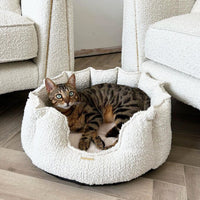
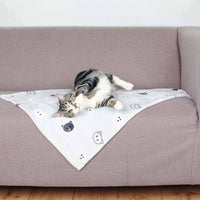
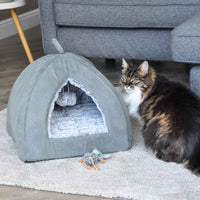
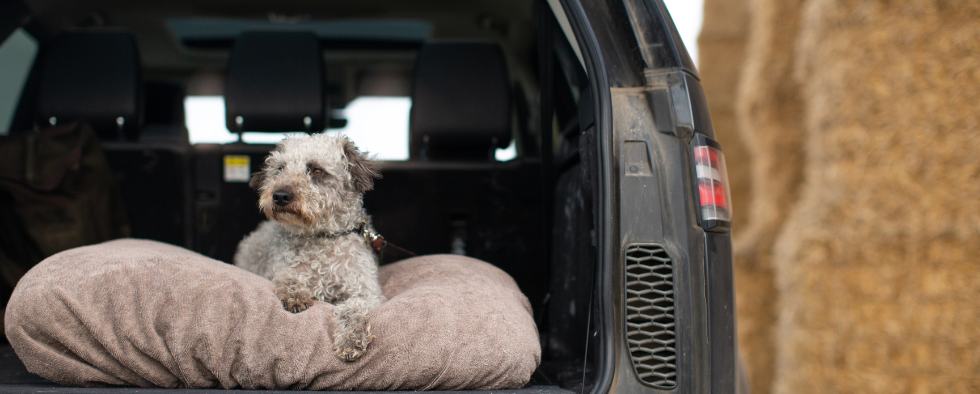
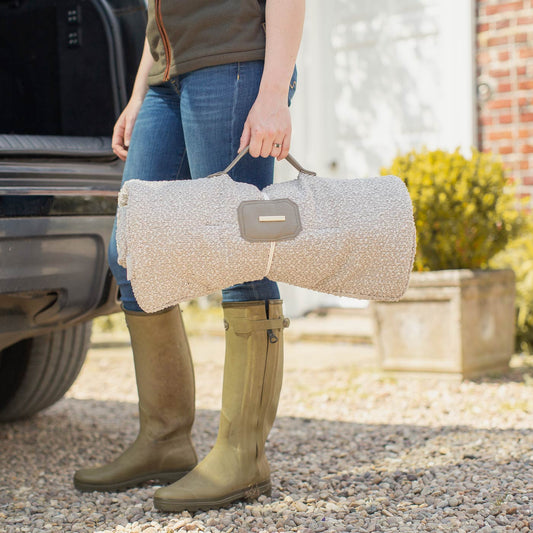
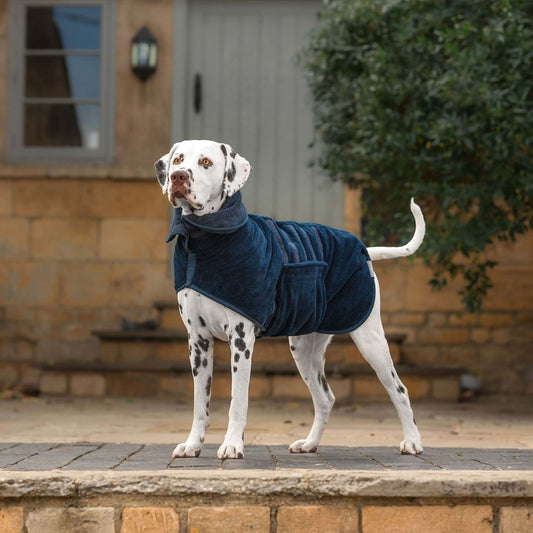
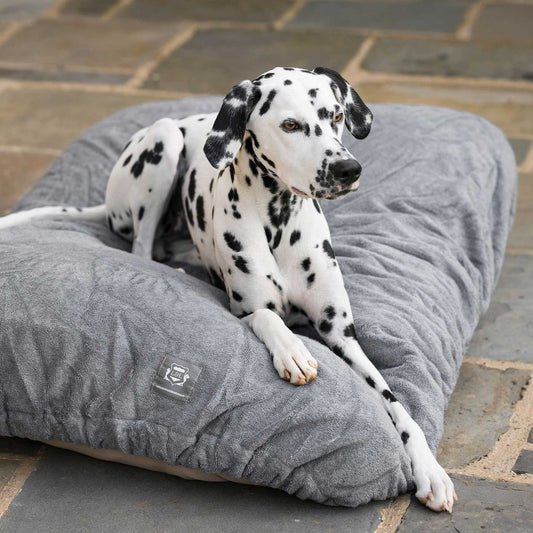
Lords & Labradors’ collection of dog travel accessories has everything you need to take your dog on holidays, car trips and excursions. We’ve picked out everything you might require to keep your dogs safe, healthy and happy while you’re out and about. Many of these products are available in different colours and sizes to ensure that there’s something for every dog and owner.
Traveling with your canine companion can be an exciting adventure, but it requires careful planning and the right accessories to ensure a comfortable and stress-free journey for both you and your furry friend. From car travel accessories to travel beds and walking gear, we've compiled a comprehensive guide to help you pack the essential items for a successful trip with your dog.
Car Travel
Safety should always be a top priority when traveling with your dog in a car. It's a legal requirement to secure your dog whilst driving and there are a few ways you can do this.
Dog Seatbelts & Tethers
A dog seat belt or tether that attaches either to the ISO fix point in your car or clips into your seatbelt will help keep your furry friend secure and prevent them from moving around the vehicle, reducing the risk of accidents and injuries.Our favourite is the KONG ultimate safety tether, it's great for both small and large dogs whilst travelling and has been designed with your dog's safety in mind
Dog Booster Seats
[product]
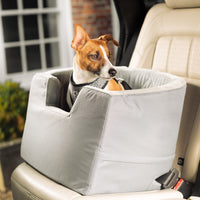
For smaller dogs or cars with a small boot space, you may want your dog to sit in the main space of the car with you. A booster seat is an ideal choice for small breed dogs and puppies as it allows them to sit high up to see where they are going whilst keeping them secure with a harness attachment, we particularly like the Trixie car seat for dogs!
Travel Crates
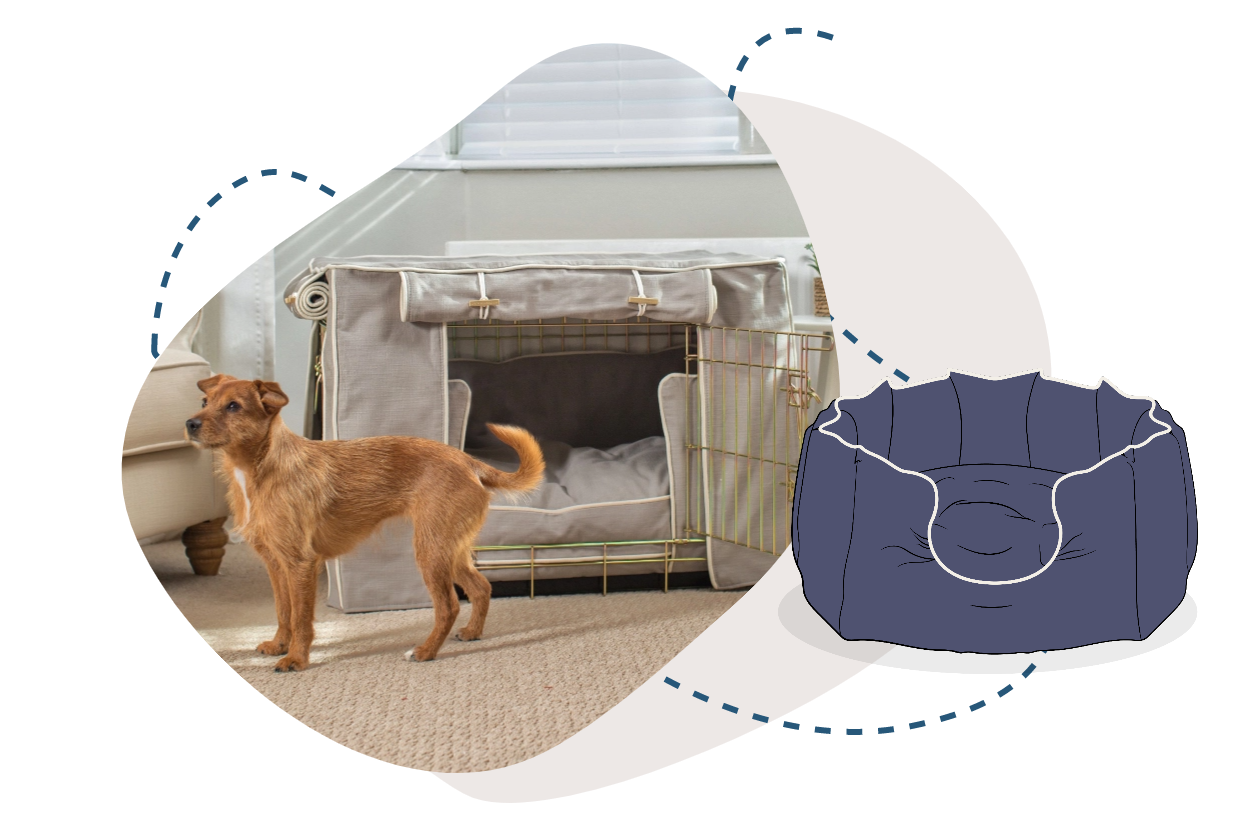
Travel crates are a great option if you want to keep the main space of your car free for passengers, they fit in the boot of your car and keep your dog secure whilst traveling. For longer trips, they are a perfect safe space for your dog to rest comfortably during the journey. Make sure it's large enough for your dog to stand, turn around, and lie down.
Travel Beds
Here at L&L we have a few options which are perfect for travel.
Travel Mats
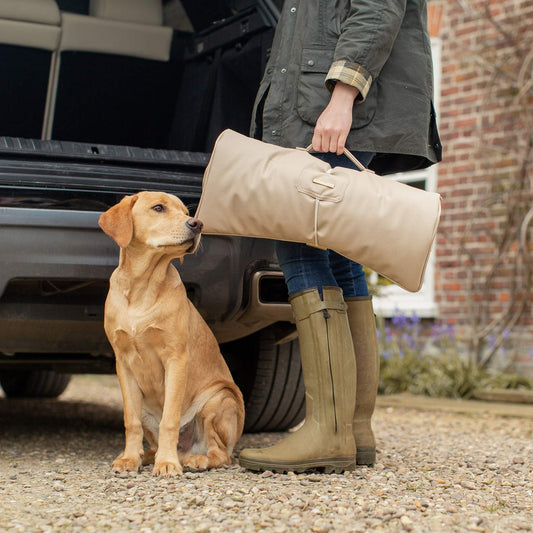
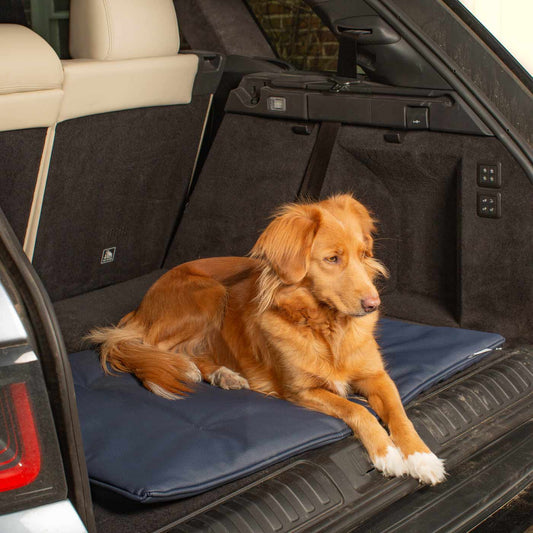
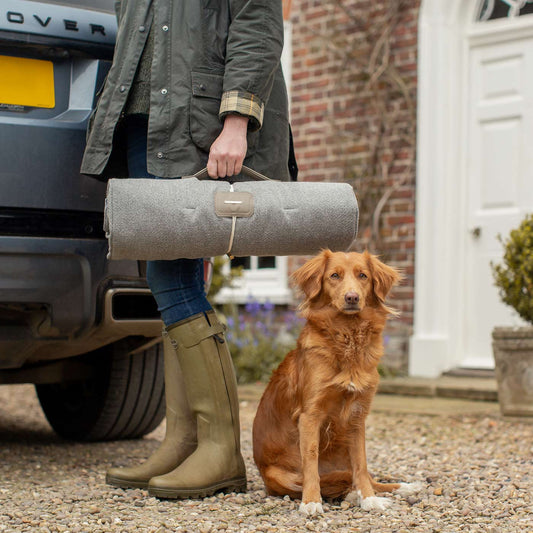
Our range of travel mats are the perfect travel companion, they come in our three most popular sizes and have a handy travel handle so you can take them with you anywhere! They roll up and fasten making them super easy to take out and about on your travels. They are perfect for popping in the boot of your car and to take along on your travels.
Sleepeze
The Sleepeze Dog Cushion is the ultimate sleep sanctuary for your pup! Super plump and cosy with extra deep hollow fibre filling, this handmade cushion comes in fun prints, with a handle for convenient portability. The perfect blend of comfort and style, the Sleepeze is great for a travel crate, as a stand-alone bed, and in the boot of your car!
Essentials Herdwick & Twill Beds
Many of our Essentials Herdwick & Twill beds have been designed with an Italian leather handle making them perfect for travel. They are designed using the most beautiful plush fabrics and fleece, perfect for home and away!
Travel Bags
Dogs come with a lot of stuff, especially if you're staying overnight somewhere. Investing in a dog-specific travel bag can be a game-change for keeping all their stuff in one place.
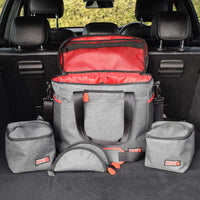
The Mobile Dog Gear bags are amazing, they have space for all you'll need for a weekend or a week away. These bags are designed to carry all your dog's essentials, such as food, treats, medication, waste bags, and even your dog's favourite toys. They even come with handy food storage containers and pop-up travel bowls - perfect for your staycations this summer.
[product]
If you're out for a day the Cocopup walking bags are the perfect size for all your and your dog's essentials, they have a handy treat pouch and come in a range of colours so you're sure to find one to match your outfit!
Dog Walking
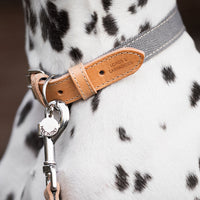
When out and about your dog you'll need either a collar or a harness with an ID tag on, the choice for this comes down to personal preference and the suitability for your dog. Collars come in a whole array of materials and sizes to suit pretty much all breeds and ages of dog. If you have a small breed dog or a puppy, perhaps a buttery soft rolled leather collar and lead will be preferable; a stylish set that will fit their small frames comfortably. If you have a larger dog, perhaps the Dogs & Horses Colours collection will be more suitable.
For more stability and comfort, a harness can be a good alternative to a collar. Particularly good for breeds such as French Bulldogs who have shorter necks, they offer extra comfort and a good level of control when out walking. Also great for the adventuring dog, offering the support needed for hiking and scrambling! Harnesses are also a must have for the car, they're great for clipping your dog's seatbelt tether or booster seat on to.
If you're going on long walks you may want to get an extendable dog lead like the Flexi comfort leads, these are great for giving your dog the freedom to explore whilst making sure they don't stray too far.
Messy Pups
If you're on a muddy walk or go for a paddle in the sea you'll want to get your dog as clean and dry as possible before they get back in the car or into your home. Don't worry we've got you covered!
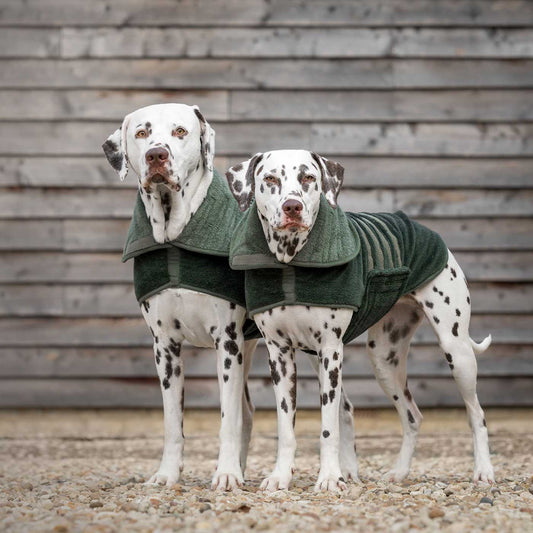
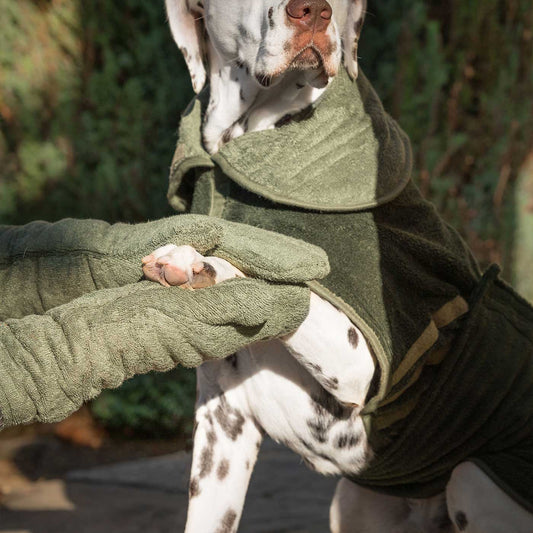
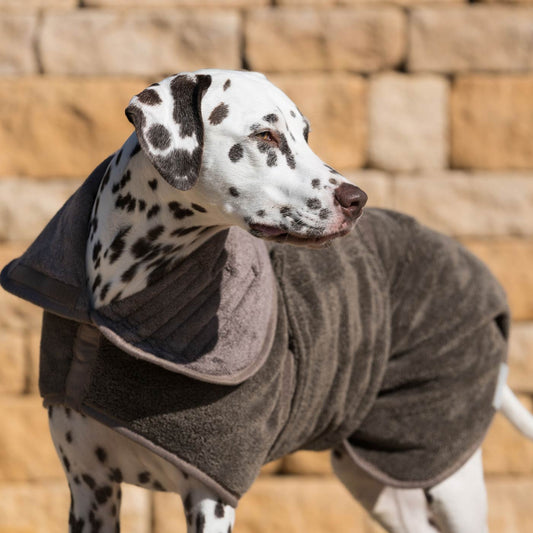
Drying coats are a great fuss-free way to dry your furry friend's luscious locks off! Our Lords & Labradors drying collection comes in four colours (Fir, Mole, Navy and Gun Metal) and is made from super soft and snuggly bamboo fleecy fabric. The collection has our drying coats, mitts and cushion covers - perfect to help dry them off after a splash at the beach or muddy puddle jumping!
Dexas Mudbusters are perfect for any mucky encounters, they're an innovative way to help clean your dog's paws! Muddy paws go in and clean paws come out, super handy after trips to the park, walks, or hikes.
Keeping a pack of pet wipes to hand is always helpful, any accidents or muck can quickly be wiped away. We particularly love the Earth-Rated wipes which you can either get unscented or lavender-scented!
For once you're back home and are looking to bathe your pup after a day of mucky fun we love the PetPlex grooming collection. Formulated to salon quality standards, this grooming range really is the best of the best. Available in 4 wonderful ranges, Puppy purifier, Dirt Defeater, Curl Perfector and Derma Doctor, whatever your dog's coat type and skin requirements we're sure to have the grooming solution for them.
Travel Accessories
Travel bowls are a must! We particularly like the Beco versions which are collapsible and come in various sizes.
Charlie The Vet First Aid Kit is a must have on our packing list, it is packed full with over 40 items you may need whilst you're away. Charlie the vet created it with her may years of veterinary experience in mind, filling it with everything pet owners need on the go.
Traveling with your dog can be a rewarding experience with the right preparation and accessories. From ensuring your dog's safety in the car to providing them with a comfortable place to sleep and eat, these essential items will contribute to a seamless journey for both you and your four-legged friend. Remember to also pack any necessary medications, vaccination records, and identification tags to ensure a worry-free adventure. By planning ahead and catering to your dog's needs, you'll be well-equipped to enjoy the sights and sounds of the world together. Happy travels!
For dog owners, there's nothing quite like exploring the great outdoors with your furry companion. Fortunately, the National Trust, renowned for preserving and protecting some of the UK's most stunning natural and historical sites, offers numerous dog-friendly options. In this blog post, we'll guide you through the best dog-friendly National Trust properties and sites near you, ensuring both you and your four-legged friend can enjoy a memorable day out.
The National Trust's Commitment to Dog-Friendly Policies
The National Trust has a strong commitment to welcoming dogs and their owners. Many of their properties, gardens, and estates are dog-friendly, as long as canine code is followed. They teamed up with one of favourite food brands, Forthglade, to create the canine code; it has 4 key rules.
Keep them close - use a short lead when walking your dog to keep them from disturbing ground-nesting birds and farm animal
Pick up poo - make sure to have some poo bags to hand to clean up after your dog
Watch the signs - make sure to read any signage to double check where you're walking is dog friendly, some areas are only dog friendly at certain times of year
Stay on the ball - as much as we love our four-legged friends, they can be scary to some people. We advise making sure they don't run up to people so that everyone can enjoy their walks
10 Dog-Friendly National Trust Properties
1. Lyme Park, Cheshire
Lyme Park is a dog-friendly National Trust property nestled in the heart of Cheshire. With over 1,400 acres of parkland and woodland to explore, your dog will have a field day here. The sweeping vistas and stunning mansion make this a great place for both human and canine history buffs.
2. Trelissick, Cornwall
Trelissick, located near Truro in Cornwall, offers a beautiful garden and estate that welcomes dogs. Meander through the gardens and woodlands while taking in breathtaking views of the Fal River.
Enjoy a short stroll across the parkland that overlooks the estuary and sea with views as far as your eye can see. Or, take a longer a trek down through the trees to Roundwood Quay.
3. Petworth House and Park, West Sussex
In the picturesque county of West Sussex, you'll find Petworth House and Park. Dogs on leads are welcome in the parkland surrounding the grand house, making it a delightful destination for a dog walk, you may even spot some deer!
4. Goddards' Garden, Yorkshire
If you're looking for a serene garden setting to explore with your dog, Goddards Garden in North Yorkshire is an excellent choice. The garden's tranquil atmosphere, charming pergolas, and colourful flowerbeds create a picturesque backdrop for your leisurely stroll with your furry friend. You can both enjoy the scent of blooming flowers and the calming sound of birdsong as you wander through this hidden gem.
5. Sissinghurst Castle Garden, Kent
Sissinghurst Castle Garden in Kent is famous for its stunning design and vibrant flora. Dog owners will be pleased to know that dogs on leads are welcome in the garden, making it a fantastic place for a leisurely stroll.
While the options listed above are excellent, there are many more dog-friendly National Trust properties across the UK. Some other noteworthy mentions include:
Clumber Park, Nottinghamshire
Stowe, Buckinghamshire
Fountains Abbey and Studley Royal Water Garden, North Yorkshire
Mount Stewart, County Down
Stackpole, Pembrokeshire
Finding Dog-Friendly National Trusts Near You
To find dog-friendly National Trust properties near you, visit the official National Trust website and use their interactive map. You can filter your search to display only dog-friendly sites, making the planning process a breeze.
Forthglade x National Trust Dog Food
The National Trust and Forthglade have co-branded range of gourmet dinners, the purchase of each recipe goes towards supporting the National Trust's amazing work in caring for many of the beautiful places we and our four-legged friends love to explore, including 780 miles of coastline, forests, woods, fens, beaches, historic houses, gardens, pubs & more! We stock some of the range here at L&L and our office dogs can confirm how much they love the range!
The National Trust offers a wealth of dog-friendly options for both local and visiting dog owners. With their commitment to preserving natural beauty and historical significance, you can explore the UK's cultural heritage with your canine companion by your side. Remember to check specific property guidelines and respect the rules to ensure a pleasant experience for all visitors. So, whether you're seeking historic houses, picturesque gardens, or vast landscapes, there's a dog-friendly National Trust site near you waiting to be discovered. Enjoy your adventures with your furry friend!
Our Guide To Taking Your Dog On The Train For The First Time
For many dog owners, the thought of taking their furry companions on a train journey for the first time can be both exciting and nerve-wracking. Questions like "Are dogs allowed on trains?" and "Can you take dogs on the Eurostar?" often arise. Fortunately, with the right knowledge and preparation, traveling with your dog on a train can be a smooth and enjoyable experience. In this comprehensive guide, we will address all your concerns and provide valuable insights on how to make your dog's first train journey a pleasant one.
Are Dogs Allowed on Trains?
Yes, dogs are generally allowed on trains, but specific regulations and policies can vary between train operators and regions. To ensure a smooth journey, it's crucial to research the dog-friendly policies of the train service you plan to use. Most train services allow dogs to travel with their owners, but there are conditions you should be aware of, such as size restrictions, the need for a lead and, in some cases, the requirement for a muzzle.
Can Dogs Go On Trains In The UK?
Traveling with your canine companion on trains in the United Kingdom is a common practice, and train operators across the country have established guidelines to make this experience safe and enjoyable for both pets and passengers. Here, we will provide you with information based on the guidance from the official National Rail website.
National Rail has laid out a comprehensive pet policy to clarify the rules and requirements for traveling with dogs and other pets on trains across the UK. Below are some key points from their policy:
Size Restrictions: National Rail's pet policy does not specify a weight limit for dogs, but it is essential to ensure your dog is well-behaved and can fit comfortably in the space provided without causing inconvenience to other passengers.
Lead Requirements: While on the train, your dog should be kept on a lead or harness, or in some cases in a pet carrier - smaller dogs may feel more comfortable in a dog carrier.
Carriage Restrictions: Dogs are typically allowed in the passenger carriages, but it is advisable to check with your specific train service for designated areas or carriages for travellers with pets.
Reservations: Making a reservation is strongly recommended when traveling with your dog, as it ensures you have sufficient space and reduces potential inconveniences to other passengers.
Cleaning Up: Responsible pet owners should carry poop bags to clean up after their dogs. This ensures that the train remains clean and hygienic for all passengers.
Identification and Vaccination Documents: While it is not a strict requirement on all train services, it's a good practice to carry identification and vaccination documents for your dog. This can be especially important if your dog were to become lost during your journey. Make sure the name and address on both their microchip and ID tag on their collar is up to date.
Behaviour and Consideration: Be considerate of your fellow passengers. Ensure your dog remains well-behaved, quiet, and does not cause any disturbances during the journey.
It's important to note that National Rail's pet policy is a guideline for the entire UK rail network, but there may be some variations depending on the train operator or specific services. Therefore, it is advisable to check with the train service you plan to use to ensure you comply with their individual pet policy.
Can Dogs Go On Eurostar Trains?
Dogs can only go on certain Eurostar train routes, but there are guidelines you must follow. Eurostar allows small dogs to travel with their owners under specific conditions. Make sure to check the Eurostar website for the most up-to-date information on their pet policy.
Taking Your Dog on the Train for the First Time
Now that you know dogs are generally welcome on trains, let's explore some essential tips to ensure a stress-free and comfortable journey for both you and your canine companion.
1. Check the Train Service's Pet Policy
Before embarking on your journey, visit the official website of the train service you plan to use. Familiarise yourself with their specific pet policy, including size restrictions, lead and muzzle requirements, and any additional charges.
2. Make a Reservation
When traveling with your dog on a train, it's advisable to make a reservation. This helps ensure there is enough space for both you and your furry friend. Inform the train operator that you'll be traveling with a dog when booking your ticket.
3. Prepare Your Dog
It's essential to prepare your dog for the train journey. Introduce your pet to the sights and sounds of the train station and use positive reinforcement to create a calm and stress-free atmosphere. Bring your dog's favourite toys and a comfortable blanket for added comfort.
4.Carry Essential Supplies
Pack the following essentials for your dog's journey:
Water and a portable bowl
Dog food and treats
Poop bags for clean-up
Identification and vaccination documents
First-aid kit
5. Choose the Right Seat
Select a seat that's more spacious and comfortable for both you and your dog. Many train services have designated areas for passengers with pets, so inquire about these options when making your reservation.
6. Be Considerate of Other Passengers
Remember that not everyone on the train may be as fond of dogs as you are. Keep your dog on a lead, and ensure they are well-behaved throughout the journey. Be respectful of other passengers by avoiding excessive barking or any disturbances.
Traveling with your dog on a train for the first time can be a wonderful experience when approached with proper planning and knowledge. Dogs are generally allowed on trains, and the key to a successful journey lies in understanding and adhering to the specific pet policies of the train service you choose. Prepare your dog, carry essential supplies, and be considerate of other passengers to ensure a smooth and enjoyable trip for both you and your furry friend. With the right preparation, your dog can become the perfect travel companion on the rails.
Hairless dogs are unlike any other breed you’ll share your home with, and the reality of life with one is a little more nuanced than their striking looks might suggest. This guide covers the most popular hairless dog breeds and what they’re genuinely like to live with, alongside everything you need to know about skin care, temperature comfort, and those big questions around allergies and shedding. Whether you’re already set on one or still weighing things up, you’ll find the practical detail here to help you decide with confidence.
What to know before choosing a hairless dog
Hairless dogs turn heads wherever they go — and if you’ve landed here, you’re probably already a little smitten. Before you fall completely, it’s worth knowing what life with a hairless dog actually looks like day to day.
The appeal is easy to understand. These dogs are striking, often deeply loyal, and they won’t leave a trail of fur across your sofa or your best dark jeans. If shedding is a genuine dealbreaker in your home, a hairless dog breed can make a real difference. But low-shedding is not the same as low-maintenance, and that’s the most important thing to get your head around before anything else.
Without a coat to protect their skin, hairless dogs need more hands-on care than most people expect. Sun exposure, cold air, dry skin, and even friction from bedding can all cause irritation. You’ll probably find yourself reaching for dog-safe moisturiser and sun cream far more often than a lint roller. And in winter, a well-fitted dog coat isn’t a luxury — it’s genuinely part of their everyday kit.
Temperature sensitivity is something you’ll navigate across every season. Breeds like the Xoloitzcuintli and the Chinese Crested dog feel the cold quickly and can struggle in strong sun too, so you’ll find yourself thinking about their comfort in ways you might not with a fluffier breed.
Allergies are also worth approaching with realistic expectations. Hairless dogs are often described as hypoallergenic, but the truth is a bit more nuanced than that. If it’s a key factor for your household, our guide to understanding hypoallergenic dog breeds is worth a read before you decide.
Go in with open eyes, and a hairless dog can be a genuinely wonderful companion. The rest of this guide will help you figure out whether one is the right fit for your home and your life.
The most popular hairless dog breeds and what they’re really like
If you’re comparing hairless dog breeds, you’ll probably keep landing on the same four. The Chinese Crested, Xoloitzcuintli, American Hairless Terrier, and Peruvian Inca Orchid are the best-known hairless dogs, but they feel very different in day-to-day life. Some are clingy little companions, some are more reserved, and some need a lot more mental and physical activity than people expect. If you’re trying to picture what living with each hairless dog breed is actually like, this is where the differences really matter.
Chinese Crested
The Chinese Crested dog is tiny, affectionate, and full of character. Most weigh around 3 to 5kg, so they fit beautifully into smaller homes, flats, and households where the dog will be part of everyday life rather than an outdoorsy sidekick. They’re often happiest tucked beside their person on the sofa, following them from room to room, or curling up in a cosy bed after a gentle walk.
In terms of temperament, they’re loving and very people-focused. That sounds lovely, and it is, but it also means many Chinese Cresteds don’t enjoy being left alone for long stretches. If your home is busy, warm, and someone is around for a good part of the day, they often thrive. If you want a dog for long hikes or high-energy adventures, they may feel a little too delicate and low-key. If you want a cheerful little shadow, they make a lot of sense.
Xoloitzcuintli
The Xoloitzcuintli, usually shortened to Xolo, has a completely different feel. This breed comes in toy, miniature, and standard sizes, which gives you a bit more flexibility depending on your space and lifestyle. A toy or miniature Xolo may suit a smaller home, while a standard size will naturally need more room and a little more exercise.
Xolos tend to be calm, loyal, and deeply bonded to their family. They’re often reserved with strangers, so they’re not always the sort of dog who greets every visitor like an old friend. Early socialisation helps enormously here. With the right start, they can grow into steady, confident companions, but they usually still keep that thoughtful, watchful nature.
This is a breed that often suits owners who like routine and don’t mind earning a dog’s trust over time. They can be wonderful in quieter households where life feels fairly predictable. If you love the idea of a sensitive dog who forms a strong bond and doesn’t need constant chaos around them, the Xoloitzcuintli can be a lovely fit.
American Hairless Terrier
The American Hairless Terrier is usually the busiest and boldest of the group. This is still a small dog, often around 5 to 8kg, but don’t let the size fool you. They’ve got proper terrier energy, which means curiosity, confidence, and a knack for getting involved in absolutely everything.
They tend to suit homes where people enjoy training, games, and giving their dog little jobs to do. Think puzzle toys, short training sessions, active walks, and plenty of interaction. Without that outlet, a clever terrier can quickly start making their own fun, and that’s not always ideal if you value a peaceful afternoon.
That said, they can be a great match for families and engaged first-time owners who are ready to put the work in. They’re bright, adaptable, and often very entertaining to live with. If that sounds appealing, our guide to the best dog breeds for first-time owners is a useful next read.
Peruvian Inca Orchid
The Peruvian Inca Orchid is elegant, sensitive, and a little less straightforward than the others. They come in small, medium, and large sizes, so daily life can vary depending on the individual dog, but the overall personality tends to lean gentle, alert, and emotionally tuned-in.
They usually form strong attachments to their people and can be shy in unfamiliar settings. In a noisy or unpredictable household, some may struggle to relax. In a calm home with patient handling and a steady rhythm, they often really come into their own. Many enjoy having space to stretch their legs, but they’re not all-out chaos merchants. It’s more that they like balance: enough exercise, enough reassurance, and a home that feels safe.
Out of all the hairless dog breeds here, this is often the one that suits experienced owners best, especially those who are comfortable reading subtle body language and building confidence gently.
All of these hairless dogs share that striking bare-skinned look, but their personalities and daily needs are far from identical. Choosing the right hairless dog is less about looks and more about whether their pace, temperament, and social needs match your home.
Do hairless dogs need special skin care?
Owning a hairless dog does mean committing to a skincare routine, but once you find your rhythm, it becomes as natural as any other part of your day. Instead of brushing out tangles or managing seasonal shedding, you’re focused on keeping skin clean, hydrated, and protected. It’s a different kind of care, not a harder one.
Here’s what a solid routine actually looks like in practice:
Bathing. Hairless dogs generally need a bath around once a week using a gentle, dog-safe shampoo. Without a coat to absorb oils and dirt, skin can get greasy or congested surprisingly quickly, so consistency really does make a difference.
Moisturising. Some hairless dogs are prone to dry or flaky skin, especially in winter. A small amount of unscented, dog-safe moisturiser after bathing can keep things comfortable and prevent that tight, irritated look.
Sun protection. Exposed skin burns just like ours does. On sunny days, apply a pet-safe sunscreen to unprotected areas before heading out. Our summer grooming tips are worth a read for keeping your dog safe when the temperature climbs.
Cold-weather clothing. A well-fitting dog jumper or coat isn’t a fashion statement when you own a hairless dog. It’s a genuine necessity. Hairless dogs lose body heat fast, so layering up before a winter walk is simply part of looking after them properly.
Skin checks. Get into the habit of running your hands over their skin every few days. Redness, dry patches, spots, or irritation are much easier to deal with when you catch them early.
Ears and nails. Without fur in the way, ears can collect debris more readily, so keep on top of gentle cleaning. Regular nail trims matter too.
Worth knowing: breed makes a real difference here. The Chinese Crested dog has a mix of hairless and coated areas, so you’ll need to adapt your routine to both textures. The Xoloitzcuintli comes in a range of skin tones, and darker pigmentation can offer slightly more natural sun protection, though sunscreen is still recommended across the board.
With a consistent weekly routine and a few good products to hand, caring for a hairless dog’s skin is genuinely manageable. Most owners find it takes no longer than coat maintenance would for other breeds. Once you know what your dog needs, it just becomes part of your normal rhythm together.
Are hairless dogs good for allergy sufferers and low-shedding homes?
It’s easy to assume that a hairless dog automatically solves the problem if allergies or fur on the sofa are a concern in your home. That logic makes sense on the surface. But “hairless” and “hypoallergenic” aren’t the same thing, and it’s genuinely worth understanding why before you commit.
Breeds like the Xoloitzcuintli and the Chinese Crested dog still produce dander, skin oils, and saliva — and those are the real triggers behind most pet allergic reactions. Someone who reacts to dogs can absolutely still sneeze around a coat-free breed, because the fur was never the culprit to begin with.
If allergies are part of your decision, these are the things worth thinking through honestly:
Dander and skin oil can actually be more noticeable on bare skin, with no coat to absorb them
Bathing and skin care routines involve close contact, which may itself trigger a reaction in sensitive people
Saliva exposure during cuddles, play, or enthusiastic face licks is still very much on the table
Other pets or environmental allergens already in your home can complicate the picture
Spending real time with the specific breed matters far more than any general claim about a dog being “safe” for allergy sufferers
That said, if your main concern is fur on furniture, clothes, or bedding, a hairless dog can be a genuinely great fit. Reduced shedding is a real, everyday benefit that many households really appreciate. Just make sure anyone with sensitivities spends proper time with the breed before you decide, because that hands-on experience will tell you far more than any guide ever could.
How to keep a hairless dog comfortable at home and on walks
A hairless dog feels temperature changes far more keenly than a coated breed. Without fur to act as a buffer, exposed skin is sensitive in both directions — too cold, too hot, and everything in between. With a little forward planning and the right kit at home, it’s easy to keep them comfortable whatever the season.
Keeping warm indoors
A draught-free, cosy sleeping spot is genuinely one of the most important things you can give a hairless dog. Think about where your dog spends most of their downtime and make sure it’s warm, sheltered, and properly cushioned.
Choose a bed with raised sides and good insulation, positioned away from doors or windows where cold air creeps in
Layer soft blankets so your dog can burrow and find their own comfortable temperature
For older dogs or those who feel the chill especially, a self-warming bed can make a big difference during cooler months
Good dog bedding isn’t a luxury for hairless dogs — it’s genuinely essential
Staying comfortable outdoors
Walks need a bit more thought too, whatever the season.
Pop a well-fitted jumper or coat on before heading out in cool or cold weather
On sunny days, opt for UV-protective dog clothing or a vet-approved pet sunscreen on exposed skin, especially for lighter-skinned dogs
Watch out for hot pavements in summer — they can burn sensitive paws quickly and make the heat far harder to manage without a coat for shade
Keep a lightweight layer in your bag just in case the weather turns mid-walk
Quick rule of thumb: If you’re reaching for a jacket before heading out, your hairless dog almost certainly needs one too.
For breeds like the Chinese Crested or Xoloitzcuintli, comfort accessories aren’t optional extras. They’re part of everyday care — and getting them right makes a real difference to how happy and settled your dog feels day to day.
Is a hairless dog the right fit for your family?
Choosing a hairless dog is about more than falling for those big eyes and that impossibly soft skin. The real question is whether your everyday life is a genuine match for what these dogs need.
Climate matters more than most people expect. If you live somewhere cold or damp, be honest with yourself about whether you’re ready to commit to proper layering, warm bedding, and year-round temperature management. A Xoloitzcuintli or Chinese Crested dog won’t thrive if winter walks leave them shivering and their skin exposed to the elements.
Your daily routine matters just as much. Hairless dogs tend to form incredibly close bonds with their people and don’t do well with long stretches alone. They want to be in the middle of family life — on the sofa, in the room with you, part of everything. If that sounds perfect, you’re probably onto a winner. If your days are mostly spent out of the house, it’s worth thinking carefully about whether the lifestyle is the right fit.
On the grooming front, hairless breeds actually need more consistent care than many coated dogs, not less. Skin checks, moisturising, sun protection, and nail care all become part of your regular routine. Our guide to grooming a dog is a great place to get those habits established from day one.
And if allergies were what brought you here — no dog is truly hypoallergenic, but low-shedding hairless breeds do make a real difference in many homes.
Get the fit right, and a hairless dog will reward you with devotion, personality, and serious charm. Take your time, choose wisely, and pick the dog that suits your life — not just your camera roll.
Frequently Asked Questions
What dog breed is hairless?
The best-known hairless dog breeds are the Chinese Crested, Xoloitzcuintli, American Hairless Terrier, and Peruvian Inca Orchid. They all share that striking bare-skinned look, but they differ quite a bit in size, energy, temperament, and the amount of daily care and routine they need at home.
How expensive are hairless dogs?
Hairless dogs can be more demanding to keep than many people expect, even if the article doesn’t give a purchase price. Beyond finding the right breed, you’ll need to budget for regular skin care, dog-safe sunscreen, moisturiser, warm coats, and cosy bedding because their comfort depends on that everyday support.
Can dog and cat fleas live on humans? What owners need to know
Finding a flea on your sofa or waking up with itchy bites on your ankles is enough to send any pet parent into a spiral, and the question of whether dog fleas can live on humans is usually the first thing that comes to mind. The honest answer is reassuring, but there is still plenty worth knowing about what those bites mean, why fleas behave the way they do around people, and what actually needs to happen to sort things out properly. This guide covers all of it, from spotting flea bites on humans to treating your pets and home together so you’re not dealing with the same problem again in a few months.
Can dog fleas live on humans? Here’s the short answer
If you’ve spotted a flea jumping across your sofa or woken up with a small, itchy bite on your ankle, it’s completely understandable to wonder whether you’ve become the new host. The good news? You haven’t.
Dog and cat fleas can bite humans, and those bites are genuinely irritating, but they cannot live on humans the way they live on your pet. Fleas need fur. Dense, warm fur gives them somewhere to hide, feed repeatedly, and lay their eggs undisturbed. Human skin and hair simply don’t offer the right conditions for them to settle and breed. So while a flea might take an opportunistic bite when it lands on you, it won’t be sticking around.
Worth knowing: cat fleas, despite the name, are actually the most common species found on both cats and dogs in the UK. And around people, they behave exactly the same way — your pet will always be their preferred host.
In practice, flea bites on humans are almost always a sign that an infestation is happening somewhere else — on your pet, in your soft furnishings, or across your home — rather than on you directly. Think of finding a flea on yourself less as a personal problem and more as a useful early warning. It’s your cue to act quickly and tackle things at the source before they get worse.
If you’ve already spotted the signs, our guide on how to get rid of fleas on your dog is a great place to start.
What flea bites on people usually look and feel like
Flea bites on humans are usually pretty easy to spot once you know what you’re looking for, and the reassuring thing is they tend to follow a fairly predictable pattern. Whether you’re dealing with cat fleas or asking whether dog fleas can bite humans, what shows up on skin looks much the same either way.
Here’s what to look out for:
Small, red spots with a tiny central puncture point, often ringed by a slightly raised halo
Intense itching that kicks in quickly, sometimes within minutes
Bites in clusters or short lines rather than single, isolated marks
Common locations: ankles, lower legs, and around the waist — anywhere clothing sits close to the skin and warmth accumulates
Reactions do vary quite a bit from person to person, which can make things confusing if you’ve got a whole household reacting differently. Some people develop noticeable swelling and redness, particularly with repeated exposure, while others barely register a bite. Children and those with more sensitive skin tend to have stronger reactions, so the same infestation can look completely different depending on who it’s affecting.
If your pet is the likely source, that’s where to focus your attention first. Our roundup of insect-repelling and soothing products for pets is a good place to start.
Why fleas stay with pets instead of humans
Fleas can and do land on people, but they don’t choose us as long-term hosts. Dogs and cats are simply far better suited to support a flea’s entire life cycle, which is why a flea bite on your ankle is usually a sign your pet has fleas rather than fleas trying to settle on you.
Here’s why pets make such ideal hosts:
Dense fur gives fleas somewhere to grip, hide, and move around undisturbed — something bare human skin just can’t offer.
Consistent body warmth keeps fleas comfortable and active. Pets maintain the steady temperatures fleas need to thrive, and we simply don’t hold that heat in the same way.
Easy, repeated feeding is possible because a flea nestled in fur can feed multiple times a day without being spotted or dislodged.
Better egg-laying conditions mean fleas on a pet can drop eggs directly into the coat, which then fall into bedding, carpets, and soft furnishings nearby.
Less grooming interference gives fleas on a dog or cat far less disruption than they’d face on a human who notices them quickly.
A single female flea can lay up to 50 eggs a day. On a pet, that adds up fast — which is exactly why infestations escalate so quickly once they take hold.
So if you’ve spotted a flea on the sofa or felt a bite on your leg, it’s not looking to live on you. It’s a signal of a wider problem involving your pet and your home. Treating your pet is essential, but it’s only half the job. Our guide on how to remove cat fleas from your home walks you through the rest.
What to do if you’ve found a flea in the house
Finding a flea in the house can feel horrible at first, especially if you are also wondering whether can dog fleas live on humans. The reassuring bit is that while dog and cat fleas can bite people, they usually want to stay with your pets rather than live on you.
Here is a calm, practical plan:
Check every pet with a flea comb. Go slowly through the coat, especially around the neck, belly, and base of the tail. You are looking for live fleas or tiny black specks of flea dirt.
Vacuum thoroughly. Focus on carpets, rugs, skirting boards, sofas, pet beds, and the spaces under furniture where eggs and larvae can collect.
Wash pet bedding and soft covers. Use the warmest wash the care label allows, then dry everything fully before it goes back down.
Treat all pets in the home together if you can. Even pets who seem fine may still be carrying fleas, so it helps to follow your flea treatment plan consistently and check the product guidance or your vet’s advice.
Freshen pet areas with pet-safe cleaning products. A pet-safe home spray or bedding wash can be useful as part of your usual cleaning routine, especially in the places your dog or cat sleeps most.
Keep going for the next few days. Repeat vacuuming and keep checking coats, because fleas often show up in stages.
A quick note: the fleas you spot are often only part of the picture. Eggs can sit quietly in soft furnishings and hatch later, which is why steady cleaning matters so much. A flea comb, regular bedding washes, and a simple pet-safe routine go a long way in preventing more flea bites on humans and pets.
When flea bites need extra attention and how to keep them from coming back
Most flea bites are a temporary irritation that settle down within a few days, especially once you’ve tackled the root cause. That said, keep an eye on any bites that seem to be getting worse rather than better. If one becomes increasingly swollen, painful, or surrounded by spreading redness, it’s worth a quick chat with a pharmacist — they can point you towards the right antihistamine or topical cream. If a bite looks infected or you’re feeling unwell alongside the itching, don’t wait it out; see your GP.
On the pet side, if you’ve already treated your dog or cat and you’re still spotting fleas a few weeks on, or your pet is scratching constantly and losing fur, loop in your vet. Persistent infestations sometimes need prescription-strength treatment, and a vet can also rule out any skin reactions that need separate attention.
The bigger takeaway here is a simple one: flea bites on humans are really a symptom of a wider problem. Fixing it properly means treating your pets and your home at the same time, not one without the other. That’s where so many owners get stuck, and end up starting from scratch months later. Once you’ve cleared things up, regular prevention is what keeps it that way. Browsing trusted options like Frontline through Lords and Labradors is a good place to start making monthly treatment part of your routine.
Frequently Asked Questions
How long will dog fleas stay on a human?
Not for long — dog and cat fleas may bite a person, but they don’t stay and live on humans. They prefer pets because fur gives them the warmth, cover, and feeding conditions they need, while human skin and hair don’t let them settle or breed properly.
Can fleas live in a bed?
Yes, fleas can be in a bed, especially in bedding and other soft furnishings around your home. They don’t live on humans, but eggs and developing fleas can collect in places like pet beds, sofas, carpets, and covers, which is why washing and thorough vacuuming matter so much.
How likely are you to get fleas from your dog?
It’s very possible to get bitten if your dog has fleas, but the fleas are still far more likely to stay with your pet than live on you. If you’re finding bites or spotting fleas in the house, it usually points to a wider infestation in your dog, bedding, or soft furnishings.
Can cats eat cheese? Dairy, milk and other human foods explained
Cats and cheese have a complicated relationship, and if you have ever wondered whether you should actually hand over that little corner of cheddar, you are not alone. This article unpacks whether cats can eat cheese safely, how different dairy foods affect a cat’s digestion, and which other human foods are worth knowing about before your cat makes the decision for you. By the end, you will have a clear, practical sense of what is fine in small amounts, what is best avoided, and when a dodgy reaction is worth a call to the vet.
Why your cat always appears when the cheese comes out
There’s something almost magical about the moment you peel back a cheese wrapper. One second you’re alone in the kitchen, and the next your cat has materialised at your feet with that very specific look on their face. Not quite begging. Just watching. Very closely.
It’s no wonder so many of us end up asking whether cats can eat cheese. The curiosity is mutual, and it’s genuinely hard to say no to a face like that. But before you break off a corner of cheddar, it’s worth understanding how cats actually handle dairy — because the answer is a little more nuanced than a straight yes or no.
Cats are obligate carnivores, meaning their bodies are built around meat, not milk. Most adult cats are lactose intolerant to some degree, though how sensitive each individual cat is varies quite a bit. Cheese tends to be lower in lactose than milk, which is why some cats can manage a small piece without any obvious reaction. But that alone doesn’t make it a good snack, and a cat tolerating something isn’t the same as a cat thriving on it.
If you’ve ever caught your cat watching you with that laser-focus intensity and wondered what’s actually going on in that head, this piece on why cats stare is worth a read. Cats are complicated little creatures, and the more you understand them, the better placed you are to make the right calls for them.
Can cats eat cheese? The short answer, and why it depends
Most cats can eat a small piece of cheese without any real harm, but that doesn’t mean it’s something they need or benefit from. Cats are obligate carnivores, and most are also lactose intolerant — they don’t produce enough of the lactase enzyme to digest dairy properly. For some cats, even a small amount is enough to cause vomiting or loose stools.
That said, not every cat reacts the same way. A few things influence how well a cat handles cheese:
Individual tolerance — some cats naturally have lower lactase levels than others
Age — kittens produce more lactase than adult cats, though that still doesn’t make dairy a sensible choice for them
Cheese type — hard cheeses tend to be significantly lower in lactose than soft or creamy varieties
Portion size — a tiny nibble is very different from a proper piece
Hard cheeses like cheddar or parmesan are generally easier on a cat’s stomach in small amounts, because the ageing process reduces their lactose content. Soft cheeses, cream cheese, and anything made with milk or cream sit at the other end of the scale and are much more likely to cause a stomach upset. So if your cat has clocked that you’ve opened a block of cheddar and is giving you the eyes, the tiniest taste is unlikely to cause any drama. A cream cheese-covered cracker is a different matter entirely.
Think of cheese as incidental at best, not a treat worth offering regularly. For a fuller picture of what actually keeps your cat in good shape, it’s worth reading up on what makes a healthy diet for cats.
Milk, cream and other dairy foods: what’s different from cheese?
Cheese and milk might both come from the same source, but they behave very differently once they reach your cat’s digestive system. The fermentation process that turns milk into cheese removes most of the lactose along the way, which is why a small sliver of cheddar tends to cause far less trouble than a saucer of milk. Cream sits at the other end of the scale — high in lactose and rich in fat, it’s one of the harder dairy foods for cats to handle.
Dairy Food
Lactose Level
Digestive Risk
Suitable for Cats?
Cheese
Low
Low to moderate
Occasionally, in very small amounts
Milk
High
High
Not recommended
Cream
High
High
Not recommended
Most adult cats are lactose intolerant. After kittenhood, they stop producing enough lactase to break lactose down properly, which is why a cat who eagerly laps up milk often ends up with an upset stomach an hour later. Kittens produce more lactase, but that doesn’t make cow’s milk a safe option — their digestive systems are still developing, and milk doesn’t come close to meeting their nutritional needs. If you’re raising a young cat, age-appropriate kitten food is what actually sets them up well.
A few things worth keeping in mind:
Cheese is the lowest-lactose dairy option, which is why it’s the safest occasional choice in very small amounts
Milk and cream carry a much higher digestive risk and are best kept out of the bowl entirely
No dairy product is nutritionally necessary for cats, whatever their life stage
Other human foods cats might beg for at the table
Cats are expert opportunists. If you have ever turned your back on a plate, you already know this. The good news is that knowing which foods are a harmless occasional nibble and which ones are genuinely a poor fit helps you stay one step ahead.
Here are some of the most common table foods cats try to steal:
Plain cooked chicken or turkey — broadly fine in small amounts, as long as it is unseasoned and boneless
Canned tuna — tolerable as an occasional treat, but high in sodium and not nutritionally balanced for regular feeding
Bread — not toxic, but offers cats nothing useful and can sit heavily on a sensitive stomach
Deli meat — a poor choice due to high salt content and preservatives that are hard on feline kidneys
Salty snacks like crisps or crackers — best kept well out of reach, as cats are not built to handle much salt at all
Heavily seasoned leftovers — garlic and onion in particular are genuinely harmful to cats, even in small quantities
It is worth remembering that cats are obligate carnivores. Plant-heavy or heavily processed human foods rarely add anything useful to their diet, even when they seem harmless enough.
The pattern holds pretty consistently across all of these: plain, unseasoned, protein-based foods carry the lowest risk, while anything salty, greasy, or processed is best left on your plate. If sharing your dinner is becoming a regular habit, our guide on feeding cats leftovers is well worth a read first.
How to share safely: treats, portion size and when to call the vet
If you do decide to share the occasional nibble of cheese with your cat, keep it small and infrequent. Think a pea-sized piece of mild cheddar or a tiny scraping of cream cheese, offered as a rare treat rather than a fridge-opening ritual. As a general rule, treats of any kind, human foods included, should make up no more than ten percent of your cat’s daily calories. If you want to get that balance right, our guide on whether treats are bad for cats is a good place to start.
After trying any new food, pay attention to how your cat responds over the next day or so. A little extra wind or a slightly softer stool is usually nothing to worry about. But if you’re seeing ongoing loose stools, vomiting, or a cat who seems uncomfortable and off their food, that’s your cue to take cheese off the menu for good. Their stomach is telling you something.
Some cats are better off skipping human food sharing altogether. If yours has a sensitive stomach, a history of digestive issues, or a condition like kidney disease or inflammatory bowel disease, check in with your vet before introducing anything new. The same applies if any symptoms appear and don’t settle within a couple of days.
For most cats, the odd dairy experiment is genuinely fine. Keep portions small, watch for any reaction, and let your cat’s response do the talking.
Frequently Asked Questions
Why do cats go crazy for cheese?
Cats often get very interested in cheese because it is a strong-smelling animal-based food, but that does not mean it is a great snack for them. Many adult cats are lactose intolerant, so even if they seem obsessed, cheese is best kept to a tiny, occasional nibble.
What foods can’t cats eat?
Cats should not eat heavily seasoned leftovers, especially anything containing garlic or onion, because those are genuinely harmful even in small amounts. Salty, greasy, and processed foods like deli meat, crisps, crackers, milk, and cream are also poor choices and can upset their stomachs.
How often should you worm your dog or cat? A complete worming guide
Worms are one of those topics most pet parents only think about when something seems off, but knowing how often to worm a dog or cat before that happens makes everything so much simpler. This guide covers the worms most likely to affect your pet, how a worming schedule changes from puppyhood through to the senior years, and what your pet’s lifestyle tells you about how often they really need treating. By the end, you’ll have a clear, practical routine you can actually stick to.
How often should you worm a dog or cat? Start with the basics
Worming your pet is one of those things that’s easy to put off — until you find yourself Googling “how to tell if a dog has worms” at 11pm because your dog has been scooting across the carpet. Sound familiar? Once you understand the basics, though, it really is straightforward to stay on top of.
So, how often should you worm a dog or cat? The honest answer is: it depends on their age, lifestyle, and where they spend their time. As a starting point, most adult dogs and cats need worming every three months. Puppies and kittens need it far more frequently — sometimes as often as every two weeks in those earliest weeks of life. We’ll get into all of that further down.
What worming treatments actually do is target internal parasites that can quietly take up residence in your pet’s gut, or occasionally other organs, without any obvious signs. Some pets show clear clues: weight loss, a rounded belly, or worms visible in their stool. Others seem perfectly fine. That’s exactly why a regular schedule beats a reactive one every time.
Dogs and cats also have slightly different needs. Dogs tend to pick up worms through scavenging, eating grass, or contact with other dogs on walks. Cats, especially those who hunt, face their own set of risks. A good routine accounts for how your pet actually lives, not just the textbook version of their species.
This guide covers everything: which worms to know about, how a dog worming schedule shifts with age, what factors change how often you should treat, and how to build a habit that genuinely sticks. You can also browse our flea and worming treatments if you want to get sorted while you read.
Which worms are we talking about, and how do pets pick them up?
Most dogs and cats will pick up worms at some point in their lives — it’s just part of being a curious, sniff-everything, roll-in-anything kind of animal. Knowing which worms to look out for, and how pets actually come into contact with them, makes it so much easier to build a worming routine that sticks.
The main worms to know about:
Roundworm — the most common type, especially in puppies and kittens. These live in the gut and can cause a pot-bellied appearance, vomiting, and poor growth.
Tapeworm — flat, segmented worms that attach to the gut lining. You might spot small white segments around your pet’s bottom or in their bedding.
Hookworm — less common, but worth knowing about. These latch onto the intestinal wall and feed on blood, which can cause anaemia in younger or smaller animals.
Whipworm — more of a dog problem than a cat one. They live in the large intestine and can cause bloody diarrhoea and gradual weight loss.
How do pets pick them up?
Sniffing or accidentally swallowing infected faeces on walks or in the garden
Hunting or scavenging — eating birds, rodents, or other small animals
Fleas — swallowing an infected flea during grooming is one of the most common routes for tapeworm
Sharing outdoor spaces with other dogs, cats, or wildlife
Mother-to-puppy or mother-to-kitten transmission, either during birth or through nursing
That last point matters more than most people realise. Puppies and kittens arrive in the world already vulnerable, which is why those early weeks call for extra care. Good puppy flea and worming treatments can make a real difference right from the start.
How often to worm a dog or cat comes down to age, lifestyle, and risk level — and we’ll work through all of that next.
The usual worming schedule by age: puppies, kittens, adults and seniors
Worming frequency shifts quite a bit depending on where your pet is in life, so treat the schedule below as a practical starting point rather than a fixed rule. The exact timing will always come down to the product you’re using and how your pet actually spends their days.
Life Stage
Recommended Frequency
Key Reason
Puppies
Every 2 weeks until 12 weeks old, then monthly until 6 months
Worm burdens are high in young pups, and maternal transmission is common
Kittens
Every 2 weeks until 12 weeks old, then monthly until 6 months
Kittens are particularly vulnerable and often pick up worms through their mother’s milk
Adult Dogs
Every 3 months as a minimum
Keeps protection consistent against roundworms and tapeworms throughout the year
Senior Dogs
Every 3 months, reviewed with your vet
Older pets may have weaker immune systems, and changing health needs can affect what treatment works best
Once your dog or cat reaches adulthood, a quarterly routine covers most households well. That said, some pets genuinely need worming more often, and it’s worth thinking this through before you settle on a schedule.
You might want to worm more frequently if your pet:
Spends a lot of time outdoors, rooting through grass, puddles, or woodland
Hunts or scavenges, even now and then
Mixes regularly with other dogs, cats, or animals at parks, kennels, or training classes
Lives with young children, who are more vulnerable to certain worm infections
For example, a Labrador who swims in every pond he passes and lives for a good rummage in the undergrowth is a different case to a greyhound who sticks to pavement walks and rarely meets other dogs. Same species, very different risk.
If you have a large adult dog and want a reliable treatment to keep on hand, our worming tablets for large adult dogs slot neatly into a quarterly routine. Whatever product you choose, always follow the guidance closely, and if your pet’s lifestyle puts them in a higher-risk category, a quick chat with your vet will help you get the timing right.
What changes the answer? Lifestyle, risk and the way your pet lives
Standard worming schedules give you a solid starting point, but they don’t tell the whole story. Every pet lives a different life, and some lifestyles genuinely put dogs and cats at greater risk of picking up worms more often. Working out how often to worm a dog really comes down to understanding what your pet actually gets up to day to day.
Here are the key factors that can push the risk higher:
Raw feeding. Raw meat, particularly offal, can carry worm larvae. Dogs and cats on a raw diet are more exposed than those eating cooked or commercial food.
Hunting or catching prey. Cats that bring home birds or mice, or dogs that snap at rabbits on walks, are repeatedly exposed to intermediate hosts that carry worms.
Scavenging on walks. If your dog is the type to hoover up anything they find on the ground, their risk goes up every single time you leave the house.
Homes with young children. Children play close to pets and often put their hands in their mouths, which raises the stakes around roundworm transmission in particular.
Multi-pet households. More animals sharing a space means more opportunity for reinfection, especially if one pet picks something up outdoors and brings it home.
Frequent boarding or daycare. Regular contact with lots of other dogs increases exposure. It’s that simple.
Inconsistent flea treatment. Fleas and worms are more closely linked than many owners realise. Gaps in flea cover can leave your pet more vulnerable than you’d expect.
The more of these factors that apply to your pet, the more likely they are to need worming more frequently than the standard schedule suggests.
That last point about fleas is worth pausing on. Fleas can transmit tapeworms directly, which makes the two genuinely inseparable. Keeping on top of both isn’t doubling your workload — it’s just good sense. If you want to review what you’re using, our flea and worming treatments are a good place to start.
How to worm your pet safely without the guesswork
Getting worming right feels complicated at first, but once you’ve done it a couple of times, it genuinely isn’t. Whether you’re figuring out how often to worm a dog for the first time or just trying to be more consistent, a few simple habits make it easy to stay on top of.
Choose a species-appropriate product. Always use a wormer made specifically for dogs or cats. They are not interchangeable — and using the wrong one can cause serious harm.
Dose by weight, not by guesswork. Weigh your pet before each treatment and follow the label closely. Too little won’t work; too much creates unnecessary risk.
Set a recurring reminder. Tying your dog worming schedule to something you already remember — the first of the month, a pet’s birthday, a regular vet visit — means it becomes habit rather than something you have to think about.
Don’t double dose if you miss one. Simply treat as soon as you remember and reset your schedule from there. No need to compensate.
Never use a dog product on a cat. Some ingredients that are perfectly safe for dogs are toxic to cats. This one really matters.
When to speak to a vet first:
Pregnant or nursing pets
Very young animals (a vet can give you a tailored plan if you’re unsure how often to deworm a puppy in those early weeks)
Pets with existing health conditions or on other medications
It’s also worth staying alert to the signs your dog has worms between treatments — things like changes in appetite, a bloated belly, or visible worms in their stool. Caught early, it’s rarely a big deal. And if you want trusted support between vet visits, our vet-approved wellbeing range is a good place to explore.
Building a routine that’s easy to stick to
Once you know how often to worm a dog or cat, the real challenge is turning that knowledge into a habit you’ll actually keep. The good news? A little planning upfront makes it almost effortless to maintain.
The simplest approach is to tie worming into something you already do. If you apply flea treatment on the first of the month, add worming to the same date. Some products cover both, which makes things even easier. A sticky note on the fridge, a recurring phone reminder, or a note in your pet’s health file all do the job — whatever suits the way your brain works is the right system.
It also helps to keep treatments in stock so you’re never caught short. Running out mid-schedule is one of the most common reasons routines slip, and it matters most with puppies and kittens who need worming every two weeks.
If you share care of your pet with a partner or family member, agree on who’s responsible. It sounds obvious, but a quick “did you worm them this month?” conversation avoids a surprising amount of confusion.
It’s also worth thinking seasonally. Autumn walks bring more mud, more wildlife contact, and more opportunities for a dog to sniff out something they shouldn’t — all of which can increase worm risk. Our autumn pet care guide covers everything you need to keep your dog or cat healthy as the seasons change.
The routine doesn’t need to be complicated. Consistent and simple is genuinely all it takes.
Frequently Asked Questions
Can you overworm a dog?
Yes, giving more wormer than the label recommends creates unnecessary risk. The safest approach is to use a dog-specific product, weigh your dog before each treatment, and follow the dosing instructions closely. If you miss a dose, treat when you remember rather than doubling up to compensate.
What are the signs that a dog needs worming?
Common signs include weight loss, a bloated or rounded belly, changes in appetite, vomiting, scooting, and visible worms or white tapeworm segments in your dog’s stool or around their bottom. Some dogs show no obvious signs at all, which is why a regular worming routine matters.
Can I deworm my dog again after 2 weeks?
Yes, in some cases worming again after 2 weeks is part of a normal schedule, especially for puppies in their earliest weeks. For adult dogs, timing depends on the product and your dog’s lifestyle, so follow the label carefully rather than repeating doses early without a reason.
Is one round of dewormer enough?
No, one round of dewormer usually isn’t enough as a long-term plan. Most adult dogs need worming every 3 months as a minimum, while puppies need it much more often at first. A regular schedule works better than only treating once or waiting until you spot signs.
How to choose the best dog food: dry, wet, raw and fresh compared
Picking the best dog food in the UK feels simple until you’re standing in front of a wall of options wondering whether kibble, pouches, raw chunks or freshly cooked trays is the right call for your dog. This guide cuts through the noise and compares all four types honestly, covering what they actually cost, how they fit into a real daily routine, and what to look for beyond the marketing on the front of the pack. By the end, you’ll have a clear sense of what works for your dog and what works for your life.
What’s the difference between dry, wet, raw and fresh dog food — and why it matters
Walk into any pet shop or scroll through an online store, and the sheer range of dog food can feel genuinely overwhelming. Dry kibble, pouches, raw chunks, freshly prepared trays — it’s a lot to take in, especially when all you want is to feed your dog something they’ll love that’s actually good for them.
So here’s a plain-English breakdown of what each type really means.
Dry dog food (kibble) is the most widely used option in the UK. It’s shelf-stable, simple to portion, and usually the most budget-friendly. Most of the best dry dog food UK brands formulate it as a complete, everyday diet, so there’s nothing extra to add.
Wet dog food comes in tins, trays or pouches and has a much higher moisture content, which makes it more aromatic and palatable. If you have a fussy eater or a senior dog who’s lost some enthusiasm for mealtimes, wet food can be a game-changer — either on its own or mixed in with kibble. For a deeper look at how the two compare, this wet vs dry dog food guide is a good place to start.
Raw dog food means minimally processed meat, bone and offal — closer to what dogs would naturally eat. Many owners swear by the difference they see in coat condition and digestion, though raw does require careful handling and a bit more planning around storage.
Fresh dog food sits somewhere between raw and traditional wet food: gently cooked, made with whole ingredients you’d actually recognise, and usually sold refrigerated or frozen.
Every type has real strengths. The right fit depends on your dog’s age, size and health — but also on your budget, your fridge space, and honestly, how much headspace you have on a Tuesday morning.
Which type works best for your everyday routine?
The right food type often comes down to your actual daily life, not just what looks best on paper. Fridge space, work hours, travel habits, and whether you’re feeding one dog or four all shape what’s genuinely manageable long-term. There’s no single best dog food UK-wide, but there is one that fits your household better than the rest.
Food Type
Storage Needs
Prep Time
Travel-Friendly
Best for Fussy Eaters
Dry
Minimal
None
Yes
Sometimes
Wet
Needs fridge once open
None
Manageable
Often yes
Raw
Freezer space required
Defrost needed
Not ideal
Usually yes
Fresh
Needs fridge
None
Less convenient
Yes
A few practical things worth knowing before you decide:
Dry food suits busy households brilliantly. Measure, store in an airtight container, done. Good dog food storage keeps kibble fresh and pests out — something most people only think about after an incident with a chewed bag.
Wet food is a genuine win for fussy eaters or dogs who need extra hydration, though opened tins need refrigerating and using up within a day or two.
Raw feeding delivers real results for many dogs, but it asks something of you — freezer space, forward planning, and confident handling. Rewarding, not effortless.
Fresh food hits a sweet spot for palatability and ease, though it needs consistent fridge access and doesn’t travel as well as dry.
Mixed feeding — typically dry plus wet — suits dogs who thrive on variety without the full commitment of raw, and it’s more flexible for busy weeks.
Keep reading for honest picks across the best dry, wet, raw, and fresh dog food in the UK.
How much should you expect to spend on the best dog food in the UK?
When you’re comparing the best dog food in the UK, the price on the pack only tells part of the story. What really matters is cost per day, how much your dog actually needs to eat, and how practical that food is for your home and routine.
Food Type
Approx. Monthly Cost (Medium Dog)
Key Cost Factors
Value for Money
Dry food
£20–£50
Portion size, ingredient quality, calorie density
★★★★
Wet food
£40–£80
Higher cost per serving, more packaging
★★
Raw food
£50–£120
Sourcing, freezer space, prep time
★★★
Fresh food
£60–£150
Subscription cost, fridge space, short shelf life
★★★
Dry food is often the most budget-friendly starting point, especially if you choose a nutritionally dense recipe that feeds well in smaller portions. That’s why many pet parents looking for the best dry dog food UK options focus on feeding guidelines, not just bag price.
Wet food can be brilliant for fussy eaters, but it usually works out pricier per meal. Raw and fresh can feel more premium, and for some dogs they suit beautifully, but you do need to factor in storage space, defrosting, and waste if portions aren’t used quickly enough.
A few hidden costs are easy to miss:
freezer or fridge space for raw and fresh food
delivery fees on some fresh food subscriptions
larger portion sizes with less calorie-dense foods
extra packaging, especially with wet food
In real life, the best dog food for dogs UK isn’t always the cheapest or the most expensive. It’s the one that suits your dog, keeps mealtimes straightforward, and feels sustainable for your budget month after month. If you’re planning the wider costs of dog ownership too, our guide to the full cost of owning a dog is a useful next step.
What to look for on the label before you buy
Knowing how to read a dog food label makes choosing the best dog food UK options much less overwhelming. Whether you’re comparing kibble, tins, raw meals or fresh subscriptions, a few simple checks will help you separate genuinely good recipes from clever packaging.
Named animal protein first
Start with the first ingredient. You want something clear, like “chicken”, “turkey” or “salmon”, not vague phrases such as “meat and animal derivatives”. Specific ingredients give you a much better idea of what your dog is actually eating.
A sensible, transparent ingredient list
Don’t worry if you spot added vitamins, minerals or a few technical names, that’s completely normal in a balanced food. What matters more is that the list feels clear and honest, without lots of fuzzy wording or ingredients that make it hard to tell where the nutrition is really coming from.
Life-stage suitability is easy to spot
Check that the food is clearly labelled for your dog’s stage of life, such as puppy, adult or senior. A lively Labrador puppy and a slower-paced older dog need very different nutrition, so this is worth checking every time you switch foods.
A FEDIAF or AAFCO complete-and-balanced statement
This is one of the big ones. It tells you the recipe is formulated to meet recognised nutritional standards for that life stage, rather than just sounding healthy on the front of the pack.
Clear nutritional analysis
Protein, fat, fibre and moisture should all be listed as percentages. That makes it much easier to compare the best dry dog food UK picks with the best wet dog food UK choices on something more useful than marketing claims.
Be wary of product names
“With chicken” can legally mean as little as 4% chicken. So always turn the pack over.
If you’d like a deeper look, our guide to healthy dog food and sustainability is a helpful next read.
How to tell if your dog will actually enjoy and thrive on it
Choosing the best dog food for your dog isn’t just about what’s on the label — it’s about how they actually respond once they’re eating it. The good news? Signs of a good fit usually show up within two to four weeks of switching, so you won’t be waiting long to know if you’re heading in the right direction.
Here’s what to watch for:
Consistent energy levels — alert and lively, but not bouncing off the walls or crashing after meals
Firm, regular stools — not too loose, not too hard, and easy to pick up (yes, we’re going there, because it genuinely matters)
A shiny, low-shed coat — good nutrition tends to show up in the fur faster than you’d expect
Clear, bright eyes — no excessive discharge or dullness
Healthy, itch-free skin — fewer scratching sessions is always a win
Good hydration — worth keeping an eye on if you’re switching to a dry food, since wet, raw and fresh options naturally contain much more moisture
Enthusiastic mealtime behaviour — trotting over happily rather than sniffing and wandering off
Stable, healthy weight — no unexplained gain or loss
Worth remembering: The best dog food in the UK looks different for every dog. What works brilliantly for a small terrier may fall well short for a large, boisterous puppy or a sensitive older dog. It’s always worth reassessing as your dog moves through different life stages.
Keep a loose mental note of how your dog looks, feels and behaves over those first few weeks after any change. If you notice persistent digestive upsets, low energy or coat issues that don’t settle, it may be worth exploring vet-formulated support through the Lords & Labradors vet’s best dog wellbeing range before drawing any conclusions about the food itself.
So, which dog food is best for you?
There’s no single best dog food for every dog, and honestly, that’s a good thing. It means you get to choose what actually works for your life.
If you want simplicity and value, a quality dry food does the job well for most dogs. If your dog is a picky eater or struggles to stay hydrated, mixing in some wet food can make a real difference. Raw feeding suits owners who enjoy a bit of meal prep and have the freezer space to commit. Fresh food sits nicely in the middle — real ingredients, minimal faff.
And if none of those feel quite right on their own? Mix it up. Plenty of dog owners pair dry kibble with a wet or fresh topper, and their dogs are absolutely delighted about it.
The best dog food in the UK is the one your dog genuinely thrives on and that you can realistically keep up — week in, week out. A brilliant food you dread preparing isn’t going to last, and that’s okay to admit.
Start with what feels manageable. Watch how your dog responds over a few weeks: their energy, their coat, their digestion. Adjust from there. You know your dog better than any packaging ever will.
Browse the full range at Lords and Labradors and find something that suits you both.
Best flea treatment for dogs: what works fastest and lasts longest
Finding the best flea treatment for dogs gets overwhelming fast, especially when every product promises to be the strongest, quickest, or most long-lasting option on the shelf. This guide cuts through that noise by looking at how quickly different treatments actually work, how long they last between doses, and which formats are genuinely easiest to use in real life. By the end, you’ll have a clear sense of what suits your dog’s age, size, and routine, without the second-guessing.
What flea treatment actually needs to do when you’ve spotted the first itch
Spotting your dog scratching more than usual tends to trigger that same panic in every pet parent: what’s going on, and how do I fix it fast?
Here’s the thing — a single flea is rarely just one flea. By the time you notice the itch, eggs may already be dropping into your carpet, bedding, and sofa cushions. So the best flea treatment for dogs needs to do more than kill the adults you can see. It also needs to tackle eggs and larvae before they hatch, then keep working long enough to stop new fleas hitching a ride after walks, park visits, or a playdate with a friend’s dog.
That’s why it’s worth understanding what each product type actually does before you buy.
Spot-ons are applied directly to the skin at the back of the neck, absorbing into the coat and skin oils to kill fleas on contact. Chewable tablets work through the bloodstream and tend to act quickly, making them a go-to when you need the fastest flea treatment for dogs. Collars release active ingredients steadily over weeks or months, so they’re well suited to long-lasting flea and tick treatment with minimal effort. Sprays are more targeted and handy for a top-up between doses, or if your dog simply won’t tolerate tablets or pipettes.
Before settling on one, think honestly about how your dog handles different application methods, how often you can realistically re-treat, and whether you’re fighting an active infestation or trying to stay ahead of one. If it’s the former, our guide on how to get rid of fleas on your dog is a brilliant place to start.
If you need fast relief, which flea treatment works quickest?
When your dog is already scratching, “fastest” matters, but it isn’t the same for every type of flea treatment for dogs. The key thing to know is that timings vary by active ingredient and brand, so it’s better to treat these as typical patterns rather than fixed rules.
Format
Typical start time
What to know
Best for
Oral tablet
Often within hours
Some products begin killing fleas very quickly, but timing depends on the tablet
Fast relief when fleas are already causing real irritation
Spot-on
Usually within several hours to around a day
Needs time to spread across the skin and coat
Good all-round option for treatment plus ongoing cover
Spray
Varies widely by product
Can be useful for direct, targeted use, but may need more hands-on application
Small areas or dogs who need a more local approach
Collar
Usually slower to fully protect
Better at ongoing prevention than immediate relief
Longer-term flea and tick support
Worth knowing: If your priority is the fastest flea treatment for dogs, oral options are often the quickest to start working, but always check the label for the specific product you’re considering.
In real life, that means a miserable, constantly scratching dog may need a different choice from one who just needs steady monthly protection. A collar can be brilliant for prevention, but it usually wouldn’t be my first pick for urgent relief. Spot-ons sit somewhere in the middle: not usually the fastest option, but often a practical balance of ease and longer-lasting cover.
If that’s what you’re after, Frontline Plus for small dogs is a helpful example of a spot-on to compare when you’re weighing up convenience, monthly protection, and whether it feels like the best flea treatment for dogs for your routine.
Which flea treatment lasts longest between doses?
If you’ve ever come home from a weekend away and quietly panicked trying to remember whether you treated your dog before you left, you already know why duration matters. Finding a long-lasting flea treatment for dogs can genuinely take one more thing off your mental load, whether you’re out on muddy woodland walks every Saturday or heading off somewhere with your dog in tow.
Treatment Type
Typical Duration
Best For
Convenience Rating
Spot-ons
Up to 4 weeks
Most dog owners, easy monthly routine
4/5
Tablets
24 hours to 3 months (varies by product)
Dogs who hate topical treatments
3/5
Collars
Up to 8 months
Owners wanting long-term, hands-off protection
5/5
Sprays
Days to a few weeks
Top-up coverage or treating the environment
2/5
Worth knowing: Spot-ons like Frontline Plus offer up to four weeks of flea and tick protection from a single application. Set a monthly reminder, apply it, and you’re done.
Longer-lasting formats make missed doses far less likely, and that’s no small thing when life gets busy. For most pet parents, the best flea treatment for dogs isn’t necessarily the most advanced one on the market — it’s the one that slots into your existing routine without you having to think too hard about it. A good dog flea and tick treatment should just quietly get on with the job, leaving you free to enjoy the walk rather than worry about what might be lurking in the long grass.
What’s easiest to give your dog: spot-on, tablet, collar or spray?
The best flea treatment for dogs isn’t just about what kills fleas fastest. It’s also about what your dog will actually tolerate, and what fits into your life without becoming a whole production. A treatment that sits unopened in the cupboard because your dog bolts the moment you reach for it isn’t helping anyone.
Format
Best For
Watch Out For
Spot-on
Dogs who are easy to handle and don’t swim or bathe frequently
Can feel greasy; needs to absorb fully before contact with other pets
Tablet
Fussy handlers or multi-dog households where cross-contact is a concern
Determined fussy eaters will find it, even inside a pill pocket
Collar
Set-and-forget households wanting long-term coverage
Fit matters; some dogs find them uncomfortable or chew them off
Spray
On-demand use between treatments or for lighter coverage
Needs applying thoroughly; some dogs dislike the sensation
Before you decide, it’s worth thinking through a few practical questions:
Does your dog swim or get bathed regularly? Both can affect how well spot-ons and collars hold up.
Are they a dedicated fussy eater who sniffs out tablets no matter how well you hide them?
Do you have multiple dogs where a freshly applied spot-on could transfer during a cuddle?
Would you rather apply once and forget about it, or do you prefer the flexibility to treat as needed?
Does your dog get anxious around handling, aerosol sounds, or anything fastened near their neck?
No single format suits every dog, which is why lifestyle fit matters just as much as efficacy. If you want something flexible to use between treatments, our dog sprays are a low-fuss option worth keeping in the cupboard for when you actually need them.
How to choose the safest option for your dog’s age, size and lifestyle
The best flea treatment for dogs isn’t always the one making the boldest promises on the box. It’s the one that actually fits your dog — their age, their size, their skin, and how they spend their days. Getting that match right is what separates a treatment that works from one that quietly disappoints.
Before you buy, run through these checks:
Minimum age: Many treatments aren’t suitable for puppies under eight or twelve weeks. Always check the label before using anything on a young dog.
Weight band accuracy: Flea treatments are dosed by weight, so using the wrong band can mean under-dosing or, more seriously, giving too much. Weigh your dog before you buy.
Skin sensitivity: If your dog has reacted to topical treatments before, a tablet-based option may suit them better.
Other medications or health conditions: Some ingredients interact with existing treatments. If your dog is on medication, a quick call to your vet is worth it.
Swimming and bathing habits: Spot-ons can lose their effectiveness faster on dogs that swim regularly or get bathed weekly. A collar or tablet tends to hold up better in those cases.
Puppy-safe formulas differ significantly from adult treatments — always check the minimum age on the label before applying anything.
There are plenty of long-lasting and fast-acting dog flea and tick treatment options available, but they only do their job properly when they’re right for the individual dog. If you have a puppy or a younger dog joining the family, our puppy flea and worming treatments are a good place to start.
How to make the final choice without overthinking it
If you’ve made it through this guide and you’re still not quite sure which way to go, here’s a simple way to think about it.
If your dog is already scratching and miserable, speed is what matters right now. Find a fast-acting flea treatment for dogs that starts working within hours, and figure out the longer-term routine once the immediate discomfort is sorted.
If you’re someone who forgets monthly doses, honestly, you’re in good company — pick the longest-lasting option you can find. A treatment that covers three months gives you far more breathing room than one you need to remember every four weeks like a recurring alarm you keep snoozing.
And if your dog is the type who clamps their jaw shut the second anything remotely medicinal appears, go with whatever format they’ll actually tolerate. A spot-on they barely notice beats a chew they spit out across the kitchen floor every single time.
Once you know which of those three things matters most, the best flea treatment for dogs for your situation becomes a lot easier to land on. It really does come down to your dog, your routine, and your life — not some universal right answer.
To compare options across all three priorities, take a look at the Lords and Labradors Frontline flea and worming range and find something that actually works for both of you.
Choosing the best kitten food is one of those decisions that feels straightforward until you’re actually doing it, and suddenly every shelf and search result pulls you in a different direction. This guide cuts through that noise with practical advice on wet versus dry food, how to read a label properly, how much to feed at every stage, and what to do when your kitten has opinions of their own. Whether you’re setting up for day one or adjusting as your kitten grows, you’ll find everything you need to feed with confidence right here.
What actually counts as the best kitten food for your new arrival?
Finding the best kitten food feels simple enough — until you’re actually standing in front of a shelf stacked floor to ceiling with options. Pouches, tins, biscuits, raw, grain-free, sensitive, indoor. It’s a lot, especially when you just want to do right by a tiny cat who depends entirely on you.
The most useful thing to know upfront: kitten food and adult cat food are genuinely different, and that difference really matters. Kittens grow at a remarkable rate, and they need more protein, more fat, more calories, and higher levels of specific nutrients like calcium, phosphorus, and taurine than an adult cat requires. Feed an adult formula too early and your kitten may simply not get the building blocks they need to grow well. It’s not a minor tweak — it’s a fundamentally different nutritional brief.
When you pick up any pack, look for the words “complete and balanced for kittens” or “all life stages.” That phrasing means the food has been formulated to meet your kitten’s full nutritional needs on its own, with nothing extra required. If a food says “complementary,” it’s designed to sit alongside something else — not replace it. That’s the single most important label check you’ll make, so it’s worth getting comfortable with it early.
Beyond that, the best food for kittens is one they’ll actually eat, fits your daily routine, and that you can buy consistently without the stress of it going out of stock. The Lords and Labradors kitten food collection is a good place to see what well-formulated options actually look like. The rest of this guide will help you narrow things down from there.
Wet food, dry food, or both: what works best in real life?
There’s no single rule that makes one format the best kitten food for every household — and most experienced cat owners will tell you they’ve landed somewhere in the middle. Wet and dry food each bring something genuinely useful to the bowl, and understanding those differences makes the whole decision a lot simpler.
Factor
Wet Food
Dry Food
Hydration
High moisture content, great for keeping kittens well hydrated
Low moisture, so fresh water alongside is essential
Texture appeal
Soft and easy to chew, ideal for younger kittens
Crunchy texture some kittens love, though not all take to it straight away
Convenience
Best served fresh, so less practical if you’re out all day
Easy to portion, stays in the bowl longer, great for measured feeding
Cost
Typically costs more per serving
Usually more economical over time
Shelf life
Short once opened, usually 24 hours refrigerated
Long shelf life, simple to store
Combining both is a sensible approach that many vets are happy with, and it works well in practice. Wet kitten food at set mealtimes supports hydration in a really natural way, which matters more than you might think — kittens are notoriously poor water drinkers. Dry food then gives you flexibility around a busy day without worrying about what’s been sitting in the bowl since breakfast. If you’re looking for quality options to build into your kitten’s routine, the wet cat food range is a good place to start.
A few practical things to help you find your balance:
Offer wet food at set mealtimes and use dry as a flexible top-up during the day
Watch how your kitten eats — enthusiasm tells you a lot about what format they prefer
If they rarely touch their water bowl, lean further towards wet food
Start simple, then adjust as you both settle into a routine
How to spot a proper complete kitten food on the label
Picking up a bag or pouch that says “kitten” on the front feels reassuring — but that label alone doesn’t guarantee the food is nutritionally complete. Reading a little further takes about thirty seconds and makes a real difference to what ends up in your kitten’s bowl.
Look for the word “complete”. You’ll usually find it on the front or back of the pack. That single word confirms the food meets all of your kitten’s nutritional needs on its own, every day.
Check the life-stage wording. The label should say “for kittens,” “for growth,” or “for all life stages.” If it only says “for adult cats,” put it back.
Find a named animal protein as the first ingredient. Chicken, salmon, or turkey listed first means animal protein leads the recipe, not cereals or vague fillers.
Look for an AAFCO or FEDIAF nutritional adequacy statement. This confirms the food has been formulated to meet recognised standards for growing cats, not just cats in general.
Think about caloric density. Kittens need significantly more calories per gram of bodyweight than adults do, so food made specifically for growth will reflect this in its nutritional values.
Complete vs. complementary, simply put: A complete food provides everything your kitten needs as a standalone meal. A complementary food is designed to be fed alongside something else and can’t do the job alone.
Once you know what to look for, spotting the right food takes seconds. The Lords and Labradors cat food range is a solid place to start browsing options that have already done the hard work for you.
Feeding amounts, meal frequency, and when to change as they grow
Kittens have tiny stomachs and very big appetites for life, so feeding little and often usually works best. Getting the balance right helps support steady growth, a healthy weight, and fewer tummy upsets too.
Kitten Feeding Guide by Age
Age
Meals Per Day
General Portion Guidance
8–12 weeks
4–5
Offer small meals and use the feeding guide on your chosen kitten wet food, kitten dry food, or mixed-feeding plan as your starting point
3–6 months
3–4
Increase the total daily amount gradually as your kitten grows, then split it across meals based on the label guidance
6–12 months
2–3
Keep adjusting portions with growth and body condition as your kitten moves towards an adult routine
If you feed both wet and dry, remember the daily amount needs balancing across both, not adding a full day’s serving of each. That’s one of the easiest ways to overfeed without meaning to.
Practical tips to get it right:
Start with the pack guidelines for your kitten’s age and weight, then tweak based on body condition and appetite
Weigh your kitten regularly, especially in the first few months when they seem to change overnight
Move to fewer meals gradually rather than dropping from four to two in one go
Measured dry food is usually easier to manage than topping up the bowl throughout the day
If your kitten constantly leaves food, or finishes every meal and still seems hungry, it’s worth reviewing portions
If you want a more detailed breakdown, our full kitten feeding guide goes into more detail by age and weight.
Even the best kitten food still needs the right portion size. A little attention now makes feeding feel much simpler as your kitten grows.
Ingredients, sensitivities, and choosing food your kitten will actually eat
Even the most nutritionally complete kitten food is useless if your kitten sniffs it twice and walks off in disgust. Ingredient quality and texture matter — especially for young digestive systems still finding their feet — so it pays to be a little selective from the start.
Here’s what to look for in practice:
Named meat first. Chicken, salmon, or turkey should sit at the top of the ingredient list. Vague terms like “meat derivatives” usually mean the recipe is cutting corners.
Go easy on fillers. Some carbohydrate content is fine, but cereals and plant proteins shouldn’t dominate — particularly in those early months when your kitten is growing fast.
Spot the green flags. Firm stools, steady weight gain, a glossy coat, and genuine excitement at mealtimes are all signs a food is genuinely working.
Take red flags seriously. Loose stools, bloating, or consistent refusal aren’t things to push through. They’re worth acting on.
Respect texture preferences. Some kittens go wild for pâté-style wet food; others want chunks or kitten dry food. Many do well on a mix of both. Follow their lead.
Transition slowly. When switching foods, mix old and new over seven to ten days to keep digestive upsets at bay.
If your kitten shows recurring signs of sensitivity — loose stools, skin reactions, persistent fussiness — it’s worth exploring sensitive and hypoallergenic cat food formulated for more delicate systems.
Finding the right match can take a little trial and error. The best food for kittens is simply the one your individual kitten genuinely thrives on.
Which kitten food should you choose? A simple way to decide
There’s no single best kitten food that works for every cat and every household — and honestly, accepting that makes the whole decision much easier. What you’re really looking for is something complete and balanced, made with decent ingredients, that your kitten actually wants to eat.
Start by thinking practically. Out of the house most of the day? Dry kitten food earns its place because it won’t spoil sitting in the bowl. If your kitten seems lukewarm about food or you want to boost their fluid intake, wet food is a brilliant option — most kittens find it far more tempting. Plenty of cat parents naturally settle into a mix of both over time, and it genuinely works well.
From there, it’s fairly straightforward. Choose a food labelled complete for kittens, check that a named protein — chicken, salmon, turkey — sits at the top of the ingredients list, and pick a texture your kitten responds to. Then give it a proper chance before switching. Chopping and changing too soon is one of the most common mistakes new kitten parents make, and it can unsettle a young cat’s digestion faster than almost anything else.
If you’re still finding your feet with the basics, our guide on how to prepare for your new kitten is a great place to start. The right food is out there. You don’t need to have it all figured out on day one — you just need to begin.
At Lords & Labradors, we specialise in dog crate bedding and accessories. Our dog crate cover and bed sets are available in a stylish choice of fabrics and come in a variety of sizes. These sets create the ultimate comfort spot for your puppy or adult dog. Luxury dog crates...
Read more
At Lords & Labradors, we specialise in dog crate bedding and accessories. Our dog crate cover and bed sets are available in a stylish choice of fabrics and come in a variety of sizes. These sets create the ultimate comfort spot for your puppy or adult dog.
Luxury dog crates
All our deluxe dog crates are made from pet-safe metal and feature removable trays to make them practical and super easy to clean. With sizes ranging from small to XXL, there’s a dog crate set to suit all breeds. Crates are essential when it comes to house training your new puppy. We always suggest buying a larger size dog crate and bed for your puppy so they can grow into it, saving you from having to purchase a new crate when they’re older.
Luxury crate bedding
Our luxury bedding is hand-crafted and designed to the highest quality, appearing both practical and stylish. Bumpers sit around the edge of the crate cushion to provide a super-soft wall of comfort for your pooch. All our bumpers and cushions feature waterproof linings in case of any accidents. It’s recommended to choose a dog crate with a cover – they’ll provide your draughty, bare cage with a fresh new look and offer some privacy for your dog too. They’re particularly great for helping young puppies settle into their night-time routines and offer nervous dogs an extra feeling of security.
Purchase your dog crate set online today
Treat your four-legged friend to one of our stylish dog crate, cover, bedding and bumper sets by browsing our online range today. If you’re struggling to decide which one would be perfect for your pooch, contact our team today who will be more than happy to help. You’ll have 28 days to return your product if you’re unhappy with it for any reason. Our Lords & Labradors items also come with a 365-day quality guarantee, so it’s easy to see why we’ve received so many positive reviews. We also offer free delivery on all orders over £75. Browse the range and order your dog crate set today.
Read less
Top
Choosing a selection results in a full page refresh.