



























































If you have ever looked down at your hands after a play session and wondered why puppies bite so much, the good news is that you are dealing with one of the most normal things a puppy can do. In this article we cover the real reasons behind all that mouthing and nipping, how to teach your puppy to be gentler, and the simplest ways to redirect their energy to something more appropriate. We also help you recognise the moments when a little extra support from a vet or trainer might be worth reaching for.
Why puppies bite so much in the first place
If your puppy seems to bite everything and everyone in sight, you are not alone — and your puppy is not broken. Biting and mouthing are completely normal parts of early development, and once you understand why it happens, the whole thing feels a lot less stressful.
The simplest way to think about it: a puppy’s mouth is their hands. Before they can explore, play, or communicate in any other way, they use their teeth. That table leg, your favourite jumper, your fingers at 7am before you’ve even had a coffee. All completely fair game as far as they’re concerned.
A few things drive all that mouthing. Teething is a big one. Between roughly three and six months old, puppies are cutting new teeth, and chewing brings real relief from the discomfort. Then there’s play. Puppies learn how to interact through rough and tumble with their littermates, and they naturally bring that same energy into life with you. They’re also figuring out how hard they can actually bite, a process known as bite inhibition. When a sibling yelps and backs away, a puppy learns that biting too hard ends the fun. It’s a genuinely important life skill, and they need the chance to practise it.
It’s also worth saying plainly: a puppy who bites a lot is not naughty or aggressive. They’re being a puppy, doing exactly what puppies are built to do at this stage.
Understanding that is half the battle. The other half is making sure they have the right things to chew, play with, and explore from the very beginning.
Teething, play, and overstimulation: the most common triggers
Most owners asking why puppies bite so much will find the answer sitting in one of three places: teething discomfort, play instinct, or a puppy who has simply had too much going on. Once you know which trigger you’re dealing with, the behaviour starts to make a lot more sense.
Common triggers to watch for:
- Evening zoomies followed by frantic nipping — an overtired puppy loses self-control fast, just like a toddler past their bedtime
- Mouthing during tug or fetch games — play drive kicks in and your hands become part of the fun
- Nibbling after a busy socialisation session — too much stimulation leaves puppies wired and struggling to settle
- Chewing fingers and furniture around 12 to 20 weeks — incoming adult teeth cause real discomfort, and puppies chew to relieve it
- Nipping when you reach down to stroke them — excitement and touch combine into a grabby, mouthy moment
- Biting during training sessions that run too long — concentration runs out and frustration takes over
Worth knowing: Puppies start losing their baby teeth from around 12 weeks, with most adult teeth coming through between 12 and 24 weeks. This is one of the most intense periods for puppy teething, and it often explains why your puppy seems to be nipping constantly at this stage.
Recognising these trigger moments is genuinely half the battle when it comes to how to stop puppy biting. The behaviour is completely normal at this age and usually peaks before gradually fading as your puppy matures. Keeping a good selection of puppy toys within easy reach means you can redirect quickly the moment you spot a trigger building — before teeth find your hands instead.
How to teach bite inhibition without upsetting your puppy
Bite inhibition sounds technical, but it really just means teaching your puppy that human skin is off-limits — and it is absolutely something they can learn. Understanding why puppies bite so much makes this easier, because you know it is not bad behaviour, just communication. Calm, consistent training works brilliantly here, with no raised voices or startled pups required.
- Stop play the moment teeth touch skin. Go completely still and quiet. Avoid pulling your hand away sharply, as that can actually make the whole thing more exciting for your puppy.
- Use a simple, neutral cue like “ouch” or “too much” in a calm, flat tone. You are not telling them off, just letting them know the fun has paused.
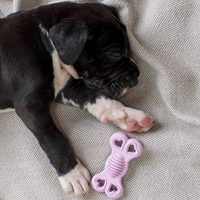
- Redirect to a chew toy within a few seconds. Offer it calmly and let your puppy settle into it. This gives them something appropriate to sink their teeth into.
- Reward gentle mouthing or soft contact with quiet praise or a small treat. You are reinforcing what you do want, not just reacting to what you do not.
- Keep it consistent across the whole household. Every person, every time.
A quick note on consistency: Mixed signals from different family members are one of the most common reasons puppy biting stages feel like they drag on. If one person lets the puppy mouth their hands during a play session, the lesson starts to unravel. Everyone needs to follow the same approach.
The goal is never punishment. It is clear, kind communication. When you understand why puppies bite, you can respond in a way that works with how they naturally learn — and that makes the whole process faster and far less stressful for everyone involved.
What to do instead: redirecting to toys and setting your puppy up for success
Once you understand why puppies bite so much, the solution gets a lot clearer: they need something better to sink their teeth into. Redirection is one of the most effective tools you have, and with a little consistency, it genuinely works.
- Swap immediately, not eventually. The moment teeth touch skin or clothing, calmly remove your hand and offer a toy instead. No drama, no delay. The swap itself is the lesson.
- Use cooling chews for teething relief. During a heavy teething stage, a chilled rubber chew can make a real difference. Pop it in the freezer for an hour before play and let the cold do the soothing work.
- Reach for the right toy. Lords & Labradors puppy toys are designed with teething puppies in mind, with textures and resistance that actually satisfy the urge to gnaw. A toy that feels good to chew is one that gets used.
- Keep play sessions structured. Short, calm sessions are your friend. Overstimulation turns even the gentlest puppies mouthy, so watch for the signs and wind things down before they tip over the edge.
- Build in calm-down breaks. If your puppy is too fired up to redirect, a quiet pause in their crate or pen gives them a chance to reset.
Every redirect counts: puppies learn through repetition, so the more consistently you make the swap, the faster it sticks.
Setting your puppy up for success really comes down to managing their environment and energy before biting becomes the default outlet. Keep appropriate chews within easy reach, keep play sessions manageable, and trust that small, consistent moments genuinely add up.
When normal mouthing becomes a problem worth getting help for
Most puppy biting is completely normal, and with consistency, it does ease off. But it’s worth pausing every now and then to ask whether something more might be going on.
If your puppy’s biting still feels relentless after weeks of calm, consistent redirection, it’s worth talking to a qualified trainer. The same applies if bites are regularly hard and don’t seem connected to play, if your puppy snaps when anyone goes near their food, toys, or bed, or if their reactions feel more fearful than excited. None of that makes them a bad puppy. It just means you’d both benefit from a little extra support.
Pain is worth considering too. Teething can make puppies genuinely sore and out of sorts, and some pups bite more simply because they’re uncomfortable. If your puppy seems distressed beyond the usual nipping and wriggling, a quick vet check is a sensible place to start.
One of the most useful things you can do in the meantime is learn to read what your puppy is telling you before the biting even begins. Spotting the early signals makes it so much easier to respond well. Our guide to understanding your dog’s body language is a really helpful starting point.
And here’s the reassuring bit: for the vast majority of puppies, the biting does pass. With patience, the right toys, and a bit of guidance, most pups grow into gentle, settled dogs who’ve figured out how to use their mouths kindly.