

















The Best Cat Scratch Posts
07.03.21 March 07, 2021 Owning a Cat

The Best Cat Scratch Posts

Scratching is something that every cat loves to do. There are a number of reasons that your cat scratches, the main one being to keep their claws in tip top condition. They also scratch to mark their territory as a sign to other cats, and can scratch when anxious too. If you don’t want your furniture or carpets to be ruined, then a scratch post is a must-have for every cat owner. You can then encourage them to scratch this and divert their attention away from your soft furnishings. Scratch accessories come in all shapes and sizes from small cardboard scratchers to large scratch posts and trees. Here we take a look at our favourite scratch posts from our Cat Emporium.   Our Favourite Cardboard Scratchers Cats like to scratch in different ways; some like to scratch vertically; some like to scratch horizontally and others like a mixture of both. If your cat likes to scratch horizontal surfaces (hopefully they haven’t taken to scratching your carpets just yet!), we have a brilliant range of cardboard scratchers. These can be easily moved around the home so that your cat can keep their claws sharp without ruining your flooring. Catit Lounge Cardboard Scratcher - This is a really good budget scratcher for cats. The whole surface is made of corrugated cardboard, which is enticing for felines and the shape is designed for cats to ‘lounge’ on when relaxing. The large size makes it ideal for all ages and breeds, and it will last a long time before it needs replacing. Catit Pirates Barrel Scratcher - This is a super fun choice! Part of the Pirates collection by Catit. It offers both scratching and lounging capabilities all in one novel design. We also love the fact that it comes in two sizes, so you can choose the small for a little kitten and the large for adults. The larger size measures 16.53” in diameter making it great for breeds such as Ragdolls and Maine Coons. Catit Senses 2.0 Oval Scratcher - This is part of the brilliant interactive Senses range by Catit. The scratcher itself is an oval shape and a great size for any age and breed of feline. What we love most is that it can be incorporated into a playground circuit along with some of the other Catit Senses products. Add a Play Circuit, a Food Tree and perhaps the Wellness Centre and your cat will have a whale of a time hunting, chasing and lounging.      Our Favourite Cat Scratch Posts & Trees If your cat is a vertical scratcher as most are, then a scratch post or tower is an essential accessory for your home. They come in all shapes and sizes, so you will find something to suit the space you have available and the breed of your cat. There are small scratch posts for kittens and large towers with multiple posts and platforms for larger breeds and indoor cats. It’s important to consider your specific cat when choosing a scratch post. If you have a cat who goes outdoors and doesn’t scratch that much in the house, then maybe a compact single post scratcher will be sufficient. If on the other hand you have an indoor cat who needs to sate all of their scratching needs in the house, then you will need to consider something much larger, with places for them to climb and lounge incorporated into the structure. Here we list a range of options for every kind of cat: Vesper Play centre Cat Scratcher - This a great miniature climbing frame for kittens by Vesper. Vesper makes premium quality cat furniture that looks stylish whilst offering practical solutions for scratching felines. Your kitten will enjoy climbing over this A-frame structure and can scratch and play too. It can be moved around and set in different positions to make playtime different for your cat. It features a scratch pad and a small scratch post as well as a memory foam pad for lounging and a catnip toy that they can ‘hunt’ and bat around too! It’s the perfect first scratch post for kittens. Rosewood Tarragon Cat Scratch Post - The Tarragon scratcher is a three-post design. Each post varies in length and has an attached catnip toy for added playtime fun. If your cat needs encouragement to scratch in the correct places, then these toys are just the thing to entice them. It will make a great first scratch post for kittens as it isn’t too big. The varying sizes will also give your cat chance to stretch and scratch as they grow into adults. Larger breeds may find this isn’t large enough once they are fully grown though. Ragdolls and Maine Coons for example may like something much larger, but this is an excellent choice for kittens, smaller cats and outdoor cats who don’t tend to scratch indoors that much anyway. Rosewood Catwalk Collection Zurich Cat Scratch Post - The Zurich has all of the same things that we love about the Tarragon, but in an exciting round shape with an added platform on top. Your little kitten will enjoy scratching and climbing over this mini frame and the dangly catnip toys will keep them coming back for more playtime fun. A brilliant scratch post for kittens and small cats Rosewood Catwalk Collection Cinnamon Scratch Post - Do you love the look of the Zurich scratch post, but have large adult cats? Then take a look at the Cinnamon scratcher. This has the same three post structure but on a much larger scale. It has a multi layered design too, which will appeal to your cat’s climbing instincts. It’s a great choice for those with an adult cat or multi-cat households. ​Trixie Galeno Scratching Post - This is more than just a scratch post. This design has a cosy hideout at the base with a post that stretches up to two platforms that sit at different heights. It will sate of your kitty’s scratching desires whilst also allowing them to hide away for a snooze when they want, or climb the tower to survey their domain! The hideaway and platforms are covered in a lovely soft plush faux fur too which will appeal to your kitty’s love of soft fabrics. A great option for one or two cats.   Trixie Ava XXL Cat Tower - The first thing to notice about this scratcher is the striking design. It has a contemporary, geometric style with cube-like structures bookmarking a wide scratch post. The bottom cube is a cosy hideaway that will provide your cat with a secluded spot for napping and sleeping. The top structure is an open top cat bed. Both are fully lined with plush faux fur and have the addition of reversible cushions. The scratch post is wrapped in jute as is the top bed giving plenty of scratching options. This a brilliant option for large breed cats including Ragdolls and Norwegian Forest Cats. They’ll love the generously sized lounging areas!   Vesper Box Large Cat Cube - Vesper is a brand that fuses style and practicality in a seamless way. They consider everything that a cat likes and work these practical attributes into well-designed, aesthetically pleasing pieces of contemporary furniture for the home. The Large Box Cube is a miniature climbing frame with lounging places, a scratch post and dangly toys all in one sleek structure. It’s ideal for kittens and will last well into adulthood. It’s large enough for multiple cats too who will enjoy chasing and playing with each other around the frame. It has removable pads - some for scratching and some for laying on that can be washed or replaced as needed. That’s one of the best things about this scratcher; Vesper makes spare parts, so if your cat wears the scratch post or pads out, you can purchase replacements to make it look as good again. Rosewood Charcoal Felt Double Cat Tower - If you’re looking for something sleek that will fit in to a modern home then this scratch tower might be just the style you’re looking for. Where the other posts have been crafted from cream fabrics and wooden accents this post is all grey. A stylish colour palette that will work seamlessly into any modern home. It features three scratch posts together with a tunnel, a round hideout and a top platform. It’s ideal for cats who love to climb and large enough for multi-cat households with two or three felines.   Trixie Humberto XXL Tall Scratching Tower - Are you looking for the ultimate scratch post? If you need an indoor playground with multiple places for your cats to scratch, play and lounge then this XXL scratch tower from Trixie may be just what you’ve been looking for. Standing at over 5 feet tall, this tower has 8 scratch posts, a large hideout in the middle, a platform on top and three hammocks; plus, a rope toy for added fun. It is ideal for any cat, but especially large breeds who will love the generously proportioned hammocks, and indoor cats who will get plenty of exercise climbing and playing around the frame. It is finished in a neutral colour palette of grey and cream so will look good in any home too. We hope you like our pick of the best cat scratch posts and trees. Which you choose will come down to the needs of your specific cat. If you’re looking for a small post for a kitten you might choose the Tarragon. If you want a moderate sized post for an adult cat who mainly goes outside, then the Galeno might be suitable. If you need a large tower for multiple indoor cats, then we’d probably suggest the Humberto. Whichever you choose, we think your cat will love it. If you need any more information regarding any of the products listed here, please do get in touch. We’re always happy to help!

By Zac Girdlestone

Read more

Scratching is something that every cat loves to do. There are a number of reasons that your cat scratches, the main one being to keep their claws in tip top condition. They also scratch to mark their territory as a sign to other cats, and can scratch when anxious too. If you don’t want your furniture or carpets to be ruined, then a scratch post is a must-have for every cat owner. You can then encourage them to scratch this and divert their attention away from your soft furnishings.

Scratch accessories come in all shapes and sizes from small cardboard scratchers to large scratch posts and trees. Here we take a look at our favourite scratch posts from our Cat Emporium.


Our Favourite Cardboard Scratchers

Cats like to scratch in different ways; some like to scratch vertically; some like to scratch horizontally and others like a mixture of both. If your cat likes to scratch horizontal surfaces (hopefully they haven’t taken to scratching your carpets just yet!), we have a brilliant range of cardboard scratchers. These can be easily moved around the home so that your cat can keep their claws sharp without ruining your flooring.

Catit Lounge Cardboard Scratcher - This is a really good budget scratcher for cats. The whole surface is made of corrugated cardboard, which is enticing for felines and the shape is designed for cats to ‘lounge’ on when relaxing. The large size makes it ideal for all ages and breeds, and it will last a long time before it needs replacing.

Catit Pirates Barrel Scratcher - This is a super fun choice! Part of the Pirates collection by Catit. It offers both scratching and lounging capabilities all in one novel design. We also love the fact that it comes in two sizes, so you can choose the small for a little kitten and the large for adults. The larger size measures 16.53” in diameter making it great for breeds such as Ragdolls and Maine Coons.

Catit Senses 2.0 Oval Scratcher - This is part of the brilliant interactive Senses range by Catit. The scratcher itself is an oval shape and a great size for any age and breed of feline. What we love most is that it can be incorporated into a playground circuit along with some of the other Catit Senses products. Add a Play Circuit, a Food Tree and perhaps the Wellness Centre and your cat will have a whale of a time hunting, chasing and lounging.   


Our Favourite Cat Scratch Posts & Trees

If your cat is a vertical scratcher as most are, then a scratch post or tower is an essential accessory for your home. They come in all shapes and sizes, so you will find something to suit the space you have available and the breed of your cat. There are small scratch posts for kittens and large towers with multiple posts and platforms for larger breeds and indoor cats. It’s important to consider your specific cat when choosing a scratch post. If you have a cat who goes outdoors and doesn’t scratch that much in the house, then maybe a compact single post scratcher will be sufficient. If on the other hand you have an indoor cat who needs to sate all of their scratching needs in the house, then you will need to consider something much larger, with places for them to climb and lounge incorporated into the structure. Here we list a range of options for every kind of cat:

Vesper Play centre Cat Scratcher - This a great miniature climbing frame for kittens by Vesper. Vesper makes premium quality cat furniture that looks stylish whilst offering practical solutions for scratching felines. Your kitten will enjoy climbing over this A-frame structure and can scratch and play too. It can be moved around and set in different positions to make playtime different for your cat. It features a scratch pad and a small scratch post as well as a memory foam pad for lounging and a catnip toy that they can ‘hunt’ and bat around too! It’s the perfect first scratch post for kittens.

Rosewood Tarragon Cat Scratch Post - The Tarragon scratcher is a three-post design. Each post varies in length and has an attached catnip toy for added playtime fun. If your cat needs encouragement to scratch in the correct places, then these toys are just the thing to entice them. It will make a great first scratch post for kittens as it isn’t too big. The varying sizes will also give your cat chance to stretch and scratch as they grow into adults. Larger breeds may find this isn’t large enough once they are fully grown though. Ragdolls and Maine Coons for example may like something much larger, but this is an excellent choice for kittens, smaller cats and outdoor cats who don’t tend to scratch indoors that much anyway.

Rosewood Catwalk Collection Zurich Cat Scratch Post - The Zurich has all of the same things that we love about the Tarragon, but in an exciting round shape with an added platform on top. Your little kitten will enjoy scratching and climbing over this mini frame and the dangly catnip toys will keep them coming back for more playtime fun. A brilliant scratch post for kittens and small cats

Rosewood Catwalk Collection Cinnamon Scratch Post - Do you love the look of the Zurich scratch post, but have large adult cats? Then take a look at the Cinnamon scratcher. This has the same three post structure but on a much larger scale. It has a multi layered design too, which will appeal to your cat’s climbing instincts. It’s a great choice for those with an adult cat or multi-cat households.

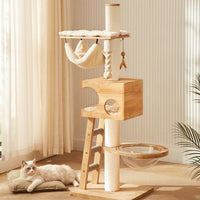
Trixie Galeno Scratching Post - This is more than just a scratch post. This design has a cosy hideout at the base with a post that stretches up to two platforms that sit at different heights. It will sate of your kitty’s scratching desires whilst also allowing them to hide away for a snooze when they want, or climb the tower to survey their domain! The hideaway and platforms are covered in a lovely soft plush faux fur too which will appeal to your kitty’s love of soft fabrics. A great option for one or two cats.


Trixie Ava XXL Cat Tower - The first thing to notice about this scratcher is the striking design. It has a contemporary, geometric style with cube-like structures bookmarking a wide scratch post. The bottom cube is a cosy hideaway that will provide your cat with a secluded spot for napping and sleeping. The top structure is an open top cat bed. Both are fully lined with plush faux fur and have the addition of reversible cushions. The scratch post is wrapped in jute as is the top bed giving plenty of scratching options. This a brilliant option for large breed cats including Ragdolls and Norwegian Forest Cats. They’ll love the generously sized lounging areas!


Vesper Box Large Cat Cube - Vesper is a brand that fuses style and practicality in a seamless way. They consider everything that a cat likes and work these practical attributes into well-designed, aesthetically pleasing pieces of contemporary furniture for the home. The Large Box Cube is a miniature climbing frame with lounging places, a scratch post and dangly toys all in one sleek structure. It’s ideal for kittens and will last well into adulthood. It’s large enough for multiple cats too who will enjoy chasing and playing with each other around the frame. It has removable pads - some for scratching and some for laying on that can be washed or replaced as needed. That’s one of the best things about this scratcher; Vesper makes spare parts, so if your cat wears the scratch post or pads out, you can purchase replacements to make it look as good again.

Rosewood Charcoal Felt Double Cat Tower - If you’re looking for something sleek that will fit in to a modern home then this scratch tower might be just the style you’re looking for. Where the other posts have been crafted from cream fabrics and wooden accents this post is all grey. A stylish colour palette that will work seamlessly into any modern home. It features three scratch posts together with a tunnel, a round hideout and a top platform. It’s ideal for cats who love to climb and large enough for multi-cat households with two or three felines.


Trixie Humberto XXL Tall Scratching Tower - Are you looking for the ultimate scratch post? If you need an indoor playground with multiple places for your cats to scratch, play and lounge then this XXL scratch tower from Trixie may be just what you’ve been looking for. Standing at over 5 feet tall, this tower has 8 scratch posts, a large hideout in the middle, a platform on top and three hammocks; plus, a rope toy for added fun. It is ideal for any cat, but especially large breeds who will love the generously proportioned hammocks, and indoor cats who will get plenty of exercise climbing and playing around the frame. It is finished in a neutral colour palette of grey and cream so will look good in any home too.

We hope you like our pick of the best cat scratch posts and trees. Which you choose will come down to the needs of your specific cat. If you’re looking for a small post for a kitten you might choose the Tarragon. If you want a moderate sized post for an adult cat who mainly goes outside, then the Galeno might be suitable. If you need a large tower for multiple indoor cats, then we’d probably suggest the Humberto. Whichever you choose, we think your cat will love it.

If you need any more information regarding any of the products listed here, please do get in touch. We’re always happy to help!

Related Products

Related Collections

Cat Scratch Posts and Scratching Trees

A scratching cat is a healthy cat! Scratching posts are an important... 

Cat Essentials

Discover a fantastic range of practical and stylish cat products in the... 

Next Article
Brand Spotlight: Hugo & Hudson

Related Articles

  • Why Do Cats Like to Go in Boxes
    31.08.26 August 31, 2026 Owning a Cat

    Why Do Cats Like to Go in Boxes

    If you have ever watched a cat bypass a brand new bed to squeeze into a battered delivery box, you already know that cardboard holds a very particular power over them. This article gets into the real reasons why cats like to go in boxes, from the deep-rooted instincts behind it to the surprising science that explains why boxes can actually make cats feel calmer and more secure. You will also find practical tips for making box time safer at home, plus some cosy alternatives worth knowing about. Why do cats like to go in boxes? The short answer If you have ever set down an empty delivery box and watched your cat claim it within seconds, you already know that cats and cardboard share a very special relationship. But why do cats like to go in boxes so reliably — regardless of age, personality, or how many perfectly good beds they have completely ignored? The honest answer comes down to instinct. Cats are both predators and prey, which means they are hardwired to seek out small, enclosed spaces where they feel hidden, secure, and in control. A box delivers all of that at once. It is basically the feline version of a perfect afternoon. But there is more to it than simple survival instinct. Cardboard retains warmth, which cats are naturally drawn to. Boxes offer novelty, which keeps curious, intelligent animals happily occupied. And research has actually shown that access to a box can meaningfully lower stress levels in cats, especially when they are adjusting to a new or unsettling environment. So if your cat has commandeered every online delivery since you started shopping from home, they are not just being theatrical. They are following a deeply rooted urge that feels safe, satisfying, and entirely natural to them. This article unpacks all of it — from the science behind why cats are attracted to boxes to practical ways you can lean into the behaviour at home. And if you want to go a step further, you can explore our full range of cat essentials for even more ways to keep your cat comfortable and content. How boxes make cats feel safe, hidden, and in control One of the clearest answers to why cats like to go in boxes lies in how perfectly a box suits their dual nature as both predator and prey. Inside a box, a cat can watch everything happening in the room while staying completely hidden. That combination of visibility and cover is deeply wired into how cats experience the world. Reduced sensory overwhelm: Enclosed spaces filter out visual noise and movement, helping cats feel calmer in busier households. Monitoring without exposure: A cat in a box can track people, other pets, and sounds without putting itself in a vulnerable position. Ambush readiness: Even the most pampered indoor cat still carries those hunting instincts. A box keeps them poised and ready, even if the “prey” turns out to be a passing sock. A sense of boundary and control: Cats feel safest when they can define their own space. A box creates a clear perimeter that feels entirely theirs. Instinct, not stubbornness: That moment when your cat bypasses a plush bed to squeeze into the tiniest cardboard box in the room? That’s not cheek. That’s instinct telling them that smaller means safer. Enclosed spaces give cats something open rooms simply cannot: a genuine sense of control over their environment. If your cat gravitates toward boxes and tight corners, they’re not being awkward — they’re following instincts that go back thousands of years. Our High Wall Bouclé Cat Bed is built with exactly that in mind, with raised, defined sides that recreate the sheltered, secure feeling cats love about boxes — just a little more comfortable for everyone involved. What the Leiden University stress study found about boxes and feline stress There is some genuine science behind why cats like to go in boxes. A well-known study from Leiden University looked at newly arrived shelter cats and found that simple hiding boxes seemed to help them cope better with the stress of a big change. That matters because shelters are full of unfamiliar smells, sounds, and routines. For a cat, that can feel overwhelming. In the study, cats with access to a box generally showed lower stress scores and appeared to settle more quickly than cats without one. In other words, the box was not just somewhere to sit. It gave the cat a safe, contained space to retreat to while taking in a new environment. A few easy takeaways from the research: Cats with a hiding box appeared to adapt more quickly in a stressful setting A small, enclosed space may help cats feel safer and more in control Hiding can be a normal coping behaviour, not something “bad” that needs stopping The idea is useful beyond shelters too, especially for new kittens, house moves, or changes in routine The big lesson is simple: when cats can choose to tuck themselves away, they often feel more secure. That helps explain why cats like boxes so much in the first place. At home, that does not have to mean leaving delivery boxes all over the hallway, although many cats would be thrilled with that. A cardboard box, covered bed, or snug hideaway can all offer a similar sense of comfort. If your cat likes cosy places to curl up out of sight, our cat beds collection is a helpful place to start. Why cardboard boxes are so irresistible: texture, warmth, and novelty Part of understanding why cats like to go in boxes comes down to the material itself. Cardboard ticks several boxes at once (pun very much intended), offering a mix of sensory rewards that are genuinely hard to resist. It’s rarely just one thing pulling them in. Natural insulation: Cardboard traps body heat surprisingly well, creating a snug little pocket of warmth that feels immediately comforting to a cat settling in for a nap. Scratch-friendly texture: The surface is satisfying to knead and scratch, giving cats a natural outlet for an instinct they act on every single day. Novelty and mental stimulation: A new box arriving in the house is basically an event. Exploring it engages their curiosity and gives their brain a small but meaningful workout. Muffled acoustics: The walls absorb surrounding sound, softening the environment and helping cats feel calmer and less overstimulated. Familiar, neutral scent: Cardboard carries no strong or threatening smells, which makes it feel safe and approachable from the very first sniff. Put all of that together and it’s easy to see why cat behaviour in boxes makes so much sense. Warm, tactile, quiet, and interesting all at once — it’s a pretty compelling combination. If you want to make a box even more inviting, try tucking in one of our soft cat blankets to layer up the warmth and comfort your cat is already searching for. How to use boxes safely and keep the fun going at home Giving your cat a cardboard box to explore is one of the easiest wins in pet parenting, but a little prep goes a long way. Before you set one down, check it over properly. Remove any staples, packing tape, or sharp folded edges that could catch a paw or scratch a nose, and give it a quick sniff while you’re at it. Boxes that have held cleaning products or heavily scented goods are best left in the recycling. Once it passes the check, placement matters more than you might expect. Tuck it somewhere quiet, away from busy hallways or noisy appliances. Cats are drawn to boxes because they feel hidden and in control, so dropping one in the middle of a well-trafficked room rather misses the point. It’s also worth keeping an eye on chewing. Most cats will sniff, knead, and generally make themselves at home without much drama, but if yours is tearing off chunks and swallowing them, it’s time to swap things out for something safer. When you want a longer-lasting version of the same comfort, cat tunnels, enclosed hideaway beds, and soft-sided dens deliver everything a cardboard box does: warmth, shelter, and that deeply satisfying tucked-in feeling. They’re washable, sturdier, and far tidier to have around the house. The instinct behind why cats like to go in boxes stays exactly the same. You’re just giving it a proper home.

    By Adele Busby

    Read more
  • Why Do Cats Lick Each Other
    26.08.26 August 26, 2026 Owning a Cat

    Why Do Cats Lick Each Other

    Watching two cats curl up and wash each other is one of those small, lovely moments that makes a multi-cat home feel just right. This guide looks at why do cats lick each other, from the social bonds and shared scents behind allogrooming to the times when one-sided licking might be worth a closer look. You’ll also find practical tips on setting up your home so your cats can feel calm, comfortable, and genuinely at ease together. Why do cats lick each other? A quick look at cat grooming If you’ve ever caught your cats curled up together, giving each other a careful wash, it’s natural to wonder why do cats lick each other when they can groom themselves just fine. In most cases, it’s a lovely, normal part of cat grooming behavior called social grooming. When cats groom each other, they’re not just tidying up. They’re building trust, sharing comfort, and showing that they feel relaxed enough to be close. You’ll often notice them licking around the head, ears, or neck, which are tricky spots to clean alone. So yes, there’s a practical side, but the bigger message is usually affection and bonding. This starts early. Mother cats lick their kittens to clean them, soothe them, and help them feel secure. As cats grow, that same behaviour can carry into adult relationships, which helps explain why cats lick each other’s fur when they’ve formed a strong bond at home. So if your two cats take turns grooming on the sofa or after a nap in their favourite bed, it’s usually a reassuring sign. They likely see each other as part of the same social group. If you’re also helping cats and dogs live happily together, our guide on how to get your dog and cat to get along may help. What allogrooming means in a cat household If you’ve ever caught one cat carefully washing another’s ears and wondered why do cats lick each other so intently, you’re looking at allogrooming. It’s simply the name for one cat grooming another, and it’s a very normal part of life in many multi-cat homes. So, why do cats groom each other in the first place? Usually, it comes down to familiarity, comfort, and living closely together. It helps build bonds. Grooming can be a calming, rewarding social interaction for cats, so doing it regularly may help strengthen their connection over time. It creates a shared scent. When cats lick each other’s fur, they mix their scents together. That shared smell helps them recognise one another as part of the same social group. It helps with hard-to-reach areas. The top of the head, around the ears, and the neck are awkward spots for a cat to clean alone, so a friendly housemate can step in. It can keep the peace. In some pairs or groups, grooming seems to help smooth over small tensions and make everyone feel more settled. It shows trust. Cats are vulnerable when they’re being groomed, so allowing another cat close in that way is often one of the loveliest cat affection signs to spot at home. In a happy cat household, allogrooming often becomes part of the daily rhythm. It’s one of those little cat grooming behavior clues that can tell you your cats feel safe, familiar, and comfortable with each other. Is it about love, hierarchy, or both? The honest answer is that cat grooming behavior is rarely just one thing. When cats lick each other, it can absolutely be about affection, but it can also reflect who feels more confident, settled, or socially comfortable in the pair. So if you’ve ever wondered why do cats lick each other, the answer is often both love and social structure. Cats may groom one another to: strengthen a bond they already feel secure in calm things down after a brief wobble or disagreement share scent and reinforce a familiar group feeling at home show social confidence, especially when one cat usually starts the grooming comfort a companion they know well, including a sibling or long-time housemate That’s why cat grooming behavior can look very sweet on the surface while still telling you something about the relationship underneath. One cat licking the other’s head or neck, for example, may be gentle and affectionate, but it can also show which cat tends to take the lead socially. Worth knowing: one study on close-contact inter-cat interactions found that cats can show both affiliative and agonistic behaviors, so grooming may sit alongside tension rather than always meaning pure affection. In other words, why do cats groom each other is not always a simple romance story. In a calm, well-set-up home, with enough space and resources like a cat scratch post, you’re more likely to see the relaxed, easy kind of grooming most pet parents hope for. When one cat does all the licking: signs it may be stress, not just affection Mutual grooming is usually a lovely sign that your cats feel safe and bonded together. But it’s worth paying attention when one cat is always doing the licking and the other is simply putting up with it. That kind of one-sided pattern can sometimes point to stress, anxiety, or an uneven social dynamic rather than pure affection. Here are a few signs to watch for: The cat being groomed flattens their ears or pulls their head away They walk off mid-session looking relieved, not relaxed One cat always initiates grooming, never the other way around You notice thinning fur in certain spots from repeated, concentrated licking The licking looks frantic or repetitive rather than slow and settled The recipient shows tension during grooming — tail flicking, a low grumble, or a stiff body Compulsive grooming can be a response to environmental stress. Giving cats a positive outlet for restless energy really does help, and something like a wall climber or activity centre can make a surprising difference to anxious behaviour at home. A little one-sidedness is perfectly normal and nothing to worry about on its own. Most cats settle into their own grooming rhythms over time. But if you’re consistently noticing avoidance, tension, or licking that looks more compulsive than caring, it’s worth keeping a closer eye on things. A chat with your vet or a cat behaviourist can help you figure out what’s going on and how best to support both cats. How to support calm, comfortable cat relationships at home The good news is that most cats in the same household find their own rhythm over time. But there are things you can do to smooth the process along, especially if you have a newer pairing or a cat who seems a little unsettled. Start with space. Cats feel safest when they have somewhere to retreat to that is entirely their own. If your cats share every bed, bowl, and sunny windowsill, tension can quietly build even when everything looks fine on the surface. Giving each cat a dedicated resting spot makes a real difference — not just for their comfort, but for the overall mood of the household. A cosy, enclosed bed works especially well as a personal sanctuary, somewhere a cat can decompress without another wandering in uninvited. If you are looking for something that suits each cat’s individual personality, the Lords & Labradors cat bed collection is well worth a browse. Scratching posts are another simple win. Place them in a few different spots around the home and cats can mark their territory in a way that feels natural and low-conflict, which quietly helps keep the peace without anyone having to step in. When it comes to encouraging closeness, let the cats lead. Grooming and licking will happen on their terms, and that is exactly how it should be. Moving them together when they seem settled apart, or hovering over interactions, can create friction rather than ease it. Step back and trust them. Watching your cats groom each other and genuinely seem at ease together is one of the quiet joys of a multi-cat home. A little support from you goes a long way in helping them get there. Frequently Asked Questions What does it mean if cats lick each other? It usually means they feel comfortable and familiar with each other. Cats often lick one another as part of social grooming, or allogrooming, which helps with bonding, shared scent, and cleaning hard-to-reach spots like the head, ears, and neck. It can also reflect social confidence within the pair. Does the dominant cat groom the other? Sometimes, yes. When one cat regularly starts the grooming, it can show social confidence or that they tend to take the lead in the relationship, not just affection. The bigger picture matters though, as relaxed body language and calm, mutual interactions usually suggest the grooming is comfortable and positive. Is it good when a cat licks another cat? Yes, in most cases it’s a good sign. Cats licking each other is often a normal, reassuring part of social grooming that shows trust, comfort, and bonding. It’s only worth watching more closely if the licking looks frantic, one-sided, or seems to make the other cat tense or uneasy.

    By Adele Busby

    Read more
  • Why Do Cats Chirp at Birds
    21.08.26 August 21, 2026 Owning a Cat

    Why Do Cats Chirp at Birds

    That strange stuttering sound your cat makes when a bird lands outside is one of those small, delightful mysteries that comes with sharing your home with a cat. In this article, we look at why cats chirp at birds, what the main theories behind the behaviour actually mean, and what your cat’s body language is quietly telling you while it happens. We also cover when to relax and when to pay closer attention, plus some simple ways to make life a little richer for a cat who lives for the windowsill. What does it mean when a cat chirps at birds? If you’ve ever caught your cat glued to the windowsill, eyes locked on a bird outside, making a strange stuttering sound you’ve never quite heard before — you already know what chirping is. It’s one of those moments that stops you mid-cup-of-tea and makes you wonder what on earth is going on in that little head. Cat chirping is a short, rapid, high-pitched sound that sits somewhere between a trill and a stutter. It’s nothing like a meow, which cats tend to save for communicating with us, and it’s worlds away from a yowl or a hiss. You’ll often see it described as chattering too, and the two are closely related. Chattering usually involves that rapid jaw movement — almost like teeth clicking — while chirping is a touch softer and more tonal. Plenty of cats do both at the same time. It tends to happen in a very specific moment: a bird lands on a nearby branch, hops across the garden, or flutters past a favourite window. Your cat spots it, freezes, and out comes that curious little sound. It’s almost always directed outward, at something they can see but can’t reach. So why do cats chirp at birds? It’s worth digging into, because the answer says a lot about how your cat thinks and experiences the world. And if you’re already thinking about ways to keep your bird-obsessed cat happy indoors, we’ve got plenty of ideas to explore. Why do cats chirp at birds? The main theories There’s no single agreed-upon answer to why cats chirp at birds, which makes cat chattering behaviour one of the more intriguing puzzles in feline research. Several compelling theories exist, and honestly, each one tells us something a little different about how cats are wired. Scientists haven’t landed on a definitive explanation yet, so this is very much an open question — and a genuinely fascinating one. Leading theories behind the chirp: Predatory excitement and overstimulation. The moment your cat spots a bird outside, their hunting instincts kick in almost instantly. Cat chattering behaviour is thought to be a physical expression of that intense arousal — a kind of involuntary release when excitement builds faster than it has anywhere to go. Frustration at not being able to reach prey. Sometimes the cat chirping at birds meaning might be surprisingly straightforward: frustration. Your cat can see exactly what they want, but the glass is in the way. That clicking, stuttering sound could be how they process the tension between wanting something and not being able to get it. Instinctive mimicry or prey-luring behaviour. Some researchers suggest cats may imitate bird calls to draw prey closer. It’s an idea supported by observations of wild cats mimicking tamarin monkey calls in the Amazon — compelling, though still unproven in domestic cats. Anticipation mixed with hunting instinct. Why do cats chatter at birds? It may simply be excitement and readiness colliding — your cat mentally rehearsing a hunt they can’t actually go on. Quick insight: This behaviour tends to show up most in indoor cats watching birds through windows. If your cat has a favourite spot to lounge near the glass, they’re probably chirping there regularly. A dedicated cat bed positioned near a window gives them a comfortable perch to watch, chirp, and daydream to their heart’s content. It’s also worth noting that research into cat vocalisation is still evolving. One peer-reviewed study found that domestic cats have a wide vocal repertoire, with up to 21 different vocalizations described in the literature — a reminder that we’re still learning a great deal about how cats communicate. Understanding why cats make chirping noises is reassuring in itself: this behaviour is completely normal and rooted in deep instinct. Keep reading to find out what your cat’s body language is telling you when the chirping starts. What your cat’s body language can tell you Chirping rarely happens on its own. If you’ve ever wondered why do cats chirp at birds, the sound is only one piece of the puzzle. Your cat’s body usually tells you just as much, especially during those long garden-watching sessions from the windowsill. Body language signals to watch for: Tail flicking or lashing – quick flicks often mean intense focus and rising excitement Crouching low – this classic hunting posture shows your cat is fully tuned in Ears forward – a good sign they’re alert and engaged; ears flattening can mean frustration or overstimulation is creeping in Fixed stare – when your cat barely blinks, they’re tracking every flutter and hop Rapid chirping bursts – short, excited sounds often happen when the bird moves suddenly Harmless excitement Signs of overstimulation Soft, steady chirping Loud, frantic chattering Relaxed crouch Stiff, tense posture Gentle tail flicks Fast, forceful tail lashing Taken together, these clues help explain cat chirping at birds meaning a little more clearly. A focused, excited cat is usually just enjoying the thrill of the “hunt” from a safe spot indoors. If the body gets tense and the sounds get more urgent, it may be time for a gentle distraction, like a toy or a quick play session. If you’d like to get better at spotting these cues in pets generally, our guide to reading body language cues in dogs and other animals is a helpful next read. Should you worry if your cat chirps at birds? For most cat owners, chirping at birds is one of those endearing little quirks that makes life with a cat so entertaining. And reassuringly, cat chirping at birds is almost always completely normal — it simply means your cat has clocked something exciting outside and their inner hunter has woken up. Nothing to worry about there. That said, it’s worth knowing what to keep an eye on. Pay a little closer attention if you notice: A sudden change in the sound, especially if it seems more strained or distressed than usual Chirping paired with pacing, hiding, or visible anxiety Repetitive vocalisation with no obvious trigger nearby, like a bird or movement at the window Other changes alongside it, such as a shift in appetite, energy levels, or general mood The short version: occasional chirping is healthy self-expression. Most cats genuinely enjoy the stimulation of watching birds — think of it as their version of a gripping nature documentary. If your cat seems happy, curious, and otherwise completely themselves, there’s very little cause for concern. What matters most is that their day-to-day environment feels calm and enriching. A well-thought-out home setup — including a dedicated cat washroom space where they can retreat and feel settled — can make a real difference to an otherwise content, bird-obsessed cat. How to support a chirpy, bird-watching cat at home If your cat loves nothing more than pressing their nose to the glass and chattering away at every robin and pigeon that dares to land in the garden, the best thing you can do is lean into it. Bird-watching is genuinely enriching for cats, and a few simple tweaks at home can make the whole experience even better for them. Start with a good window spot. Cats want a clear, comfortable view, ideally at height, so they can properly survey their kingdom. A wall-mounted perch like the Lords and Labradors Malmo Viewing Pod gives them a dedicated vantage point to settle in for as long as they like, without monopolising the sofa arm or teetering on a wobbly windowsill. You can also bring a little of the outside in. A bird feeder positioned within sight of a favourite window turns an ordinary afternoon into something genuinely absorbing. Pair that with a cat-safe herb planter on the sill, some rustling foliage nearby, or even a nature documentary playing quietly in the background, and you have got a surprisingly rich little sensory world for them to enjoy. Interactive play is worth building in too. Wand toys with feather attachments are brilliant for letting your cat act on all that pent-up predatory energy from a long chattering session. A short burst of play afterwards can leave them feeling satisfied rather than quietly wound up. Cat chirping at birds is your cat being fully, brilliantly themselves. Your job is simply to give them the best possible seat for the show. Frequently Asked Questions Why does my cat make a chirping sound at birds? Cats usually chirp at birds because seeing prey triggers a burst of hunting excitement. It can also reflect frustration when they can see a bird but cannot reach it through the window. In most cases, it is a completely normal instinctive behaviour, often paired with focused staring, crouching, and tail flicking. Why does my cat make a chirping sound like a bird? Cats often make a bird-like chirping sound when they spot birds or other fast-moving prey outside. The sound is linked to hunting instinct, excitement, anticipation, and sometimes frustration if the prey is out of reach. It is generally a normal feline behaviour, especially during intense window watching.

    By Adele Busby

    Read more
  • Why Do Some Cats Not Like to Be Held
    17.08.26 August 17, 2026 Owning a Cat

    Why Do Some Cats Not Like to Be Held

    If you have ever scooped up your cat only to find them twisting free within seconds, you are not alone and it is not personal. Understanding why do some cats not like to be held starts with instinct, personality, and the quiet signals cats send long before they decide to make their feelings obvious. This article unpacks what is really behind that resistance and shares gentle, practical ways to build the kind of trust that makes closeness feel safe for both of you. Why some cats hate being held: what’s really going on If your cat wriggles out of your arms the second you pick them up, it can feel a bit disheartening, especially when you were only after a cosy cuddle. But if you have ever wondered why do some cats not like to be held, it usually is not about attitude or affection. Your cat is communicating discomfort. A big part of it comes down to instinct. Cats may be brilliant hunters, but they are also prey animals, so being lifted off the ground and restrained can feel unsafe. Even in a calm home with people they love, that sudden loss of control can trigger a very natural fear response. That is also why does my cat not like being picked up is such a common question among cat parents. Their body language often tells the story before they struggle. A twitching tail, ears pinned back, wide eyes, or a stiff body are all signs your cat is not relaxed. Learning to spot that cat body language when held helps you respond with more empathy and less guesswork. Understanding the reason matters because it changes how you support your cat. Instead of forcing contact, you can build trust in ways that feel safer to them, whether that is giving them choice, creating quiet hiding spots, or making their home feel secure with something like a cat washroom for extra privacy. The instinctive reasons holding can feel unsafe to a cat To understand why some cats don’t like to be held, it helps to start with what cats are actually wired to feel, rather than what we’d love them to feel. Cats haven’t been domesticated nearly as long as dogs, and underneath every purring house cat is a creature still built to stay alert, stay mobile, and stay in control of what happens to their body. Here are the key instinctive reasons being held can feel threatening to a cat: Feeling trapped. The moment you hold a cat, you take away their ability to move freely. That triggers a deep alarm, even when you mean nothing but love. Losing their escape route. Cats always want to know how they’d get away if they needed to. Being held removes that option entirely. Unfamiliar pressure on their body. Even gentle squeezing can feel overwhelming to a cat who hasn’t built trust around that kind of contact. Vulnerability from height. Being lifted puts a cat somewhere they didn’t choose to go. That feels disorienting and exposed, not reassuring. No control over what happens next. Cats are deeply independent. Unpredictability, even from someone they adore, can flip them straight into defensive mode. Key insight: Cats are both predator and prey. Being restrained activates the same alarm response as being caught by a threat, regardless of how safe the situation really is. That prey-animal instinct never fully switches off, which is why so many cats gravitate toward high spots where they can keep watch entirely on their own terms. Giving them access to vertical space, like wall-mounted cat climbers, genuinely supports their need for control and safe retreat — the very things being held can take away. Every cat is different: personality, early experiences, and trust No two cats are the same, and that is often the real answer to why do some cats not like to be held. If your cat pulls away when you scoop them up, it does not automatically mean they are unfriendly. More often, it comes down to personality, past experiences, and how safe they feel with touch. A few things usually shape that preference: Personality. Some cats love being close and will happily curl up on your lap. Others prefer to sit beside you, follow you from room to room, or ask for affection in short bursts. Early socialisation. Kittens who were handled gently and regularly in their first weeks are often more relaxed with human contact later on. Past handling experiences. If a cat has been grabbed, restrained, or picked up awkwardly, they may decide being held is something to avoid. Age and life stage. Comfort with handling can change over time. Some cats become softer and clingier, while others grow more particular about how and when they want contact. Breed tendencies. Some breeds are known for being especially people-focused, while others tend to like affection on their own terms. Family setting and trust. One study found that cats showed affectionate, aggressive, fearful, and playful responses in family settings and these responses varied across cats, especially in homes with children. Trust grows slowly, and usually in small everyday moments. A calm routine, gentle handling, and a cosy place to settle, like a soft cat blanket, can help your cat feel secure. Some cats do become cuddlier with time, but only when their boundaries are respected. Signs your cat is uncomfortable being held Cats communicate discomfort long before they feel the need to scratch or bite. Learning to read what their body is already telling you is one of the most useful things you can do as a cat parent, and it goes a long way toward understanding why some cats don’t like to be held. Body stiffening: Your cat goes rigid in your arms rather than relaxing into you. It’s the opposite of a melt. Tail lashing or thumping: A fast, sweeping tail is not excitement. It signals agitation, and it tends to escalate quickly. Flattened ears: Ears pinned back or turned sideways mean your cat feels threatened or overwhelmed. Dilated pupils: Wide, round pupils in normal lighting point to stress or fear, not curiosity. Vocalising: Growling, hissing, or persistent meowing while being held is a verbal protest. A clear one. Squirming and twisting: Active attempts to wriggle free are not playfulness. Your cat wants down. Biting or scratching: This is a last resort, and it almost always means earlier signals were missed. If you notice any of these signs, put your cat down calmly and straight away. These are not phases to push through. They are clear requests to stop. Respecting those signals consistently is what builds trust over time. Giving your cat somewhere that genuinely feels safe and theirs, like a high-sided cat bed they can retreat to, means bonding happens on their terms. That’s always when it works best. How to build trust without forcing cuddles The goal here isn’t to get your cat to tolerate being held. It’s to help them feel genuinely safe around you — and once that shifts, everything else tends to follow. Start by letting your cat lead. When they come to you, offer a gentle stroke and stop before they pull away. That small moment of choice builds more trust than ten forced cuddles ever could. Repeated often enough, your cat starts to understand that closeness doesn’t mean losing control. When you do need to pick them up, keep it brief and make it worthwhile. Support their full body weight, hold them close to your chest, and make sure all four paws feel stable. A cat who feels like they might fall is a cat who’s going to wriggle free immediately. Even a few calm, well-supported seconds counts as progress. It also helps to pair handling with something good. Lift them gently, set them back down, then offer a small treat or a quick play session they love. Do that consistently and being picked up starts to feel less like a threat and more like the start of something worth staying for. Beyond the handling itself, think about the environment. A well-placed cat perch, a cosy hiding spot or two, and enrichment they actually engage with all lower background stress — and a less stressed cat is a more open one. Our cat collection has plenty to help you build a space they feel at home in. Small, consistent moments matter far more than grand breakthroughs. Trust builds slowly, but when it does, it sticks. Frequently Asked Questions How do I get my cat to like to be held? You can’t force a cat to like being held, but you can help them feel safer with it. Let them lead contact, keep lifts brief and well supported, and pair being picked up with something positive like a treat or play so handling feels predictable, not threatening. Why does my cat suddenly not want to be held? A cat can suddenly stop wanting to be held because handling starts to feel unsafe, overwhelming, or too restrictive for them. Changes in trust, stress, life stage, or past handling experiences can all affect this, and their body language usually shows discomfort before they struggle.

    By Adele Busby

    Read more

loyal customer in 17 countries

Why Shop With Us?

  • Free Delivery

    Orders over £75 qualify for free standard UK delivery. Orders under £75 will be calculated at the checkout.

  • Shopping Made Easy

    Gain exclusive access to sales and shop all your pets favourites on the go by downloading our app.

  • Designed in the UK

    Our own brand products are lovingly designed in our specialist UK workshop to our exacting standards.

  • We're Here For You

    Contact our Pet Experts on Chat or by email at sales@lordsandlabradors.co.uk